When a child gets sick, parents don’t just want relief-they want safe relief. Giving a child a pill meant for an adult isn’t just ineffective-it can be dangerous. Children aren’t small adults. Their bodies process medicine differently, and even small dosing errors can lead to serious harm. That’s why age-appropriate medications matter more than ever.
Why Kids Need Different Medicines
For decades, doctors guessed at children’s doses by shrinking adult amounts. That approach failed. Kids metabolize drugs faster or slower depending on their age. A newborn’s liver and kidneys can’t clear medications the way a teenager’s can. Their body weight, fat distribution, and even stomach acidity change dramatically in the first few years of life.
That’s why the FDA now requires drug makers to test medicines in children before approval. Since the Pediatric Research Equity Act passed in 2003, over 89% of new drugs now include pediatric data-up from just 12% in the early 2000s. But even today, about half of all medications given to kids are used off-label, meaning they haven’t been formally approved for that age group. That’s why knowing what’s safe-and what’s not-is critical.
Key Age Groups and How Dosing Changes
Medication guidelines now break children into six precise age groups, not just "baby," "toddler," and "child." Here’s how they differ:
- Preterm neonates (up to 37 weeks): Extremely sensitive. Doses can be 10 to 100 times lower than adult amounts.
- Term neonates (0-27 days): Still developing organs. Avoid drugs like angiotensin blockers-can cause severe kidney damage.
- Infants (28 days-23 months): Need liquids or chewables. Most can’t swallow pills. Doses are weight-based: 25-45 mg/kg/day for antibiotics like amoxicillin.
- Children (2-11 years): Can handle chewables or tablets. Still need careful dosing. Maximum acetaminophen: 75 mg/kg/day, capped at 3,750 mg total.
- Adolescents (12-16 years): Closer to adult metabolism, but still not quite there. Ibuprofen max: 400 mg per dose, not 600 mg like adults.
- Young adults (17-21 years): Usually treated like adults, but some drugs still need caution.
Weight is the most accurate way to dose. Age is a rough guide. A 30-pound 5-year-old and a 30-pound 10-year-old need the same amount of medicine, even if they’re in different "age groups." Always check the weight-based chart, not the bottle’s "for ages 2-6" label.
Common Conditions and Safe Drug Choices
Pain and Fever
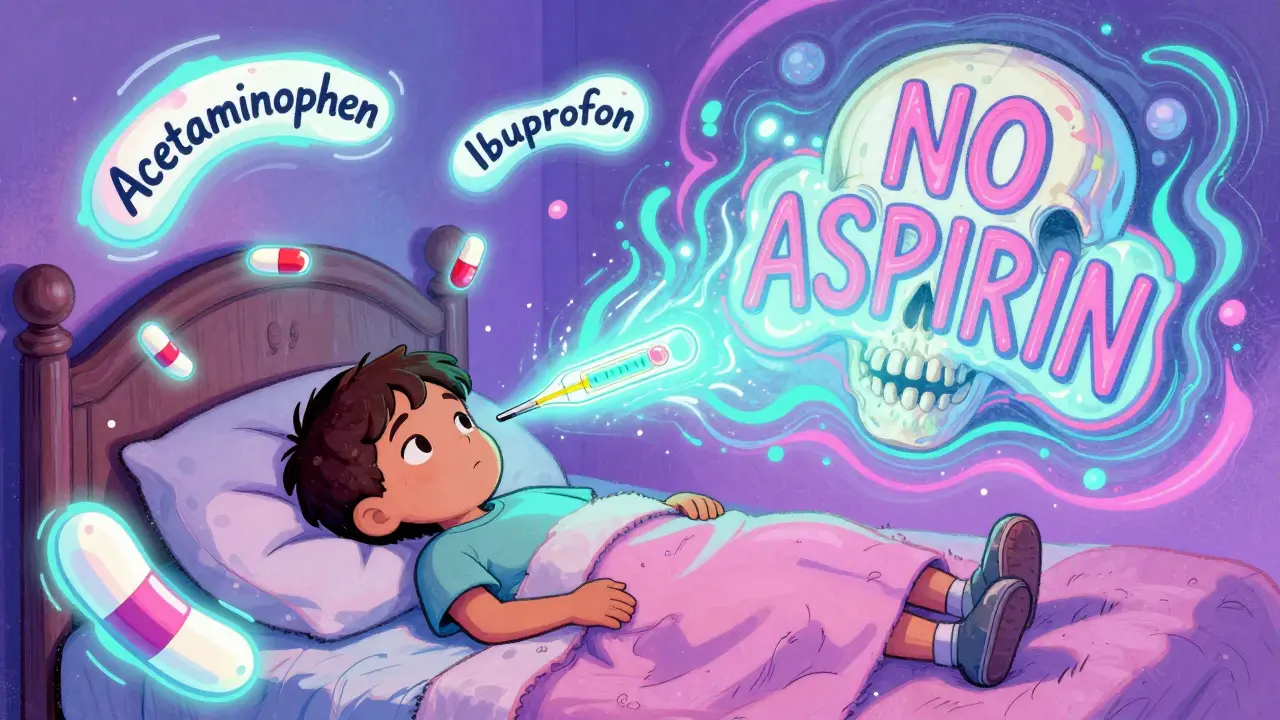
For fever or pain, only two drugs are safe for kids under 18: acetaminophen and ibuprofen.
- Acetaminophen: 10-15 mg/kg every 4-6 hours. Max 75 mg/kg/day (no more than 3,750 mg total). Never exceed 5 doses in 24 hours.
- Ibuprofen: 5-10 mg/kg every 6-8 hours. Max 400 mg per dose for kids under 12. Max daily dose: 3,200 mg for teens.
Never give aspirin. It can cause Reye’s syndrome-a rare but deadly condition that attacks the liver and brain. This risk led to aspirin being pulled from children’s medicine shelves in the 1980s, and it’s still a hard rule today.
Ear Infections and Antibiotics
Ear infections are the most common reason kids get antibiotics. The first-line choice? Amoxicillin.
- Dose: 25-35 mg/kg/day, split into two or three doses.
- Max single dose: 500 mg.
- Course: 7-10 days.
For kids allergic to penicillin, azithromycin is used-but it’s less effective. Resistance is high: up to 40% of ear infection bugs now resist azithromycin. That’s why doctors don’t reach for it first. Also, avoid fluoroquinolones like ciprofloxacin. They can damage growing cartilage. These drugs are banned for kids under 18 unless it’s a life-threatening infection like anthrax.
Respiratory Infections
For viral infections like colds or flu, antibiotics don’t help. But for flu, oseltamivir (Tamiflu) can shorten illness if given within 48 hours.
- Infants 2 weeks to 1 year: 3 mg/kg twice daily.
- Children 1-12 years: 3-6 mg/kg twice daily.
- Max single dose: 1,000 mg.
Flavor matters. The old version tasted terrible. The new fruit-flavored suspension increased adherence by 58% during the 2022-2023 flu season. Kids take it more often when it doesn’t make them gag.
Asthma and Allergies
Montelukast (Singulair) is often prescribed for asthma and allergies. But in 2025, the KIDs List added a strong warning: it can cause sleep disturbances, mood changes, and even suicidal thoughts in children and teens under 18. Use it only if other treatments fail-and watch closely for behavior changes.
Medicines to Never Give Kids
The Pediatric Pharmacy Association’s 2025 KIDs List identifies 27 drugs that are dangerous or risky for kids. Two stand out:
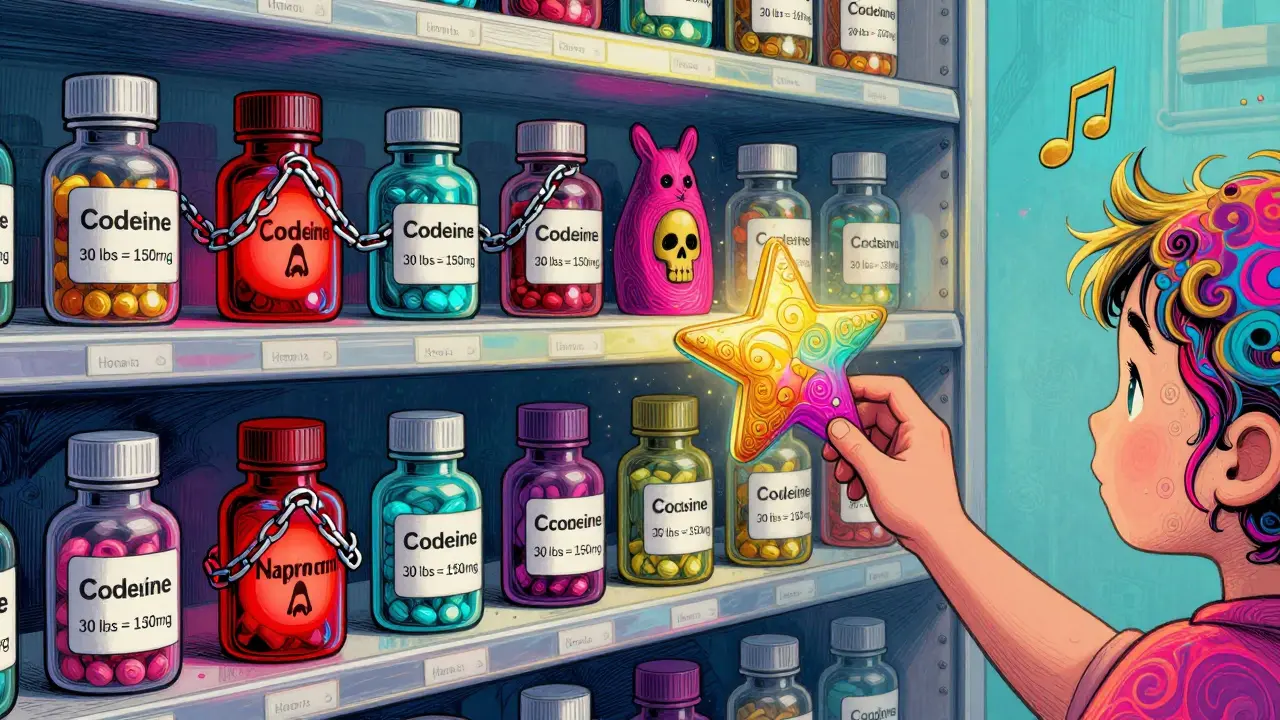
- Codeine and tramadol: These are opioids. Kids metabolize them unpredictably. Some turn them into morphine too fast, leading to fatal breathing problems. The FDA banned them for kids under 12 in 2017. Avoid them completely.
- Adult NSAIDs like naproxen: Safe for adults, but not for kids under 12. Higher risk of stomach bleeding. Use only ibuprofen for pain.
Also avoid:
- Antihistamines like diphenhydramine (Benadryl) for colds in kids under 6-ineffective and can cause seizures.
- Mirabegron (Myrbetriq) for bladder issues in kids under 3-kidney risks not fully studied.
- Molnupiravir for COVID-caution under 18 due to possible DNA damage risks.
Formulations Matter More Than You Think
It’s not just about the drug-it’s about how it’s delivered.
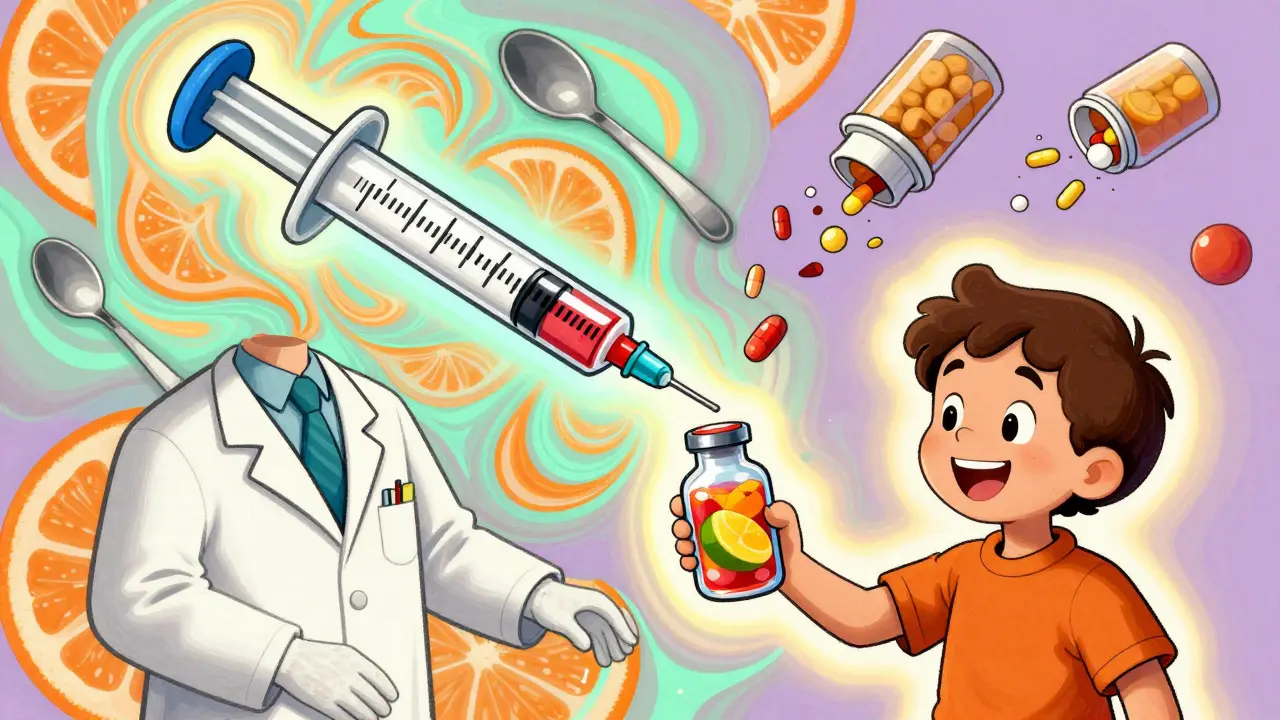
Children under 5 need liquids, chewables, or dissolving tablets. Pills? Forget it. But even liquids can be a nightmare. Many come in concentrations that require precise measuring. A 2.5 mL dose sounds simple-until you’re using a kitchen spoon and your toddler is screaming.
Studies show 42% of parents make dosing errors because they use spoons, syringes without markings, or guess. The fix? Always use the measuring device that comes with the medicine. If it’s missing, ask the pharmacy for one. Never use a kitchen teaspoon.
And taste? Huge factor. A bitter antibiotic can mean missed doses. That’s why manufacturers now add fruit flavors and sweeteners. The CDC found that when oseltamivir went from bitter to cherry-flavored, kids took it 58% more often.
What Parents and Caregivers Can Do
Here’s how to avoid mistakes:
- Always ask: "Is this dose based on weight?" If not, ask for the correct calculation.
- Use only the dosing tool that comes with the medicine. No spoons, no cups, no eyeballing.
- Keep a log: write down what you gave, when, and how much. Helps spot errors and shows doctors what’s working.
- Check the expiration date. Liquid antibiotics can lose potency fast-some only last 14 days after mixing.
- Store meds out of reach. Kids can open child-resistant caps. Keep them locked away.
- Ask if there’s a better-tasting version. Many drugs now have flavored options.
And if you’re unsure? Call your pediatrician or pharmacist. Don’t Google it. A 2022 JAMA Pediatrics survey found 68% of pediatricians say parents struggle with dosing because commercial formulations don’t match their child’s weight. You’re not alone. But you’re responsible for getting it right.
The Bigger Picture: Access and Equity
Not every child gets the same chance at safe medicine. In high-income countries, 92% of essential pediatric drugs are available. In low-income countries? Only 34%. That gap is growing. The WHO’s 2025 Access to Medicines Framework aims to fix that by 2030, but progress is slow.
Even in the U.S., community clinics often lack pediatric pharmacists. Only 38% have one. Children’s hospitals? 92% do. That means kids in rural areas or low-income neighborhoods are more likely to get adult doses or wrong formulations.
Future solutions are promising: 3D-printed pills customized by weight, nanoparticle systems to improve absorption in babies, and apps that calculate doses in real time. But until then, the best tool you have is knowledge.
Final Reminder: When in Doubt, Pause
Medicines for kids aren’t optional. They’re life-changing when done right-and dangerous when done wrong. The goal isn’t to treat fast. It’s to treat safely.
If you’re ever unsure about a dose, a formulation, or whether a drug is appropriate-stop. Call your doctor. Call your pharmacist. Wait for the answer. One wrong dose can change a child’s life. Don’t rush it.
Can I give my child adult medicine if I cut the dose in half?
No. Adult medications aren’t just scaled-down versions. They often contain fillers, coatings, or concentrations that aren’t safe for children. Even if you cut a pill in half, you can’t guarantee the dose is accurate. Always use pediatric-specific formulations. If none exist, your doctor can prescribe a compounded version made for your child’s weight.
Is ibuprofen safer than acetaminophen for kids?
Both are safe when used correctly. Ibuprofen can cause stomach irritation in about 5-10% of kids, especially if taken on an empty stomach. Acetaminophen is gentler on the stomach but harder on the liver if overdosed. Use ibuprofen for inflammation or swelling; acetaminophen for fever or mild pain. Never alternate them unless directed by a doctor.
Why can’t kids take antibiotics meant for adults?
Adult antibiotics often come in doses too high for children, or in forms they can’t swallow. More importantly, some drugs like fluoroquinolones can damage growing bones and cartilage. Others, like tetracycline, stain developing teeth. Even if the dose seems right, the formulation may not be safe. Always use pediatric-approved versions.
What should I do if my child spits out or vomits medicine?
Don’t give another full dose right away. Wait and call your doctor. If vomiting happens within 15 minutes of giving the medicine, it likely didn’t absorb. If it’s been longer, the dose may have been absorbed. Giving more could lead to overdose. Your provider will tell you whether to repeat the dose or skip it.
Are liquid medicines better than tablets for kids?
For children under 6, yes-liquids are safer and easier to dose accurately. But for older kids who can swallow pills, tablets or chewables are often more stable, have longer shelf life, and avoid sugar or alcohol found in some liquids. The best choice depends on the child’s age, ability to swallow, and the specific drug. Ask your pharmacist which option is most reliable.
How do I know if a medication is on the KIDs List?
The KIDs List is maintained by the Pediatric Pharmacy Association and updated yearly. You can ask your pediatrician or pharmacist to check it. Most children’s hospitals have it in their electronic systems. If a drug is flagged as "avoid" or "use with caution," it means strong evidence shows it’s risky for children. Don’t ignore those warnings.

Eli In
I can't believe how many parents just grab whatever's in the cabinet 🤦♀️ I once saw someone give their 3-year-old a whole adult ibuprofen tablet because "it's just medicine." My heart stopped. Please, use the dosing tool. Always. 🙏
Ryan Pagan
Let me tell you something real: the KIDs List isn't just a suggestion-it's a goddamn lifesaver. I'm a pediatric ER nurse, and I've seen kids admitted because their parents thought 'half a pill' meant 'half the danger.' Spoiler: it doesn't. Codeine? No. Naproxen under 12? Hell no. And for the love of all that's holy, stop using kitchen spoons. Get a syringe. It's $2 at CVS.
Paul Adler
This is one of the most thorough and well-researched pieces on pediatric pharmacology I've encountered in years. The emphasis on weight-based dosing, the breakdown of age groups, and the inclusion of formulation challenges are all critical. It's unfortunate that so many caregivers lack access to pediatric pharmacists, especially in underserved communities. Systemic change is needed, but this kind of public education is a vital first step.
Andy Steenberge
I've been a pharmacist for 18 years, and I still cringe when I see parents asking if they can crush adult pills and mix them with applesauce. Some meds have enteric coatings or extended-release mechanisms-crushing them can turn a safe dose into a lethal one. Even if the math seems right, the delivery system isn't. Compounded suspensions exist for a reason. Ask your pharmacist. They're not just the people who hand out pills-they're your safety net.
DHARMAN CHELLANI
Lmao so now we gotta have 6 age groups and 3d printed pills? Kids been gettin sick since cavemen. Just give em a lil bit less than adult. Done. Overcomplicatin shit.
kabir das
I just lost my niece to Reye’s syndrome... because I gave her aspirin for the fever... I didn't know... I didn't know... I didn't know!!! Why didn't anyone tell me?!?!?!?!?!?!?!?!?!?!
Kacey Yates
Why is everyone so scared of meds? My kid gets amoxicillin every time he gets sick and he's fine. Stop scaring parents with this overkill. You're making people afraid to treat fevers. That's worse than the meds.
ryan Sifontes
I think the FDA just wants to sell more branded kids' meds. All this 'weight-based dosing' is just a money grab. My cousin gave his kid half an adult Tylenol and nothing happened. It's all hype.
rajaneesh s rajan
We treat kids like fragile glass figurines. But here's the truth: evolution didn't design children to be medicated like lab rats. Maybe we're over-medicalizing normal childhood illnesses. A fever isn't an emergency. A runny nose isn't a crisis. Let them get sick. Their immune systems need to learn.
Alex Flores Gomez
The fact that you need a PhD to figure out how much Tylenol to give your kid is ridiculous. Who designed this system? A corporate lawyer? The 'cherry-flavored suspension increased adherence by 58%'? That's not science-that's marketing. And now we're supposed to believe this is 'safe'? Pfft.
Laura Arnal
This post made me cry. Not because it's sad-but because it’s so clear, so kind, and so desperately needed. 🥹 My daughter had a bad ear infection last winter and the pharmacist spent 20 minutes teaching me how to use the syringe. I’ll never forget it. Thank you for putting this out there. You’re helping parents feel less alone 💛
Laia Freeman
OMG YES!!! I used a kitchen spoon once and my kid threw up everything and I panicked!! Now I keep 5 syringes in the fridge and label them by kid and med. I even bought a little plastic box with compartments!! It's a whole system now!! 😅 My 4-year-old calls it 'the medicine castle' and thinks it's a game!!
LOUIS YOUANES
I've read this entire thing. It's beautifully written. But I still think it's all unnecessary. Kids have survived without pediatric-specific formulations for centuries. The fact that we now need apps, 3D-printed pills, and flavor consultants says more about our society than about medicine.
paul walker
Just wanted to say thank you. My daughter’s allergic to penicillin and we’ve had a nightmare finding a safe antibiotic. This list helped me ask the right questions. You’re not just sharing info-you’re saving lives.
Frank Declemij
The part about fluoroquinolones damaging cartilage is critical. I had a patient at the clinic last month whose mom gave him cipro because 'it worked for my UTI.' He ended up with tendon pain and a three-week ER visit. This isn't theoretical. It's happening every day.