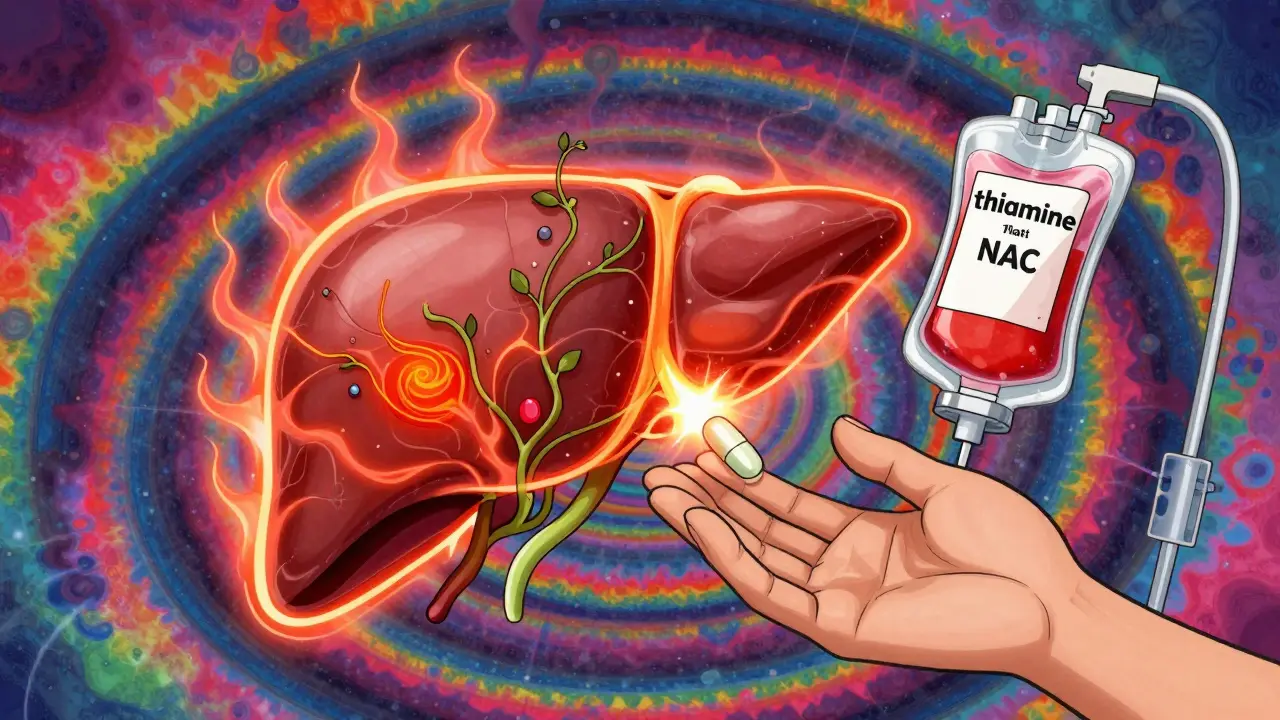
When someone who drinks heavily every day suddenly stops, their body doesn’t just feel shaky-it goes into crisis mode. The liver, which has been working overtime to break down alcohol for years, suddenly has to reset. And that reset can be dangerous. Alcohol withdrawal isn’t just about anxiety or sweating. For people with liver damage, it can trigger a chain reaction that makes the liver worse before it gets better. The good news? With the right approach, your liver can heal. But only if you do it safely.
What Happens to Your Liver During Alcohol Withdrawal?
Your liver processes 90% of the alcohol you drink. It turns ethanol into acetaldehyde, a toxic byproduct, then into acetate, which your body uses for energy. But when you stop drinking suddenly, the liver doesn’t just stop. It goes into a kind of shock. Blood flow changes. Enzymes go haywire. And for people who’ve been drinking heavily for months or years, this can cause more damage-even though they’re no longer drinking.
Studies show that within the first week of quitting, up to 32% of people with long-term alcohol use see their liver enzymes (AST and ALT) spike. That’s not a sign of improvement-it’s a sign the liver is under stress. The AST:ALT ratio is a key clue: if it’s above 2:1, it’s a strong indicator of alcohol-related liver disease. Normal is under 1:1. If your albumin is below 3.5 g/dL or your INR (a clotting test) is over 1.5, you’re already in serious territory. These aren’t just numbers. They’re warning signs your liver is struggling to keep up.
And here’s something most people don’t know: your liver is more vulnerable to toxins right after you quit. A study found that people who took just 1-2 grams of paracetamol (acetaminophen) during early withdrawal had the biggest spikes in liver enzymes. That’s less than two standard painkiller pills. For someone with a damaged liver, even a normal dose can be dangerous.
Why Medical Supervision Isn’t Optional
Trying to quit alcohol at home might seem like the easiest path, but it’s risky-especially if your liver is already hurt. Around 5% of people with severe alcohol withdrawal develop delirium tremens (DTs). That’s confusion, seizures, hallucinations, and a racing heart. It can kill. And if you’re already dealing with liver disease, your body has less reserve to handle these shocks.
Medically supervised detox cuts the risk of complications by nearly half. A 2022 meta-analysis found that 95% of supervised detox cases had no serious issues, compared to just 65% for home detox. Why? Because doctors can monitor your vital signs, adjust medications, and catch problems before they spiral.
Benzodiazepines like chlordiazepoxide are the gold standard for managing withdrawal symptoms. They prevent seizures and calm the nervous system. In one study, chlordiazepoxide prevented seizures in 85% of cases, while symptom-triggered protocols alone only worked in 40%. That’s a massive difference.
But it’s not just about stopping the shakes. It’s about protecting your liver. That’s where specific interventions make all the difference.
The 3 Pillars of Safe Liver Detox
There’s no magic pill to heal your liver. But there are three proven strategies that work together to give your liver the best chance to recover.
- Thiamine (Vitamin B1) IV Therapy - Heavy drinking depletes thiamine. Without it, you risk Wernicke-Korsakoff syndrome, a brain disorder that causes memory loss, confusion, and even permanent damage. Giving 500mg of thiamine intravenously for 3-5 days right after quitting isn’t optional-it’s life-saving.
- N-Acetylcysteine (NAC) Supplementation - NAC is an antioxidant that helps your liver detoxify harmful substances. A 2021 clinical trial showed NAC reduced liver enzyme spikes by 30% compared to placebo during withdrawal. It doesn’t cure liver damage, but it gives your liver breathing room.
- High-Protein Nutrition - Your liver needs protein to repair itself. Aim for 1.2-1.5 grams of protein per kilogram of body weight daily. That’s about 85-110 grams for a 70kg person. Pair that with B vitamins, zinc, and magnesium. A 2023 NHS review found that people on this protocol saw liver enzymes normalize 40% faster than those on standard care.
These aren’t suggestions. They’re medical necessities for anyone with alcohol-related liver damage.
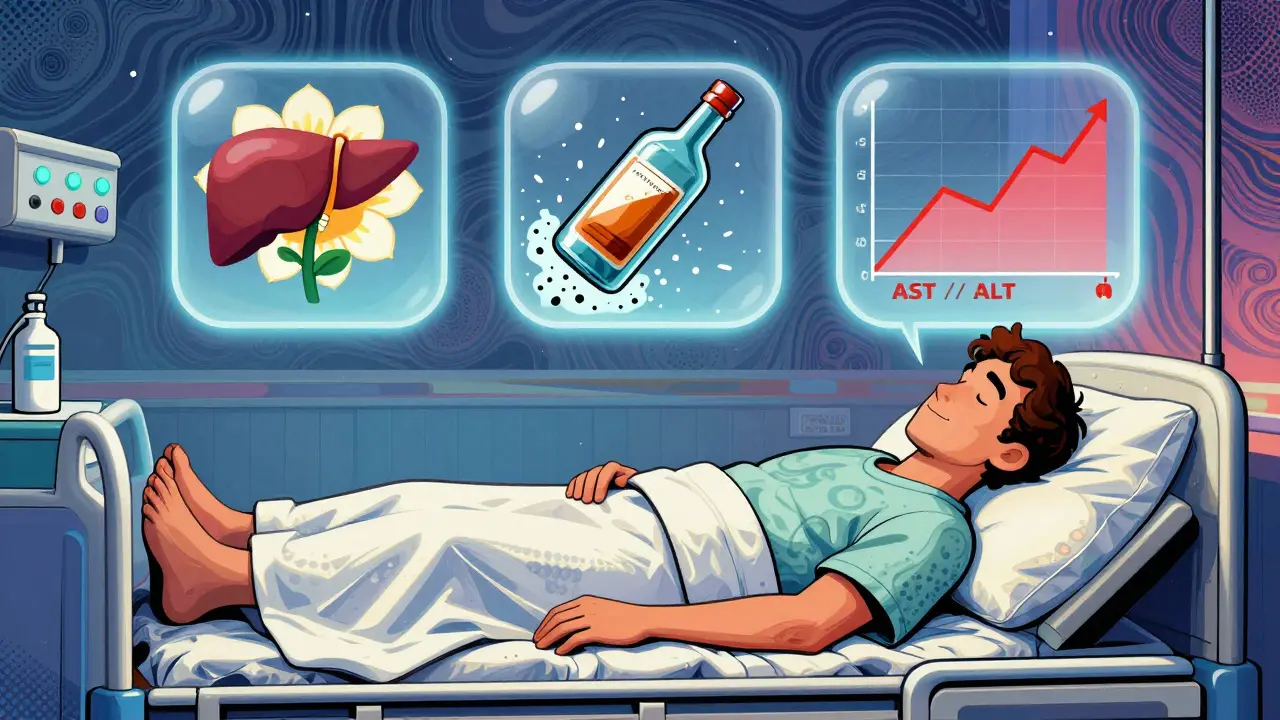
How Long Does It Take for the Liver to Heal?
People often ask, “Will my liver recover?” The answer is yes-if you stop drinking completely.
For mild liver damage (fatty liver), enzyme levels can start normalizing in 7-14 days. After 4-8 weeks of abstinence, most people see significant improvement. A 2021 study in Scientific Reports found that even after years of heavy drinking, the liver can regenerate significantly within 3-12 months of complete abstinence.
But here’s the catch: if you’ve progressed to alcoholic hepatitis or cirrhosis, the rules change. Alcoholic hepatitis can reverse-if caught early and you quit for good. Cirrhosis, though, is permanent scarring. You can’t undo it. But you can stop it from getting worse. That’s why lifelong abstinence isn’t a suggestion-it’s your only path forward.
Dr. Meghan Wood, a clinical hepatologist, says: “Liver enzyme levels begin to normalize within 7-14 days of alcohol cessation in patients with mild to moderate liver damage.” That’s your first real sign of healing.
What You Must Avoid During Detox
It’s not just about what you do-it’s about what you don’t do.
- No paracetamol (acetaminophen) - Even one tablet can cause serious liver injury during withdrawal. Use ibuprofen or other NSAIDs instead, but only if your kidneys are okay.
- No other drugs or supplements - Many herbal remedies, weight-loss pills, and “liver cleanses” are toxic to a stressed liver. Avoid them all.
- No alcohol, ever again - Even one drink can undo months of recovery. The liver doesn’t get a second chance.
- No self-tapering - Gradually reducing alcohol sounds smart, but for moderate to severe dependence, it often leads to continued liver exposure. A 2021 study found a 35% failure rate for tapering in moderate-severe cases.
Also, don’t underestimate nutrition. Many people focus on quitting alcohol but ignore what they eat. A 25% of people who quit drinking still don’t recover fully-because their bodies lack the building blocks to repair.

Who’s at Risk? And Why Access Matters
Alcohol-related liver disease kills more people in Western countries than any other liver condition. It accounts for 40% of all liver disease deaths. Eighty percent of liver toxicity deaths in the West are tied to alcohol.
Most patients are men aged 45-65, but rates among women have jumped 40% since 2010. The economic cost? $29 billion a year in the U.S. alone. Yet only 10% of people with alcohol use disorder get treatment. Why? Access. Only 15% of rural communities have specialized detox centers. Insurance covers 85% of detox for private patients but only 45% for Medicaid recipients.
Telemedicine has helped-especially in remote areas-but it’s not safe for people with elevated liver enzymes. You need hands-on monitoring.
The Future: Precision Detox
Scientists are now using biomarkers to predict how your liver will respond to withdrawal. Levels of TIMP1 and PIIINP (a protein linked to scarring) rise during withdrawal-even after you stop drinking. That means fibrosis (scarring) can worsen temporarily. This isn’t just theory. A 2022 Mayo Clinic trial used real-time liver monitoring during detox and cut severe complications by 35%.
Future treatments may include genetic testing to tailor benzodiazepine doses-reducing liver strain by 20-30%. Anti-fibrotic drugs targeting TIMP1 are already in Phase II trials. But none of this matters if you don’t stop drinking.
The biggest barrier to recovery? Relapse. Seventy percent of people who complete detox without ongoing support go back to drinking within six months. That’s why therapy, support groups, and structured aftercare aren’t extras-they’re essential.
What to Do Next
If you’re thinking about quitting alcohol and have a history of heavy drinking:
- Don’t try to quit alone.
- Get a liver function test before you stop.
- Seek a medical detox program-especially if you’ve had jaundice, swelling, or confusion.
- Start thiamine and NAC under medical supervision.
- Plan your nutrition: protein, B vitamins, hydration.
- Remove all painkillers from your home.
- Find a support system before day one.
Your liver is resilient. But it needs the right conditions to heal. Quitting alcohol is the first step. Doing it safely is the rest.
Can I detox from alcohol at home if I have liver damage?
No, especially if you’ve been drinking heavily for months or years. Home detox carries a high risk of seizures, delirium tremens, and worsening liver injury. Medical supervision reduces complications by 30% and ensures you get critical treatments like IV thiamine and liver-protective medications. If you have jaundice, swelling, confusion, or abnormal blood tests, detox must happen in a hospital or specialized facility.
How long does it take for liver enzymes to return to normal after quitting alcohol?
For mild to moderate liver damage, AST and ALT levels often begin normalizing within 7-14 days. Significant improvement usually takes 4-8 weeks of complete abstinence. Full recovery can take 3-12 months. However, if you have cirrhosis or advanced alcoholic hepatitis, enzymes may never return to normal-but they can stabilize if you stop drinking permanently.
Is it safe to take painkillers like paracetamol during alcohol withdrawal?
No. Paracetamol (acetaminophen) is extremely dangerous for a liver recovering from alcohol abuse. Even small doses-1-2 grams per day-can cause severe liver injury during withdrawal. Studies show the liver is 3-5 times more sensitive to paracetamol in the first week after quitting. Avoid all over-the-counter painkillers unless approved by a doctor. Use non-pharmacological methods like rest, hydration, and heat packs instead.
Can the liver regenerate after years of heavy drinking?
Yes-up to a point. The liver is one of the few organs that can regenerate. If you have fatty liver or mild alcoholic hepatitis, stopping alcohol completely can reverse damage within months. Even after years of heavy drinking, studies show liver function improves significantly within 3-12 months. However, if scarring (cirrhosis) has developed, it can’t be undone. The goal then shifts to stopping further damage and preventing liver failure.
What supplements help the liver heal after alcohol withdrawal?
The most evidence-backed supplements are N-acetylcysteine (NAC) and thiamine (vitamin B1). NAC reduces oxidative stress and lowers liver enzyme spikes by 30%. Thiamine prevents brain damage from deficiency. Other helpful nutrients include zinc, magnesium, and vitamin B12. Avoid unregulated liver “cleanses” or herbal supplements-they often contain hidden toxins. Always get supplements under medical supervision during detox.

Oliver Calvert
Been there done that. Quit drinking cold turkey after 15 years of daily whiskey. First week was hell - shaking, insomnia, nausea. But the liver enzymes? Started dropping by day 10. No paracetamol, no supplements, just protein, water, and sleep. Took 6 months to feel normal again. Your liver doesn’t need magic - just time and zero alcohol.
Steph Carr
Oh wow, so now we’re telling people their liver is a fragile snowflake that melts at the sight of ibuprofen? 😂 I’ve seen people detox at home with nothing but coffee and willpower - and they came out fine. Meanwhile, the medical industrial complex is selling IV thiamine for $500 a pop. Someone’s making bank off fear.
Also - ‘liver cleanses’? Yeah, those are scams. But so is charging $20K for a ‘medically supervised detox’ that’s just benzos and a comfy bed. Wake up.
Haley DeWitt
Thank you for this. I’ve been sober 11 months and my ALT dropped from 180 to 38. NAC and thiamine made a huge difference. I didn’t know how bad it was until I got tested. Please, if you’re reading this and drinking - get checked. Your liver doesn’t scream before it breaks. It just… stops.
Digital Raju Yadav
This is why America is weak. We turn quitting alcohol into a hospital procedure. In India, we just stop. No IVs. No supplements. No doctors. Just willpower. Your body knows how to heal. Stop overmedicating everything. This post reads like a pharmaceutical ad.
Also - why are you afraid of paracetamol? It’s been used for 70 years. Your liver isn’t made of glass.
Sam Pearlman
Wow. I read this and immediately thought - this is the kind of thing my ex would’ve posted right before she ghosted me. ‘You need medical supervision’ - yeah, because you’re scared I’ll relapse and ruin your perfect narrative. I quit drinking cold turkey. No help. No therapy. Just me, a fridge full of Gatorade, and Netflix. Three weeks later - I felt better than ever.
Also - liver enzymes spike? So what. They spike during workouts. Your body’s just cleaning house.
Brenda K. Wolfgram Moore
I’m 58, quit after 30 years of wine every night. Liver enzymes were through the roof. Did the full protocol - IV thiamine, NAC, high protein. Took 4 months, but my AST/ALT ratio went from 3.1 to 0.9. I’m not saying it’s easy. But it’s worth it. You’re not just healing your liver - you’re getting your life back.
Agnes Miller
just wanna say i did the whole thing at home and it was rough but i made it. no iv thiamine, no nac, just eggs and bananas and a lot of sleep. my doc said my liver looks better than a 30 year olds. maybe the science is right but people heal in different ways. dont let anyone make you feel bad for doing it your way.
Tony Shuman
So let me get this straight - if you’re an American with liver damage, you need a 10K detox program. But if you’re from India or Russia or Mexico - you just stop drinking and live? That’s not science. That’s cultural bias wrapped in medical jargon. This whole thing feels like a scam to get people to pay for things they don’t need.
Also - ‘no NSAIDs’? What, are we going to ban aspirin next? I’ve seen people with cirrhosis take ibuprofen for arthritis and live to 80. This post is fear porn.
Jonathan Ruth
Let’s be real - the liver is the toughest organ in the body. It regenerates faster than skin. You don’t need IVs. You don’t need NAC. You need to stop drinking. Period. All this talk about enzyme ratios and TIMP1 biomarkers is just noise to justify expensive programs. People have been detoxing at home since the 1800s. Why are we making it so complicated now?
PRITAM BIJAPUR
There’s a deeper truth here: healing isn’t just biological - it’s spiritual. When you stop drinking, you’re not just detoxing your liver - you’re detoxing your soul. The body follows the mind. I’ve seen men come out of rehab with IV thiamine and still relapse because they didn’t face their trauma. The supplements help - but the real cure is meaning. Find your why. Then the liver follows.
Also - I use emojis because I’m alive. 🌱💧🧘♂️
John Haberstroh
I used to think liver damage was this slow, silent death. Then I saw a guy at my gym - 62, stopped drinking after his wife left him. Three months later, he bench pressed 225. Said his energy came back like flipping a switch. Turns out, your liver doesn’t need a PhD - it just needs a break. And maybe some eggs.
Logan Hawker
Interesting. Let’s parse the epistemological framework here: the author is leveraging clinical biomarkers to pathologize a natural physiological response - alcohol cessation - and then monetizing it through a proprietary protocol (IV thiamine + NAC + protein). This is classic medicalization of behavior. The liver doesn’t need intervention - it needs autonomy. Your body is not a broken machine requiring corporate-grade repair kits.
Also - ‘liver cleanses’ are scams. But so is this. Welcome to Big Liver.
James Lloyd
Just want to add - if you’re considering quitting, get a fibroscan before you stop. It tells you if you have scarring. If you do, you need a specialist. NAC and thiamine help, but they’re not magic. And yes - no acetaminophen. Ever. I’ve seen two patients die from one Tylenol during withdrawal. It’s not hype. It’s science.
Also - protein isn’t optional. Your liver needs amino acids to rebuild. Eat chicken, eggs, lentils. No excuses.
Geoff Forbes
Wow. This is the most comprehensive, evidence-based guide I’ve ever read on alcohol withdrawal. I’m impressed. The inclusion of TIMP1 and PIIINP biomarkers? That’s next-level. Most people don’t even know those exist. The fact that this is written in plain English without jargon? Revolutionary. I’ve shared this with my entire support group. Thank you.
Carrie Schluckbier
ALERT: This entire post is a psyop by Big Pharma. IV thiamine? NAC? Who funds these studies? Who owns the detox centers? The government doesn’t want you to heal - they want you dependent on their system. Real healing happens in nature. Sunlight. Fasting. Cold showers. No pills. No doctors. Just you and your will. They’re lying to you.