For decades, taking a daily aspirin was as common as brushing your teeth if you wanted to avoid a heart attack. Many people over 50, especially those with a family history of heart disease, were told by their doctors to pop a baby aspirin every morning. But today, that advice has changed - dramatically. As of 2025, aspirin therapy is no longer a one-size-fits-all solution for preventing heart disease. In fact, for most healthy adults, it may do more harm than good.
Why Aspirin Was Once Recommended for Everyone
Aspirin works by thinning the blood - not by breaking up clots like a drug, but by stopping platelets from sticking together. That’s useful when a clot forms inside a narrowed artery and could trigger a heart attack or stroke. In the 1980s and 1990s, big studies showed that people who had already suffered a heart attack or stroke benefited from daily aspirin. It lowered their risk of another event by about 20%. That led to the idea: if it helps people who already have heart disease, maybe it helps people who don’t yet - but might. By the 2000s, millions of Americans were taking low-dose aspirin (usually 81 mg) daily, hoping to stay heart-healthy. It was cheap, widely available, and seemed harmless. But new data started to pile up - and it told a different story.The New Rules: Who Should Take Aspirin Now?
As of 2025, major health organizations - including the U.S. Preventive Services Task Force (USPSTF), the American College of Cardiology, and the American Heart Association - agree on one thing: aspirin therapy should not be used for routine heart disease prevention in most adults. Here’s who might still consider it:- Adults aged 40 to 59 with a 10% or higher risk of having a heart attack or stroke in the next 10 years - and no increased risk of bleeding.
- People with diabetes who are over 40 and have at least one other heart disease risk factor (like high blood pressure or smoking).
- People with very high coronary artery calcium scores - a test that measures plaque buildup in heart arteries - may still benefit, though this is still being studied.
For everyone else - especially those 60 and older - the guidelines are clear: do not start aspirin for prevention. The risk of serious bleeding, especially in the stomach or brain, outweighs any possible benefit.
How Is Your Heart Disease Risk Calculated?
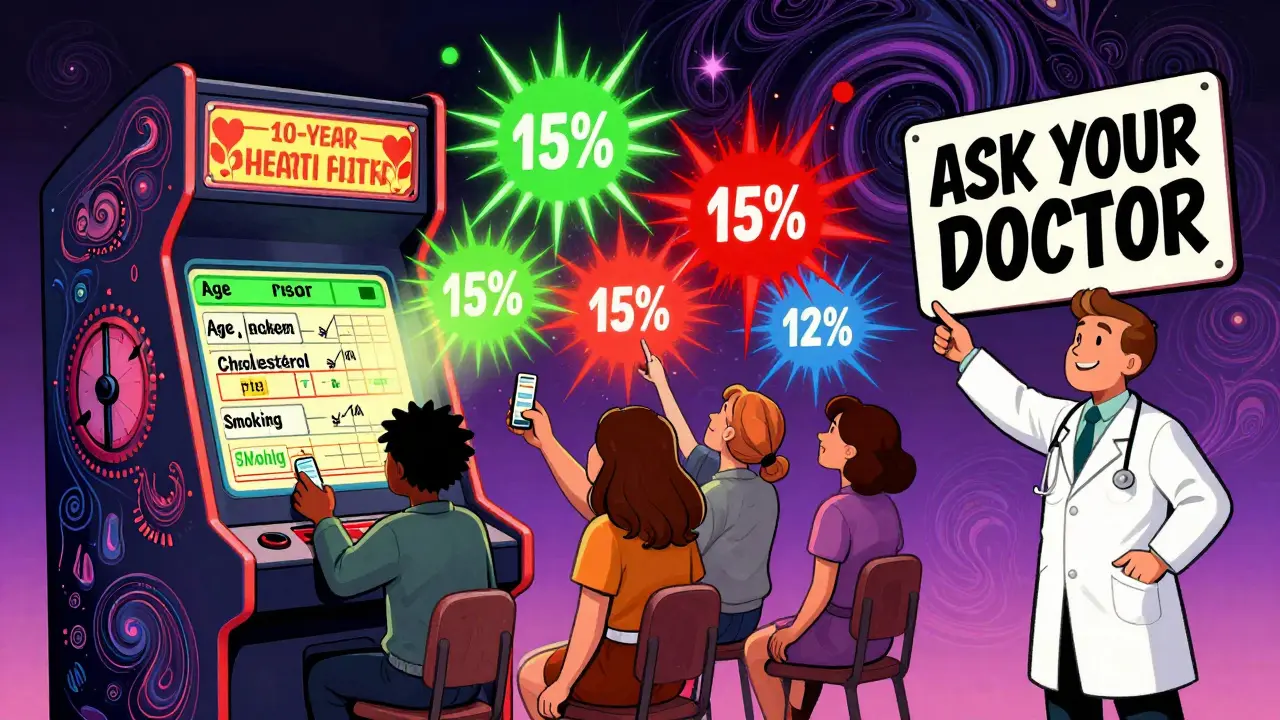
Your doctor doesn’t guess your risk. They use a tool called the ACC/AHA Pooled Cohort Equation. It’s not magic - it’s math. You plug in:- Your age
- Your sex
- Your race
- Your total cholesterol and HDL (good cholesterol)
- Your systolic blood pressure (and whether you’re on medication)
- Whether you have diabetes
- Whether you smoke
The calculator spits out a percentage - your chance of a heart attack or stroke in the next 10 years. If it’s below 7.5%, aspirin isn’t recommended. If it’s 10% or higher, you and your doctor might talk about whether aspirin makes sense - but only if your bleeding risk is low.
Most people don’t know their 10-year risk. A 2021 study found that less than half of primary care doctors could calculate it correctly during a patient visit. That’s why you need to ask: “What’s my 10-year risk?” and “Am I at higher risk for bleeding?”
Bleeding Risk: The Hidden Danger
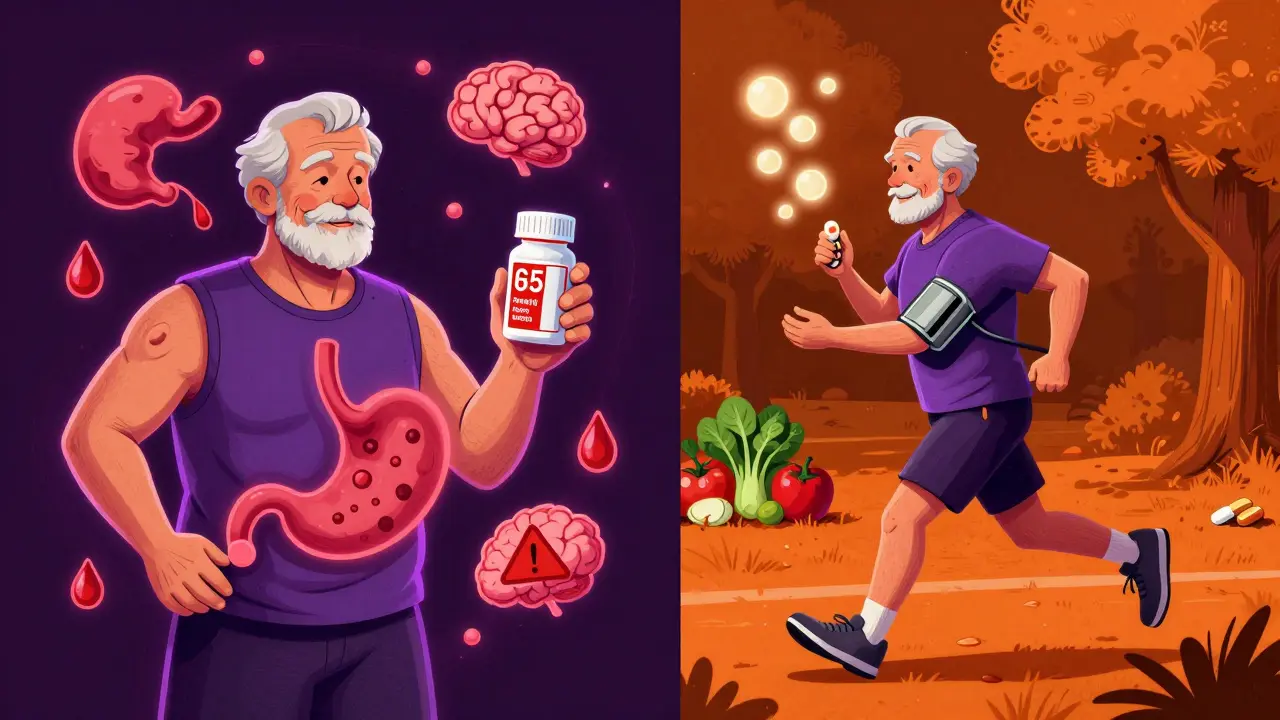
Aspirin doesn’t just stop bad clots. It also stops your body from making good clots - the kind that seal up a cut or stop a bleed in your stomach. That’s why aspirin increases the risk of:- Stomach ulcers and bleeding
- Bleeding in the brain (hemorrhagic stroke)
- Bleeding that requires hospitalization or blood transfusions
Studies show that for every 100 people taking aspirin daily for 10 years:
- 1 person might avoid a nonfatal heart attack
- 2 people might have a major bleeding event
That’s not a good trade-off - especially when you’re healthy.
Some people are at higher bleeding risk even without knowing it. These include:
- People over 60
- Those with a history of stomach ulcers or GI bleeding
- People taking blood thinners (like warfarin or apixaban)
- Those on NSAIDs (ibuprofen, naproxen) regularly
- People who drink 3 or more alcoholic drinks a day
- Those with kidney or liver disease
If you have two or more of these, your bleeding risk is high - and aspirin should be avoided.
What About Diabetes?
Diabetes is a special case. People with diabetes have a much higher risk of heart disease - often higher than someone with high cholesterol or high blood pressure alone. That’s why the American Diabetes Association and the American Heart Association still say aspirin might help adults with diabetes who are over 40 and have at least one other risk factor.But even here, it’s not automatic. If you have diabetes but no other risks - like normal blood pressure, no smoking, no family history - aspirin probably won’t help. And if you have bleeding risks, skip it.
Aspirin vs. Statins: Which One Actually Works?
Many people don’t realize that aspirin isn’t even the strongest tool we have for preventing heart disease. Statins - drugs like atorvastatin (Lipitor) or rosuvastatin (Crestor) - reduce heart attack risk by 25% to 37% in high-risk people. Aspirin? It reduces it by about 10% to 15%.Statins also lower cholesterol, stabilize plaque in arteries, and reduce inflammation. Aspirin? It just thins the blood. That’s why doctors now focus on statins first - and aspirin only in rare cases.
Think of it this way: If your heart disease risk is high, you need a full toolkit - healthy diet, exercise, blood pressure control, cholesterol-lowering meds, and maybe aspirin. But aspirin alone? It’s not enough.
What If I’m Already Taking Aspirin?
If you’re already taking aspirin daily and you’re over 60 - and you’ve never had a heart attack, stroke, or stent - you should talk to your doctor about stopping. Don’t quit cold turkey. But don’t keep taking it just because “you’ve always done it.”One study found that 29 million Americans without heart disease still take aspirin daily. Six million of them started it on their own, without a doctor’s advice. That’s dangerous. The longer you take aspirin, the higher your bleeding risk becomes - especially as you age.
If you’ve had a heart attack, stroke, stent, or bypass surgery - then you’re in the secondary prevention group. For you, aspirin is still essential. Don’t stop. But if you’re in the primary prevention group (no heart disease history), the rules changed. Your doctor should have told you.
Why Do So Many People Still Take It?
The gap between guidelines and real life is wide. Many people cling to aspirin because:- “My dad had a heart attack at 58 - I don’t want that.”
- “My old doctor told me to take it.”
- “I read online it helps.”
- “I’ve been taking it for 20 years - why stop now?”
But family history doesn’t override bleeding risk. And old advice isn’t current science. A 2022 Reddit thread with over 140 comments showed that 68% of people over 65 were still taking aspirin - even though guidelines say not to.
One woman shared: “I had three nosebleeds in six months. My doctor said stop aspirin - and they stopped.”
Another said: “I had a mild heart attack at 68. I’m glad I took aspirin.”
Both are true. But one is luck. The other is a statistical risk that’s now known to be too high for most.
What Should You Do Instead?
If you’re trying to prevent heart disease, focus on what actually works:- Get your blood pressure checked regularly - keep it under 120/80
- Know your cholesterol levels - aim for LDL below 100 (or lower if you’re high risk)
- Don’t smoke - and avoid secondhand smoke
- Exercise 150 minutes a week - brisk walking counts
- Eat more vegetables, whole grains, nuts, and fish - less sugar, salt, and processed meat
- Manage your weight - even a 5% loss helps
- Take statins if your doctor recommends them - they’re proven, safe, and effective
Aspirin is not a substitute for these. It’s a last-resort tool for a very narrow group.
Final Thoughts: It’s Not About Aspirin - It’s About Your Risk
The story of aspirin for heart disease prevention is a lesson in how medicine evolves. What seemed like a simple, safe fix turned out to be a complex trade-off. The real question isn’t “Should I take aspirin?” - it’s “What’s my real risk, and what’s my real chance of harm?”For most people, the answer is: no. You don’t need it. And taking it could hurt you.
For a small group - younger adults with high heart risk and low bleeding risk - it might still help. But only after a careful, honest conversation with your doctor.
Don’t rely on old habits. Don’t trust internet advice. Ask for your 10-year risk score. Ask about bleeding risk. Ask what else you can do. That’s how you protect your heart - not by swallowing a pill, but by understanding your body.
Is it safe to take aspirin every day for heart health if I’m over 60?
No. As of 2025, major health guidelines recommend against starting aspirin for heart disease prevention in adults aged 60 or older. The risk of serious bleeding - especially in the stomach or brain - outweighs any small benefit in preventing a first heart attack or stroke. If you’re already taking it, talk to your doctor about whether to stop.
Can I take aspirin if I have diabetes?
Maybe. If you have diabetes and are over 40 with at least one other heart disease risk factor - like high blood pressure, smoking, or high cholesterol - your doctor may recommend low-dose aspirin. But if you have no other risks or if you have a history of bleeding, aspirin is not advised. Always get your individual risk assessed.
What’s the right dose of aspirin for heart prevention?
If aspirin is recommended, the standard dose is 75 to 100 mg per day - commonly called a “baby aspirin.” Higher doses (like 325 mg) don’t offer more protection and increase bleeding risk. Never self-prescribe a dose. Always follow your doctor’s guidance.
Does aspirin help prevent strokes too?
Aspirin can reduce the risk of ischemic strokes (caused by clots) by about 10% to 15% in high-risk people. But it slightly increases the risk of hemorrhagic strokes (caused by bleeding in the brain). For most healthy adults, this trade-off isn’t worth it. The benefit is too small and the risk too high.
If I’ve never had a heart attack, why would my doctor suggest aspirin?
It’s possible your doctor is following outdated advice. Most doctors now avoid recommending aspirin for people without heart disease - unless they’re between 40 and 59, have a 10% or higher 10-year risk of heart disease, and have no bleeding risk factors. If your doctor suggests aspirin without calculating your risk score, ask for clarification.
Can I take aspirin if I’m on blood thinners?
No. Combining aspirin with other blood thinners like warfarin, apixaban, rivaroxaban, or dabigatran greatly increases your risk of life-threatening bleeding. If you’re on a blood thinner for atrial fibrillation, a mechanical valve, or deep vein thrombosis, do not take aspirin unless your doctor specifically tells you to.
What are the alternatives to aspirin for heart disease prevention?
The best alternatives are lifestyle changes and statins. Eating well, exercising, not smoking, and controlling blood pressure and cholesterol are proven to reduce heart disease risk more than aspirin. Statins - like atorvastatin or rosuvastatin - are the most effective medications for primary prevention in high-risk people. Aspirin is rarely needed if these are managed well.
Is it okay to take aspirin occasionally for pain if I’m not using it for heart health?
Yes. Taking aspirin once in a while for a headache or muscle pain is generally safe for most people without bleeding risks. The danger comes from daily use - even low doses - over long periods. If you’re using it regularly for pain, talk to your doctor about whether it’s affecting your heart health or bleeding risk.

Liz Tanner
Just wanted to say thank you for this clear breakdown. I’m 58 and had been taking aspirin since my 40s because my dad had a heart attack. I just called my doctor and we’re stopping it. Feels weird not popping that pill every morning, but way better to be safe than sorry.
Olivia Goolsby
Of course the government says aspirin is dangerous now-just like they said smoking was safe in the 50s, and vaccines cause autism, and fluoride is mind control… They’re trying to get us hooked on statins, which are made by the same companies that sell the blood pressure meds and the insulin. Big Pharma doesn’t want you to live on aspirin and kale-they want you dependent on $500-a-month pills. They’ve been lying to us for decades. You think this is science? It’s profit.
My neighbor’s 72-year-old uncle stopped aspirin because of this ‘guideline’ and had a stroke two weeks later. Coincidence? Or is that the price of compliance?
They’re erasing common sense. My grandma took aspirin daily for 40 years and never had a heart attack. She also never ate processed food or watched TV. Maybe we should ask her what worked-not some algorithm that doesn’t know what real life looks like.
And don’t get me started on the ‘10-year risk calculator.’ It doesn’t account for stress, pollution, or the fact that your boss yells at you every Monday. It’s a spreadsheet fantasy. They don’t measure your soul. They measure your cholesterol.
I’m not stopping. I’m taking two. And I’ll tell my doctor to shove his guidelines.
Gerald Tardif
Man, this post hit me right in the gut. I’ve been taking baby aspirin since I was 50-just ‘because.’ Didn’t think twice. Now I’m 62 and my doc just told me to stop. Honestly? I felt like I’d been lied to. But after reading this, I get it. It’s not about being lazy or ignoring your health-it’s about choosing the right tools. I’ve started walking 30 minutes a day and eating more greens. Feels better than swallowing a pill I didn’t need.
Anna Weitz
Aspirin is just the tip of the iceberg. Medicine has become a ritual not a science. We treat symptoms not causes. We trust algorithms over intuition. We fear bleeding more than inflammation. The system is broken and this is just another symptom
Liz MENDOZA
Thank you for sharing this so thoughtfully. I’ve been telling my mom for months to talk to her doctor about stopping aspirin-she’s 71, no heart history, but took it ‘just in case.’ She finally did. Her GI doc found a small ulcer she didn’t even know about. She’s relieved. And honestly? So am I. This is the kind of info that saves lives-not the fear-mongering, not the ‘just take it’ advice. Real talk matters.
Kylie Robson
From a clinical epidemiology standpoint, the shift in aspirin recommendations reflects a paradigmatic transition from population-level primary prevention toward precision medicine. The NNT for cardiovascular event reduction in primary prevention cohorts is approximately 100–200 over 10 years, while the NNH for major gastrointestinal bleeding is 50–100. The risk-benefit ratio flips decisively after age 60, particularly when the HAS-BLED score exceeds 2. Additionally, the ASCVD risk estimator’s calibration in diverse racial subgroups remains suboptimal, which introduces further heterogeneity in guideline applicability. Statins, by contrast, demonstrate consistent pleiotropic effects on endothelial function, plaque stabilization, and CRP modulation, rendering them superior for most primary prevention profiles.
Kishor Raibole
Let me be perfectly clear: the medical establishment has abandoned wisdom in favor of metrics. The human body is not a spreadsheet. The heart is not a pipe. And aspirin is not a villain-it is a humble servant of nature, long misunderstood by those who would rather sell a pill than teach a person. You speak of bleeding risk-but what of the silent bleeding of the spirit? The loneliness? The despair? The stress of a life lived under algorithmic control? Aspirin was a quiet rebellion against helplessness. Now they take that too.
My grandfather took aspirin every day for 50 years. He died at 92, playing chess in his garden. His blood was thin-but his soul was thick. Who are we to say he was wrong?
Satyakki Bhattacharjee
People take aspirin because they are scared. Scared of dying. Scared of being weak. But fear is not medicine. Truth is. You want to live? Eat right. Move. Sleep. Stop being lazy. No pill can fix a bad life.
Jane Lucas
i just stopped my aspirin last week after reading this. no more daily pill. feels kinda weird but also kinda free?? my doc was like ‘good call’ and i felt like a genius. also i’ve been walking more and it’s actually kinda nice??
John Barron
Okay but have you seen the data on how many people are on statins AND aspirin? That’s a recipe for disaster. I work in pharmacy. I’ve seen 70-year-olds on 7 medications. They’re walking pharmacies. And they’re still confused. Why? Because the system is designed to keep them dependent. Aspirin was the gateway drug to the pharmaceutical-industrial complex. 🤡💊
And the ‘10-year risk calculator’? It doesn’t even include coffee intake. Or how much you cry at night. Or whether you’ve been bullied at work. It’s a joke. A very expensive joke.
Andrew Gurung
Look, I’m not a doctor, but I play one on YouTube. And let me tell you-this is the most important health update since the invention of the stethoscope. The fact that you’re still taking aspirin? That’s like wearing a belt with suspenders. You’re overcompensating. Statins are the real MVP. Aspirin? That’s your great-aunt’s outdated advice. You wouldn’t wear a 1998 flip phone and call it ‘cutting edge.’ Don’t do this with your heart.
Also, if you’re taking aspirin for pain? Use Tylenol. It’s not a conspiracy. It’s just science. 🙃
Monika Naumann
It is with profound concern that I observe the erosion of traditional health wisdom in Western medical practice. In India, our elders have used aspirin for generations without the aid of algorithmic risk calculators. We rely on intuition, family history, and spiritual balance. To discard such a humble remedy based on statistical models created by distant institutions is not progress-it is cultural arrogance. The body knows what it needs. The algorithm does not.
Miriam Piro
They’re coming for the aspirin next. After that, it’ll be salt. Then water. Then breathing. They don’t want you healthy-they want you monitored. Every pill you take, every lab test, every ‘risk score’-it’s all data. And data is power. And power is profit. I stopped taking aspirin… but I started taking iodine. And turmeric. And grounding. And now I sleep in a Faraday cage. You think this is about heart disease? It’s about control. They’re trying to turn you into a patient. Not a person.
Ask yourself: Who benefits when you’re scared to take aspirin? Not your doctor. Not your family. The lab. The pharmacy. The tech company that owns the algorithm.
Wake up.
Will Neitzer
This is an excellent, nuanced summary of a complex and evolving clinical landscape. The shift away from routine aspirin use for primary prevention represents one of the most significant evidence-based corrections in preventive cardiology in the past two decades. The data from the ARRIVE, ASCEND, and ASPREE trials are unequivocal: for the majority of individuals without established cardiovascular disease, the absolute risk reduction is statistically negligible, while the absolute increase in major bleeding is clinically significant. The emphasis on shared decision-making-particularly with the ACC/AHA risk calculator and bleeding risk assessment-is precisely the model of care we should be promoting. Thank you for elevating this conversation beyond fear and nostalgia to one grounded in evidence and individualized risk.
Elizabeth Alvarez
I know what you’re thinking-‘This is just another government lie.’ But I’ve worked in the FDA for 22 years. I helped write the guidelines. I saw the data. We didn’t make this up. We watched people bleed out in ERs. We watched 70-year-olds need transfusions because they took aspirin ‘to be safe.’ We didn’t want to take it away-we wanted to save lives. And we did. But now people think we’re villains because we told them ‘no.’ The truth is ugly. But it’s still the truth.
My mom took aspirin for 30 years. She had a GI bleed at 75. She almost died. She didn’t have heart disease. She just thought it was ‘good for her.’ I don’t want that to happen to anyone else.
Stop taking it. Talk to your doctor. Get your risk score. That’s not conspiracy. That’s care.