High blood pressure doesn’t always come with symptoms. You might feel fine, but your arteries are under constant strain. Left untreated, it quietly increases your risk of heart attack, stroke, and kidney damage. That’s why millions of people take blood pressure medications every day. But not all pills are the same. Some work better for certain people. Some cause side effects that make people quit. And some combinations can be dangerous if you don’t know what you’re taking.
How Blood Pressure Medications Work
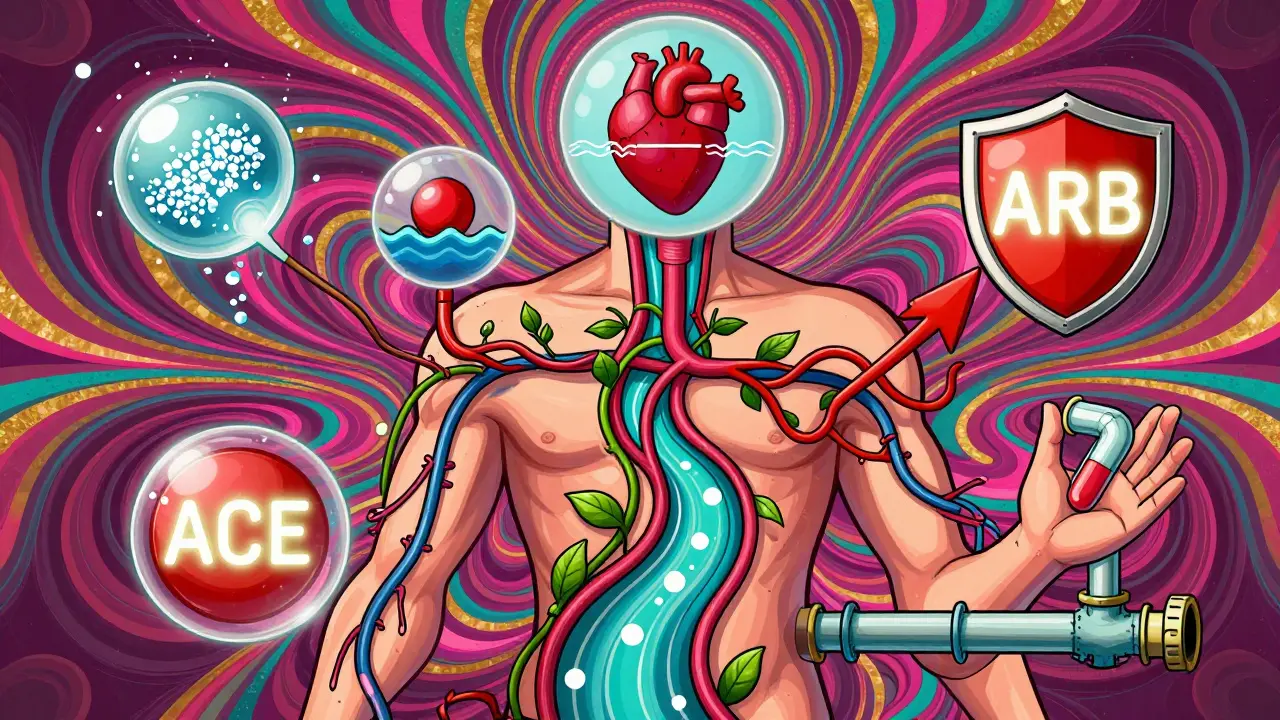
Blood pressure meds don’t just lower numbers-they target how your body controls pressure. Think of it like a water system: too much fluid, too narrow pipes, or too much pump pressure. Different drugs fix different parts of the problem.
Diuretics, like hydrochlorothiazide a thiazide diuretic that helps the kidneys remove extra salt and water, reduce fluid volume. Beta-blockers such as metoprolol a beta-blocker that slows heart rate and reduces heart force calm the heart’s output. ACE inhibitors like lisinopril an ACE inhibitor that blocks a hormone causing blood vessels to narrow and ARBs like losartan an ARB that blocks the same hormone at a different point relax blood vessels. Calcium channel blockers such as amlodipine a dihydropyridine calcium channel blocker that widens arteries loosen up the muscle around your arteries.
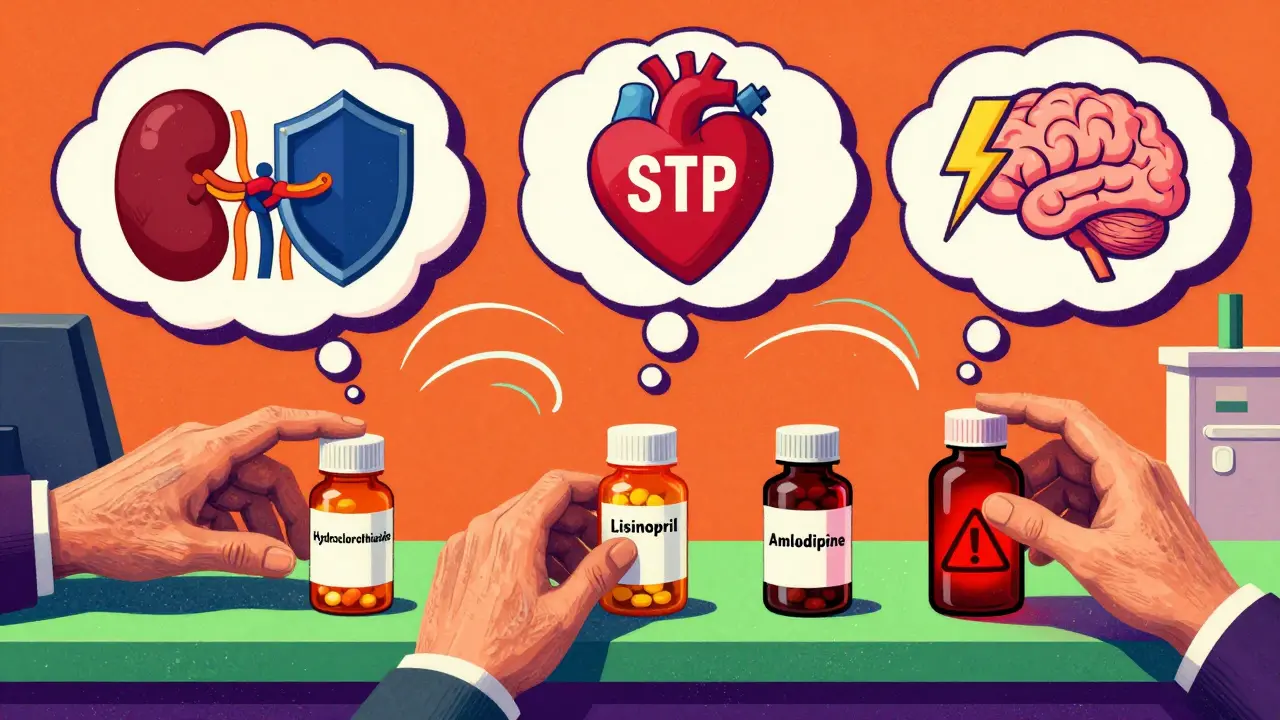
These aren’t random choices. Doctors pick based on your age, race, and other health issues. For example, thiazide diuretics and calcium channel blockers are often first for Black patients because studies show they respond better. For someone with diabetes or kidney disease, ACE inhibitors or ARBs are preferred because they protect the kidneys. If you’ve had a heart attack, beta-blockers help prevent another.
Main Classes of Blood Pressure Medications
There are more than ten types, but five cover most prescriptions:
- Diuretics - Remove excess fluid. Common: hydrochlorothiazide, chlorthalidone.
- Beta-blockers - Slow heart rate and reduce force. Common: metoprolol, atenolol, carvedilol.
- ACE inhibitors - Block a hormone that tightens blood vessels. Common: lisinopril, enalapril, ramipril.
- ARBs - Block the same hormone but differently. Common: losartan, valsartan, irbesartan.
- Calcium channel blockers - Relax artery walls. Common: amlodipine, diltiazem, verapamil.
Other less common types include alpha-blockers (doxazosin), central agonists (clonidine), and vasodilators (hydralazine). These usually come into play when first-line drugs fail or when other conditions are involved.
Common Side Effects You Should Know
Side effects aren’t rare-they’re expected. And knowing what to watch for can keep you safe.
Diuretics can make you pee too much, especially at night. They also lower potassium, which can cause muscle cramps or irregular heartbeat. Some people get gout flares because uric acid builds up.
Beta-blockers often cause fatigue, cold hands and feet, and trouble sleeping. If you have diabetes, they can hide the warning signs of low blood sugar-like shaking or sweating-making hypoglycemia more dangerous.
ACE inhibitors cause a dry, tickly cough in 10-20% of users. It’s not dangerous, but it’s annoying enough that many stop taking them. Rarely, they trigger angioedema-a sudden swelling of the face, lips, or throat that needs emergency care.
ARBs avoid the cough but still carry risks of high potassium (hyperkalemia) and, like ACE inhibitors, are unsafe during pregnancy.
Calcium channel blockers like amlodipine can cause swollen ankles, dizziness, and flushing. Verapamil and diltiazem may cause constipation or slow heart rate too much in people with existing heart rhythm issues.
Some drugs, like labetalol an alpha-beta blocker used in pregnancy and acute hypertension, can cause dizziness when standing up. This is called orthostatic hypotension. It’s especially risky for older adults and can lead to falls.
Safety Risks and What to Avoid
Combining certain drugs can backfire. Taking an ACE inhibitor and an ARB together? That’s a no-go. Studies show it raises the risk of kidney failure and dangerously high potassium without better blood pressure control.
NSAIDs like ibuprofen or naproxen can cancel out the effect of your blood pressure pill and harm your kidneys-especially if you already have kidney disease. Even occasional use of these painkillers can be risky.
If you’re pregnant, avoid ACE inhibitors, ARBs, and direct renin inhibitors completely. They can cause severe birth defects. Instead, methyldopa or labetalol are the go-to options. Always tell your doctor if you’re pregnant or planning to be.
Elderly patients need lower starting doses. Their bodies process drugs slower. A dose that’s fine for a 40-year-old might knock a 75-year-old off their feet. Start low, go slow.
Some meds interact with supplements. Potassium supplements with ACE inhibitors? Big risk of hyperkalemia. Grapefruit juice with certain calcium channel blockers? It can spike drug levels in your blood and lead to dangerous drops in pressure.
When Two Drugs Are Better Than One
Most people need more than one pill. About 70% of patients require two or more medications to reach their target. The 2025 American Heart Association guidelines say if your blood pressure is 140/90 or higher, you should start with two drugs from different classes right away.
Common combinations include:
- ACE inhibitor + diuretic
- ARB + calcium channel blocker
- Diuretic + calcium channel blocker
These combos work because they hit different pathways. One reduces fluid, another opens vessels, and together they’re more effective than doubling one drug.
Fixed-dose combinations (one pill with two drugs) make it easier to stick with treatment. Fewer pills = fewer missed doses. And adherence is the biggest challenge-about half of people stop their meds within a year, not because they don’t work, but because of side effects or forgetfulness.

Monitoring and Long-Term Safety
Your doctor should check your blood pressure within 2-4 weeks after starting or changing a drug. They’ll also test your kidney function and potassium levels, especially if you’re on ACE inhibitors, ARBs, or diuretics.
Long-term use is generally safe when monitored. But ignoring follow-ups can lead to silent problems: high potassium damaging your heart, low sodium causing confusion, or kidney stress going unnoticed.
There’s no cure for hypertension-just control. That means taking your meds every day, even when you feel fine. Blood pressure doesn’t scream for attention. It whispers. And if you stop listening, the consequences can be sudden and severe.
What’s Next? Personalized Medicine and Digital Tools
Future treatment is moving toward personalization. Early research shows your genes might influence how well you respond to beta-blockers or ACE inhibitors. In the next 5-10 years, genetic testing could help doctors pick your best first drug.
Right now, simple tech helps. Medication reminder apps and home blood pressure monitors have been shown to improve adherence by 15-20%. If you’re struggling to remember pills or track your numbers, ask your doctor about these tools.
The goal isn’t just to hit a number. It’s to protect your heart, brain, and kidneys for decades. That means choosing the right drug, watching for side effects, avoiding dangerous combos, and sticking with it-even when you don’t feel like it.
Can I stop taking my blood pressure medication if I feel fine?
No. High blood pressure often has no symptoms, so feeling fine doesn’t mean your pressure is under control. Stopping medication can cause your pressure to spike suddenly, increasing your risk of stroke or heart attack. Always talk to your doctor before making any changes.
Which blood pressure meds are safest for older adults?
Calcium channel blockers and low-dose diuretics are often preferred for older adults because they’re effective and have fewer side effects than beta-blockers or ACE inhibitors in this group. But everyone’s different-doctors start with lower doses and monitor closely for dizziness or falls.
Why do ACE inhibitors cause a cough?
ACE inhibitors block the enzyme that breaks down bradykinin, a substance that can irritate the airways. This buildup causes a dry, persistent cough in about 1 in 5 people. If it’s bothersome, switching to an ARB usually fixes it-without the cough.
Can I take ibuprofen with my blood pressure pill?
It’s risky. Ibuprofen and other NSAIDs can reduce the effectiveness of diuretics, ACE inhibitors, and ARBs. They can also cause kidney damage, especially if you’re already at risk. For pain relief, acetaminophen (paracetamol) is usually safer-but check with your doctor first.
Are there natural alternatives to blood pressure medication?
Lifestyle changes-like reducing salt, losing weight, exercising, and limiting alcohol-can lower blood pressure significantly. But for most people with stage 1 or 2 hypertension, lifestyle alone isn’t enough. Medication is necessary to reduce long-term risk. Don’t replace your pill with supplements unless your doctor approves it.
Final Thoughts
Taking blood pressure medication isn’t about being sick-it’s about staying healthy. The right drug, at the right dose, with the right monitoring, can keep you out of the hospital for years. But if side effects are messing with your life, don’t suffer in silence. Talk to your doctor. There’s almost always another option. The goal isn’t perfection-it’s sustainability. Find what works for your body, stick with it, and don’t let fear or forgetfulness put your future at risk.

Donnie DeMarco
Man, I swear half the time my doctor just picks a pill like it’s a game of roulette. I was on lisinopril for six months and that damn cough had me sounding like a broken foghorn. Switched to losartan and boom - silence. No more 3 a.m. hacking. Why do we even still use ACE inhibitors if everyone’s coughing? Just sayin’.
Tom Bolt
I read the entire post twice. Twice. And I still think the most alarming thing here isn’t the side effects - it’s the fact that 50% of people stop taking these meds within a year. That’s not noncompliance. That’s a systemic failure. We treat hypertension like a minor inconvenience when it’s a silent assassin. If your car’s engine light came on and you ignored it for a year, you’d be in a ditch. Why are we treating our arteries like they’re optional?
Shourya Tanay
The pharmacodynamic nuances here are fascinating. The RAAS axis modulation via ACEi vs ARB is elegantly divergent, yet clinically redundant in many cases. The real challenge lies in polypharmacy risk stratification - particularly in geriatric populations with reduced GFR and altered CYP450 metabolism. I’ve seen multiple cases where concomitant NSAID use precipitated acute kidney injury in patients on ARBs. We need better real-time EHR alerts.
LiV Beau
I love how this post breaks it all down! 🙌 Seriously, I was terrified of meds until I found out my BP was 158/94 and my doc said ‘you’re not sick, you’re just… overworked.’ Now I take amlodipine + hydrochlorothiazide and I feel better than I have in years. Also - grapefruit juice? I had no idea. Now I drink orange juice instead. Small wins! 💪
Miranda Varn-Harper
I appreciate the thoroughness of this article, but I must respectfully challenge the assertion that lifestyle modifications are insufficient for stage 1 hypertension. The DASH diet alone, when rigorously followed, has demonstrated non-inferiority to monotherapy in multiple randomized controlled trials. The medical-industrial complex thrives on pharmaceutical dependency. Consider this: if you can lower your sodium intake below 1,500 mg/day and achieve 30 minutes of daily aerobic activity, medication may not be necessary - and certainly not first-line.
Denise Jordan
I read the whole thing. Then I forgot half of it. I just know I take a blue pill and I don’t feel like dying. That’s good enough for me.
David L. Thomas
The combo of ACEi + diuretic is still the gold standard for a reason. It’s not just about BP numbers - it’s about reducing left ventricular hypertrophy over time. And honestly? Fixed-dose combos are a game-changer. I’ve seen patients go from 3 pills a day to 1, and adherence jumps from 40% to 85%. Sometimes the simplest fix is the most powerful one.
Bridgette Pulliam
I’m a nurse, and I see this every day. People stop their meds because they can’t afford them, or because they’re too tired to keep track, or because their doctor never checked in. It’s not laziness. It’s a broken system. We need better support - not more pills. Maybe community health workers. Maybe telehealth check-ins. Maybe just someone asking, ‘How’s your week been?’
Adam Kleinberg
They never tell you about the potassium thing. I took lisinopril for 8 months. Felt fine. Then one day I couldn’t lift my arm. Turned out my K+ was 6.8. They pumped me full of insulin and calcium. I almost died. And no one warned me. Now I eat bananas like they’re candy. And I avoid every single supplement. This whole system is a trap. Big Pharma doesn’t want you healthy. They want you dependent.
Tom Bolt
To the person who said lifestyle changes are enough - you’re right. But only if you’re a 35-year-old who works from home, eats organic kale, and has unlimited time and money. What about the single mom working two shifts, with no access to fresh food, no gym, and a kid with asthma? You think she’s gonna drop salt because some blog says so? This isn’t about willpower. It’s about justice.