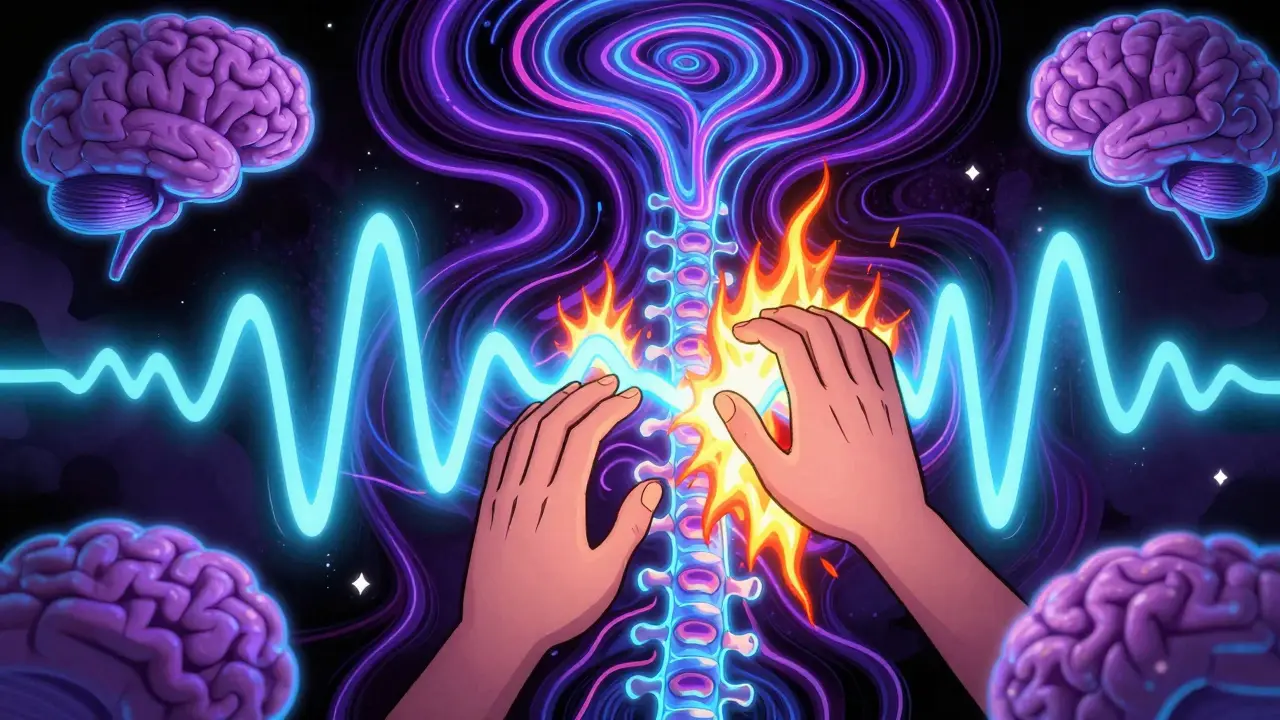
Imagine touching a light blanket and it feels like sandpaper. Or walking barefoot on a cool floor and it burns. You didn’t hurt yourself. There’s no swelling, no injury, no visible damage. But the pain is real - and it’s everywhere. This isn’t imagination. It’s central sensitization.
What Exactly Is Central Sensitization?
Central sensitization is when your nervous system gets stuck on high alert. It’s not that something’s wrong with your skin, muscles, or joints. It’s that your brain and spinal cord have changed how they interpret signals. What should feel like a gentle touch now feels like a stab. What used to be a dull ache now screams. This isn’t new. Back in 1983, neuroscientist Clifford J. Woolf first described it as the spinal cord “wind-up” effect - a process where repeated pain signals make nerve cells more sensitive over time. Think of it like turning up the volume on a speaker until even whispers sound like shouts. In central sensitization, your pain system does the same thing. It gets louder. And it doesn’t turn off. Unlike regular pain from a sprained ankle or a cut, which fades as tissues heal, central sensitization sticks around. Even after the original injury is gone, the pain doesn’t stop. That’s because the problem isn’t in the tissue - it’s in the wiring. Studies using fMRI show that people with this condition have 20-35% more activity in brain areas that process pain. Their nervous systems are stuck in survival mode.How Does It Happen?
It starts with repeated or persistent pain signals. Maybe it was a bad back injury. Or a viral infection that left you feeling awful for months. Or years of standing on your feet for work. Whatever the trigger, your body sends pain signals to your spine and brain over and over. Eventually, your nervous system adapts - not to help you heal, but to keep you on guard. Here’s what changes inside your body:- Neurons in your spinal cord become hyper-excitable - they fire more easily and more often.
- Chemicals like cytokines spike by 30-50% in nerve tissues, creating inflammation right inside your nervous system.
- Your body’s natural painkillers, like endogenous opioids, stop working as well. Mu-opioid receptor binding drops by 15-25%.
- Signals that normally calm down pain (descending inhibition) weaken by 30-50%.
- Your sympathetic nervous system - the one that kicks in during stress - stays overactive, flooding your system with norepinephrine.
What Does It Feel Like?
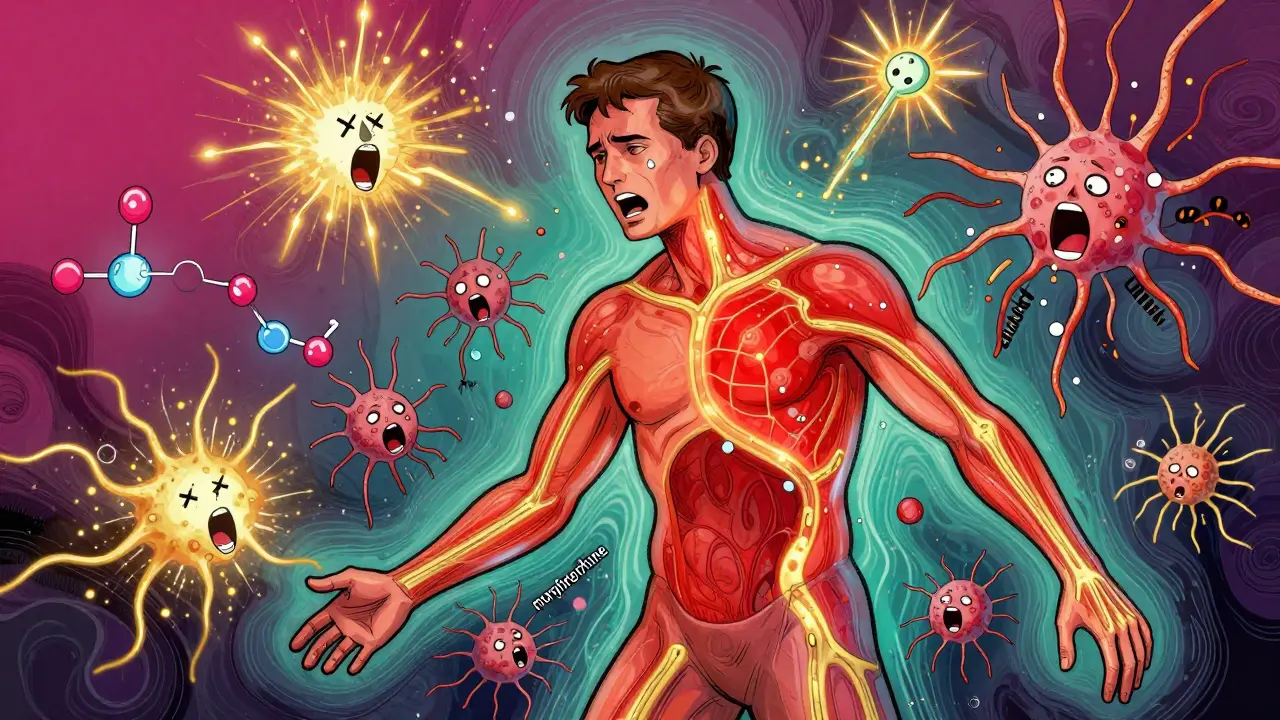
If you’ve got central sensitization, you might recognize these signs:- Widespread pain - not just in one spot, but in multiple areas. 95% of people with this condition report pain across the body.
- Allodynia - pain from things that shouldn’t hurt. A tag on your shirt, a breeze, or a hug feels painful.
- Hyperalgesia - normal pain feels way worse. A light pinch feels like a pinch from a vise.
- Temporal summation - repeated touches feel increasingly painful. Tap your arm five times? The fifth tap hurts more than the first.
How Is It Diagnosed?
There’s no single blood test or X-ray for central sensitization. Doctors rely on patterns - and a few simple tests. The most common clinical approach is a 3-step check:- Disproportionate pain - Is the pain way worse than the injury? Did it last longer than 6-12 weeks after healing should’ve happened? Most cases last over 14 months.
- Widespread hypersensitivity - Doctors use tools like quantitative sensory testing (QST). They press a device on your skin to see how much pressure it takes to hurt. People with central sensitization feel pain at much lower levels - 20-30% lower than average.
- Pain patterns - Pain drawings (where patients mark where they hurt) often show non-anatomical patterns - pain in areas that don’t match nerves or muscles. About 80% of cases show this.
Who Gets It?
Central sensitization isn’t rare. About 2-4% of the global population has chronic pain driven by this mechanism. But it’s the hidden engine behind many conditions:- Fibromyalgia - 90% of patients show clear signs. It’s the poster child for central sensitization.
- Chronic low back pain - 35-45% of people whose pain lasts beyond 3 months have this mechanism at play.
- Chronic headaches and migraines - 55% of neurology patients with persistent headaches show central sensitization features.
- Post-surgical pain - 15-30% of people still hurting months after surgery have this issue.

How Is It Treated?
The good news? This isn’t permanent. Your nervous system can relearn. But you can’t just “push through.” You need to retrain it. Medications:- Pregabalin (Lyrica) - Works for about 52% of patients. Doses of 150-300mg daily reduce pain by 30-50%.
- Duloxetine (Cymbalta) - An SNRI. 60mg daily helps 45% of people cut pain by 30%.
- Low-dose naltrexone (LDN) - 4.5mg at night. Surprisingly effective for fibromyalgia, helping 40% of users.
- Nortriptyline - A tricyclic antidepressant. 25-50mg nightly improves sleep and pain in nearly half of patients.
- Graded exercise - Start slow. Walk 5 minutes. Add 10% each week. People who stick with it see 25-40% improvement in function.
- Pain neuroscience education - Learning how your nervous system works reduces fear. Studies show it cuts pain catastrophizing scores by 20-30%.
- Mindfulness and stress reduction - 8 weeks of mindfulness practice improves pain interference by 25%. Stress fuels sensitization. Calming the mind helps calm the nerves.
- Sleep hygiene - Poor sleep makes everything worse. Fixing sleep patterns often reduces pain intensity on its own.
Why It Matters
Central sensitization is changing how we think about chronic pain. For years, doctors focused on damaged tissues. Now we know - sometimes, the damage is in the signal, not the source. Research funding from the NIH has jumped 50% since 2018. Academic pain centers now include central sensitization checks in 78% of cases - up from 45% just six years ago. Fibromyalgia, once dismissed, is now understood as a neurological condition. And treatments are improving. Future breakthroughs are coming. Researchers are tracking biomarkers like elevated substance P in spinal fluid and reduced mu-opioid binding on PET scans. Five new drugs targeting specific pathways are in clinical trials. By 2027, diagnostic tools aim for 90% accuracy. This isn’t just science. It’s validation. For millions of people who’ve been told their pain isn’t real, central sensitization says: Your pain is real. It’s not your fault. And it can get better.What’s Next?
If you think you might have central sensitization, start by tracking your symptoms. Write down:- Where the pain is - and if it moves.
- What triggers it - light touch, cold, stress, noise?
- How long it lasts - beyond 3 months?
- Whether rest helps - or if pain stays even when you’re still.
Is central sensitization the same as fibromyalgia?
No. Fibromyalgia is a condition, and central sensitization is the mechanism behind it. Think of it like this: fibromyalgia is the diagnosis, and central sensitization is the reason your body hurts the way it does. About 90% of people with fibromyalgia have central sensitization, but not everyone with central sensitization has fibromyalgia. It can also show up in chronic back pain, migraines, or post-surgical pain.
Can central sensitization go away on its own?
Sometimes, yes - especially if the original trigger (like an injury or infection) is fully resolved and you avoid ongoing stressors. But for most people, it doesn’t just disappear. Left untreated, it often gets worse. The good news is it’s reversible with the right approach: reducing pain signals, managing stress, moving gently, and using targeted treatments.
Why do some doctors not believe in central sensitization?
Because it’s invisible. You can’t see it on an X-ray or MRI. It doesn’t show up in blood tests. Until recently, medical training focused on structural damage - broken bones, torn ligaments, inflamed joints. Central sensitization is a functional problem - a change in how the nervous system works. Many doctors haven’t been trained to recognize it. But that’s changing fast. More than 75% of pain clinics now use assessment tools for it.
Are medications for central sensitization addictive?
The main medications - pregabalin, duloxetine, low-dose naltrexone - are not addictive. They don’t produce euphoria or cravings. Unlike opioids, they work by calming overactive nerves, not by blocking pain signals entirely. Side effects like dizziness or drowsiness can happen, which is why dosing starts low and increases slowly. Most people tolerate them well after the first few weeks.
Can exercise make central sensitization worse?
Only if you push too hard, too fast. Sudden, intense exercise can overload your nervous system and make pain worse. But slow, steady movement - like walking, swimming, or tai chi - is one of the most effective treatments. Start with 5-10 minutes a day. Increase by 10% each week. Your nervous system needs time to adapt. Consistency beats intensity every time.
Is central sensitization the same as neuropathic pain?
No. Neuropathic pain comes from direct nerve damage - like diabetic neuropathy or a pinched nerve. It usually follows a specific nerve path (like burning down one leg). Central sensitization is different. It’s widespread. It doesn’t follow nerve lines. It’s not from damaged nerves - it’s from overactive nerves in the spinal cord and brain. The treatments overlap, but the approach is different.
How long does it take to see improvement?
It varies. Medications often take 4-8 weeks to show full effect. Exercise and mindfulness need at least 8-12 weeks to rewire habits. Some people notice small changes in 2-3 weeks - like better sleep or less brain fog. Full recovery can take 6 months to a year. The key is consistency. You’re not fixing a broken bone. You’re retraining a nervous system that’s been on high alert for months or years.
Can stress cause central sensitization?
Stress doesn’t cause it directly, but it’s a major fuel. Chronic stress raises cortisol and norepinephrine, which makes nerves more sensitive. It also weakens the brain’s ability to shut down pain signals. Many people notice their pain spikes during stressful periods - work deadlines, family conflict, financial pressure. Managing stress isn’t optional - it’s part of treatment.
Is central sensitization a mental health issue?
No. It’s a neurological condition. The pain is real, physical, and measurable. While anxiety and depression often come with chronic pain, they’re symptoms - not the cause. Telling someone “it’s all in your head” is wrong and harmful. The brain is involved, yes - but not because the pain isn’t real. It’s because the nervous system has changed how it processes signals. That’s biology, not psychology.
What’s the best way to find a doctor who understands this?
Look for pain specialists, rheumatologists, or physiotherapists who mention “pain neuroscience,” “central sensitization,” or “fibromyalgia” on their website. Ask if they use quantitative sensory testing or offer pain education programs. You can also check with local fibromyalgia support groups - patients often know who the good providers are. Don’t be afraid to ask: “Do you treat central sensitization?” If they look confused, keep looking.

Rohit Kumar
Central sensitization isn't just a medical term-it's the silent scream of a nervous system that's been pushed too far for too long. I've seen it in my father after his back surgery. No torn ligaments, no herniated disc, just pain that refused to leave. The doctors called it psychosomatic. We called it survival mode gone rogue. This isn't fantasy. It's biology rewriting itself under pressure.
Jodi Olson
The idea that pain can exist without tissue damage flips everything we were taught in med school. It’s not about what’s broken-it’s about how the system interprets signals. The spinal cord isn’t just relaying data-it’s amplifying it. And once that volume knob is turned up, it doesn’t just reset. That’s why opioids fail. They don’t address the amplifier. They just drown out the signal temporarily.
Marc Bains
For anyone reading this and feeling dismissed-your pain is real. I used to think chronic pain was weakness until I saw my sister go from marathon runner to barely able to wear a shirt. It wasn’t depression. It wasn’t laziness. Her nervous system got stuck in fight-or-flight and forgot how to turn off. The fact that we’re finally recognizing this as neurological-not psychological-is a revolution. And it’s long overdue.
Eliana Botelho
Okay but let’s be real here-why is it always women who get this diagnosis? I mean, fibromyalgia, chronic fatigue, all this stuff-it’s like the medical system’s catch-all for when they don’t know what else to call it. I’ve had three doctors tell me ‘it’s stress’ and then hand me a Xanax script. Meanwhile my brother broke his leg and got a full MRI, physical therapy, and a follow-up every two weeks. Why do women’s pain get turned into a neuroscience lecture while men’s gets treated like an injury? Something’s off here.
April Allen
Central sensitization is fundamentally a maladaptive neuroplasticity. The dorsal horn neurons undergo long-term potentiation (LTP) akin to synaptic learning in memory circuits. Glial activation-particularly microglia and astrocytes-releases proinflammatory cytokines like IL-6 and TNF-alpha, which downregulate mu-opioid receptor expression and impair descending inhibitory pathways via the periaqueductal gray and rostral ventromedial medulla. This creates a feedforward loop where nociceptive input begets more sensitivity. The 20-35% fMRI hyperactivity in the insula and anterior cingulate cortex reflects cortical reorganization, not psychological distress. Treatment must target glutamatergic overdrive (hence pregabalin), monoaminergic modulation (duloxetine), and neuroinflammation (LDN). Graded exposure and neuroeducation work because they engage top-down cortical regulation to dampen limbic amplification. It’s not ‘in your head’-it’s in your synaptic architecture.
Donna Fleetwood
I was told for years it was just anxiety. Then I started doing 10-minute walks every day and slowly added 1% more each week. After six months, I could hug my kids without crying. It didn’t fix everything, but it gave me back my life. You don’t need to run a marathon. You just need to move without fear. And you’re not broken-you’re rewiring.
Melissa Cogswell
Thanks for this. I’ve been struggling to explain this to my doctor. I don’t have fibromyalgia but I’ve had chronic pain since my car accident three years ago. The tingling in my hands, the burning in my feet-it’s all over the place. I didn’t realize it could be central sensitization. I’ll print this out and bring it to my next appointment.
Diana Dougan
Wow. So after 20 years of being told I’m crazy, now I get a 10-page essay with stats? Congrats. You just turned my lifelong suffering into a PowerPoint slide. And hey, low-dose naltrexone? That’s the same stuff they give to people detoxing from opioids. So now I’m addicted to pain? Great. Next time, just say ‘it’s all in your head’ and save us all the trouble.