Shortness of breath is often dismissed as a sign of aging or being out of shape. But for millions of people, it is the first warning signal of Chronic Obstructive Pulmonary Disease, commonly known as COPD. This progressive condition restricts airflow in the lungs and affects approximately 16 million diagnosed Americans, with an estimated 14 million more living undiagnosed. Understanding how COPD progresses from mild to severe is not just about medical terminology; it is about recognizing when your body is sending distress signals and knowing what treatment options are available at each step.
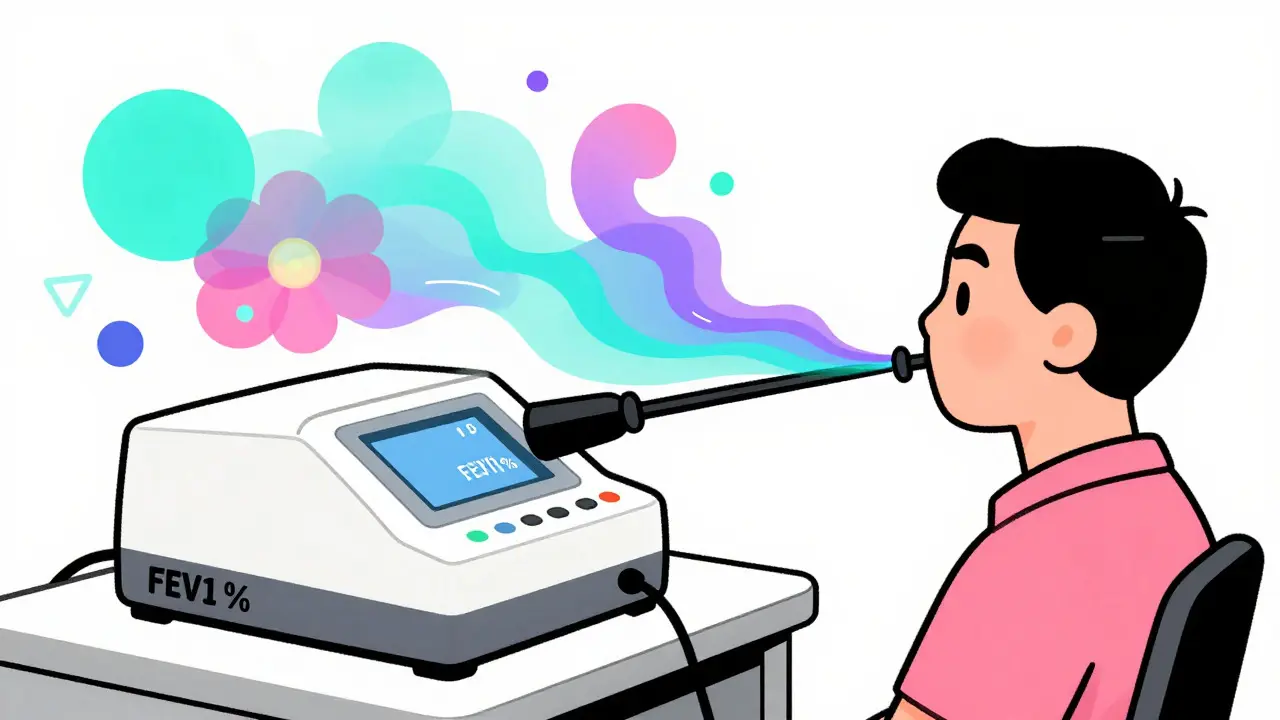
The global standard for diagnosing and managing this condition is the GOLD system, developed by the Global Initiative for Chronic Obstructive Lung Disease. Established in 2001 and updated annually, the most recent 2023 GOLD Report provides a clear framework that doctors use to classify severity. This system relies heavily on spirometry testing, a simple breathing test that measures how much air you can exhale and how fast. Specifically, it looks at the Forced Expiratory Volume in one second (FEV1) compared to what is predicted for someone of your age, height, and sex.
How Doctors Determine Your COPD Stage
You cannot determine your COPD stage based on symptoms alone. A person with mild lung damage might feel terrible, while someone with moderate damage might adapt and feel relatively fine. That is why objective data matters. The diagnosis requires a post-bronchodilator FEV1/FVC ratio of less than 0.70. Once that threshold is crossed, the specific percentage of your predicted FEV1 determines your stage.
The GOLD criteria divide COPD into four distinct stages:
- Stage 1 (Mild): FEV1 is greater than or equal to 80% of predicted.
- Stage 2 (Moderate): FEV1 is between 50% and 79% of predicted.
- Stage 3 (Severe): FEV1 is between 30% and 49% of predicted.
- Stage 4 (Very Severe): FEV1 is less than 30% of predicted, or less than 50% if chronic respiratory failure is present.
However, the 2023 guidelines also introduce a multidimensional grouping system (Groups A, B, C, D). This adds layers to the diagnosis by considering your symptom burden using tools like the modified Medical Research Council (mMRC) dyspnea scale or the COPD Assessment Test (CAT), along with your history of exacerbations. An exacerbation is defined as two or more moderate flare-ups or one hospitalization in the previous year. This dual approach ensures that treatment matches both your lung function and your daily quality of life.
| Stage | Severity Level | FEV1 % Predicted | Typical Symptoms |
|---|---|---|---|
| 1 | Mild | ≥80% | Occasional shortness of breath during strenuous activity |
| 2 | Moderate | 50-79% | Breathlessness when walking on level ground; increased mucus |
| 3 | Severe | 30-49% | Breathlessness during basic self-care; reduced oxygen saturation |
| 4 | Very Severe | <30% | Extreme limitations; frequent exacerbations; possible need for oxygen |
Stage 1: Recognizing Mild COPD Early
In Stage 1, the damage is real but often subtle. You might notice occasional shortness of breath only when pushing yourself hard, like running up stairs or hiking a steep hill. According to a 2021 study in the CHEST Journal, 65% of patients in this stage experience breathlessness only when walking fast on level ground or climbing slight hills. About 42% report a chronic cough with sputum production, which they might brush off as a "smoker's cough" or seasonal allergies.
This is the critical window for intervention. The primary goal here is smoking cessation. Data from the Lung Health Study shows that quitting smoking can slow the decline of FEV1 from the typical 60 milliliters per year in active smokers to just 30 milliliters per year in those who quit. At this stage, doctors may prescribe short-acting bronchodilators as needed for symptom relief. Many patients don't realize they have COPD until years later because these symptoms are easily attributed to deconditioning or aging. Dr. MeiLan Han, a professor of medicine at the University of Michigan, notes that this delay averages 5.2 years, allowing irreversible damage to accumulate.
Stage 2: Managing Moderate Progression
As the disease moves to Stage 2, the impact on daily life becomes harder to ignore. You might find yourself having to stop walking on level ground every few minutes to catch your breath. The Lung Institute's 2022 survey found that 83% of patients in this stage report this specific limitation. Mucus production increases significantly, affecting 76% of patients and complicating daily activities.
Treatment shifts from reactive to proactive. Long-acting bronchodilators, such as Long-Acting Beta-Agonists (LABA) or Long-Acting Muscarinic Antagonists (LAMA), become the standard care. The UPLIFT trial demonstrated that these medications can improve FEV1 by 100 to 150 milliliters on average. Pulmonary rehabilitation is also highly recommended at this stage. These supervised programs include exercise training and education, and a Cochrane Review from 2021 showed they can increase the distance you can walk in six minutes by 45 to 75 meters. Additionally, annual influenza vaccination is crucial, reducing the risk of exacerbations by 32%, according to research by Kitaoka et al. (2022).
Stage 3: Coping with Severe Limitations
Stage 3 represents a significant drop in lung function, with FEV1 falling between 30% and 49%. The Cleveland Clinic's 2023 Patient Registry highlights that 92% of patients in this stage report breathlessness during basic self-care activities like dressing or bathing. Oxygen levels may dip below 90% saturation during routine tasks, indicating that the lungs are struggling to oxygenate the blood effectively.
Therapy often becomes more complex. Combination therapy using both LAMA and LABA is common, with the SUNSET trial showing a 14% reduction in moderate-to-severe exacerbations compared to using just one type of medication. For some patients, particularly those with elevated blood eosinophil counts (greater than 300 cells per microliter), inhaled corticosteroids are added to the regimen. The WISDOM trial found this combination reduces exacerbations by 25%. At this stage, monitoring for cardiovascular comorbidities is essential, as heart issues affect 65% of Stage 2 and 3 patients and contribute significantly to mortality.
Stage 4: Living with Very Severe COPD
Stage 4 is characterized by extreme respiratory limitation, with FEV1 below 30% of predicted. Life changes dramatically. An American Journal of Respiratory and Critical Care Medicine report from 2022 indicates that 89% of patients in this stage require supplemental oxygen therapy for more than 15 hours a day. Frequent exacerbations are common, with 74% of patients experiencing hospitalizations. Each exacerbation carries a serious risk, including a 22% mortality rate within one year, according to European Respiratory Review data.
Management focuses on survival and quality of life. Long-term oxygen therapy is a cornerstone of care, proven to improve one-year survival from 73% to 90% in the NOTT trial. Non-invasive ventilation may also be used to reduce hospital readmissions by 28%, as per 2022 European Respiratory Society guidelines. Financial and emotional burdens are high; the American Lung Association found that 52% of Stage 4 patients face financial hardship due to equipment costs, and 44% cite social isolation as their biggest challenge.

Bridging the Gap: Why Diagnosis is Often Delayed
Despite the clear staging system, gaps in clinical practice persist. The CDC reports that spirometry is performed in only 35.7% of primary care visits for patients with respiratory symptoms. Even when tests are done, interpretation errors occur. A 2022 JAMA Internal Medicine study found that 42% of primary care providers misclassify COPD stages due to improper technique. Furthermore, only 12.3% of eligible individuals-smokers over 40 with symptoms-actually receive this testing.
Patient experiences reflect these systemic issues. On the COPD Foundation's online community, 78% of Stage 2 patients reported that doctors initially dismissed their symptoms as "just getting older." This dismissal delays effective treatment, allowing the disease to progress unchecked. Early detection is vital. Dr. Fernando J. Martinez emphasizes that identifying COPD at Stage 1 or 2 can slow progression by 50% compared to delayed treatment.
Future Directions in COPD Management
Research is evolving to make staging and treatment more precise. The 2023 GOLD Report introduced the ABCD assessment tool, which better integrates symptoms and risk, potentially improving treatment matching by 27% according to preliminary SPIROMICS study data. Scientists are also exploring blood biomarkers, such as plasma fibrinogen levels, which correlate with faster FEV1 decline. Artificial intelligence is entering the field too; pilot studies at Massachusetts General Hospital show AI-assisted spirometry interpretation can reduce staging errors by 35%. While the market for COPD therapeutics is growing, projected to reach $15.7 billion by 2028, the World Health Organization warns that without better early detection, global mortality could rise by 30% by 2030.
What is the difference between COPD stages and groups?
Stages (1-4) are based solely on lung function measured by FEV1 from spirometry. Groups (A-D) combine lung function with symptom severity and history of exacerbations. A patient might have Stage 2 lung function but fall into Group D if they have high symptoms and frequent flare-ups, guiding more aggressive treatment.
Can COPD stages be reversed?
COPD is a progressive disease, meaning lung damage is generally irreversible. However, early intervention, especially smoking cessation in Stage 1, can significantly slow the rate of decline. Treatments manage symptoms and prevent exacerbations, helping maintain quality of life even as the stage progresses.
How is spirometry performed?
Spirometry involves blowing forcefully into a machine called a spirometer. It measures how much air you can exhale and how quickly. To diagnose COPD, the test is repeated after inhaling a bronchodilator medication. If the FEV1/FVC ratio remains below 0.70, COPD is confirmed.
Why do I feel worse than my stage suggests?
Symptom severity does not always match spirometric stage. Factors like anxiety, deconditioning, cardiovascular issues, or other comorbidities can worsen perceived breathlessness. This is why the GOLD system uses symptom scales (like mMRC or CAT) alongside lung function to create a complete picture.
What is an exacerbation in COPD?
An exacerbation is a sudden worsening of COPD symptoms, such as increased shortness of breath, cough, or mucus production. It is often triggered by infections or pollution. Frequent exacerbations accelerate lung decline and increase mortality risk, making prevention through vaccination and proper medication adherence critical.
