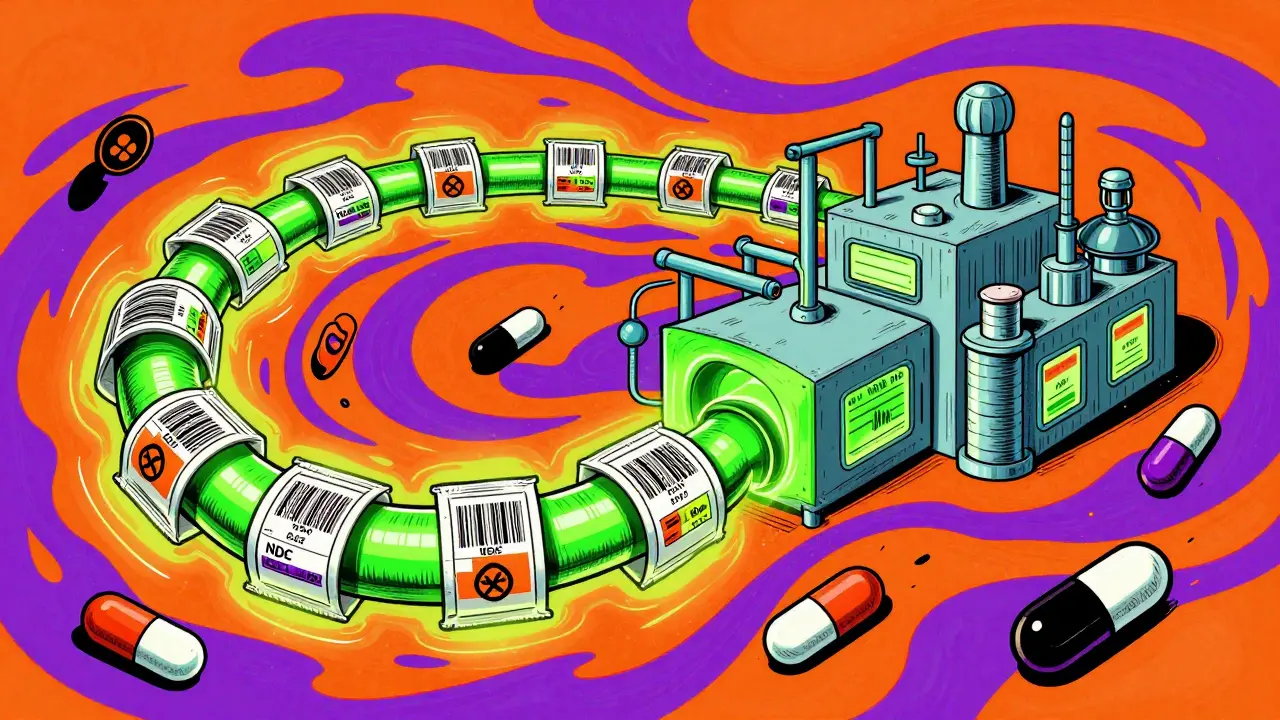
Every year, millions of prescription drugs move through a complex network of manufacturers, wholesalers, and pharmacies before reaching your medicine cabinet. But somewhere in that chain, a fake pill could slip in - one that contains no active ingredient, the wrong chemical, or even toxic substances. The DSCSA track-and-trace system was built to stop that before it happens.
What Is the DSCSA, and Why Does It Matter?
The Drug Supply Chain Security Act (DSCSA) is a federal law passed in 2013 to create a secure, electronic trail for every prescription drug sold in the U.S. Before this law, tracking drugs was a patchwork of state rules, paper records, and guesswork. Counterfeiters took advantage. Some fake pills looked identical to real ones but contained fentanyl, rat poison, or nothing at all. The DSCSA changed that by requiring every package - from the factory to the pharmacy - to have a unique digital fingerprint. The goal? Make it impossible for counterfeit, stolen, or contaminated drugs to move undetected through the supply chain. By November 27, 2024, every single prescription drug package must be traceable electronically. No more paper slips. No more manual checks. Just fast, accurate digital verification.How the DSCSA Track-and-Trace System Works
The system doesn’t rely on one big database. Instead, it uses a network of trading partners - manufacturers, repackagers, wholesalers, and pharmacies - who share key data about each drug package. This data comes in three parts:- Transaction Information (TI): What the drug is (name, strength, dosage form), who made it, and when it expires.
- Transaction History (TH): A record of every handoff - who shipped it, who received it, and when.
- Transaction Statement (TS): A legal certification that the transaction is legitimate and compliant.
Why Serialization Is the Key to Stopping Counterfeits
Before DSCSA, a fake drug could be sold as a legitimate product if it matched the brand name and packaging. Now, each package has a one-of-a-kind serial number tied to the manufacturer’s database. If a pharmacy scans a pill bottle and the serial number doesn’t match what the manufacturer says it should be - the system flags it immediately. The FDA estimates this system reduces counterfeit drug incidents by up to 95%. That’s not theoretical. In 2022, CVS Health reported a 75% drop in suspect product investigations after switching to automated DSCSA verification. Walgreens and McKesson now process over a billion serialized transactions a year with near-perfect accuracy. But it’s not just about catching fakes. Serialization also makes recalls faster and more precise. Instead of pulling every bottle of a drug off shelves nationwide, pharmacies can now target just the affected lot - saving time, money, and preventing unnecessary panic.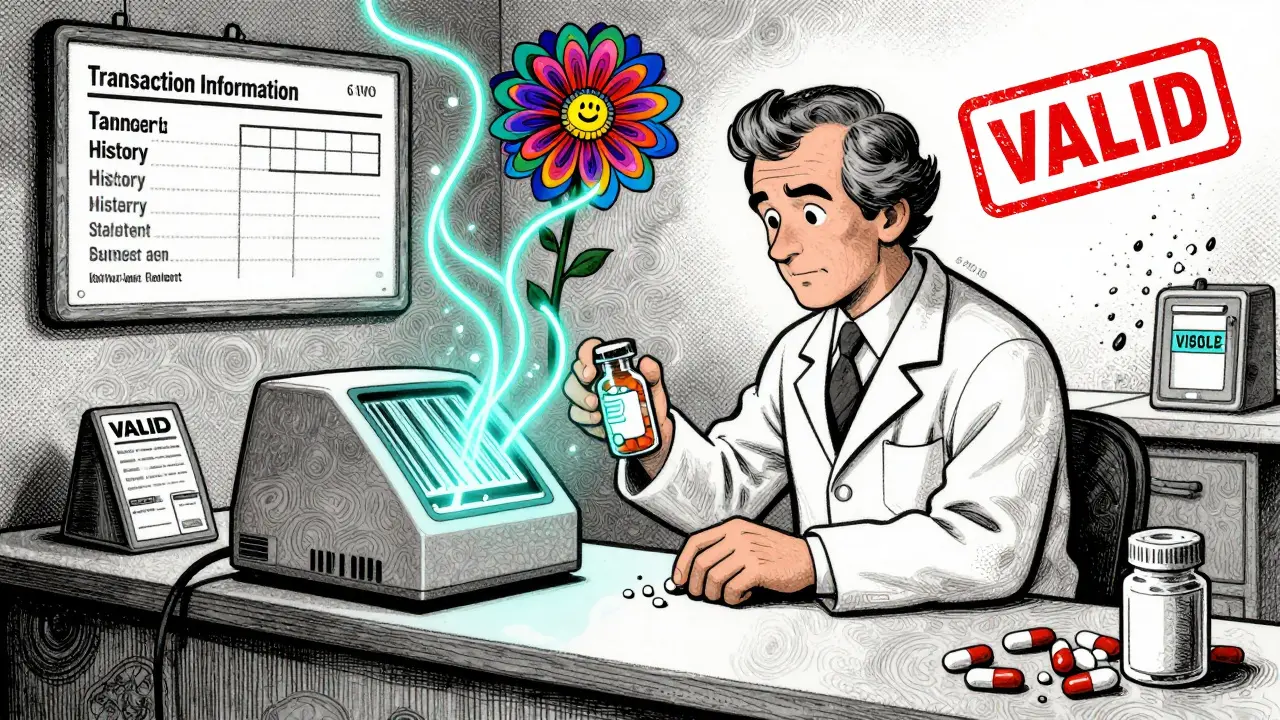
Who Has to Comply - and Who’s Falling Behind
The law applies to everyone in the supply chain:- Manufacturers: Must serialize every package and share data electronically. 98% are compliant as of mid-2023.
- Wholesalers: Must verify products before reselling. 95% have systems in place.
- Repackagers: Like pharmacies that repackage bulk meds into unit doses. Also required to serialize.
- Pharmacies: Must verify each package before dispensing. Only 72% are fully compliant - and independents are struggling the most.
Big Problems Still Lurking in the System
Even with progress, the system isn’t flawless. The biggest issue? Data mismatches. When a wholesaler sends a shipment to a pharmacy, the serial numbers, lot numbers, or expiration dates don’t always match up - even if the drugs are real. This causes delays. Some pharmacies report 2-3 day waits just to verify a shipment. Another problem: not everyone uses the same software. The DSCSA requires data to be shared using EPCIS standards, but not all vendors follow them the same way. TraceLink, SAP, and Oracle dominate the market, but smaller systems often can’t talk to each other. That creates bottlenecks. And then there’s the human factor. Pharmacists aren’t IT specialists. When a system flags a product as “suspect,” they have to investigate - check the serial number against the manufacturer’s database, confirm the product isn’t stolen, and quarantine it if needed. Many don’t have the training or time to do this properly. In 2022, the FDA issued a warning letter to a regional distributor for failing to investigate suspect products - a clear sign that compliance isn’t just about buying software. It’s about having the right processes and people in place.What Happens After November 2024?
The FDA has said it will give companies a year to fix glitches after the November 2024 deadline - a “stabilization period” where enforcement will be flexible. But that doesn’t mean the rules are softening. The goal is full, seamless operation by late 2025. Looking ahead, the FDA is considering expanding DSCSA to cover certain over-the-counter (OTC) drugs - especially high-risk ones like painkillers or allergy meds that are often targeted by counterfeiters. That could mean even more pressure on pharmacies and retailers. Long-term, experts predict DSCSA-compliant systems will save the industry $2.3 billion a year by cutting down on recalls, theft, and counterfeit-related lawsuits. PwC projects counterfeit drug incidents will drop 90% by 2027.
What You Can Do - As a Patient
You don’t need to understand EPCIS or serial numbers. But you can still help protect yourself:- Always get prescriptions filled at licensed pharmacies - not online sellers without a physical address.
- Check your pills. If the shape, color, or taste seems off, ask your pharmacist to verify.
- Report anything suspicious. The FDA’s MedWatch program lets you report counterfeit drugs anonymously.
How the U.S. Compares to Europe
The European Union’s Falsified Medicines Directive (FMD) also uses serialization and unique identifiers. But there’s a big difference: the EU has a central database where every serial number is stored and checked in real time. The U.S. doesn’t. Instead, the DSCSA relies on direct communication between trading partners - no central hub. That means the U.S. system is more flexible and less vulnerable to a single point of failure. But it also means verification is slower and more complex. The EU system can verify a drug in seconds. In the U.S., it can take minutes - and sometimes hours - if data doesn’t sync properly. Still, the U.S. approach gives companies more control over their data. And with over 5 billion prescription transactions happening annually, that scalability matters.Final Thoughts: It’s Not Perfect - But It’s Working
The DSCSA isn’t a magic bullet. It’s expensive, complicated, and still has glitches. But it’s the most comprehensive drug safety system the U.S. has ever had. Before 2013, counterfeit drugs were a hidden threat. Now, they’re a visible, trackable risk - and one that’s being actively blocked. The system isn’t just about technology. It’s about accountability. Every time a pharmacist scans a bottle and the system says “valid,” it’s a small win for patient safety. And that’s what this law was always meant to do.What exactly does DSCSA track-and-trace do?
DSCSA track-and-trace creates a digital record for every prescription drug package from manufacturer to pharmacy. Each package gets a unique serial number, lot number, expiration date, and NDC code. These are scanned and verified electronically at every step, making it nearly impossible for counterfeit or stolen drugs to enter the supply chain unnoticed.
When did DSCSA become fully mandatory?
Full compliance for electronic, interoperable, package-level traceability became mandatory on November 27, 2024. The FDA is allowing a one-year stabilization period to fix technical issues, but all trading partners are expected to be fully operational by late 2025.
Do pharmacies have to scan every pill bottle?
Yes. Pharmacies must scan and verify the unique identifier on each prescription drug package before dispensing it to a patient. This ensures the product is legitimate, hasn’t been tampered with, and isn’t counterfeit or stolen.
What happens if a pharmacy gets a suspect product?
The pharmacy must immediately quarantine the product, verify its legitimacy by checking the serial number against the manufacturer’s database, and report it to the FDA and the previous trading partner. Failure to do so can result in fines or enforcement actions.
Is DSCSA only for prescription drugs?
Currently, yes. DSCSA applies only to prescription drugs. But the FDA is evaluating whether to expand it to certain high-risk over-the-counter medications, like pain relievers or allergy medicines, in the near future.
How much does DSCSA compliance cost a small pharmacy?
The average cost for an independent pharmacy to become DSCSA-compliant is around $185,000. This includes new scanning systems, software integration, staff training, and ongoing maintenance. Many small pharmacies struggle with this expense, which is why compliance rates are lower than in large chains.
Can I trust my meds if my pharmacy hasn’t upgraded yet?
Most pharmacies have upgraded - 91% of chain pharmacies and 72% overall. But if your pharmacy still uses paper records, there’s a higher risk of counterfeit drugs slipping through. If you’re concerned, ask if they verify serial numbers. If they say no, consider switching to a compliant pharmacy.
Are there any real examples of counterfeit drugs being caught by DSCSA?
Yes. In 2021, a pharmacy in Ohio flagged a batch of metformin because the serial numbers didn’t match the manufacturer’s database. The FDA traced it back to a repackager that had falsified labels. The batch was destroyed before any patients received it. Similar cases have happened across multiple states since 2020.

mike swinchoski
This whole DSCSA thing is just big pharma’s way of making small pharmacies go bankrupt. $185k to scan bottles? That’s not compliance, that’s extortion. And don’t get me started on how these systems still glitch like a Windows 95 update. We’re supposed to trust this?
lucy cooke
Ah yes, the noble quest for pharmaceutical purity - a modern myth wrapped in barcodes and regulatory dogma. We’ve replaced human trust with machine validation, as if a serial number can cleanse the soul of a system built on profit and neglect. The real counterfeit? The illusion that bureaucracy equals safety.
Robin Williams
bro honestly i had no idea this was even a thing til i read this. like i just assume my pills are legit but now im scanning every bottle like its a secret code. also why does it take 3 days to verify a shipment? we have drones delivering pizza but my blood pressure med needs a PhD to verify??
Scottie Baker
Y’all act like this is some revolutionary breakthrough. Newsflash - it’s just tech forcing small shops to die so big corporations can monopolize the supply chain. And don’t even get me started on how the FDA ‘allows’ delays like it’s a coffee break. This isn’t safety - it’s corporate control dressed up in compliance jargon.
Anny Kaettano
Let’s pause for a second and recognize the sheer operational complexity here - EPCIS-compliant data exchange across thousands of entities, serialized identifiers at the unit level, real-time verification protocols. It’s not just software; it’s a cultural shift in how we steward public health infrastructure. The real win isn’t the tech - it’s the alignment of accountability across a fractured ecosystem. We’re building a pharmacovigilance backbone that’s actually scalable. That’s monumental.
Kimberly Mitchell
So let me get this straight - we spent billions to digitize what was already working, and now pharmacies are getting fined for not scanning bottles that haven’t been counterfeited in 10 years? The system is overengineered, undertested, and overpriced. And the FDA’s ‘stabilization period’ is just a polite way of saying they knew this was a disaster from day one.
Diana Campos Ortiz
My uncle works at a small pharmacy in Nebraska. He told me they almost closed last year because they couldn’t afford the upgrade. But they did it - manually entered every serial number for weeks until the scanner arrived. I cried reading this. It’s not perfect, but people are showing up. Even when the system fails, they still show up. That’s what matters.
Jesse Ibarra
And yet, the FDA still lets companies like McKesson and CVS run their own private verification networks. No central database? That’s not innovation - it’s fragmentation with a fancy acronym. If this were truly about safety, we’d have a single, open, auditable system like the EU. But we don’t. We have corporate silos, vendor lock-in, and a whole lot of ‘we’re trying our best.’ That’s not a system. That’s a lawsuit waiting to happen.