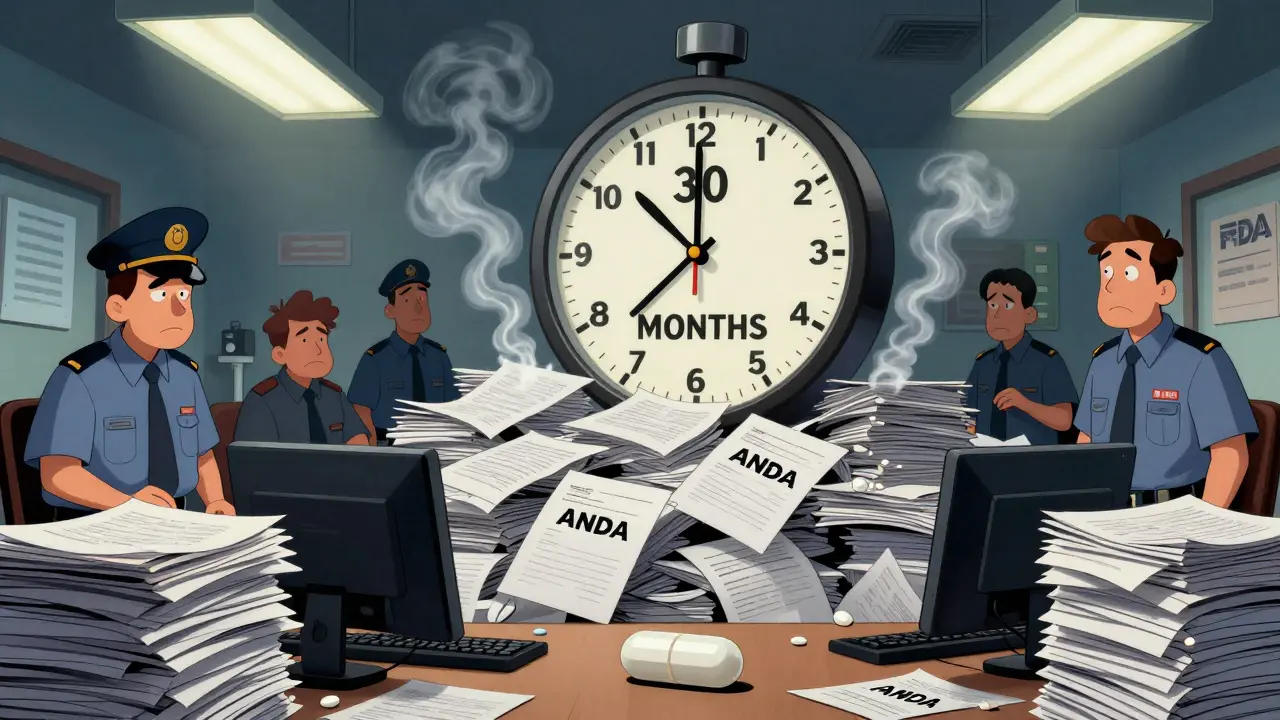
Before 2012, the FDA was drowning in paperwork. Thousands of generic drug applications sat untouched for years. Patients waited longer for affordable medicines. Manufacturers didn’t know when - or if - their drugs would get approved. That changed with the Generic Drug User Fee Amendments (GDUFA), a law that turned a broken system into one that works. It didn’t just add money. It created structure, accountability, and speed where there was none.
What GDUFA Actually Does
GDUFA isn’t a tax. It’s a deal. The U.S. Food and Drug Administration (FDA) gets money from generic drug makers to review their applications. In return, the FDA promises to meet clear deadlines. Before GDUFA, the average review time for an Abbreviated New Drug Application (ANDA) was over 30 months. By 2020, that dropped to under 10 months. How? Because the law forced the FDA to act.
The fees come from companies that make generic drugs. They pay for inspections, reviewers, and system upgrades. The money can’t be used for anything else. Congress made sure of that. Every dollar goes into the generic drug program. That means more inspectors at factories, faster reviews, and fewer backlogs.
How the Fees Work
The fee structure is detailed, but it’s not random. It’s built around two things: where the drug is made, and what kind of drug it is.
There are two main types of facilities:
- Finished Dosage Form (FDF) - where the pill or liquid is put together (like a pharmacy mixing ingredients into a final product).
- Active Pharmaceutical Ingredient (API) - where the actual drug chemical is made (the core ingredient).
Each facility - whether in the U.S. or overseas - pays an annual fee. In 2025, a U.S. FDF facility pays $205,394. A foreign one pays $220,394. The $15,000 difference? That covers the cost of flying inspectors overseas. It’s not a penalty. It’s a cost recovery.
There are also one-time fees:
- $182,775 for a new ANDA application
- $81,645 for a supplement (changes to an already-approved drug)
- $57,550 for a Drug Master File (DMF) when first used
These aren’t hidden costs. They’re published. Every year, the FDA releases exact numbers in the Federal Register. Companies know exactly what they owe - and when.
Why GDUFA Changed Everything
Before GDUFA, the FDA had no money to keep up. It had 100 reviewers for over 3,000 pending applications. Now, thanks to user fees, it has over 1,200 staff dedicated to generic drugs. That’s not just more people. It’s better reviews.
Inspections jumped too. In 2012, the FDA inspected about 40% of foreign generic drug factories. By 2023, that number hit 85%. That’s huge. Most generic drugs sold in the U.S. are made overseas - in India, China, and elsewhere. Without GDUFA, the FDA couldn’t have kept up.
And the results? In 2023, the FDA approved over 1,100 generic drugs. That’s more than any year before. More approvals mean more competition. More competition means lower prices. A 30-day supply of metformin, for example, dropped from $120 to under $10 because of generic competition.
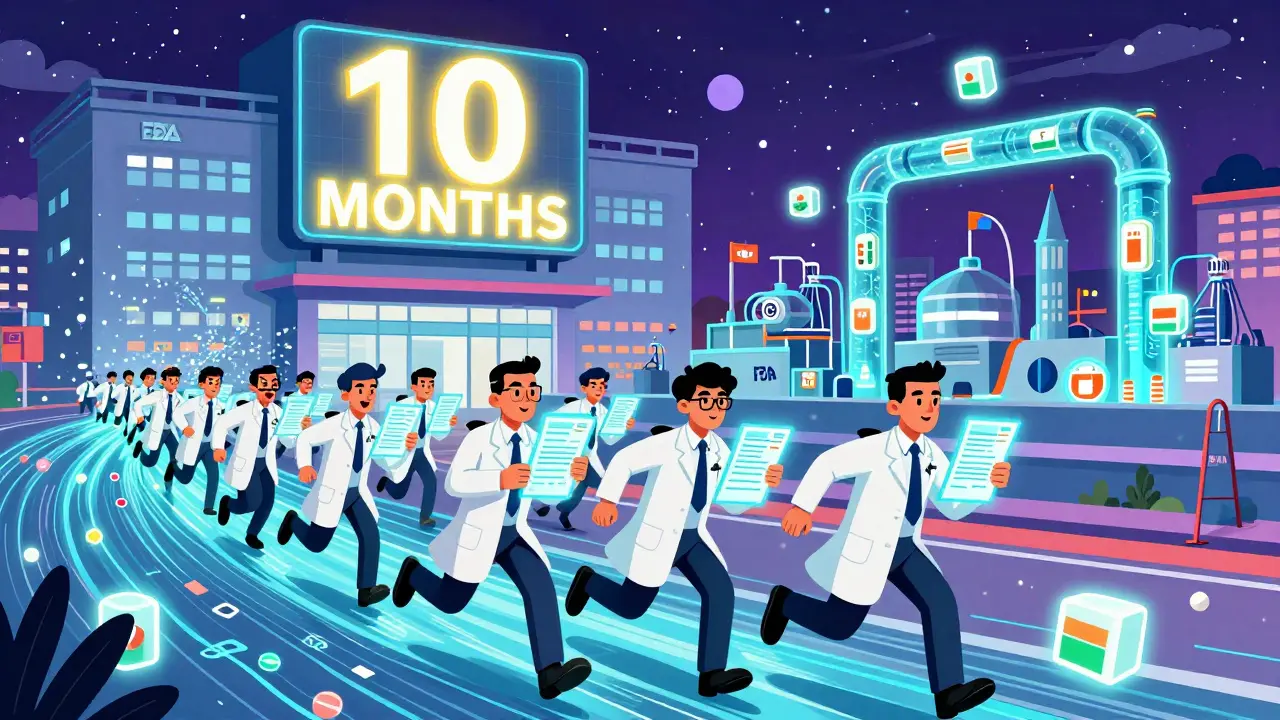
How GDUFA Evolved - GDUFA I, II, III
GDUFA isn’t static. It’s renewed every five years. Each version fixes what the last one missed.
GDUFA I (2013-2017) got things moving. It cleared the backlog. But it hurt small companies. Paying $200,000 a year in facility fees was doable for a big drugmaker with 20 products. For a startup with one? Nearly impossible. The system favored giants.
GDUFA II (2018-2022) fixed that. It introduced fee reductions for small businesses. If a company made fewer than 10 generic drugs, they paid less. It also added flexibility for new applicants. The goal? More competition, not less.
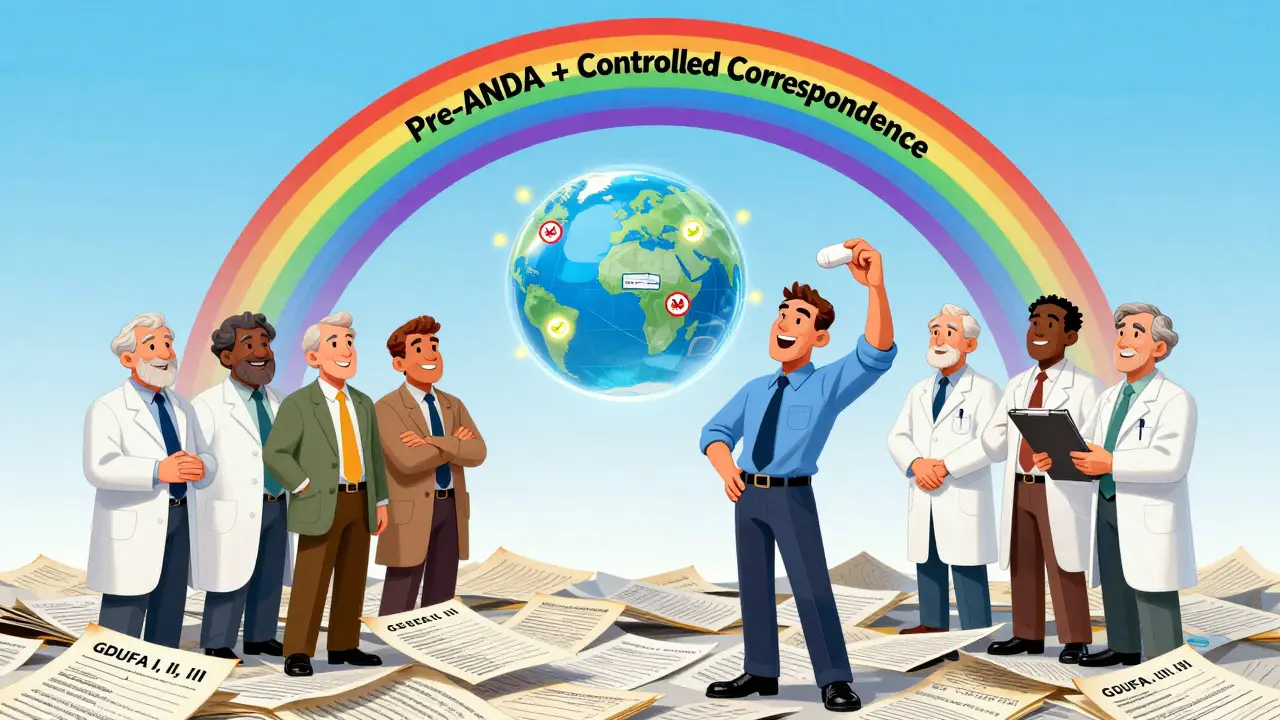
GDUFA III (2023-2027) is the most advanced yet. It added the Pre-ANDA Program. Now, companies can meet with FDA scientists before submitting their full application. They get feedback. They fix problems early. That cuts review time even more.
It also created the ANDA Assessment Program - a way to flag high-risk applications early. And the Controlled Correspondence system lets companies ask questions without waiting weeks for a reply.
Who Benefits?
Patients. That’s the real win.
Over 90% of all prescriptions in the U.S. are filled with generic drugs. They’re not cheaper because they’re worse. They’re cheaper because GDUFA made it faster and cheaper to bring them to market.
Manufacturers benefit too. They get predictability. They know when their drug will be reviewed. They know what the rules are. No more guessing.
But it’s not perfect. Smaller companies still struggle with costs. Foreign manufacturers complain about the $15,000 premium. Some say it’s outdated. The FDA says it’s based on actual inspection costs - and data backs that up.
What’s Next?
GDUFA III runs until September 30, 2027. After that, Congress must pass a new law - GDUFA IV - or the whole system stops.
Early talks are already happening. Experts expect changes like:
- Even lower fees for very small manufacturers
- More digital submissions (no more paper)
- Stronger focus on complex generics - like inhalers, injectables, or topical creams
- More transparency in how fees are spent
The FDA has already started publishing quarterly reports. You can see exactly how many applications were reviewed, how long they took, and how many inspections were done. That didn’t exist before GDUFA.
Why This Matters Outside the U.S.
Even if you’re not in America, GDUFA affects you. Most generic drugs sold worldwide are made in the same factories that supply the U.S. If a factory fails an FDA inspection, it can’t export to the U.S. - and often loses other global markets too.
GDUFA raised the bar for quality. It forced factories to clean up. It made supply chains more reliable. That’s good for everyone.
And if you’ve ever paid less for your blood pressure pill, your asthma inhaler, or your birth control - you’re seeing GDUFA in action.

Ernie Simsek
GDUFA is literally the reason my insulin costs $25 instead of $300. 🙌 FDA used to sit on applications for YEARS. Now? I get my generics in 6 months flat. This system works. Stop complaining about fees-they’re what keep the lights on and the inspectors flying to India. 🇮🇳💊
Joanne Tan
omg i had no idea this was a thing!! i just thought generic drugs were cheap because companies were cutting corners lol but nooo-this is like a secret superhero law?? the FDA actually got better?? i’m so here for it. also metformin is now $8?? yes please. 🤩
Kristin Jarecki
The structural integrity of GDUFA represents a rare and successful alignment of regulatory accountability with market efficiency. The user-fee model, when constrained by statutory oversight and transparent reporting, mitigates conflicts of interest while enhancing public health outcomes. This is not merely policy-it is governance at its most pragmatic. The data supporting reduced review times and increased inspection rates are statistically significant and reproducible.
christian jon
Wait-so the FDA is now a *corporate vending machine*?? You’re telling me drug companies pay to get their drugs approved?? That’s not regulation-that’s bribery with a spreadsheet!! And don’t even get me started on the $15,000 ‘overseas premium’-that’s just the FDA saying ‘pay up or we’ll ignore your factory’!! This isn’t safety-it’s a pay-to-play cartel!! 🤬💸
Neha Motiwala
They say it's about safety... but let's be real-this is how the US controls global pharma supply chains. Every time a factory in India fails an FDA inspection, it collapses. Coincidence? Or is the FDA working with Big Pharma to crush smaller competitors? The fees? Just a distraction. The real goal? Monopoly. And don't tell me about 'transparency'-they publish reports but never explain who's really behind the reviews...
Craig Staszak
Honestly this is one of those rare gov programs that actually works better than it should. Feels weird to say that but yeah the numbers don't lie. More inspections faster approvals lower prices. All good. No drama needed
alex clo
It is important to recognize that the GDUFA framework operates under strict statutory guidelines, ensuring that user fees are earmarked exclusively for the generic drug review process. This prevents fiscal misappropriation and reinforces institutional accountability. The model is replicable in other regulatory domains.
Alyssa Williams
i just wanna say thank you to whoever designed this system. my dad’s blood pressure med went from $120 to $8. that’s life changing. also the pre-ANDA thing? genius. no more waiting 8 months for a ‘your submission is incomplete’ email. you actually help people fix stuff first?? yes. yes. yes.
Gloria Ricky
sooo… i just found out my asthma inhaler is generic now and its like 1/4 the price?? and i had no idea why. turns out this GDUFA thing is why?? mind blown. also the fact that they inspect factories overseas?? that’s wild. i always thought ‘made in india’ meant ‘low quality’ but now i know it’s just… regulated. cool.
Rachidi Toupé GAGNON
This is how you fix broken systems-money, structure, and deadlines. No magic, just smart policy. More generics = more people getting treated. And hey, if a factory in China has to clean up to sell here? That’s a win for everyone. 🌍👍
steve sunio
gdufa? sounds like a corporate scam. who even approved this? i bet the FDA just got lazy and said 'lets make drug cos pay us' instead of hiring more staff. now they're rich and we're still waiting for our meds. lol