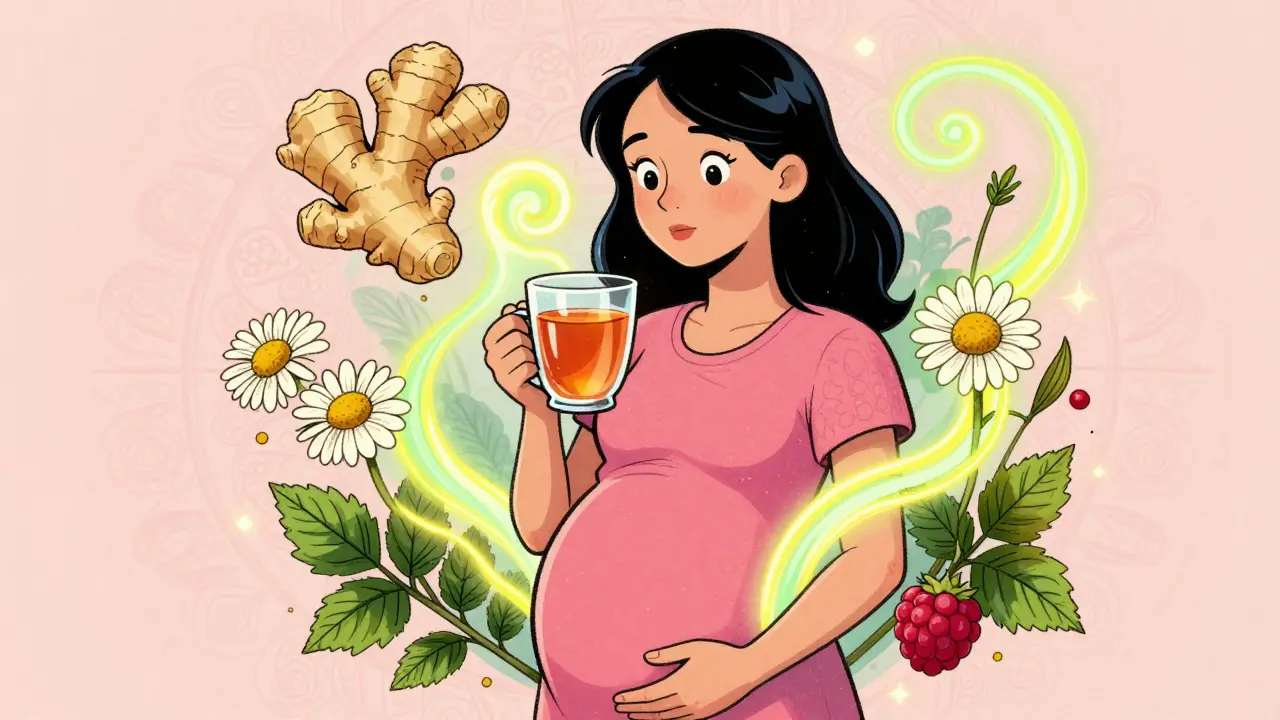
More than 1 in 4 pregnant women take herbal supplements. Not because they’re reckless, but because they’re told these are "natural" and therefore safe. The truth? It’s not that simple. While some herbs like ginger have solid evidence backing their use, others carry hidden risks - risks most doctors won’t mention unless you ask. And here’s the kicker: many of these products aren’t even tested on pregnant women. That means you’re essentially part of an uncontrolled experiment.
What Herbal Supplements Are Pregnant Women Actually Taking?
Ginger tops the list. In studies from Spain, Canada, and the U.S., it’s the most common herbal product used during pregnancy - mostly for nausea. And for good reason. Multiple reviews, including one from the Cleveland Clinic in 2023, confirm that up to 1,000 mg of ginger per day is effective and safe for morning sickness. It works as well as vitamin B6 and doesn’t carry the same side effects as prescription anti-nausea drugs.
After ginger, it’s chamomile, rooibos, cranberry, and red raspberry leaf. Chamomile tea is often sipped for sleep or anxiety. Rooibos is popular as a caffeine-free alternative to black tea. Cranberry supplements are taken to prevent urinary tract infections - a common problem during pregnancy. And red raspberry leaf? That’s the one most women start taking in the third trimester, believing it will "tone the uterus" and make labor easier.
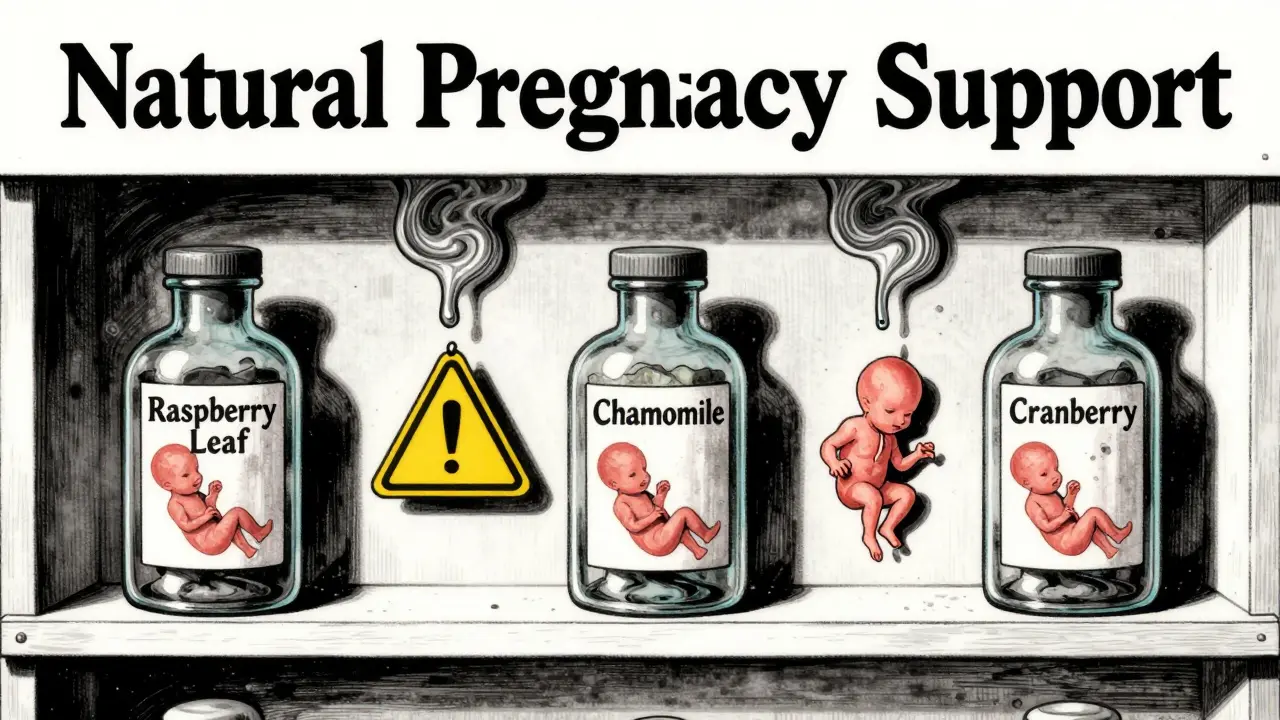
But here’s what nobody tells you: raspberry leaf isn’t harmless. The American Academy of Family Physicians warns it may increase the chance of cesarean delivery when used to try to induce labor. And while some midwives swear by it, there’s no solid proof it shortens labor or reduces complications. In fact, it might trigger contractions too early. That’s not "toning" - that’s stimulation.
The Big Problem: No One’s Really Testing These
Prescription drugs go through years of testing before they’re approved. Herbal supplements? Not even close. The U.S. FDA doesn’t require them to prove safety or effectiveness before hitting store shelves. That’s because pregnant women are almost never included in clinical trials. Why? Fear of liability. Ethical concerns. It’s a system designed to protect, but it leaves women in the dark.
Less than 10% of all medications approved since 1980 have enough data to say whether they’re safe during pregnancy, according to the CDC. Herbal supplements? The number is even lower. A 2023 review of 74 studies involving over a million pregnant women found that for most herbs, we simply don’t know the long-term effects on the baby.
And it gets worse. A 2023 FDA inspection found that 20 to 60% of herbal products contain ingredients not listed on the label - sometimes harmful ones. One batch of raspberry leaf might have a safe amount of active compounds. The next batch? Could be five times stronger. Or contaminated with heavy metals. Or mixed with synthetic drugs.
Herbs That Sound Safe But Aren’t
Just because something grows in your garden doesn’t mean it’s safe in your tea.
Cranberry supplements are marketed for UTI prevention. And yes, they might help a little. But the AAFP notes a serious risk: spotting in the second and third trimesters. That’s not normal. Spotting can signal placental issues, and cranberry might be contributing. Antibiotics like nitrofurantoin - which have known risks too - at least come with clear dosing guidelines and decades of safety data.
Chamomile is another trap. It’s in so many pregnancy teas. But the same 2023 review from the AAFP links it to possible risks like premature closure of the ductus arteriosus (a fetal blood vessel), preterm birth, and low birth weight. The evidence isn’t definitive, but it’s enough to make cautious providers say: avoid it.
Rosemary is fine as a seasoning. But in medicinal doses - like capsules or concentrated extracts - it’s classified as "possibly unsafe." Why? It can stimulate uterine contractions. That’s fine after delivery. Not so fine at 28 weeks.
And then there are the outright dangerous ones: pennyroyal, blue cohosh, black cohosh, and high-dose sage. These are linked to uterine contractions, fetal abnormalities, and even stillbirth. Yet you can still buy them online labeled as "natural pregnancy support."
Why Do Women Keep Taking Them Anyway?
Because they’re told they’re safe. Or because their mom took them. Or because Instagram influencers say they "cleansed their body before conception."
A study in Catalonia found that 42% of women started taking herbal supplements without telling their doctor. They got advice from family (38%), social media (29%), or Google (24%). Reddit threads are full of questions like, "Is chamomile tea okay?" - with answers ranging from "totally fine" to "my friend lost a baby after taking this."
The cultural belief that "natural = safe" is powerful. Especially when pharmaceuticals are painted as toxic. But that’s a myth. A prenatal vitamin is natural - it’s just a purified, tested, standardized version of nutrients found in food. Herbal supplements? They’re wild. Unregulated. Unpredictable.
What Should You Do?
If you’re pregnant and taking herbal supplements - stop. Just stop. Don’t panic. But do talk to your provider. Bring the bottle. Show them the label. Ask: "Is this safe?"
There are only two herbs with strong enough evidence to be considered low-risk in pregnancy: ginger (for nausea) and possibly cranberry (for UTI prevention). Even then, ginger should be under 1,000 mg per day. Cranberry should be in juice form, not concentrated pills.
For everything else - chamomile, raspberry leaf, echinacea, licorice root, turmeric, lavender - assume it’s unsafe unless proven otherwise. And even then, don’t self-prescribe.
Doctors aren’t herbal experts. But they know how to find the data. Ask for a referral to MotherToBaby - a free service run by the U.S. government that gives evidence-based fact sheets on pregnancy exposures. They update their info every quarter. That’s more than most supplement companies can say.
The Bigger Picture: Why This Gap Exists
The real issue isn’t just bad labeling or ignorant consumers. It’s systemic. The global herbal supplement market hit $85 billion in 2023. Pregnancy-specific products are a fast-growing niche. Companies profit from fear - fear of pharmaceuticals, fear of doctors, fear of "toxins."
Meanwhile, research is catching up. In September 2023, the NIH launched a $12.7 million study to track herbal use in pregnancy and its outcomes. But it’ll take years to get answers. In the meantime, you’re on your own.
And that’s why the most important thing you can do isn’t to find a "safe" herb. It’s to stop assuming anything is safe without proof. Your baby’s development isn’t a risk worth taking on faith, tradition, or a TikTok video.
What About Breastfeeding?
The same rules apply. Herbs don’t disappear after birth. They pass into breast milk. Ginger is still considered safe in moderation. But raspberry leaf? Chamomile? No clear data. Some women report reduced milk supply after taking certain herbs. Others notice fussiness in their babies. Without studies, we can’t say why.
If you’re breastfeeding and want to use an herbal supplement, treat it like a new medication. One dose at a time. Watch your baby. Talk to your doctor. Don’t rely on forums. Don’t trust labels. And never assume "natural" means harmless.

Frank Geurts
While the article presents a compelling, evidence-based argument regarding herbal supplement use during pregnancy, I feel compelled to emphasize the profound ethical implications of the regulatory gap in this sector.
The absence of mandatory pre-market testing for herbal products-particularly those marketed to pregnant women-represents a systemic failure in public health policy.
It is not merely a matter of consumer ignorance; it is a structural abandonment of maternal and fetal safety under the guise of laissez-faire market freedom.
The FDA’s classification of these substances as dietary supplements, rather than pharmaceuticals, is a legal loophole that prioritizes corporate profit over scientific rigor.
Moreover, the commercialization of fear-exploiting anxieties about pharmaceuticals to sell unregulated botanicals-is not only unethical, it is predatory.
The $85 billion industry thrives on misinformation, and the absence of labeling transparency exacerbates the risk exponentially.
When a product labeled as ‘red raspberry leaf’ may contain unlisted uterotonics or heavy metals, we are no longer discussing wellness-we are discussing public endangerment.
It is imperative that regulatory bodies enforce standardized manufacturing practices, mandatory ingredient disclosure, and third-party laboratory verification for all supplements intended for use during pregnancy.
Until that occurs, the onus should not fall on the individual to navigate this minefield alone.
Healthcare providers must be empowered with accessible, updated databases to guide patients, and public health campaigns must actively dismantle the myth of ‘natural equals safe’ with the same vigor as anti-vaccine misinformation.
This is not about restricting autonomy; it is about ensuring informed consent, which is impossible without accurate, reliable data.
The NIH’s new $12.7 million study is a step in the right direction, but it is reactive, not preventative.
We need legislation now-not another decade of anecdotal reports and tragic outcomes.
As a cultural ambassador of evidence-based practice, I urge all stakeholders: demand transparency. Demand accountability. Demand science.
Mike Berrange
So let me get this straight-you’re telling me that if I drink chamomile tea because my mom did, and my aunt did, and my yoga instructor swears by it, I’m risking my baby’s heart development?
And that some random batch of raspberry leaf tea I bought on Amazon might have synthetic drugs in it?
Meanwhile, my OB-GYN won’t even look at the label unless I bring it in, and even then, she says, ‘I don’t know, but if you’re gonna do it, don’t go over 1000mg.’
So what’s the point of even asking?
And why is it that when a pill is made in a lab, it’s ‘pharmaceutical,’ but when it’s from a plant, it’s ‘natural’-and therefore magically exempt from scrutiny?
This isn’t just ignorance. It’s a cultural delusion.
And now I’m paranoid about every tea bag I’ve ever drunk.
Crystel Ann
I took ginger throughout my first pregnancy for nausea and it was the only thing that worked. I didn’t know about the dosage limits until after, but I stuck to one tea bag a day.
I didn’t take anything else-not even chamomile, even though I loved it. I just didn’t want to risk it.
My baby is healthy, and I think that’s because I listened to my gut more than the internet.
It’s scary out there, but you’re not alone in being cautious.
Iona Jane
They don’t test herbs on pregnant women because they already know what they’ll find
They’ve known for decades
That’s why the FDA looks the other way
Big Pharma owns the supplements industry
They want you to think ginger is safe so you don’t ask for real medicine
But ginger is a placebo
And the real drugs? They’re hidden
They’re in the raspberry leaf
They’re in the chamomile
They’re in the ‘natural’ labels
They’re poisoning babies quietly
And no one’s talking about it
Until the next headline
Jaspreet Kaur Chana
Man, this whole thing hits different when you’re from India where our grandmas have been using tulsi, ashwagandha, and fennel for generations during pregnancy
And now you’re telling me that just because it’s not FDA-approved, it’s dangerous?
Look, I’m not saying ignore science-I’m saying science hasn’t caught up with tradition yet
My mom took neem water in her third trimester and I’m 32 and running marathons
There’s a difference between herbal supplements sold in a Walmart aisle and ancestral remedies passed down with intention, dosage, and cultural context
When we reduce centuries of wisdom to ‘untested’ because it doesn’t fit a Western clinical trial model, we’re not being cautious-we’re being arrogant
Yes, some products are contaminated
Yes, some companies are shady
But the answer isn’t to throw out everything-it’s to create culturally competent guidelines
Not just ‘avoid all herbs’ but ‘here’s how to safely use turmeric if you’re from a South Asian background’
And maybe, just maybe, listen to the women who’ve been doing this for 5000 years instead of treating them like lab rats
Science should honor tradition, not erase it
Haley Graves
Stop scrolling. Stop Googling. Stop asking strangers on Reddit.
Bring the bottle to your provider. Show them the label. Ask: ‘Is this safe?’
That’s it.
That’s the entire checklist.
Don’t let fear or hype make your decisions.
Your baby doesn’t need a Pinterest board.
They need you to be informed, not isolated.
You’ve got this.
Diane Hendriks
Let me be clear: this isn’t about herbal supplements.
This is about the erosion of American medical authority.
When a woman in Iowa trusts a TikTok influencer more than her OB-GYN, we’ve lost something fundamental.
Our culture has replaced expertise with anecdote.
Science with spirituality.
Evidence with emotion.
And now we’re paying the price in fetal outcomes.
The solution isn’t more studies.
The solution is to restore trust in institutions.
Doctors aren’t the enemy.
Google is.
And until we fix that, no amount of FDA warnings will matter.
Stop letting algorithms decide what’s safe for your child.
That’s not freedom.
That’s negligence.
ellen adamina
I took raspberry leaf in my third trimester because my doula said it would help
I didn’t know it could trigger contractions
My baby was born two weeks early
We were fine
But I still don’t know if it caused it
I wish someone had told me
Not just ‘be careful’
But ‘this is what it could do’
Now I’m breastfeeding and I’m terrified to drink anything
Even ginger
I just want to know what’s real