
If you’ve ever opened a bottle of pills and found them sticky, discolored, or smelling funny, you’re not alone. Moisture damage isn’t just a nuisance-it can make your medication less effective, or worse, unsafe. In humid climates like Melbourne, where humidity regularly hits 70% or higher, even a few days of improper storage can ruin your pills or capsules. The good news? It’s completely preventable-with the right knowledge and simple steps.
Why Moisture Ruins Pills and Capsules
Pills and capsules aren’t just sugar and powder. They contain active ingredients designed to dissolve at the right time in your body. But water? It’s their worst enemy. Moisture triggers chemical reactions called hydrolysis and oxidation. These break down the medicine before you even take it. For example, aspirin turns into salicylic acid and vinegar when it gets wet. That’s not just ineffective-it can irritate your stomach. Vitamin C, antibiotics like amoxicillin, and even some supplements degrade fast in damp conditions. The result? You’re not getting the dose you paid for. In some cases, degraded drugs can produce toxic byproducts. Studies show that 67% of medication shortages in the U.S. between 2010 and 2012 were tied to quality issues, and moisture was a top cause. Even if your pills look fine, they might be losing potency. You won’t feel the difference until the treatment doesn’t work.The Three Layers of Moisture Protection
Pharmaceutical manufacturers don’t leave this to chance. They use three proven layers to protect medicines from moisture:- Film coating-a thin, invisible barrier on the pill or capsule surface
- Packaging-the bottle or blister pack you see
- Desiccants-those little packets you often ignore
Film Coating: The First Line of Defense
Most pills you buy today have a coating. But not all coatings are equal. Older ones use hydroxypropyl methylcellulose (HPMC). Newer ones use polyvinyl alcohol (PVA)-like Opadry® amb II. Research shows PVA coatings block moisture 30-40% better than HPMC. In one study, uncoated and HPMC-coated amoxicillin tablets lost all their active ingredient after just 10 days outside the original packaging. But PVA-coated tablets? They stayed strong. That’s why pharmacies in humid regions now prefer medications with PVA coatings. What to look for: If you’re choosing between two identical medications, pick the one with “PVA-coated” or “advanced moisture-resistant coating” on the label. It’s worth the slight extra cost.Packaging: More Than Just a Bottle
You’ve probably seen plastic bottles labeled HDPE or PP. These are good at keeping liquid out-but they’re like a screen door against humidity. Water vapor slips right through. The best packaging combines plastic with aluminum foil, like blister packs. These are airtight and block moisture completely. But once you pop a pill out, the protection is gone. Important tip: Never transfer pills to a different container unless it’s airtight and moisture-resistant. A Tupperware box? Not enough. A plastic pill organizer? Only if it’s sealed daily and kept in a dry place.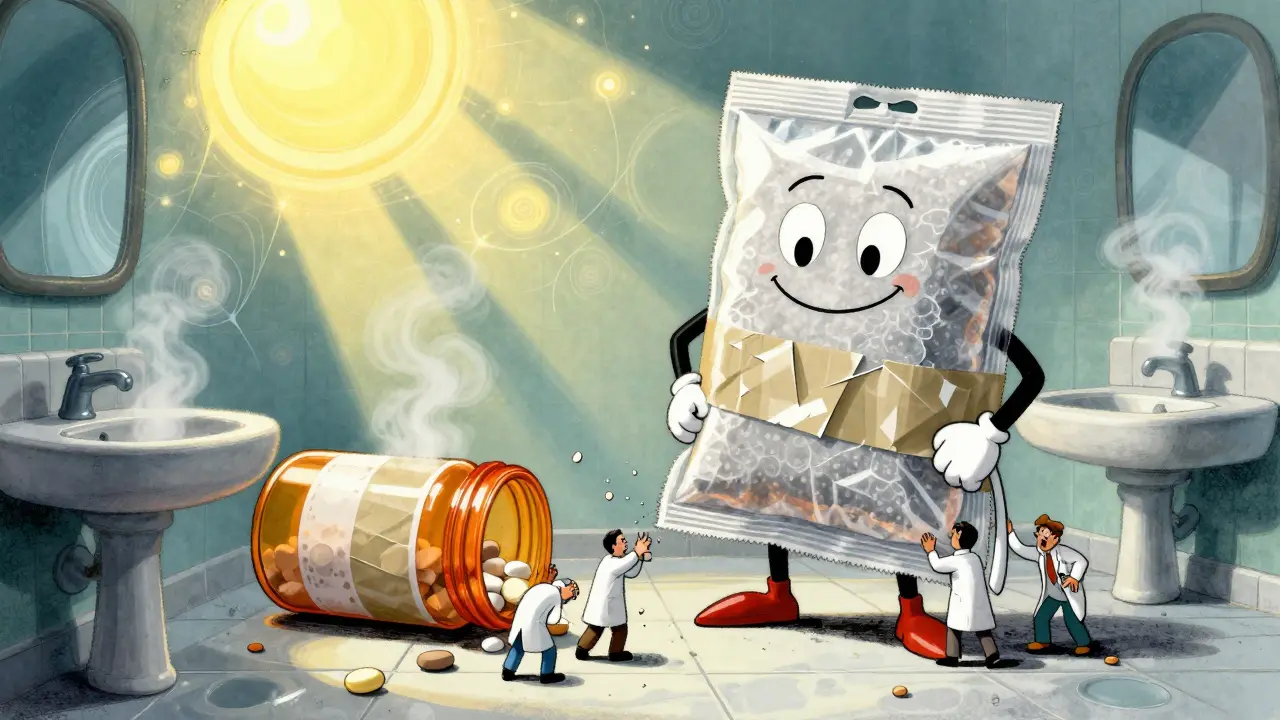
Desiccants: The Silent Heroes
That little white packet in your pill bottle? Don’t throw it away. It’s silica gel-a material that can absorb up to 40% of its own weight in water. In a 500-pill bottle, a properly sized desiccant can keep moisture levels from rising more than 0.3% over two years. In one case, a company in Brazil was getting constant returns because their capsules were getting sticky in the tropical heat. They added a silica gel pack and saw zero complaints after six months. On Trustpilot, users rate these packs 4.7 out of 5. How to use them:- Never remove the desiccant from the bottle.
- If the packet is wet, crumbly, or changed color, replace the whole bottle.
- For long-term storage (like emergency kits), add an extra silica gel pack.
Real-World Storage Mistakes (And How to Fix Them)
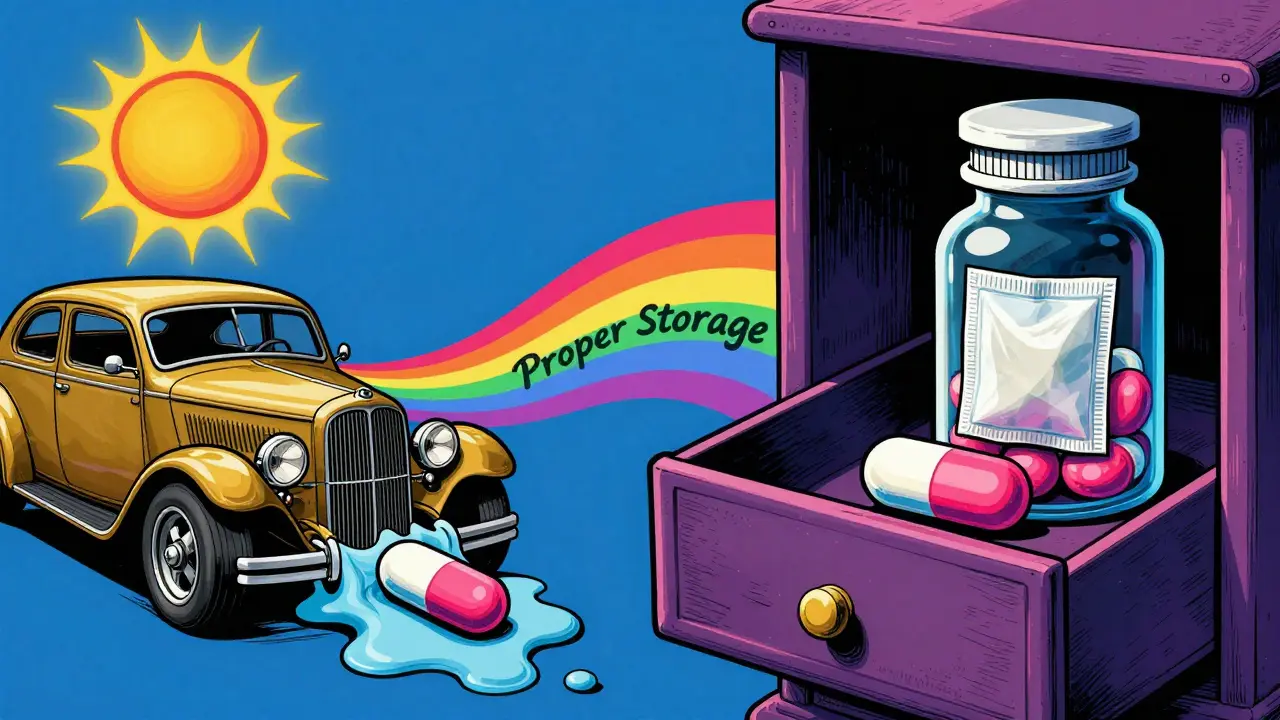
Here’s what people do wrong-and how to avoid it:- Storing pills in the bathroom → The steam from showers is deadly. Move them to a cool, dry closet or bedroom drawer.
- Leaving pills in a hot car → Heat speeds up moisture damage. Even in winter, a car can hit 50°C inside.
- Keeping pills in their original blister pack after opening → Blister packs are designed for single-dose use. Once you open them, transfer pills to a sealed bottle with a desiccant.
- Using pill organizers for more than a week → These aren’t sealed. Use them only for short-term, daily use.
What to Do If Your Pills Are Already Damaged
If your pills look wet, discolored, cracked, or smell odd, don’t take them. Even if they’re not expired, they’re unsafe. Signs of moisture damage:- Sticky or clumped tablets
- Soft or swollen capsules
- White powder on the surface
- Unusual odor (like vinegar or mildew)
What Manufacturers Are Doing Now
The industry is moving fast. New coatings are being developed that don’t just block moisture-they actively absorb it. Some companies are testing color-changing labels that turn red when moisture levels get dangerous. Sustainable desiccants made from plant-based materials are also gaining ground. In 2023, biodegradable options made up 12% of the market-and that number is rising. But here’s the truth: even the best tech won’t help if you store your pills wrong. The science is solid. The solutions are simple. It’s up to you to follow through.Quick Checklist: Protect Your Medication
- ✔️ Keep pills in original bottle with desiccant
- ✔️ Store in a cool, dry place-never bathroom or kitchen
- ✔️ Don’t transfer to plastic organizers for long-term use
- ✔️ Check for PVA coating when choosing medications
- ✔️ Replace bottle if desiccant is wet or damaged
- ✔️ Dispose of damaged pills at a pharmacy take-back point
Moisture doesn’t care if you’re in Melbourne, Mumbai, or Miami. It finds a way in. But with these steps, you can keep your medication safe, strong, and ready to work when you need it.
Can I store pills in the fridge to avoid moisture?
Only if the label says to. Refrigerators are humid environments. When you take a cold pill out, moisture from the air can condense on it and cause damage. Unless your medicine specifically requires refrigeration, keep it at room temperature in a dry place.
Are all desiccants the same?
No. Silica gel is the most common and effective for pills. Other types like clay or molecular sieves are used in industrial settings but aren’t safe or approved for medicines. Always check that the desiccant is pharmaceutical-grade and labeled for use with medications.
Why do some pill bottles have no desiccant?
Some manufacturers use only film coating and sealed packaging, thinking it’s enough. But in humid climates, that’s not enough. If your bottle has no desiccant and you live in a humid area, add one. You can buy pharmaceutical-grade silica gel packs online or at pharmacies.
How do I know if my pill coating is PVA-based?
Check the packaging or ask your pharmacist. Brands like Opadry® amb II are clearly labeled. Generic brands may not say, but if the pill looks smooth and glossy and doesn’t chip easily, it’s likely a better coating. When in doubt, choose the brand that mentions “moisture-resistant” or “advanced film coating.”
Can moisture damage cause side effects?
Yes. Degraded aspirin can cause stomach irritation. Broken-down antibiotics may not treat infections, leading to worse illness or antibiotic resistance. In rare cases, chemical byproducts from moisture damage can be toxic. Always discard pills that look or smell off.
How often should I check my medication for moisture damage?
Check every 3 months if you live in a humid climate. Look for changes in color, texture, or smell. If you’ve opened the bottle often or left it in a warm place, check more frequently. Don’t wait until the expiration date-moisture damage can happen long before then.

Jason Jasper
I never thought about desiccants being that important. Just kept the bottle in my medicine cabinet and called it a day. Guess I'm lucky nothing's gone bad yet. Will check my pills this weekend.
Justin James
This is all part of the pharmaceutical industry's grand scheme to keep you dependent. They don't want you to know that moisture damage is actually caused by chemtrails altering atmospheric humidity levels. The FDA knows this. The WHO knows this. But they let you believe it's just about silica gel packets. Why? Because if you started using proper humidity control, you'd realize most meds are unnecessary anyway. And then where would Big Pharma be? Right. Bankrupt. And you'd be free. But no-keep trusting your bottle. Keep ignoring the signs. The desiccant isn't protecting you-it's masking the truth.
Lindsay Hensel
Thank you for this. As someone who manages chronic illness, I’ve lost count of how many times I’ve had to replace pills that turned sticky. This guide is clear, practical, and deeply needed.
sagar patel
PVA coating is superior to HPMC in moisture resistance by 30 to 40 percent according to peer reviewed studies published in the Journal of Pharmaceutical Sciences 2019 volume 42 issue 3
Michael Dillon
I've been storing my meds in the garage for years. It's dry there. And it's cold. What's the problem? You people overthink everything. My blood pressure pills are fine. I'm still alive.
Gary Hartung
I mean... have you ever considered that maybe the real issue isn't moisture... but the fact that we've been conditioned to believe that pills are sacred? That we need them? That we're somehow broken if we don't swallow a tiny chemical every day? The desiccant is just a Band-Aid on a systemic wound. The real solution? Stop taking them. Or better yet-grow your own herbs. Nature knew better than Big Pharma ever could.
Ben Harris
I live in Miami and I put my vitamins in a ziplock bag in the fridge because I read somewhere that cold stops mold. Is that wrong? I mean I'm not stupid I just want to know
Rick Kimberly
The assertion that humidity-driven degradation contributes significantly to medication shortages is well-supported by FDA adverse event reports and pharmacopeial data. However, the practical implementation of PVA coatings remains inconsistent across generic manufacturers. A standardized labeling protocol for moisture resistance would greatly enhance consumer safety and reduce reliance on user behavior.
Christopher King
You know what’s really scary? They put desiccants in the bottles so you think you’re safe. But what if the desiccant itself is part of the problem? What if it’s absorbing moisture... and then slowly releasing toxins back into the pills? They’ve been doing this since the 80s. No one talks about it because the FDA is owned by the same people who make the gel packs. I once found a crystal in my bottle. I didn’t take the pills after that. I’m still alive. They’re not.
Bailey Adkison
You say don't use pill organizers long term. But I've been using mine for 3 years. I wash it weekly. I live in Arizona. Dry as a bone. You're telling me I'm wrong because of some hypothetical humidity in Melbourne? That's not logic. That's fearmongering.
Oluwatosin Ayodele
In Nigeria we store pills in plastic containers with dried rice because silica gel is expensive and hard to find. Rice absorbs moisture too. It works. You don't need fancy coatings if you're smart. People in rich countries overcomplicate everything.
Carlos Narvaez
PVA coatings are overrated. The real innovation is in polymer-aluminum laminated blister packs. Desiccants are just a marketing gimmick.
Harbans Singh
I'm from India and we've been using clay pots to store medicines for generations. Cool, dry, naturally humid-controlled. No plastic, no silica gel. Just good old wisdom. Maybe we don't need all this tech after all.
Zabihullah Saleh
It’s funny how we treat medicine like it’s some sacred artifact we have to protect from the elements. But we don’t treat food that way. We don’t panic if bread gets a little stale. We just eat it or throw it out. Maybe we’ve got the whole relationship with pills backwards. Maybe we need to stop treating them like they’re the only thing holding us together. Maybe we need to ask why we need so many in the first place.