
It is easy to assume that memory lapses, confusion, or sudden fatigue are just part of getting older. But what if those symptoms aren’t aging at all? What if they are the result of a pill your doctor prescribed last week? For millions of seniors, medication side effects look exactly like early dementia or frailty. This isn’t just a scary possibility-it is a documented medical reality. Research shows that up to 30-40% of apparent cognitive decline cases in older adults can improve significantly after adjusting medications. The good news? These changes are often reversible.
The problem lies in how we interpret these symptoms. Physicians and caregivers frequently attribute new confusion or dizziness to "normal" aging or neurodegenerative diseases like Alzheimer’s. However, a landmark study published in the National Institutes of Health (NIH) journal highlights that adverse drug reactions (ADRs) contribute heavily to hospitalizations and health burdens in multimorbid older adults. When we mistake a drug reaction for aging, we miss the chance to fix the root cause. Let’s break down how to spot the difference, which drugs are the biggest culprits, and what you can do about it.
The "Medication Fog": Spotting the Early Signs
Cognitive decline from true neurodegenerative diseases usually progresses slowly over years. In contrast, medication-induced symptoms often appear suddenly or worsen rapidly. Experts call this phenomenon "medication fog." If you or a loved one starts feeling like everything is happening in slow motion, pay attention. According to the BrightFocus Foundation, key indicators include forgetting important details (reported by 78% of affected seniors), feeling easily confused (83%), and a general sense of mental sluggishness.
Look for these specific patterns:
- Sudden Onset: Symptoms appearing within 14 days of starting a new medication or changing a dose.
- Fluctuation: Confusion that gets worse after taking a pill and better later in the day.
- Physical Clues: New dizziness (which increases fall risk by 200%), unexplained weight loss, or skin reactions accompanying cognitive changes.
If the timeline matches a recent prescription change, stop assuming it’s age-related. It might be chemistry.
The Silent Culprit: Anticholinergic Drugs
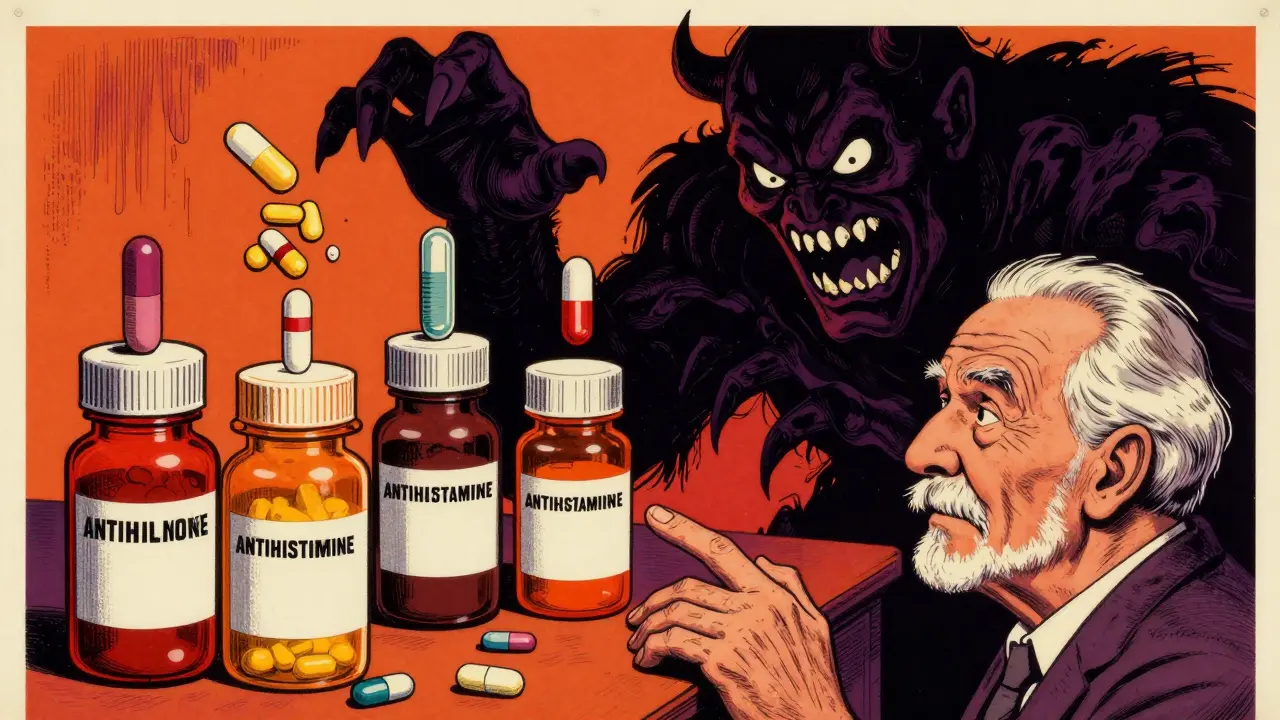
Not all medications affect the brain equally. The most dangerous group for seniors are anticholinergic medications. These drugs block acetylcholine, a neurotransmitter critical for memory and learning. As we age, our blood-brain barrier becomes more permeable, meaning seniors experience 30-50% greater brain exposure to these compounds than younger adults.
You might be surprised to find anticholinergics in common household remedies. They include:
- Diphenhydramine (Benadryl): Often used for allergies or sleep.
- Oxybutynin: Commonly prescribed for urinary incontinence.
- Promethazine: Used for nausea.
- Tricyclic Antidepressants: Older antidepressants still prescribed today.
The symptoms are distinct and severe. Research from the Medical University of South Carolina found that these drugs cause dry mouth in 89% of cases, constipation in 76%, drowsiness in 81%, and confusion in 72%. Dr. Malaz Boustani, an aging research professor at Indiana University, documented cases where patients in their late 60s presented with severe dementia-like symptoms-including incoherence and terrible short-term memory-that completely resolved after discontinuing these drugs.
Other High-Risk Medications
While anticholinergics are the primary suspects, other classes of drugs also mimic aging symptoms. Understanding these helps broaden your awareness during medication reviews.
| Medication Class | Common Examples | Key Side Effects Mimicking Aging | Incidence Rate |
|---|---|---|---|
| Benzodiazepines | Lorazepam (Ativan), Alprazolam (Xanax) | Short-term memory impairment, sedation, increased fall risk | 65% experience memory issues |
| Opioids | Morphine, Oxycodone | Short-term memory loss, confusion, lethargy | 57% experience memory loss |
| Corticosteroids | Prednisone, Dexamethasone | Mood swings, anxiety, psychotic episodes | 42% mood swings; 18% psychosis |
| Antipsychotics | Quetiapine (Seroquel) | Parkinson’s-like stiffness, cognitive slowing | High risk of motor/cognitive decline |
Note that while some studies suggest prolonged benzodiazepine use increases dementia risk, experts like Dr. Shinya Ikeda note that appropriate short-term use remains beneficial when monitored carefully. The key is duration and dosage.
Why Seniors Are More Vulnerable
It’s not just about the drug; it’s about the body processing it. As we age, our pharmacokinetics-the way our body absorbs, distributes, metabolizes, and excretes drugs-change drastically. Dr. Cara H. Olsen from the Uniformed Services University explains that liver metabolism drops by 30-50%, and kidney clearance reduces by 40-60% in older adults.
This means a standard dose for a 40-year-old could be toxic for an 80-year-old. Furthermore, polypharmacy-taking five or more medications simultaneously-affects 55% of adults over 65. When multiple drugs interact, the risk of adverse reactions multiplies. The NIH review notes that 35% of elderly subjects studied had polypharmacy present, amplifying vulnerability to ADRs.
Tools for Recognition: Beers Criteria and ACB Scale
You don’t have to guess which drugs are risky. Medical professionals use specific tools to assess safety. The most famous is the Beers Criteria, updated in 2023 by the American Geriatrics Society. This list identifies medications generally inappropriate for adults 65+ due to high risks of cognitive side effects. The 2023 update added six new medications to the "avoid" list, including first-generation antihistamines, based on evidence that they increase cognitive side effects by 35-50%.
Another vital tool is the Anticholinergic Cognitive Burden (ACB) scale, developed by Dr. Boustani’s team. It quantifies risk by assigning scores to medications. An ACB score of 3 or higher correlates with a 49% increased risk of developing dementia over three years. If you see your doctor, ask them to calculate your ACB score. It’s a simple number that can save your mind.
Action Plan: How to Protect Yourself
Recognizing the problem is step one. Fixing it requires action. Here is how you can take control:
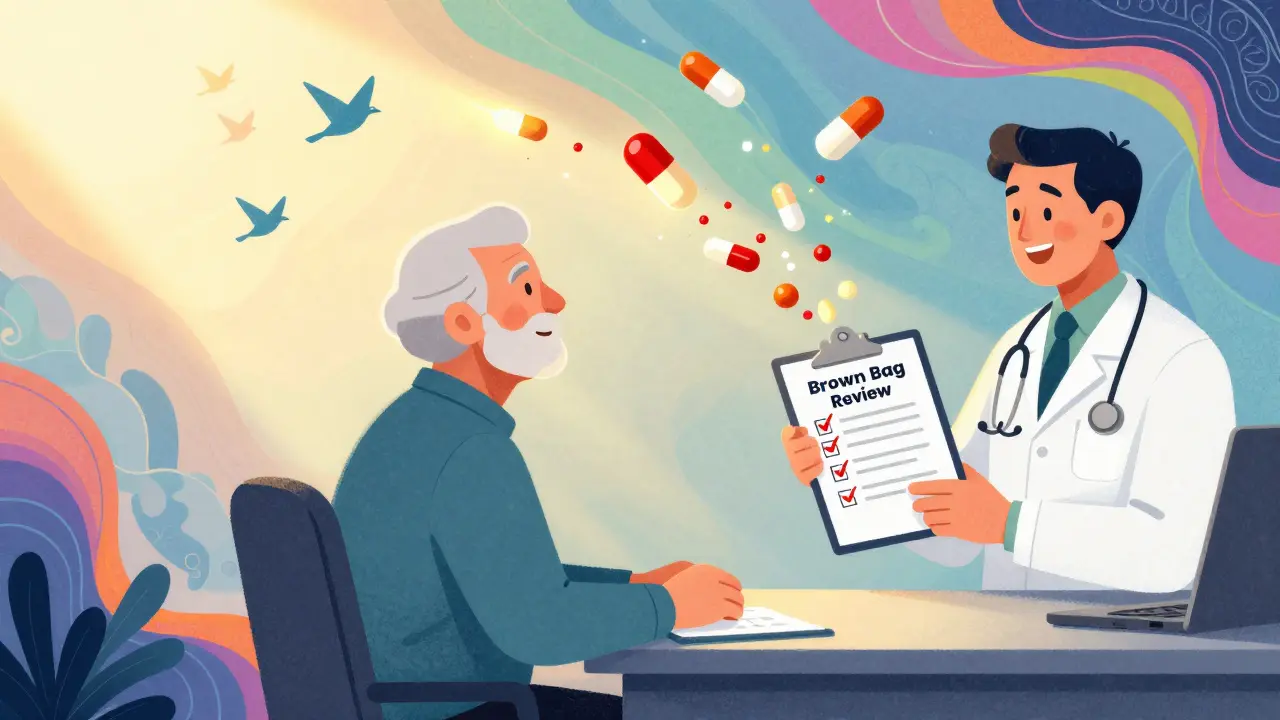
- Conduct a Brown Bag Review: Bring every medication (prescription, over-the-counter, supplements) to your next appointment. Ask your doctor or pharmacist: "Is this necessary? Can we lower the dose? Is there a safer alternative?"
- Monitor for Changes: Keep a symptom diary. Note when confusion or dizziness occurs relative to medication times. This data helps doctors distinguish between drug effects and disease progression.
- Advocate for Deprescribing: If a drug is no longer needed or causing harm, work with your doctor to taper off it safely. The NIH recommends deprescribing problematic medications over 4-12 weeks while monitoring for symptom resolution.
- Use Technology: Many electronic health records now integrate tools like the STOPP/START criteria to alert providers to inappropriate prescriptions. Ensure your care team uses these systems.
Studies show that interdisciplinary teams involving geriatricians, pharmacists, and caregivers can improve outcomes in 35-45% of apparent dementia cases simply through medication adjustment. You have the power to initiate this conversation.
Can medication side effects permanently damage the brain?
In many cases, no. Cognitive impairment caused by anticholinergic drugs or benzodiazepines is often reversible once the medication is discontinued or reduced. However, long-term use (e.g., daily strong anticholinergics for three years) has been linked to a 49% increased risk of developing permanent dementia. Early intervention is key to preventing lasting damage.
What is the Beers Criteria?
The Beers Criteria is a clinical guideline published by the American Geriatrics Society that lists medications potentially inappropriate for use in older adults (65+). It helps doctors avoid prescribing drugs that pose high risks of side effects like confusion, falls, and cognitive decline without offering significant benefits.
How quickly do symptoms appear after starting a new medication?
Symptoms often appear within 14 days of initiating a new medication or changing a dose. Sudden onset of confusion, dizziness, or memory loss shortly after a prescription change is a major red flag that the symptoms may be drug-induced rather than age-related.
Is it safe to stop taking my medication if I suspect side effects?
Never stop medication abruptly without consulting your doctor. Some drugs require a gradual tapering process to avoid withdrawal symptoms or rebound effects. Instead, contact your healthcare provider immediately to discuss your symptoms and create a safe deprescribing plan.
What is the Anticholinergic Cognitive Burden (ACB) scale?
The ACB scale is a clinical tool used to quantify the risk of cognitive impairment from medications. Each drug is assigned a score based on its anticholinergic strength. A total score of 3 or higher indicates a significantly increased risk of cognitive decline and dementia, prompting doctors to consider alternatives.
