Why You Can’t Just Toss Expired EpiPens or Inhalers in the Trash
Throwing an expired EpiPen, inhaler, or medicated patch in the regular trash isn’t just irresponsible-it’s dangerous. These aren’t ordinary household items. EpiPens have sharp needles. Inhalers are pressurized cans that can explode if crushed or heated. Patches still contain powerful drugs on their sticky surfaces, even after use. Kids, pets, and sanitation workers have been poisoned by improperly discarded medications. The FDA says 12% of accidental poisonings in children involve meds tossed in the trash. That’s not a small risk. It’s a preventable emergency waiting to happen.
How to Dispose of Expired EpiPens
EpiPens are classified as medical sharps because of their built-in needle. That means they need the same handling as syringes or lancets. Never bend, break, or try to remove the needle. You can’t recycle them. And don’t flush them unless they’re on the FDA’s official flush list-which EpiPens aren’t.
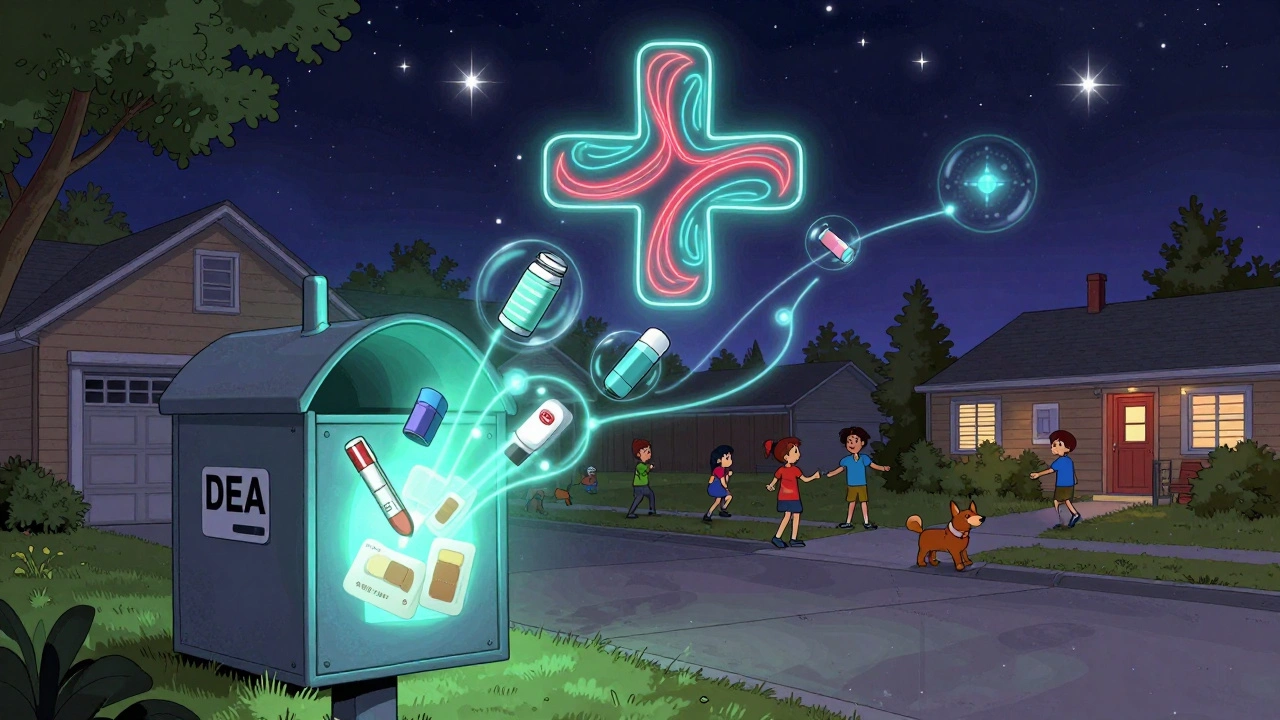
The safest way is to return them to your doctor’s office or pharmacy when you pick up a new one. Most allergists and clinics have sharps disposal bins just for this. If your provider doesn’t, ask them to point you to a local drop-off site. Hospitals, fire stations, and some pharmacies with take-back programs also accept them. Use the DEA’s National Take Back Day locator to find the nearest authorized collector.
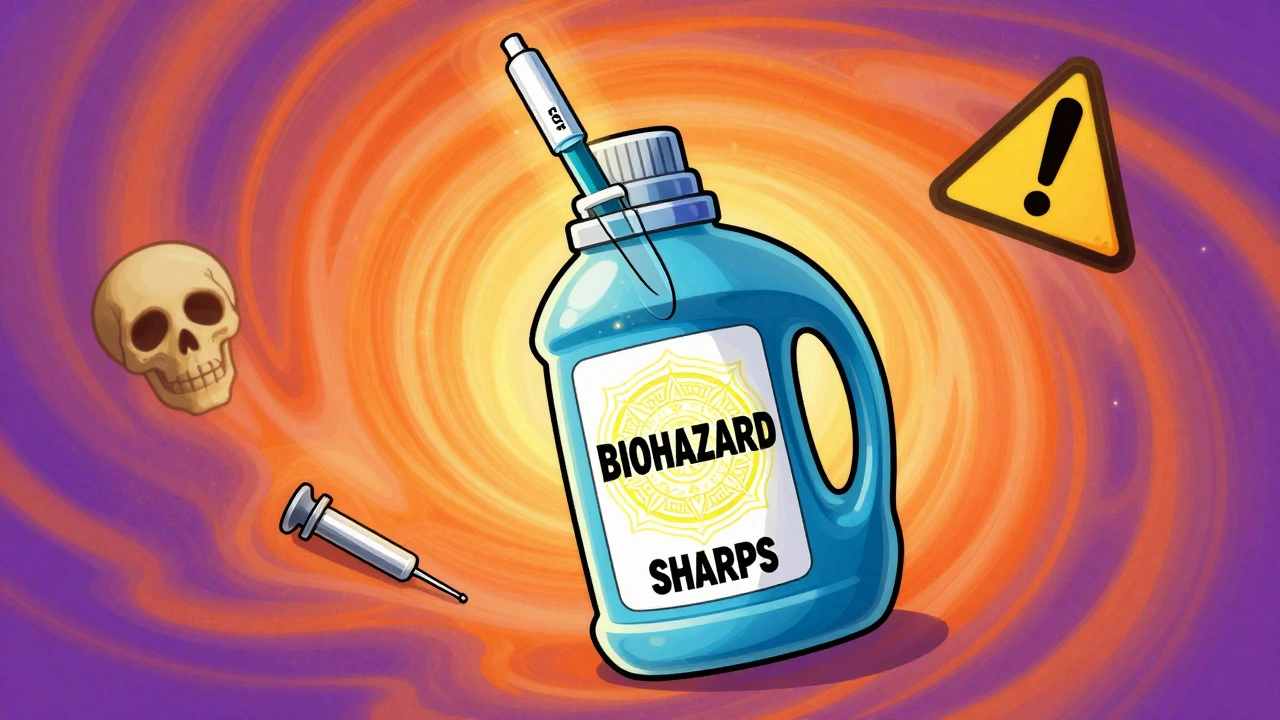
If you must store an expired EpiPen at home before disposal, put it in a rigid, puncture-proof container. A clean plastic laundry detergent bottle works. Tape the lid shut. Write clearly on the side: BIOHAZARD, SHARPS, DO NOT RECYCLE. Keep it out of reach of children and pets. In California, you’re required to use a mail-back program or drop it at a certified sharps center. In Texas, you can throw it in the trash if it’s in a sealed, labeled container. Always check your state’s rules.
What to Do With Old Inhalers
Inhalers are trickier than pills. Most are metered-dose inhalers (MDIs) filled with propellant gas-often hydrofluoroalkanes (HFAs)-that are potent greenhouse gases. If punctured or thrown into a fire, they can explode. Even when empty, they shouldn’t go in regular recycling bins because the valve and canister aren’t recyclable in standard programs.
First, check the label. Some manufacturers now include disposal instructions. If it says to return it to a pharmacy, do it. Walgreens and CVS have pilot programs in select locations, but only about half of their stores participate. Call ahead. Don’t assume.
Your best bet is to contact your city or county waste management department. Many urban areas, like New York City, have special Household Hazardous Waste drop-off sites that take aerosols. Some counties host periodic collection events. If none are available, remove the metal canister from the plastic mouthpiece (if possible), and dispose of them separately. The plastic part can go in recycling if your program accepts #5 plastic. The metal canister? Tape the nozzle shut, put it in a sealed plastic bag, and put it in the trash. Never incinerate or crush it.
Disposing of Medicated Patches Like Fentanyl or Nicotine
Patches are the most dangerous to throw away because they still hold a lot of active drug-even after use. A single fentanyl patch can contain enough medicine to kill a child or adult who finds it. That’s why the FDA says some patches must be flushed immediately.
Check the label or ask your pharmacist: if it’s on the FDA’s flush list, flush it down the toilet right away. This includes fentanyl patches, certain opioids, and a few others. The list was updated in April 2023 and now includes 15 medications. If it’s not on the list, fold the patch in half with the sticky sides together so the medication is trapped inside. Tape it shut. Put it in a sealed container with something unappealing-coffee grounds, cat litter, or dirt. Then toss it in the trash. Never leave a patch unfolded or stuck to a surface where someone might touch it.
Some pharmacies sell DisposeRx® packets. These turn pills and liquids into a gel that can’t be reused. But they don’t work well on patches. Stick with folding and flushing (if required) or sealing and trashing.
When and Where to Use Take-Back Programs
Take-back programs are the gold standard. The DEA runs two National Prescription Drug Take Back Days each year-usually in April and October. In October 2022, over 985,000 pounds of meds were collected at 5,800 locations. That’s not just pills. It includes EpiPens, inhalers, and patches.
But you don’t have to wait for those days. Many police stations, hospitals, and pharmacies have permanent drop boxes. The DEA’s online tool lists over 14,000 permanent collection sites across the U.S. Rural areas are still behind-only 37% of rural counties have permanent options compared to 89% in cities. If you live in a rural area, call your local pharmacy or health department. Ask if they’ll hold onto your expired meds until the next collection event.
Some states, like California, now require drugmakers to pay for disposal programs under SB 212, which started in January 2024. That means more drop-off points are coming. Keep an eye out for new bins at pharmacies.
What Not to Do
- Don’t flush EpiPens or inhalers unless explicitly told to by the FDA’s flush list. Flushing them can contaminate water systems.
- Don’t put patches in the recycling bin. They’re not recyclable.
- Don’t dismantle any device. Trying to remove a battery from an Auvi-Q or break open an inhaler can release harmful chemicals or cause injury.
- Don’t rely on your local recycling program to handle meds. They aren’t designed for it.
- Don’t assume your pharmacy takes everything. Many only accept pills. Always call first.
How to Stay Prepared
Set a monthly reminder to check your medicine cabinet. Expired EpiPens, inhalers, and patches lose effectiveness over time. Most EpiPens expire after 12-18 months. Inhalers last about a year after opening. Patches vary. Write the opening date on the box.
Keep a dedicated sharps container at home. You can buy one at any pharmacy for $5-$15. Or reuse a sturdy plastic bottle. Label it clearly. Store it in a high, locked cabinet.
When you get a new prescription, ask: “Where do I take the old one?” Most providers are happy to help. If they don’t know, ask them to look up your state’s guidelines. You’re not being difficult-you’re protecting your family and community.
Environmental Impact and Why It Matters
Improper disposal doesn’t just risk human safety-it harms ecosystems. The U.S. Geological Survey found pharmaceuticals in 80% of tested rivers and streams. Hormone disruptors from patches and inhalers are affecting fish reproduction. The EPA estimates that 1 in 5 waterways now contain traces of medication waste. That’s why flushing only what’s on the FDA list matters. Every patch flushed properly reduces the chance of these chemicals entering our drinking water.
Manufacturers are starting to respond. Mylan, the maker of EpiPens, began adding QR codes to packaging in late 2023 that link directly to local disposal instructions. Other companies are following. The market for safe disposal solutions is expected to hit $1.2 billion by 2027. Better systems are coming-but you still have to use them.
Frequently Asked Questions
Can I recycle the plastic part of an inhaler?
Sometimes. Remove the metal canister and mouthpiece. If the plastic is #5 (polypropylene) and your local recycling program accepts it, you can recycle the plastic part. But never put the metal canister or the entire inhaler in the recycling bin. Always tape the nozzle shut and bag the canister before trashing it.
What if my pharmacy won’t take my EpiPen?
Call your local hospital, fire station, or health department. Many have sharps disposal bins. You can also use the DEA’s online locator to find the nearest authorized collector. If you’re in a rural area, ask your doctor to hold onto it until the next Take Back Day. Don’t give up-there’s always a safe option.
Is it safe to flush a fentanyl patch?
Yes. The FDA specifically lists fentanyl patches as one of the few medications that should be flushed immediately to prevent accidental exposure. This is the only exception to the general rule against flushing. Fold it in half, sticky sides together, and flush it right away.
Can I throw away an empty EpiPen?
Even if it’s empty, treat it as a sharp. The needle is still inside and can puncture bags or injure workers. Always dispose of it in a sharps container or take it to a collection site. Don’t assume empty means safe.
Are there any apps or tools to find disposal locations?
Yes. The DEA’s National Take Back Day website has a searchable map of permanent drop-off sites. You can also visit safeneedledisposal.org for state-specific guidelines. Some pharmacies like CVS and Walgreens list their take-back locations online-just search for "medication disposal" on their websites.

Desmond Khoo
Just disposed of my dad’s expired EpiPen last week-used an old laundry detergent bottle like the article said. Taped it shut, labeled it BIONHAZARD in Sharpie, and dropped it at the fire station. So simple. Why do people still toss these like trash? 🙃
Ryan Sullivan
Let’s be clear: the FDA’s flush list is not a suggestion-it’s a regulatory directive grounded in toxicological risk assessment. The notion that ‘it’s just a patch’ reflects a dangerous ignorance of pharmacokinetic persistence in aquatic ecosystems. Proper disposal isn’t a lifestyle choice; it’s a public health imperative.
Wesley Phillips
bro i just threw mine in the trash 😭 i thought it was empty lol
now i’m scared my dog is gonna die
also why does the government care so much about my inhaler but not my rent?
Nicholas Heer
they want you to flush patches so they can track you
that’s why they say ‘flush fentanyl’
next they’ll say ‘flush your insulin’ and then your phone number gets logged
this is all a surveillance op disguised as safety
they’ve been doing this since the 2000s with mercury thermometers
ask your local pharmacist if they’re NSA affiliated
Oliver Damon
The structural integrity of metered-dose inhalers (MDIs) under thermal stress is a well-documented hazard. The propellant systems-particularly HFA-134a-retain pressure even after apparent depletion. Disassembling these units introduces both mechanical and chemical exposure risks, which is why manufacturer-specific disposal protocols exist. Always consult the product insert before attempting any non-standard handling.
Sam Mathew Cheriyan
in india we just bury em in the backyard lol
no one cares here
why should you care if your water tastes like medicine?
at least the fish get a nice snack
Ted Rosenwasser
Wow. Finally someone who understands that ‘recycling’ doesn’t apply to pharmaceutical waste. Most people think if it’s plastic, it goes in the blue bin. Nope. That’s how microplastics get laced with fentanyl metabolites. 🤦♂️
Helen Maples
If you’re still tossing inhalers in the trash, you’re not just careless-you’re negligent. Your neighbor’s toddler doesn’t deserve to die because you couldn’t drive 10 minutes to a drop-off site. Stop making excuses. Call your pharmacy. Do the right thing.
David Brooks
Just found my 3-year-old EpiPen in the glovebox. Expired. I cried. Not because I’m dramatic-but because I almost lost my kid and didn’t even know it. I’m dropping it off tomorrow. You don’t have to be perfect. Just don’t wait until it’s too late.
Jennifer Anderson
my grandma used to save all her patches in a shoebox 🤭
we just found it last week
she didn’t know they were dangerous
now i’m teaching her how to fold ‘em
we’re all learning. no shame in that 💙
Sadie Nastor
i just used the DEA map and found a drop box at my local walgreens 😍
it’s in the pharmacy lobby next to the flu shots
took me 2 mins
so glad i didn’t have to wait for take-back day
thank you for writing this
it saved me from being a hazard
Kyle Oksten
There’s a moral hierarchy in waste. A plastic bottle? Recycle. A cigarette butt? Dispose responsibly. An EpiPen? It’s a weapon of accidental harm if mishandled. The burden of safe disposal isn’t a privilege-it’s a duty we owe to the vulnerable. Ignorance isn’t innocence. It’s complicity.