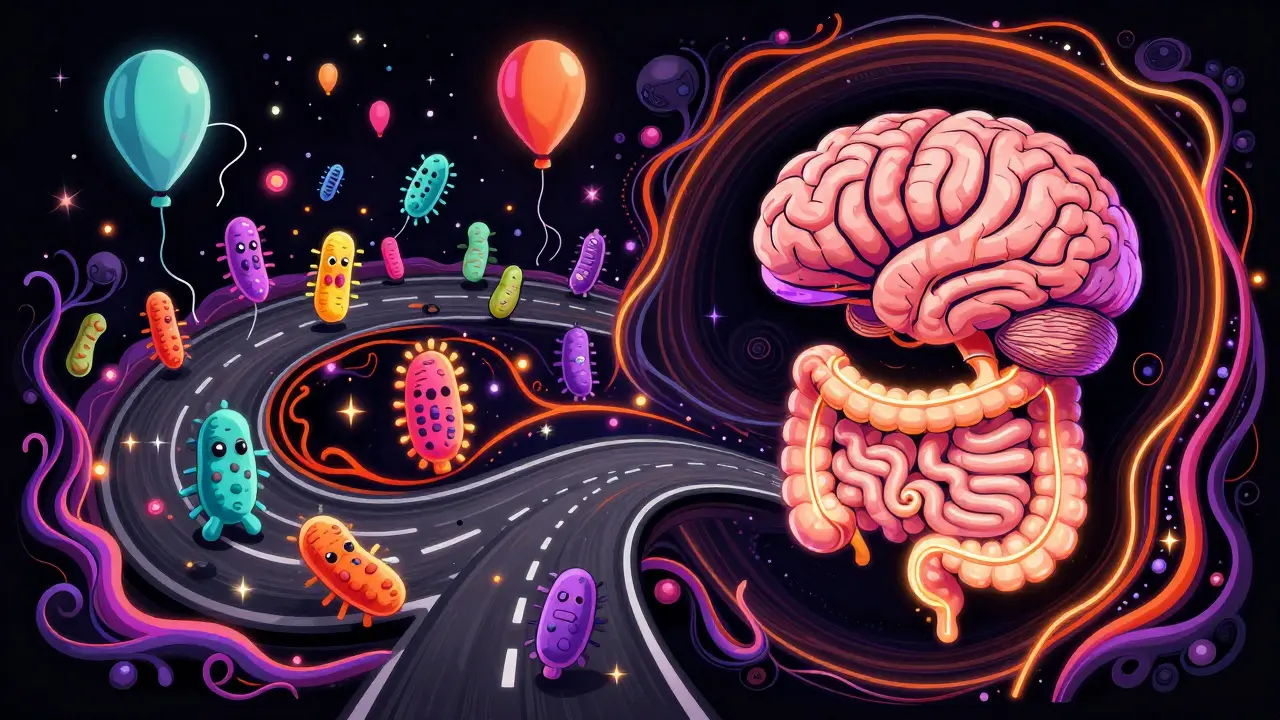
For millions of people around the world, abdominal pain, bloating, and unpredictable bowel habits aren’t just inconvenient-they’re life-limiting. If you’ve been told your symptoms are "just stress" or that your colon is "sensitive," you’re not alone. Irritable Bowel Syndrome (IBS) affects 5 to 10% of the global population, yet most treatments still treat it like a simple gut problem. That’s the wrong approach. The real issue isn’t your intestines alone-it’s the broken conversation between your gut and your brain.
The Gut-Brain Axis Isn’t Just a Buzzword
For decades, doctors thought IBS was caused by abnormal muscle contractions in the bowel. That’s why antispasmodics and laxatives were the go-to treatments. But research over the last 15 years has turned that idea upside down. We now know IBS is a disorder of brain-gut-microbiome interactions. That means your symptoms aren’t just in your belly-they’re shaped by signals traveling back and forth between your gut and your nervous system.
This two-way highway is called the gut-brain axis. It’s made up of nerves (especially the vagus nerve), hormones, immune signals, and trillions of gut bacteria. When this system gets out of sync, your brain starts misreading signals from your gut. A normal amount of gas? Feels like cramping. A slight change in bowel speed? Feels like urgent diarrhea. This isn’t "in your head." It’s your nervous system misfiring.
Brain scans show real differences in people with IBS. Those with diarrhea-predominant IBS have thicker brain areas linked to pain and sensation. Those with constipation-predominant IBS show thinner areas tied to emotional regulation. Even more telling: 60 to 70% of people with IBS also struggle with anxiety or depression-not because they’re "stressed out," but because the same brain circuits that control gut function also regulate mood.
Serotonin: The Gut’s Favorite Chemical
Did you know 95% of your body’s serotonin is made in your gut, not your brain? This neurotransmitter doesn’t just affect how you feel-it controls how fast food moves through your intestines and how sensitive your nerves are to stretching and pressure.
In IBS-D (diarrhea-predominant), gut cells pump out too much serotonin. That speeds up digestion, causes watery stools, and cranks up pain signals. In IBS-C (constipation-predominant), serotonin levels drop. Food lingers, gas builds, and the gut feels sluggish. That’s why drugs like alosetron (for IBS-D) and prucalopride (for IBS-C) work-they tweak serotonin activity right where it matters.
But here’s the catch: these drugs don’t work for everyone. And they come with risks. Alosetron can cause serious bowel damage. That’s why it’s only approved for women with severe IBS-D who haven’t responded to anything else. The truth? Targeting serotonin helps some, but it doesn’t fix the root problem: the broken gut-brain loop.
What Your Gut Bacteria Are Doing to Your Brain
Your gut is home to over 100 trillion bacteria. They’re not just passengers-they’re active players in the gut-brain conversation. Studies show people with IBS have different ratios of key bacterial groups like Firmicutes and Bacteroidetes compared to healthy people. These microbes don’t just digest food-they produce chemicals that travel to your brain.
One of those chemicals is short-chain fatty acids (SCFAs), made when bacteria ferment fiber. SCFAs help calm inflammation and support the gut lining. In IBS, this process often breaks down. That’s why low-FODMAP diets work for so many people. FODMAPs are fermentable carbs that feed bacteria too quickly, leading to gas, bloating, and distension. By cutting them out temporarily, you give your gut a break. Studies show 50 to 76% of people see major symptom relief on this diet.
But it’s not just about avoiding foods. Specific probiotics like Bifidobacterium infantis 35624 have been shown to reduce bloating and pain in 30 to 40% of users-twice as effective as placebo. Fecal microbiota transplants (FMT) show promise too, but results vary wildly. One person’s "miracle cure" might be another’s waste of time. Why? Because the gut microbiome is as unique as your fingerprint.
The Most Effective Treatment You’ve Never Heard Of
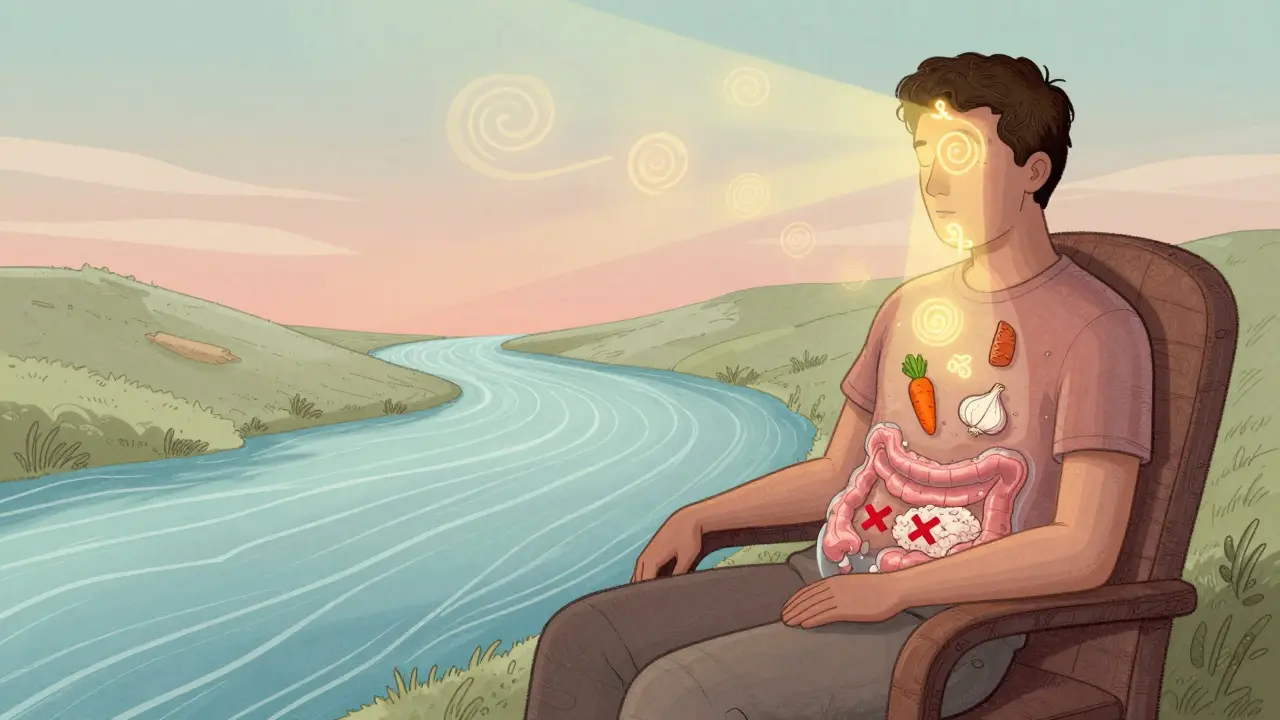
Here’s something that might surprise you: gut-directed hypnotherapy is more effective than most medications for IBS. In clinical trials, 70 to 80% of people who completed a 6- to 12-week program saw lasting symptom relief. That’s compared to 35 to 40% for standard medical care.
How does it work? You’re not being put to sleep. Instead, you learn to calm your nervous system’s overreaction to gut signals. Your therapist guides you to imagine your gut as calm, quiet, and in control. Over time, your brain stops interpreting normal gut activity as dangerous. The changes stick-studies show benefits last at least six months after treatment ends.
The downside? Access is limited. There’s only about one certified practitioner for every 500,000 people in rural areas. Sessions cost $1,200 to $2,500 out-of-pocket. Insurance rarely covers it. But if you’ve tried everything else, this might be your best shot.
Why Diets and Pills Often Fail
Most people with IBS try a dozen things before finding relief. The low-FODMAP diet? Tough to stick to. The elimination phase alone takes 4 to 6 weeks. Many give up because it’s confusing, expensive, and socially isolating.
Medications? Loperamide for diarrhea can cause dizziness. Antispasmodics like hyoscine make you drowsy. Many stop taking them within three months because the side effects outweigh the benefits. Even when they work, they don’t change the underlying problem. Your gut-brain axis stays dysregulated. Symptoms return as soon as you stop.
And diagnosis? It’s a long road. On Reddit’s IBS community, 68% of people spent 3 to 7 years seeing five or more doctors before getting a proper diagnosis. Too many are told they’re "anxious" or that their pain is "all in their head." That’s not just frustrating-it’s harmful. It delays real help.
A New Way Forward: The Stepped-Care Model
Leading experts now recommend a three-step approach:
- Education. Spend 15 to 20 minutes learning how the gut-brain axis works. Understanding that your symptoms are real and biological-not psychological-boosts treatment success by 30%.
- Diet. Work with a dietitian on a low-FODMAP plan. Don’t go it alone. Many people eliminate too much and end up malnourished.
- Neuromodulation. If symptoms persist, try gut-directed hypnotherapy or consider newer options like transcutaneous vagus nerve stimulation (tVNS). These devices send mild electrical pulses through the skin to calm the vagus nerve. Early studies show 45 to 55% pain reduction.
This isn’t about finding a magic bullet. It’s about fixing the system. You’re not broken. Your gut-brain connection just needs recalibration.
What’s Next for IBS Treatment?
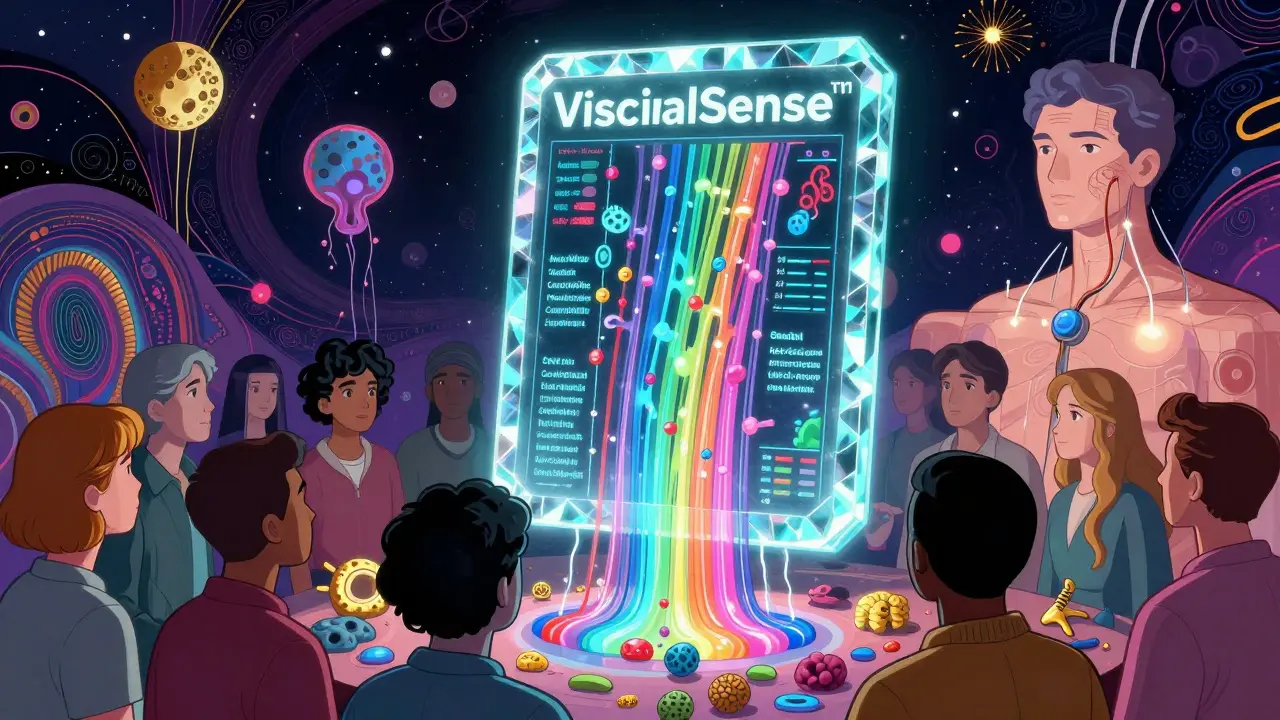
The future is personal. In 2023, the first gut-brain axis biomarker panel called VisceralSense™ launched. It measures 12 microbial metabolites and neurotransmitter ratios to predict which treatment will work for you. In clinical testing, it was 85% accurate.
Drug companies are pouring money into new therapies. Etrasimod, a drug targeting immune pathways in the gut, showed 52% symptom improvement in a recent trial-far better than placebo. The NIH has launched a $15 million project to build personalized treatment algorithms based on your unique gut-brain profile.
But here’s the reality: these advances won’t help if they’re only available to the wealthy. Right now, hypnotherapy, specialized dietitians, and advanced testing are out of reach for many. That’s the biggest barrier to real progress.
What you can do today? Start with education. Learn how your gut and brain talk to each other. That knowledge alone gives you power. Then, consider a low-FODMAP diet with professional help. If symptoms persist, ask your doctor about gut-directed hypnotherapy or tVNS. Don’t settle for temporary fixes. You deserve a treatment that addresses the real cause.
Is IBS just stress or anxiety?
No. While stress can make symptoms worse, IBS is a real biological disorder rooted in the gut-brain axis. Brain scans show structural differences in people with IBS, and chemical imbalances in gut neurotransmitters like serotonin are measurable. Anxiety and depression often coexist because the same brain regions control both emotion and gut function-but the condition itself is physical, not psychological.
Can the low-FODMAP diet cure IBS?
It doesn’t cure IBS, but it can dramatically reduce symptoms for 50 to 76% of people. The diet works by reducing foods that ferment too quickly in the gut, causing gas, bloating, and pain. After the initial elimination phase, you slowly reintroduce foods to find your personal triggers. It’s a management tool, not a cure-but for many, it’s life-changing.
Why don’t medications work for everyone?
Most IBS medications target symptoms, not the root cause. Antispasmodics relax muscles, laxatives move stool, and antidiarrheals slow transit. But they don’t fix the miscommunication between your gut and brain. That’s why relief is often temporary. Treatments that recalibrate the gut-brain axis-like hypnotherapy or microbiome therapy-tend to have longer-lasting effects because they address the system, not just the signal.
Is gut-directed hypnotherapy scary or weird?
It’s not like stage hypnosis. You’re fully awake and in control the whole time. A trained therapist guides you through calming visualizations focused on your gut. You might imagine your intestines relaxing, or warm light soothing your abdomen. It’s a form of mindfulness tailored to your body’s signals. Studies show it rewires how your brain processes gut sensations, leading to real, lasting relief.
How long until I see results from gut-brain axis treatments?
It varies. On a low-FODMAP diet, some feel better in 2 weeks. Gut-directed hypnotherapy usually takes 6 to 12 weekly sessions before major improvement. Medications like prucalopride or alosetron may show results in 2 to 4 weeks. But the key is consistency. The gut-brain axis doesn’t reset overnight. Treatments that work long-term require time and patience-because you’re retraining your nervous system, not just masking symptoms.

Cecelia Alta
Okay but let’s be real-gut-directed hypnotherapy sounds like something a wellness influencer would sell on Instagram for $300 a session. I tried it. Sat there for 45 minutes listening to someone tell me my intestines are ‘calm blue waves.’ I left more anxious. Also, who has $2,500 to waste on this? I work two jobs and my insurance thinks IBS is a ‘lifestyle choice.’
steve ker
serotonin in gut 95% yeah right
George Bridges
I appreciate how this breaks down the science without blaming patients. I’ve had IBS for 12 years and been told I’m ‘too stressed’ more times than I can count. The gut-brain axis explanation finally made sense to me. Not magic. Not weakness. Biology.
Faith Wright
LOL at the ‘low-FODMAP diet’ as if we’re all fancy food scientists now. I tried it. Ended up eating plain rice and boiled chicken for 6 weeks. Lost 15 lbs. My doctor said I was ‘malnourished.’ So thanks, science.
Audu ikhlas
you americans think your medical system is so advanced but you still dont know how to treat a simple stomach problem? we in nigeria just drink ginger tea and pray. works better than all this expensive nonsense
Sonal Guha
the data here is cherry picked. 70% relief from hypnotherapy? where’s the control group? where’s the long term follow up? this reads like a pharma ad disguised as a blog post
TiM Vince
I’ve been on a low-FODMAP diet for 8 months. It helped. But honestly? The biggest change came when I started journaling my stress levels and bowel habits side by side. The correlation was insane. I didn’t need hypnotherapy-I just needed to see the pattern.
gary ysturiz
You’re not broken. Your body’s just trying to tell you something. Listen. Start small. One change at a time. Maybe it’s cutting out dairy. Maybe it’s 10 minutes of breathing before meals. You got this. Progress > perfection.
Jessica Bnouzalim
OMG YES!! I did hypnotherapy and it literally changed my life!! 🙌 I used to cancel plans every weekend because I was scared of being near a bathroom. Now I travel. I eat tacos. I go to concerts. I’m not ‘fixed’-but I’m finally in charge. If you’re skeptical, just try ONE session. You have nothing to lose except your bloating!!
Prachi Chauhan
if the gut-brain axis is a conversation, then what are we saying? and who is listening? serotonin is just a messenger, not the message. the real question is why the system became so sensitive in the first place. trauma? toxins? time? we treat symptoms like they’re the cause. but maybe the cause is silence. the silence between the body and the mind.
Jennifer Phelps
so what about kids with IBS? my 10 year old has it. can they do hypnotherapy too? is there data on that?
beth cordell
just tried the vagus nerve stimulator thingy 🤯 it’s like a tiny taser for your neck but it feels like a warm hug? i’m not joking. i’ve been using it for 2 weeks and my bloating is down 70%. no meds. no diet. just a $200 gadget. if you’re curious, search ‘tVNS for IBS’ on YouTube. i’ll link it in comments 👇
Lauren Warner
Everyone keeps saying ‘it’s not in your head’ like that’s supposed to be comforting. But what if it IS in your head? What if your brain is the problem? What if you’re just wired wrong? That’s not empowering. That’s terrifying. And now you’re supposed to pay $2,000 to fix your wiring?
Cecelia Alta
to the person who said they tried hypnotherapy and it worked-congrats. But don’t act like it’s a universal fix. I had the same therapist. Same script. Same ‘calm blue waves.’ I cried during session 3 because it felt like emotional abuse. Not everyone’s nervous system responds to ‘visualization.’ Some of us need meds. Or surgery. Or just to be believed.
Lelia Battle
Thank you for writing this with such care. I’ve spent years feeling like a medical mystery. The fact that we now have biomarkers like VisceralSense™ gives me hope-not because it’s perfect, but because it’s a step toward seeing IBS as a legitimate, measurable condition. I hope insurance companies catch up soon.