
Imagine a frantic night in the Emergency Department. A toddler is burning up with fever, crying inconsolably. The parent hands over a bottle of liquid acetaminophen, desperate for relief. In the chaos, a decimal point is missed, or a concentration is confused. Suddenly, a simple dose becomes a toxic overdose. This isn't just a hypothetical nightmare; it is a documented reality that happens far too often.
Children are not just small adults. Their bodies process drugs differently, their weights change rapidly, and the medications available to them are often complex formulations requiring precise calculations. According to data from the US Pharmacopeia, pediatric patients experience medication errors at a rate of 31%, compared to only 13% in adults. That is more than double the risk. When you add the pressure of an emergency room-where seconds count and verbal orders fly-the margin for error shrinks dangerously thin.
This article breaks down real-world case lessons from pediatric emergencies. We will look at why these mistakes happen, the specific types of errors that cause harm, and the practical strategies that clinicians and parents can use to prevent them. By understanding the mechanics of these failures, we can build safer systems for our most vulnerable patients.
The Anatomy of a Pediatric Dosing Error
To fix a problem, you first have to understand its shape. In adult medicine, dosing is often standardized. You take one pill, twice a day. Simple. In Pediatric Medicine, nothing is standard. Every child has a unique weight, which changes as they grow. Therefore, every dose must be calculated individually, usually in milligrams per kilogram (mg/kg) of body weight.
This requirement for calculation introduces multiple points of failure. A study published in the Journal of Emergency Medicine found that calculation errors account for 20-35% of all medication mistakes in this setting. Let's look at a common scenario:
- The Weight Gap: If a child's weight is recorded incorrectly-or if an old weight from months ago is used-the entire dosage calculation is flawed. Research shows inaccurate weight measurement contributes to 10-31% of errors.
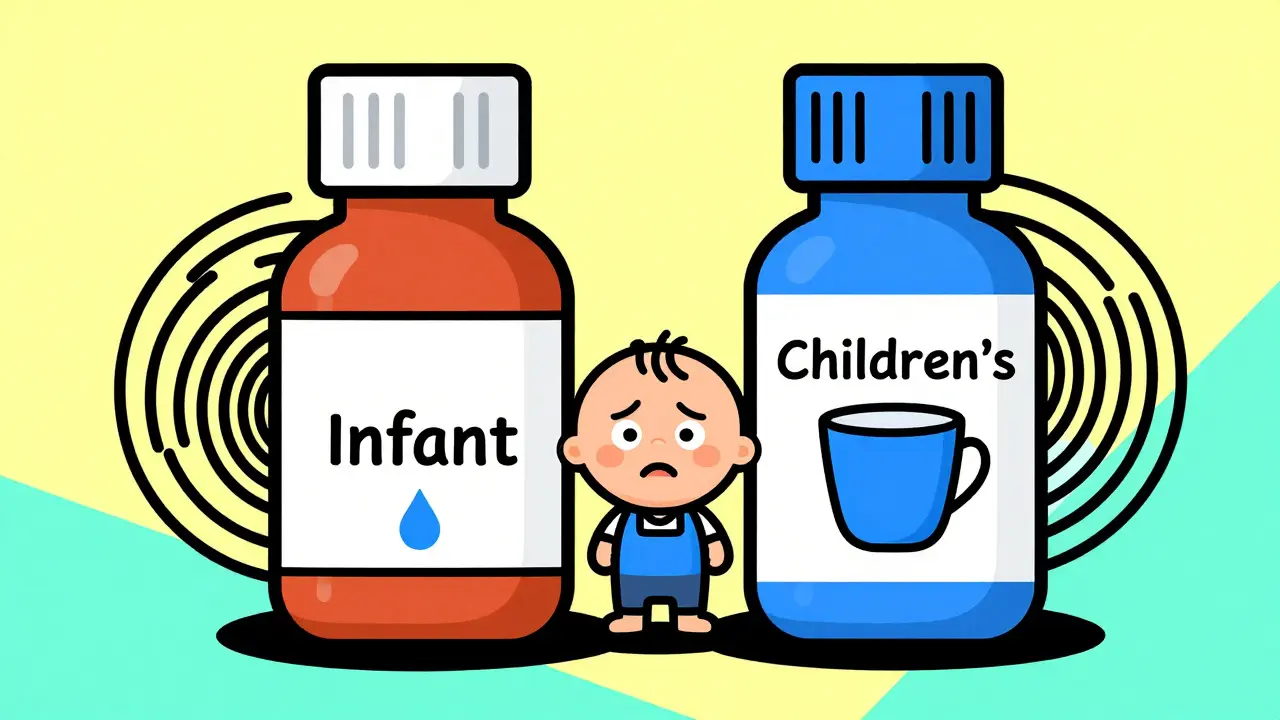
- The Concentration Trap: Liquid medications come in various strengths. Infant acetaminophen might be 80mg per 0.8mL, while children's acetaminophen is 160mg per 5mL. Confusing these two leads to a massive overdose or underdose.
- The Decimal Danger: Writing "5.0 mg" instead of "50 mg" is a classic transcription error. In high-stress environments, eyes skip zeros. This is why many hospitals now ban trailing zeros (writing "5." instead of "5.0") to prevent ambiguity.
These aren't just clerical slips; they are systemic vulnerabilities. The complexity of converting a child's weight into a volume of liquid medicine creates a cognitive load that overwhelms even experienced professionals when fatigued or rushed.
Case Study 1: The Liquid Concentration Confusion
Consider the case of Leo, a 2-year-old brought to the ED by his mother after she administered what she thought was a safe dose of pain reliever. She had been given instructions for "5 mL" of liquid medication. At home, she grabbed the bottle labeled "Children's Acetaminophen." However, the doctor had prescribed "Infant Concentrate" during a previous visit, which is significantly stronger.
Leo received ten times the intended dose. He didn't show immediate symptoms, but his liver enzymes were at risk. This case highlights a critical issue: packaging and labeling inconsistencies. Parents often reuse bottles or switch between brands without realizing the concentration has changed.
In the emergency department, this confusion can also happen among staff. If a nurse pulls a vial of antibiotic suspension without verifying the reconstitution instructions, the final concentration could be half or double what the order requires. The lesson here is clear: never assume concentration. Always verify the strength on the label against the order, and always teach parents to check the box and bottle every single time they administer a dose.
Case Study 2: The Verbal Order Miscommunication
Emergency departments are noisy. Alarms beep, phones ring, and doctors shout across rooms. Dr. Smith calls out to the charge nurse: "Give five milligrams of morphine to patient four!" The nurse hears "fifty milligrams."
This is a terrifyingly common scenario. Verbal orders are necessary in crises, but they are prone to catastrophic misinterpretation. Numbers like "five," "fifteen," and "fifty" sound similar, especially over background noise. Furthermore, drug names that sound alike (look-alike/sound-alike drugs) compound the risk. For instance, confusing *Epinephrine* with *Ephedrine*, or *Zofran* with *Vomiting* protocols.
Research indicates that frequent verbal orders are a primary driver of errors in pediatric EDs. The solution? Read-back protocols. The nurse must repeat the entire order back to the doctor verbatim: "You want me to give five milligrams of morphine to patient four?" The doctor then confirms. This simple step acts as a safety net, catching errors before the syringe is filled.
The Role of Health Literacy and Language Barriers
Medication safety doesn't end when the child leaves the hospital. In fact, a significant portion of errors occur at home, leading to return visits to the ER. Data from JAMA Network Open reveals stark disparities based on health literacy and language proficiency.
| Factor | Error Rate | Comparison Group |
|---|---|---|
| Limited Health Literacy | 68% | Adequate Literacy (29%) |
| Limited English Proficiency | 45% | English Proficient (28%) |
| Medicaid Enrolled | Higher Risk | Commercially Insured |
Why do these gaps exist? It's not about intelligence; it's about communication. Medical jargon confuses everyone. Telling a parent to "administer BID" means nothing if they don't know it means "twice a day." Similarly, explaining "mg/kg" requires math skills that many exhausted parents simply don't have time for at 2 AM.
Spanish-speaking families, for example, showed 32% higher error rates in studies when instructions were not provided in their native language. The fix is twofold: use plain language ("two times a day" instead of "BID") and employ professional medical interpreters, not family members, to translate discharge instructions. Visual aids, such as pictograms showing how much liquid to pour, have been shown to reduce errors by 35-45%.
Systemic Solutions: Technology and Protocols
Blaming individuals for mistakes is ineffective because humans are fallible. Instead, we must build systems that forgive human error. Leading institutions like Nationwide Children's Hospital have achieved an 85% reduction in harmful medication events by focusing on proactive system design.
Electronic Medical Records (EMR) with Smart Alerts
Modern EMRs can calculate doses automatically based on the patient's recorded weight. If a doctor tries to order a dose that exceeds the safe limit, the system blocks it. By 2023, 68% of children's hospitals had implemented these pediatric-specific dosing calculators. However, a major gap remains: community emergency departments often lack these advanced tools, creating a safety disparity between specialized children's hospitals and general ERs.
Standardized Measuring Devices
One of the biggest sources of home errors is the measuring tool. Kitchen teaspoons vary wildly in size. Some hold 3mL, others 6mL. Hospitals should never discharge a child with a prescription for liquid medication without providing a calibrated oral syringe or dosing cup. These devices have clear markings and eliminate guesswork.
The "Teach-Back" Method
Before a parent leaves the ED, ask them to explain back to you how they will give the medicine. "Can you show me how you'll measure the dose?" If they hesitate or get it wrong, there is still time to correct it. This method takes only 90 seconds but drastically improves adherence and accuracy.

Checklist for Safer Pediatric Medication Administration
Whether you are a clinician in the ER or a parent at home, use this checklist to minimize risk:
- Weigh the Child: Always use the most recent weight. Do not estimate.
- Calculate Twice: Have a second person verify the math, especially for high-alert drugs like insulin or heparin.
- Check the Label: Verify the drug name, strength (concentration), and expiration date.
- Use the Right Tool: Use only calibrated syringes or cups provided by the pharmacy.
- Clarify Instructions: Ensure the parent understands the dose, frequency, and duration. Use teach-back.
- Document Clearly: Avoid abbreviations. Write "microgram" not "mcg" if possible, and avoid trailing zeros.
Conclusion: A Shared Responsibility
Medication errors in pediatric emergencies are not inevitable. They are the result of complex interactions between human factors, system design, and communication gaps. By recognizing the unique vulnerabilities of children-such as the need for weight-based dosing and the prevalence of liquid formulations-we can implement targeted solutions.
Technology helps, but it is not a silver bullet. The most powerful tools remain clear communication, double-checks, and a culture where anyone can speak up if something looks wrong. As we move forward, the focus must shift from blaming individuals to building resilient systems that protect every child, regardless of where they seek care.
What is the most common type of medication error in pediatric emergencies?
The most common type is a dosing error, specifically related to incorrect calculations based on weight. Studies show that 13% of reported safety events are due to the wrong dose, and calculation errors account for 20-35% of all mistakes. Confusion between milliliters (volume) and milligrams (mass) is also extremely frequent.
Why are children more prone to medication errors than adults?
Children require weight-based dosing (mg/kg) rather than fixed adult doses. Additionally, many pediatric medications are liquids, which require precise measurement and are prone to concentration confusion. Children's physiology also processes drugs differently, making margins for error narrower.
How can parents prevent medication errors at home?
Parents should always use the measuring device provided by the pharmacy (oral syringe or dosing cup), never kitchen spoons. They should read the label every time to check the concentration, keep medications in their original containers, and ask the doctor to demonstrate the dose using the "teach-back" method before leaving the hospital.
What is the "read-back" protocol in emergency medicine?
The read-back protocol is a safety practice where the receiver of a verbal order repeats the entire order back to the prescriber verbatim. This confirms that the drug, dose, route, and patient were understood correctly, preventing miscommunication errors caused by noise or similar-sounding words.
Do electronic medical records (EMRs) eliminate medication errors?
EMRs significantly reduce errors by automating weight-based calculations and flagging unsafe doses. However, they do not eliminate them entirely. Errors can still occur if the initial weight entered is wrong, or if staff override alerts without proper justification. Community hospitals often lack the advanced pediatric-specific EMR tools found in specialized children's hospitals.
