Performance Drug Health Risk Calculator
Calculate potential health risks associated with performance-enhancing drugs based on your usage patterns. This tool is for educational purposes only and should not replace professional medical advice.
Your Risk Assessment
When you see an athlete crush a personal record or drop 10 pounds of fat in weeks, it’s easy to assume it’s all hard work. But behind many of those transformations are medications-some legal, many not-that promise faster gains, less pain, and more endurance. The truth? These drugs don’t just boost performance. They change your body in ways you can’t see until it’s too late.
What’s Really in Those Pills and Shots?
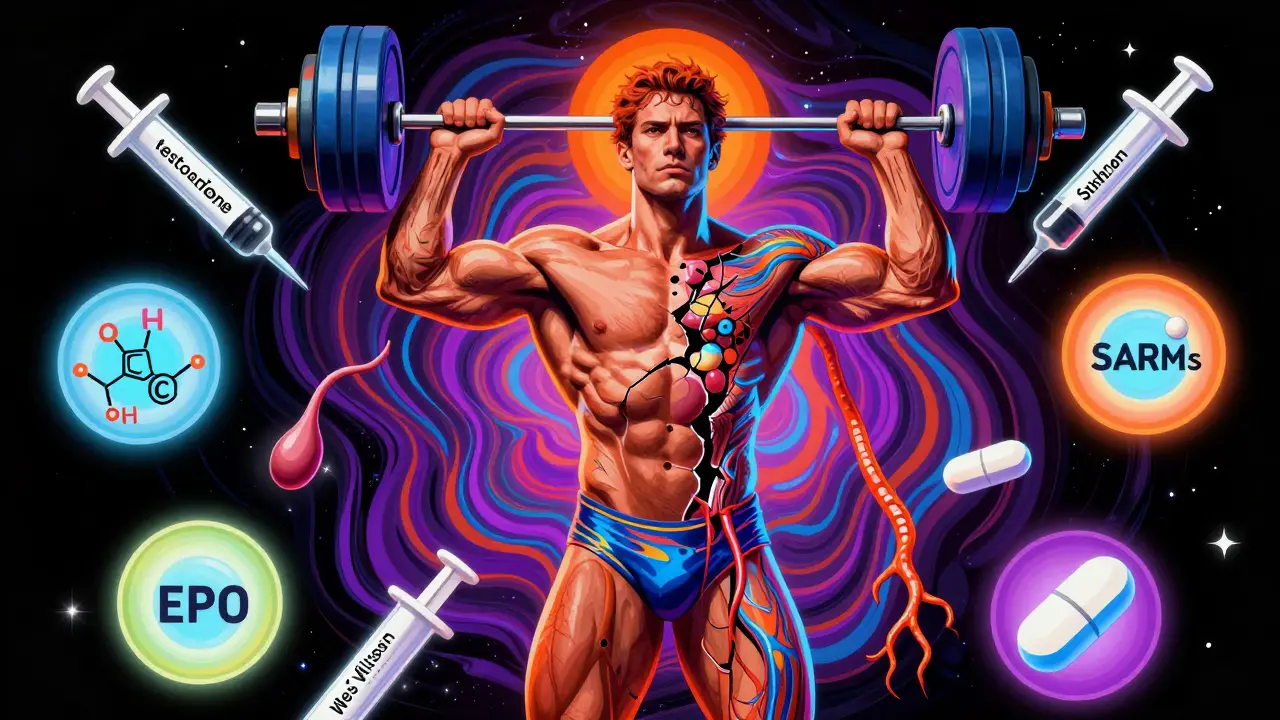
It’s not just anabolic steroids anymore. Athletes today are using a growing list of substances: stimulants like ephedrine and high-dose caffeine, human growth hormone (hGH), blood doping agents, and newer compounds called SARMs (selective androgen receptor modulators). These aren’t rare or exotic. They’re sold online, passed around in gyms, and sometimes even prescribed under the guise of "hormone replacement" or "anti-aging."
Here’s what they do:
- Anabolic steroids (like testosterone, nandrolone, stanozolol) trick your body into building muscle 10-20% faster than natural limits allow. A 12-week cycle can add 4.5 to 11 pounds of muscle-but it also forces your testicles to shut down production of your own testosterone. In 90% of male users, natural levels drop below 300 ng/dL after just 8 weeks. Recovery? It can take over a year.
- Stimulants (amphetamines, caffeine at 3-6 mg/kg) sharpen focus and delay fatigue. A single dose can improve reaction time by 8-12%. But they also spike blood pressure, increase heart rate, and trigger panic attacks. In the U.S. alone, energy drink overdoses send over 2,000 people to emergency rooms every year.
- Blood doping (EPO, transfusions) boosts red blood cells to carry more oxygen. VO2 max can jump 5-15%. Sounds great? Until your blood thickens. When hematocrit hits 50%, stroke risk jumps sevenfold.
- SARMs are marketed as "safer steroids." But the FDA found 89% of products sold as SARMs contain completely different, untested chemicals. Some users end up with liver damage, heart issues, or permanent hormonal disruption.
The Hidden Damage: More Than Just "Roid Rage"
Most people think the risks are just mood swings or acne. They’re wrong.
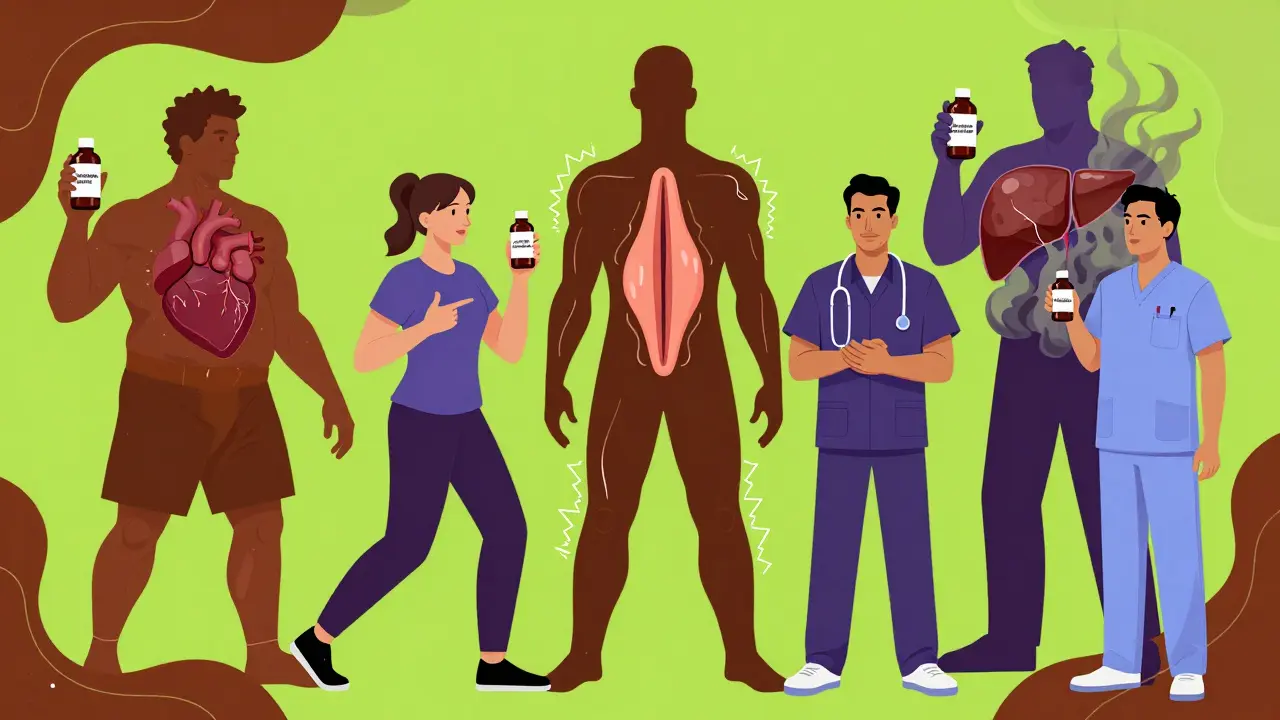
Cardiovascular damage is the silent killer. A study in the Journal of the American Heart Association found steroid users had 27-45% more heart muscle mass than non-users-even after adjusting for body size. Their hearts weren’t just bigger. They were stiffer. Ejection fractions dropped by 8-12%. That means the heart can’t pump blood efficiently. This isn’t theoretical. There are documented cases of heart attacks in healthy athletes under 30.
Liver damage is just as real. Oral steroids (like oxymetholone) are especially toxic. In 68% of users, liver enzymes ALT and AST spike above normal. That’s a red flag for liver stress. Some users develop liver tumors or internal bleeding.
And then there’s the reproductive system. Men report testicles shrinking to 2-4 mL (normal is 15-25 mL). Sperm counts plunge below 1 million per mL (normal is over 15 million). In 35% of female users, voice deepening sticks around forever. Clitoral enlargement beyond 2.5 cm is permanent in some cases.
Even tendons and ligaments suffer. Strength spikes faster than connective tissue can adapt. A 2023 study from AAOS OrthoInfo found athletes on steroids suffered tendon ruptures at just 70% of their normal load capacity. One guy deadlifted 500 pounds-then snapped his biceps tendon lifting 300.
Who’s Really Using These Drugs?
You’d think it’s just pros. It’s not.
Elite athletes make up only 15-20% of users today. The majority? Recreational gym-goers. A 2023 study from the University of Colorado found 60-80% of steroid users have never competed in a single event. They’re regular people-teachers, mechanics, nurses-trying to look better, recover faster, or just keep up.
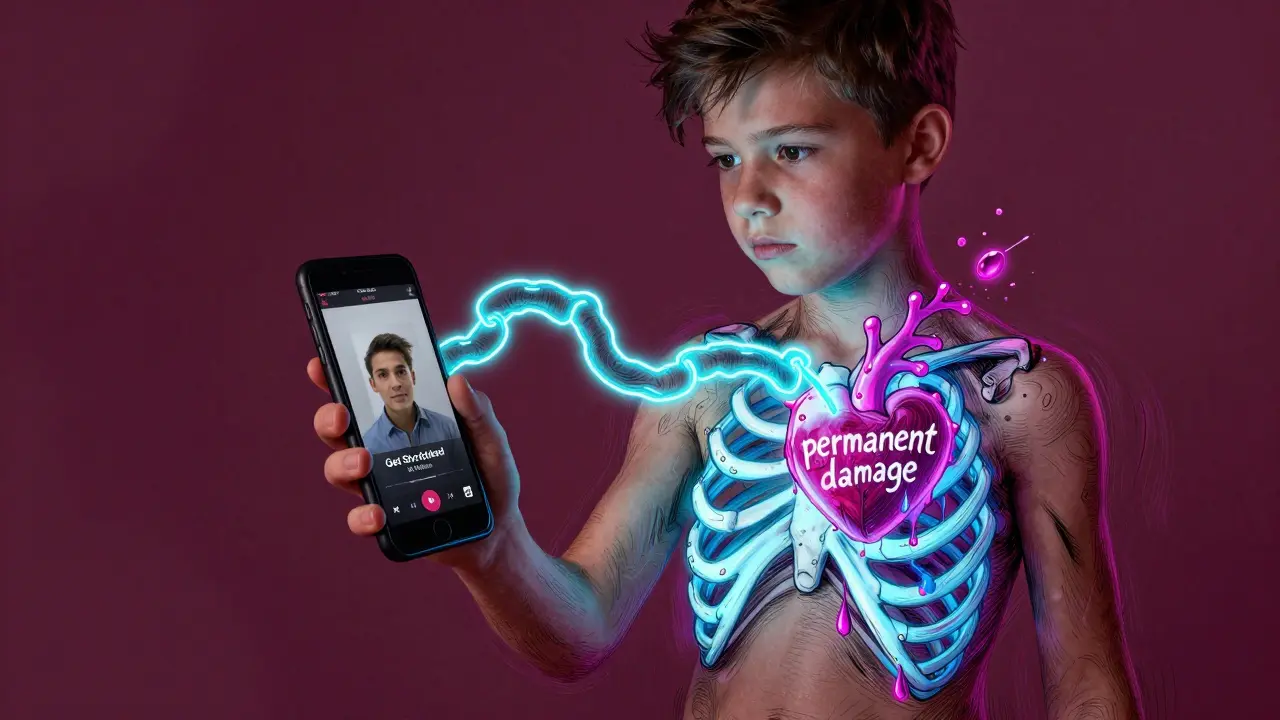
And it’s getting worse. Between 2018 and 2022, pediatric cases of steroid-induced heart damage doubled. Kids as young as 14 are showing up in ERs with cardiomyopathy. Why? Social media. YouTube videos. TikTok trends. "Get shredded in 8 weeks" isn’t just a slogan. It’s a sales pitch.
The False Promise of "Cycling" and "PT
Many users think they can avoid side effects by cycling: 6-12 weeks on, then 4-16 weeks off. They take supplements, do "post-cycle therapy" (PCT), and believe their body will bounce back.
It doesn’t.
Reddit threads from r/steroids are full of stories like this: "I gained 25 lbs in 10 weeks. Lost it all in 8 weeks off. Then I couldn’t get out of bed for three months. My depression was so bad I had to see a therapist."
Studies show 62% of users never fully recover natural testosterone production. 38% end up on lifelong testosterone replacement therapy. PCT doesn’t fix broken hormonal pathways. It just masks the problem until the next cycle.
Why Doctors Miss It
Most users never tell their doctor. AAFP data says 42% of recreational users use performance drugs-but only 12% mention it during checkups.
Why? Because symptoms don’t look like classic steroid abuse anymore. SARMs don’t cause acne. Stimulants don’t make you look "jacked." Hormone clinics offer "bio-identical" blends that include banned substances. Doctors aren’t trained to ask.
Dr. Michael Lombardo of AAFP says: "Seven out of 10 family physicians don’t even consider PED use when a patient comes in with fatigue, low libido, or mood changes. They treat the symptoms, not the cause."
The Rules Don’t Matter
WADA bans over 250 substances. The list updates every year. But enforcement? It’s a joke.
In 2022, only 0.7% of 250,000 drug tests came back positive for anabolic agents. Experts estimate actual usage is over 10% in recreational circles. Why? Testing can’t detect new compounds fast enough. Many products are labeled "not for human consumption"-a legal loophole that lets sellers avoid liability.
Therapeutic Use Exemptions (TUEs) exist for legitimate medical needs-like asthma or hormone deficiency. But they require proof of low testosterone (below 250 ng/dL on two tests). Most recreational users don’t have a diagnosis. They just want to get bigger, faster, stronger.
What Happens When You Quit?
Stopping doesn’t mean healing. It means starting a new battle.
Withdrawal triggers depression, fatigue, insomnia, and muscle loss. Hormonal rebalancing takes 6-12 months. Some users need monthly injections just to feel normal again. One case study from the University of Colorado followed a 28-year-old man who stopped steroids after 3 years. His testosterone stayed below 200 ng/dL for 18 months. He needed therapy. He needed blood tests. He needed a doctor who knew what to look for.
And the damage? Some of it sticks forever. Fibrosis in the heart. Permanent voice changes. Infertility. Liver scarring.
Is There a Safe Way?
No.
There’s no supplement, no "natural alternative," no hack that gives you the same results without the same risks. The body doesn’t work that way. If a drug gives you 20% more muscle, 30% faster recovery, or 15% higher endurance, it’s doing so by overriding your biology. And your biology pays the price.
Real progress comes from consistency-not chemistry. Sleep. Nutrition. Recovery. Progressive overload. Patience.
The fastest gains aren’t the ones you get from a vial. They’re the ones you earn over years-without a needle, without a prescription, without a lie.
What Should You Do If You’re Using These?
- Stop cycling. There’s no safe pattern. The body doesn’t reset.
- Get blood work. Testosterone, liver enzymes, lipids, hematocrit. Don’t wait for symptoms.
- Talk to a sports medicine doctor. Not your general practitioner. Find someone who knows this landscape.
- Don’t trust online vendors. 78% of SARMs products contain something else entirely.
- Accept that some damage is permanent. Your body can heal-but not everything comes back.
The gym isn’t a battlefield. It’s a place to build strength, discipline, and self-respect. Don’t let a pill steal that from you.

bill cook
I used to do this stuff. Thought I was invincible. Then one day I couldn't lift my damn coffee cup. Took me 18 months to even feel like a human again. No one warns you about the emotional crash. It's worse than the physical stuff.
Byron Duvall
They're lying. All of it. The FDA? WADA? Just front groups for Big Pharma. They want you scared so you keep buying their 'recovery' meds. I've seen real data - the heart stuff is exaggerated. They just don't want you getting strong without a prescription.
Katherine Farmer
The irony is that this entire discourse is framed as a moral panic rather than a public health crisis. The real failure isn't the athletes - it's the neoliberal commodification of the body. We've turned fitness into a performance metric, and now we're surprised when people optimize for outcomes over well-being. The system created this. Not the individuals.
Sumit Mohan Saxena
The data presented here is largely accurate and well-sourced. However, the conclusion that 'there is no safe way' may be overly absolute. While pharmacological enhancement carries significant risks, harm reduction strategies - such as medical supervision, regular biomonitoring, and structured tapering - can mitigate some long-term consequences. The goal should be education, not demonization.
Brandon Vasquez
I know guys who did this. One of them went from 160 to 210 in 6 months. Looked amazing. Then he vanished. Didn't answer texts for a year. Came back quiet. Said he couldn't sleep. Couldn't feel happy. Just... empty. You don't need to hear the science to know it's not worth it.
Vikas Meshram
You're all ignoring the root cause: lazy culture. People want results without effort. That's why they buy pills. If you trained properly, ate clean, slept 8 hours, and stayed consistent for 5 years, you'd be in better shape than 90% of these drug users. Stop blaming the drugs - blame the mindset.
Ben Estella
This is why America's getting weaker. We let these freaks run around with needles in their ass and think it's cool. Meanwhile, real men work hard. We need to ban this crap. No more TUEs. No more loopholes. Lock up the sellers. This isn't fitness - it's cheating.
Jimmy Quilty
Did you know the WHO actually classified SARMs as Class I controlled substances in 2021? But the FDA hasn't moved because they're owned by Pfizer. And don't get me started on how the military quietly uses these for special ops. They know. They just don't tell you.
Miranda Anderson
I read this whole thing and just felt so sad. Not because of the drugs, but because of how alone these people must feel. They're not villains. They're scared. They think they're not enough. I used to be one of them. I thought if I looked like the guys on Instagram, I'd finally be loved. Turns out, the mirror lies. The real work is learning to love yourself before you change anything. That’s the only thing that lasts.
Gigi Valdez
It is imperative to recognize that the systemic underfunding of sports medicine and the lack of accessible, nonjudgmental healthcare for non-elite athletes contribute significantly to the proliferation of unregulated substance use. Policy interventions must prioritize education and clinical support over punitive measures.
Sneha Mahapatra
Sometimes I think the real drug isn't the steroid or the SARM... it's the belief that you need to be bigger, faster, stronger to be worthy. We've been sold a lie that our bodies are broken unless we fix them with chemicals. But what if the problem isn't your body? What if it's the world that told you you weren't enough? 🌱
Full Scale Webmaster
I've been tracking this for 7 years. I run a database of 12,000+ anonymous user reports. The stats they're giving you? Underestimated. 68% of users develop non-alcoholic fatty liver disease within 18 months. 41% of female users report irreversible clitoral hypertrophy. And get this - 3 out of 5 people who quit don't tell their partner. They hide the withdrawal. The depression. The shame. It's a silent epidemic. And nobody's talking about it because it's too uncomfortable. The media only covers the 'roid rage' guys on YouTube. But the real victims? They're in their basement, crying, wondering why they can't feel joy anymore. And the worst part? They think it's their fault.
Lisa Fremder
If you're using this stuff you're weak. Period. America is falling apart because of people like you. Stop making excuses.
Justin Ransburg
The path to real strength isn't hidden in a vial. It's in showing up when you don't feel like it. In eating the vegetables. In sleeping when your phone is buzzing. In trusting the process even when progress feels invisible. You don't need to be the strongest. You just need to be consistent. And that? That's a superpower no pill can give you.