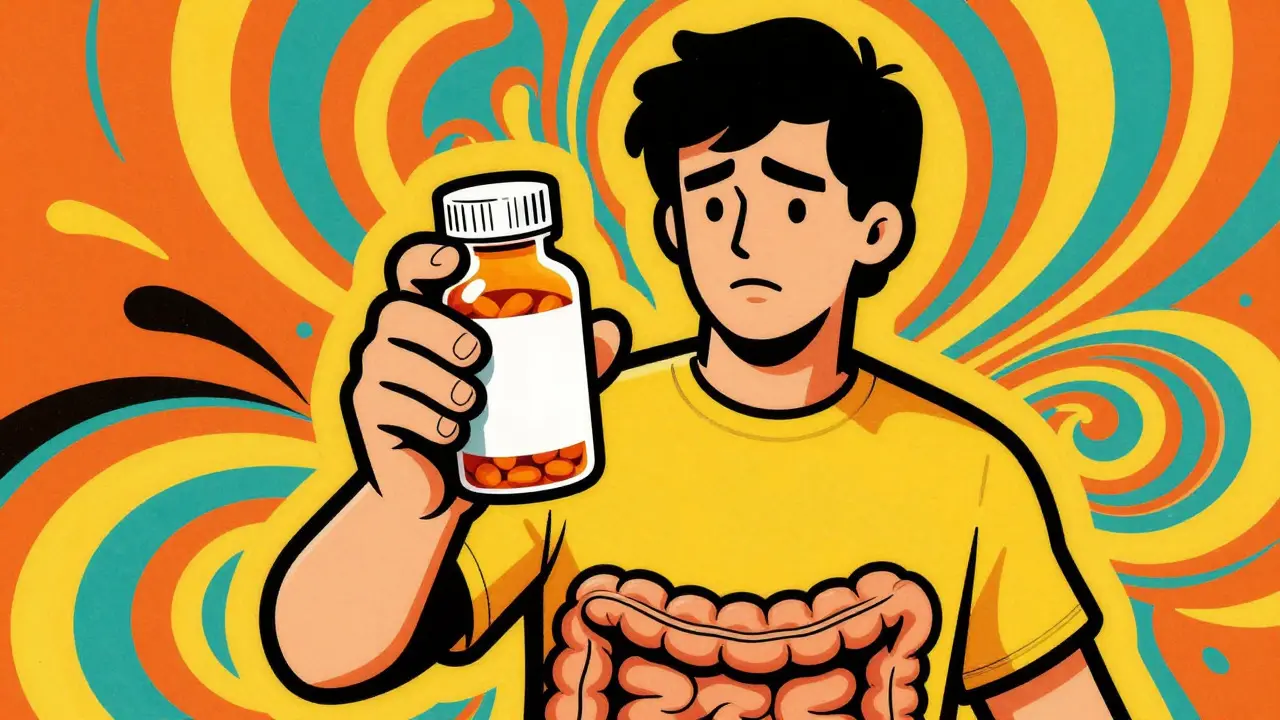
It starts as a simple headache or a stiff knee. You reach for the bottle of ibuprofen or naproxen on your shelf. It’s safe, right? After all, you buy it without a prescription. But what happens when that "safe" dose turns into an overdose, either by accident or through chronic overuse? The answer often lies in your gut. Non-steroidal anti-inflammatory drugs (NSAIDs) are powerful painkillers, but they carry a hidden cost: they can silently erode the lining of your digestive tract, leading to severe gastrointestinal bleeding.
This isn't just about feeling a bit queasy. We are talking about life-threatening complications that strike without warning. In fact, studies show that up to 70% of people taking long-term NSAIDs have visible damage to their gut lining, even if they feel perfectly fine. Understanding how these drugs work, who is at risk, and what to do in an emergency is crucial for anyone relying on them for pain relief.
How NSAIDs Damage Your Gut
To understand the risk, you first need to know how NSAIDs actually work. They block enzymes called cyclooxygenase (COX). These enzymes produce prostaglandins, which cause inflammation and pain. That’s the good part. The bad part? Prostaglandins also protect your stomach lining. They stimulate mucus production and blood flow to keep the stomach wall healthy against acid.
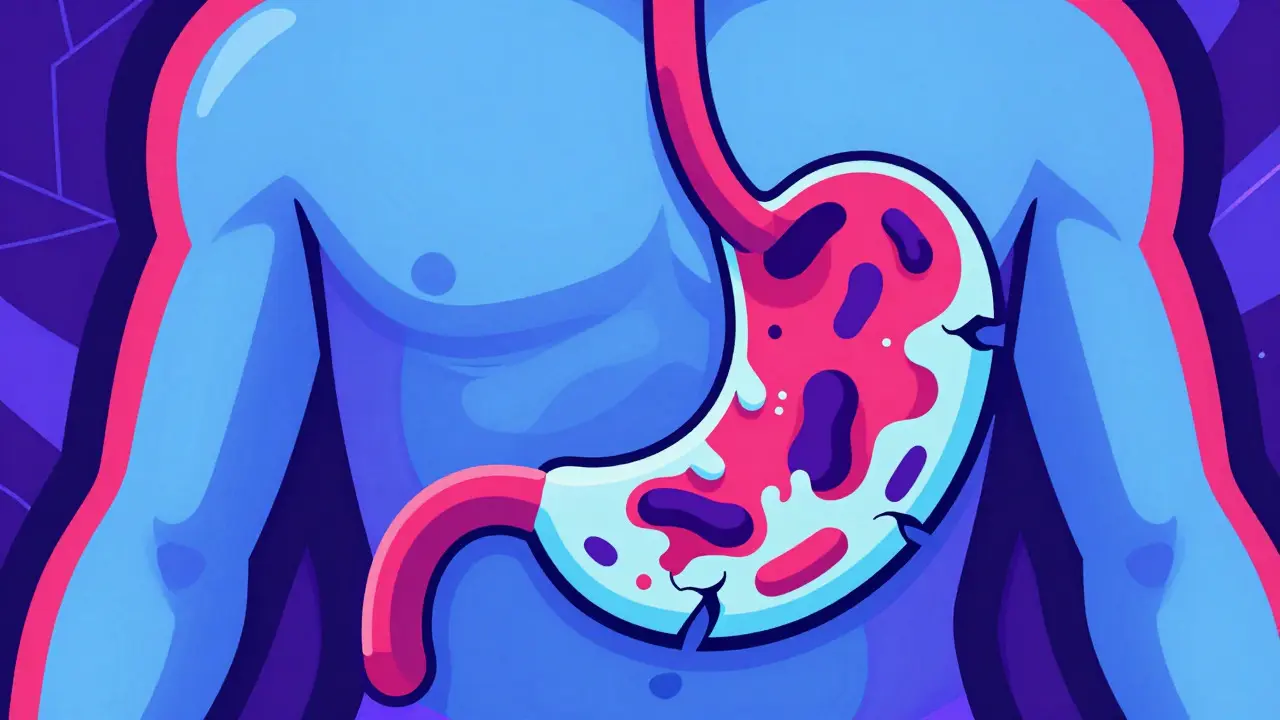
When you take an NSAID, you stop the pain, but you also strip away this protection. Without those protective prostaglandins, stomach acid begins to eat away at the tissue. This process doesn’t happen overnight for everyone, but it creates a vulnerability. An overdose accelerates this damage significantly. Instead of minor irritation, you might develop erosions, ulcers, or even perforations-holes in the stomach or intestine wall.
The damage isn't limited to the stomach. NSAIDs can cause injury throughout the entire gastrointestinal tract, from the esophagus down to the large intestine. This includes non-specific colitis and increased gut permeability, which allows bacteria and toxins to leak into the bloodstream, causing systemic issues beyond just local pain.
Silent Dangers: Why Symptoms Lie
Here is the most dangerous myth about NSAID use: "If my stomach hurts, I’ll stop." The problem is that serious damage often happens without any pain at all. Clinical data reveals that while only about 10% of long-term users report heartburn or indigestion, endoscopies show abnormalities in 70% of them.
You can have a bleeding ulcer and feel nothing until it becomes critical. Many patients present with iron deficiency anemia because they are losing small amounts of blood daily-a condition known as occult bleeding. Others experience overt bleeding, which manifests as black, tarry stools (melena) or vomiting material that looks like coffee grounds. By the time these symptoms appear, the bleed is often significant enough to require hospitalization.
A study published in the *Canadian Family Physician* noted that NSAID-induced GI toxicity is the 15th leading cause of hospital admissions for GI bleeding. This statistic highlights that this is not a rare side effect; it is a major public health issue driven by widespread access to these medications.
Who Is at Highest Risk?
Not everyone who takes an extra pill will bleed, but certain groups face exponentially higher risks. Identifying where you fall on this spectrum is vital for prevention.
- Previous Ulcer History: If you’ve had a peptic ulcer before, your risk of recurrence is sky-high when using NSAIDs.
- Age: Elderly patients have thinner stomach linings and slower healing rates. The risk increases sharply after age 60.
- H. pylori Infection: This common bacterial infection works synergistically with NSAIDs. Having both increases the bleeding risk by 1.2-fold compared to having neither.
- Concomitant Medications: This is the biggest danger zone. Taking NSAIDs with aspirin, blood thinners (anticoagulants), or steroids multiplies the risk.
Consider the patient taking low-dose aspirin for heart protection. Adding an NSAID for arthritis creates a two-fold increase in GI bleeding risk and a 1.4-fold increase in adverse cardiovascular events. The ACCF/ACG/AHA Expert Consensus Document warns that combining NSAIDs with aspirin raises the annual risk of upper GI events to 5.6%. For context, that means more than 1 in 20 patients in this group will suffer a serious GI event each year.
Recognizing an NSAID Overdose
An acute overdose usually occurs when someone takes much more than the recommended dose, perhaps thinking "more equals better pain relief." The symptoms go beyond stomach upset. Early signs include nausea, vomiting, dizziness, and ringing in the ears (tinnitus). As the toxicity progresses, you may see confusion, seizures, or kidney failure.
However, the gastrointestinal manifestation remains the primary concern for long-term morbidity. If you suspect an overdose, look for these red flags immediately:
- Black, Tarry Stools: This indicates digested blood from an upper GI bleed.
- Vomiting Blood: Or material resembling coffee grounds.
- Severe Abdominal Pain: Sudden, sharp pain could indicate a perforation.
- Dizziness or Fainting: Signs of significant blood loss and dropping blood pressure.
If any of these occur, seek emergency medical attention immediately. Do not wait to see if it passes.

Care and Management Strategies
Treating NSAID-induced GI bleeding requires a multi-step approach. First, the offending agent must be stopped. In a hospital setting, doctors will stabilize the patient with IV fluids and possibly blood transfusions if the loss is severe. Endoscopy is often used to locate the bleed and cauterize the vessel.
For medication management, proton pump inhibitors (PPIs) are the gold standard for high-risk patients. PPIs reduce stomach acid, allowing ulcers to heal. However, research suggests that while PPIs protect the stomach, they may not fully prevent small bowel mucosal injury caused by NSAIDs. This is a critical gap in current prophylaxis.
What about COX-2 selective inhibitors (coxibs)? These were designed to spare the stomach. While they do reduce upper GI complications compared to traditional NSAIDs, they offer no additional gastroprotection when combined with aspirin. In fact, some studies show similar rates of upper GI events between coxibs plus aspirin versus traditional NSAIDs plus aspirin. Therefore, switching to a coxib is not a magic bullet if you are already on dual therapy.
Prevention: A Practical Checklist
Prevention is far easier than cure. If you need NSAIDs, follow these evidence-based steps to minimize risk:
- Use the Lowest Effective Dose: Don’t exceed the label instructions. More drug does not mean less pain; it means more damage.
- Limit Duration: Use NSAIDs for the shortest time possible. Switch to acetaminophen (paracetamol) if appropriate, as it has a lower GI risk profile (though it carries liver risks at high doses).
- Check for Interactions: Always tell your doctor if you take aspirin, warfarin, clopidogrel, or steroids. They may prescribe a PPI alongside your painkiller.
- Test for H. pylori: If you have a history of ulcers, ask your doctor to test for and treat this bacteria before starting long-term NSAID therapy.
- Avoid Alcohol: Alcohol irritates the stomach lining independently. Combining it with NSAIDs compounds the erosion risk.
Remember, enteric-coated or buffered aspirin/NSAIDs do not eliminate the risk. They delay absorption in the stomach but still inhibit prostaglandins systemically, causing damage downstream in the intestines.
How quickly can NSAIDs cause stomach bleeding?
Damage can begin almost immediately upon ingestion, as prostaglandin inhibition happens rapidly. However, clinically significant bleeding usually develops over weeks or months of continuous use. In cases of acute overdose, severe gastric irritation and potential bleeding can occur within hours.
Is it safe to take ibuprofen with aspirin for heart health?
Generally, no. Combining NSAIDs like ibuprofen with low-dose aspirin significantly increases the risk of gastrointestinal bleeding (up to 5.6% annually) and can interfere with aspirin's cardioprotective effects. Consult your doctor before combining them; they may recommend alternative pain relievers.
Do COX-2 inhibitors prevent stomach ulcers?
COX-2 inhibitors (like celecoxib) reduce the risk of upper GI ulcers compared to traditional NSAIDs. However, they do not eliminate the risk entirely, especially in high-risk patients or those taking concurrent aspirin. They also carry their own cardiovascular risks.
What are the signs of a silent GI bleed?
Silent bleeds often present as unexplained fatigue, weakness, shortness of breath, or pale skin due to iron deficiency anemia. You might not see blood in your stool, but laboratory tests will reveal low hemoglobin levels. Regular monitoring is key for long-term NSAID users.
Can probiotics help prevent NSAID-induced gut damage?
Some emerging research suggests that certain probiotic strains may help mitigate NSAID-induced gut permeability and inflammation. However, they are not yet considered a standalone replacement for proven gastroprotective agents like PPIs in high-risk patients. Discuss with your healthcare provider.
