Imagine you’ve spent over a decade and billions of dollars developing a life-saving medication. You finally get the green light from regulators to sell it. But here’s the catch: just because you have the right to sell it doesn’t mean competitors can’t jump in immediately. This is where the confusing world of patent exclusivity and market exclusivity comes into play. For anyone in the pharmaceutical industry-or even a curious patient wondering why generics aren’t available yet-understanding this distinction is crucial. These two legal shields operate differently, come from different government agencies, and expire on different schedules.
The Two Keys to the Pharmaceutical Kingdom
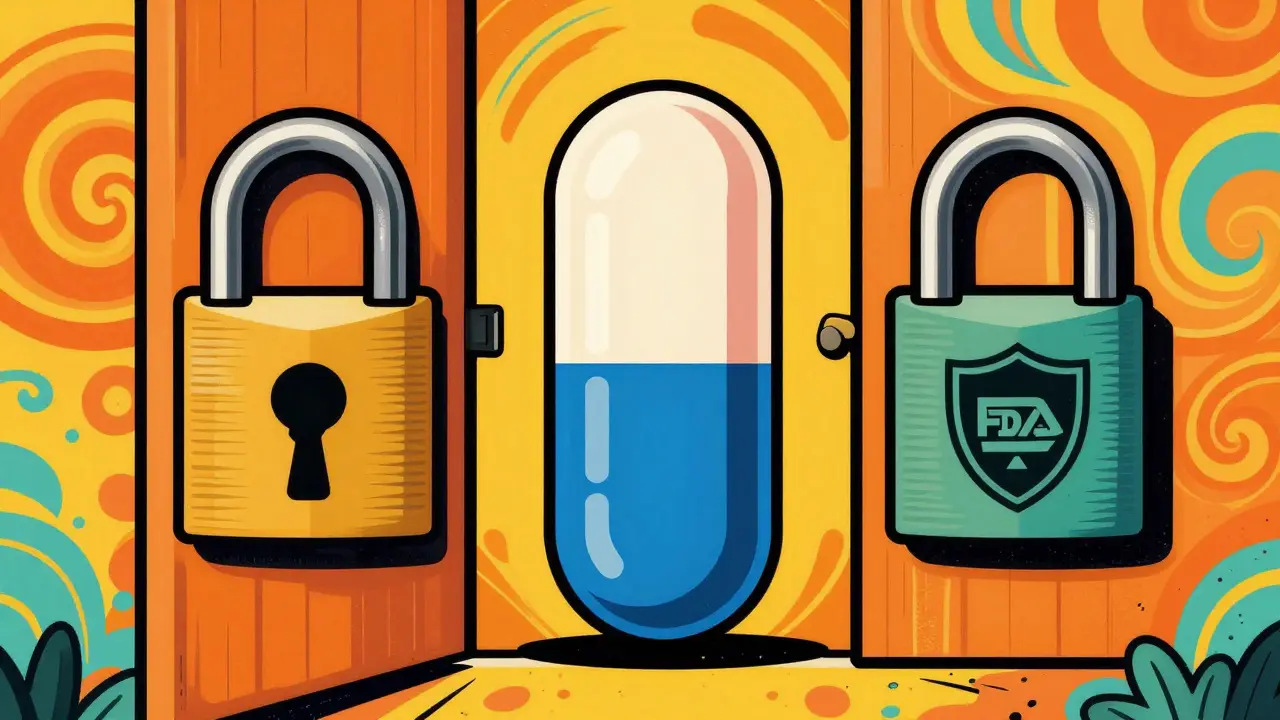
To keep things simple, think of patent exclusivity and market exclusivity as two separate locks on the same door. If either lock is engaged, generic competitors cannot enter the market. The first lock is managed by the United States Patent and Trademark Office (USPTO), while the second is controlled by the Food and Drug Administration (FDA). They were created under the Hatch-Waxman Act of 1984 to balance innovation with access, but they function independently.
In contrast, Market Exclusivity is a regulatory privilege granted by the FDA that prohibits the agency from approving applications for competing drugs for a specific time. Unlike patents, market exclusivity is self-enforcing; the FDA simply will not process a generic application if exclusivity is still active.
How Long Do These Protections Last?
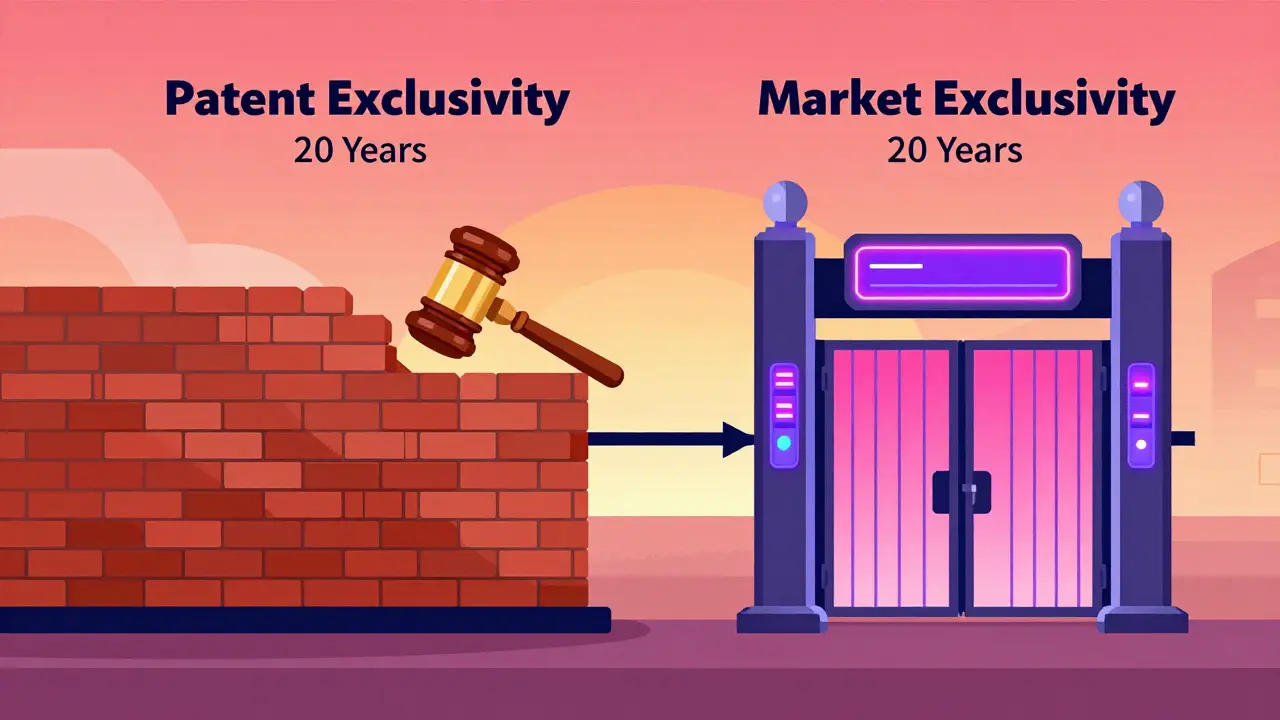
The duration of these protections varies significantly, which often leads to confusion. A standard patent lasts for 20 years from the date it was filed. However, since drug development takes 10-15 years, companies rarely enjoy the full 20 years of market protection. To compensate, the USPTO offers Patent Term Extension (PTE), which can add up to 5 years, capped so that the total post-approval patent life does not exceed 14 years.
Market exclusivity periods are fixed and depend on the type of drug:
- New Chemical Entity (NCE): 5 years of data exclusivity, during which the FDA cannot accept Abbreviated New Drug Applications (ANDAs).
- Biologics: 12 years of exclusivity under the Biologics Price Competition and Innovation Act (BPCIA) of 2009.
- Orphan Drugs: 7 years of exclusivity for treatments targeting rare diseases, regardless of patent status.
- Pediatric Studies: An additional 6 months added to existing protections if the sponsor completes requested pediatric clinical trials.
- First Generic Challenger: 180 days of market exclusivity for the first company to successfully challenge a listed patent.
Key Differences: Enforcement and Scope
The most critical difference lies in enforcement. Patents are not self-executing. If a competitor tries to make your patented drug, you must sue them. This is expensive and time-consuming. Market exclusivity, however, is enforced by the FDA itself. If the exclusivity clock is ticking, the FDA’s computer systems will block the approval of any competing product, no lawsuit required.
Another major distinction is what is being protected. Patents protect specific inventions, such as the chemical composition, manufacturing process, or method of use. Market exclusivity protects the approved drug product itself. This means a drug can have market exclusivity even if it isn’t novel enough to receive a strong composition-of-matter patent. For example, in 2010, Mutual Pharmaceutical received 10 years of regulatory exclusivity for colchicine, an ancient heart medication, allowing them to raise prices significantly despite having no new patentable invention.
| Feature | Patent Exclusivity | Market Exclusivity |
|---|---|---|
| Governing Agency | USPTO | FDA |
| Enforcement | Self-enforced via litigation | Automatically enforced by FDA |
| Duration | 20 years from filing (+ extensions) | Varies (5-12 years depending on drug type) |
| Basis for Grant | Novelty, non-obviousness, utility | Regulatory approval and clinical data submission |
| Impact on Generics | Generics can file ANDA early but must wait for expiration or win lawsuit | FDA cannot approve ANDA until exclusivity expires |
Strategic Implications for Pharma Companies
For pharmaceutical companies, navigating these dual protections is a high-stakes game. According to the FDA’s 2021 analysis, only 27.8% of branded drugs have both strong patent and regulatory exclusivity. Many rely primarily on one or the other. Small biotech firms, in particular, often lean heavily on regulatory exclusivity because obtaining broad patents is difficult and costly. In fact, 73% of small biotechs rely primarily on regulatory exclusivity for their lead products.
However, mistakes happen. A 2023 analysis by Scendea Consulting found that 22% of innovator companies failed to claim all available regulatory exclusivities between 2018 and 2022, leaving an average of 1.3 years of potential protection unclaimed. This oversight can cost millions in lost revenue. Conversely, generic manufacturers invest heavily in "Paragraph IV" certifications to challenge listed patents, with average legal costs reaching $8.3 million per challenge. The goal is to find weaknesses in the patent thicket while waiting for market exclusivity to expire.
Why This Matters for Patients and Prices
These legal frameworks directly impact drug prices and availability. When both patent and market exclusivity are in place, competition is blocked, and prices remain high. Once these protections lapse, generic entry typically drives prices down by 80-90%. However, when regulatory exclusivity outlasts patent protection-as seen in the colchicine case-patients may face high costs for decades without the benefit of competitive generics. Understanding these timelines helps stakeholders predict when affordable alternatives will become available.
Can a drug have market exclusivity without a patent?
Yes. Market exclusivity is granted by the FDA based on regulatory submissions and clinical data, not patentability. A drug like colchicine has received regulatory exclusivity despite having no novel patentable invention, preventing generic competition for years.
Who enforces patent exclusivity versus market exclusivity?
Patent exclusivity is enforced by the patent holder through civil litigation in court. Market exclusivity is enforced automatically by the FDA, which refuses to approve competing drug applications while the exclusivity period is active.
How long does market exclusivity last for biologics?
Biologics receive 12 years of market exclusivity under the Biologics Price Competition and Innovation Act (BPCIA) of 2009. This is longer than the 5-year data exclusivity typically granted to small molecule drugs.
What happens when patent exclusivity expires but market exclusivity remains?
Generic manufacturers can file their applications early, but the FDA cannot approve them until the market exclusivity period ends. This creates a bottleneck where generics are ready to launch but legally barred from entering the market.
Do all drugs receive both types of exclusivity?
No. Only about 27.8% of branded drugs have both strong patent and regulatory exclusivity. Many rely solely on one form of protection, depending on the novelty of the invention and the regulatory pathway used.

Mark Hogan
honestly this whole system is a bit of a mess but i get why they do it. its crazy how long it takes for generics to come out even when the patent is kinda weak. makes me wonder if we are just paying for lawyers more than meds sometimes.
Hassan Bukhari
Clearly you don't understand the nuance here. The Hatch-Waxman act was a brilliant piece of legislation designed to balance innovation with access, not some arbitrary cash grab as your tone suggests. One must appreciate the regulatory complexity before dismissing it so casually.
Alexandre Desbiens
The distinction between USPTO and FDA enforcement mechanisms is indeed critical. While patents require active litigation which can be prohibitively expensive for smaller entities, market exclusivity operates as an automatic barrier within the regulatory framework. This structural difference fundamentally alters the strategic approach pharmaceutical companies take regarding their intellectual property portfolios and generic competition timelines.
Jonathan Paul
its basically legalized monopoly capitalism at its finest. these companies know exactly how to game the system to keep prices high while pretending to care about innovation. its sickening really how they exploit patients who have no other choice but to pay up or die slowly. morality has left the building entirely.
Roderick Gooden
I have to say that while I agree with the sentiment expressed by the previous commenter regarding the moral implications of such high drug prices, it is important to consider the sheer magnitude of investment required in modern drug development which often exceeds billions of dollars over many years before a single molecule ever reaches a patient's hands, and without these protections there would simply be no incentive for any company to undertake such risky ventures which could lead to a complete stagnation in medical progress for everyone involved in the healthcare ecosystem globally.
ANGELA CHINENYE
It is interesting to note that small biotechs rely heavily on regulatory exclusivity because obtaining broad patents is difficult and costly; this highlights a significant disparity in resources and legal expertise between large pharmaceutical conglomerates and smaller innovators who may lack the capital to engage in prolonged patent litigation despite having potentially life-saving innovations.
Aishwarya Thankachan
lol yeah the colchicine case is wild 🤯 like seriously? an ancient med gets 10 years of exclusivity? thats insane jargon heavy stuff but true tho 💊💸
Jerry Mathews
yeah it is pretty wild but hey at least we have some protection right? maybe we can look at the bright side that innovation is happening even if it feels slow sometimes. lets try to stay positive about the science part of it all.
Francis Saul
i think its good to know this stuff so we can make better choices. dont let the big corps fool u into thinking they are doing it for us. its all about profit mostly but we gotta survive too so knowing when generics hit helps plan budgets.
Rosy Centire
The cultural impact of these pricing strategies extends far beyond mere economics, affecting social equity and access to healthcare across different demographics. It is imperative that we scrutinize these regulatory frameworks to ensure they serve the public interest rather than solely corporate bottom lines, especially given the global disparities in health outcomes that arise from such monopolistic practices.
Aswin Ashokan
this is typical western greed. our systems work better without such excessive regulation protecting corporate interests. pathetic.
Cathy N
i found this article helpful for understanding why my insurance wont cover certain drugs yet. it explains the timeline clearly enough for a layperson to grasp the basics of why we wait so long for cheaper options to appear on the market shelf.
Adelaide Motata
you people are so naive if you think this changes anything. the rich will always find a way to keep the poor down through these complex legal loopholes. its disgusting how you all accept this status quo without fighting back properly against the elite who control these agencies.