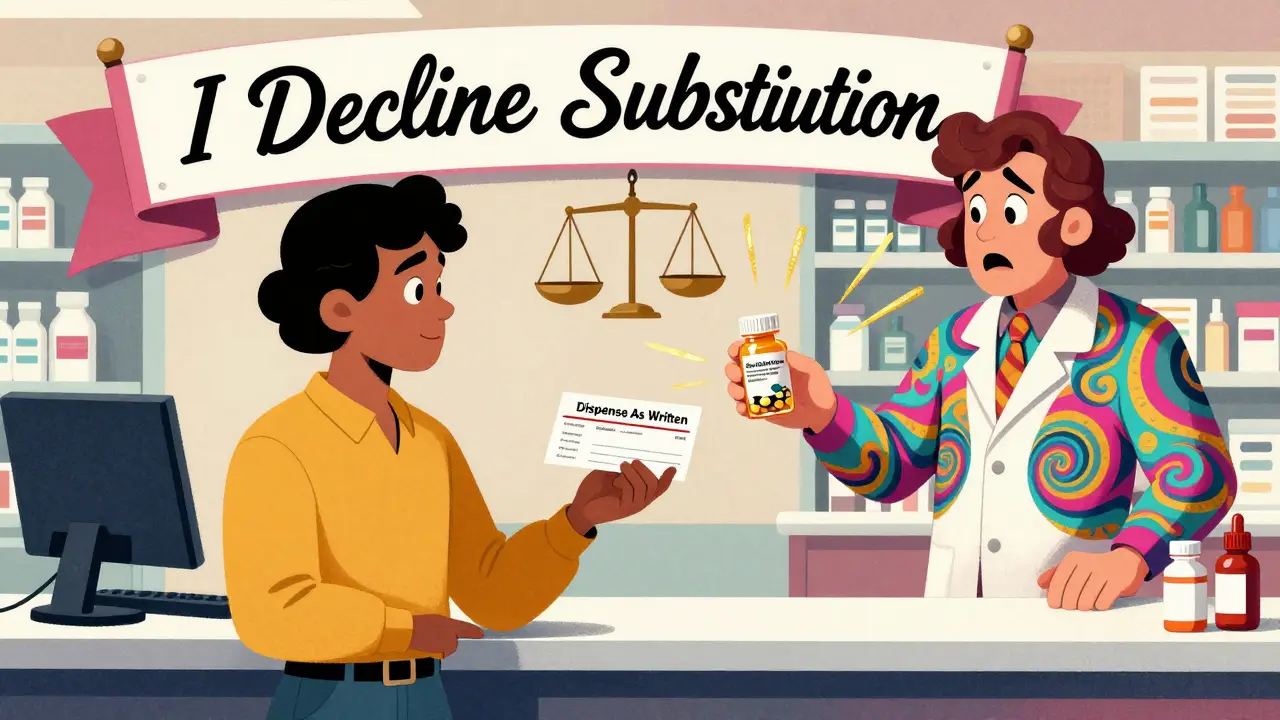
When you walk into the pharmacy to pick up your prescription, you expect to get what your doctor ordered. But more often than not, you’re handed a different pill - a generic version - without being asked. That’s because most states let pharmacists swap brand-name drugs for cheaper generics automatically. But here’s the truth: you have the right to say no. And if you’re on a medication where even small changes can mess with your health, that right isn’t just helpful - it’s essential.
Why Generic Substitution Happens
Generic drugs are chemically identical to their brand-name counterparts. They contain the same active ingredient, dosage, and route of administration. The FDA requires them to meet the same safety and effectiveness standards. That’s why most doctors and insurers push for them: they cost 80-85% less. In 2023, generics made up 92% of all prescriptions filled in the U.S., but only 24% of total drug spending. That’s billions in savings for insurers, pharmacies, and patients - on paper. But savings aren’t always simple. For some people, switching from a brand-name drug to a generic - even if it’s "therapeutically equivalent" - causes real problems. That’s especially true for drugs with a narrow therapeutic index (NTI), where tiny differences in absorption can lead to dangerous side effects. Think levothyroxine for thyroid disorders, warfarin for blood thinning, or certain epilepsy medications like phenytoin. One patient in Michigan sued a pharmacy in 2019 after an automatic switch to a generic antiepileptic drug triggered seizures. The court ruled in her favor.Your Legal Right to Refuse
You don’t have to accept a generic substitution. In fact, federal and state laws give you clear power to stop it. Forty-three states recognize a patient’s verbal refusal as legally binding. All you need to say at the counter is: "I decline substitution." That’s it. No explanation. No argument. Just those words. But it’s not the same everywhere. In 19 states - including California, Texas, and New York - pharmacists are required to substitute generics unless told otherwise. In 7 states - Alaska, Connecticut, Hawaii, Maine, Massachusetts, New Hampshire, and Vermont - plus Washington, D.C., the law requires your explicit consent before any swap. That means the pharmacist must ask you, in writing or verbally, and you must say yes. If they don’t, they’re breaking the law. In 31 states and D.C., pharmacists must notify you that a substitution happened - even if they don’t need your permission. If they don’t tell you, you have grounds to complain. And in 48 states, if your doctor writes "dispense as written" or "brand medically necessary" on the prescription, the pharmacy must honor it. That’s not a suggestion. It’s the law.When Brand-Name Drugs Are Necessary
Not all generics are created equal - and not all patients react the same way. For drugs with a narrow therapeutic index, even minor variations in inactive ingredients (like fillers or coatings) can affect how your body absorbs the medicine. A 2021 survey by Consumer Reports found that 28% of patients who tried to refuse a generic substitution ran into resistance. Some pharmacists claimed they "had to" switch the drug. Others said refusing would cost you more. Both are false. Insulin is another hot spot. Biosimilars - which are not generics, but close copies - have replaced brand-name insulins like Lantus in many pharmacies. One user on Diabetes Daily reported their blood sugar became erratic after switching to Basaglar without warning. It took two weeks to realize the change was the cause. That’s not rare. In 2023, 47 states now require pharmacists to notify prescribers when substituting biosimilars, but many patients still aren’t told. If you’ve been stable on a brand-name drug for months or years, switching can destabilize your condition. The World Medical Association warns: "Once medication for chronic diseases has been prescribed and begun, no substitution should be made without the attending physician’s permission."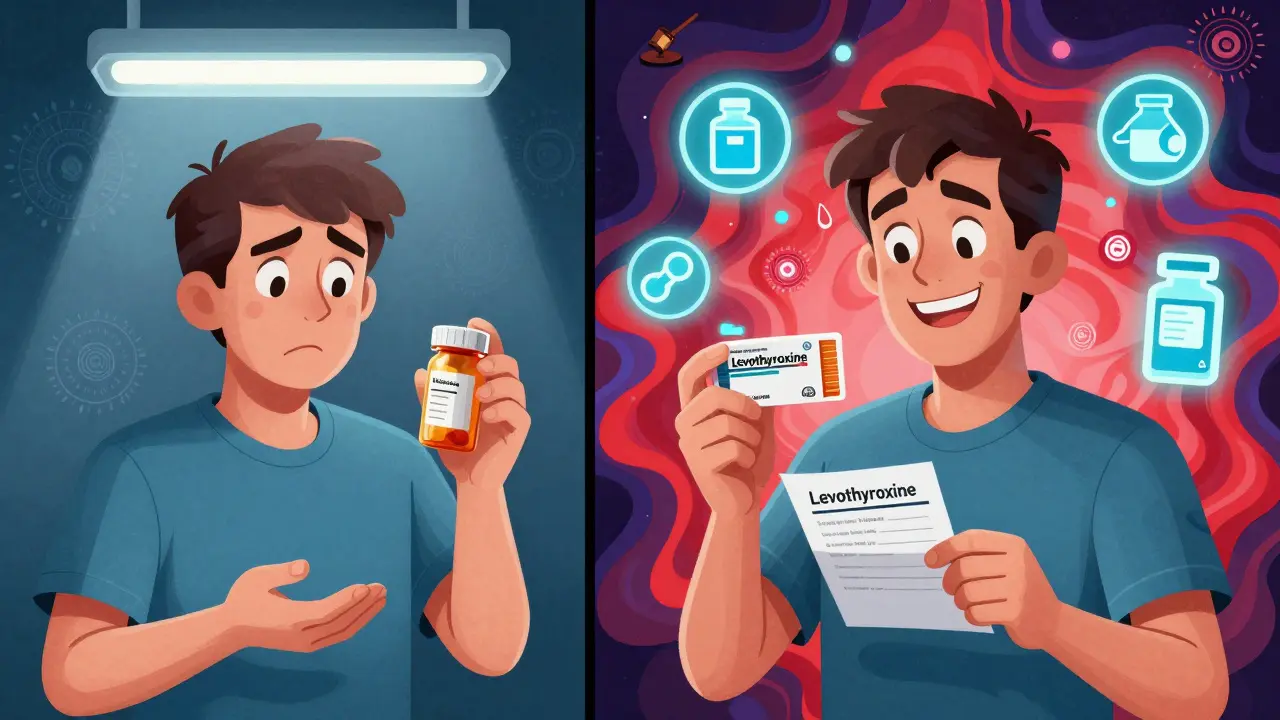
How to Actually Refuse a Generic
You don’t need to be a legal expert to protect yourself. Here’s how to do it, step by step:- Know your state’s law. Check your state pharmacy board’s website. If you live in Massachusetts, you can refuse without explanation. In Texas, you can refuse too - but the pharmacist might not know it unless you remind them.
- Ask your doctor to write "dispense as written" on your prescription. This is the strongest protection. Most prescribers will do it if you explain you’ve had issues with generics before.
- At the pharmacy, say it clearly: "I decline substitution." Don’t say "I’d prefer the brand" - that leaves room for them to argue cost. Say "I decline." That’s the legal phrase.
- Ask for the pharmacy manager if the pharmacist pushes back. They’re more likely to know the rules.
- Keep a record. Write down the date, drug name, pharmacy name, and what was said. If you get pushback, you can file a complaint with your state board.
What to Do If the Pharmacy Refuses to Listen
Sometimes, pharmacists don’t know the law. Sometimes, they’re pressured by insurance companies or pharmacy benefit managers (PBMs) to push generics. If you’re told you can’t get your brand-name drug, or that refusing will cost you hundreds more, you’re being misled. The 2018 Know the Lowest Price Act banned "gag clauses" - rules that stopped pharmacists from telling you when paying cash for the brand-name drug was cheaper than using your insurance. If you’re paying out of pocket, always ask: "What’s the cash price?" You might be surprised. GoodRx found that in 2022, paying cash for a brand-name drug was cheaper than the insurance co-pay in 37% of cases. If the pharmacy still refuses:- Ask for a copy of their substitution policy.
- Call your state pharmacy board. All 50 states have complaint lines.
- File a report with the FDA’s MedWatch system if you had a bad reaction after an unauthorized switch.
When You Can’t Afford the Brand
Refusing a generic doesn’t mean you have to pay more. Many pharmaceutical companies - like Pfizer, Merck, and AbbVie - offer patient assistance programs that give brand-name drugs for free or at low cost if you qualify based on income. Ask the pharmacy for the manufacturer’s name and search for their patient support page. You can also check NeedyMeds.org or RxAssist.org. Some Medicare Part D plans cover brand-name drugs without a tier penalty if your doctor documents medical necessity. Commercial insurers vary - but if you’re on a stable regimen and switching caused problems, you can appeal the decision.What’s Changing in 2026
The FDA is moving toward stricter standards for complex generics - especially for drugs like inhalers, injectables, and biologics. In 2023, they released draft guidance suggesting future substitutions will be limited for these types of medications. States like Colorado and Nevada passed new laws in 2023 requiring extra notification for biosimilar switches. More states are expected to follow. The big shift? Patients are no longer passive recipients of substitutions. Real-world data from studies tracking 500,000 patients now shows that non-medical switching - changing someone’s stable medication just to save money - costs the system $2.1 billion a year in extra doctor visits, ER trips, and hospitalizations. That’s more than the savings from the switch.Bottom Line: You’re Not Just a Cost Center
Your health isn’t a line item on an insurance spreadsheet. You’ve earned the right to know what’s in your medicine, to be asked before it’s changed, and to refuse if it’s not safe for you. The system is built to push generics. But the law is built to protect you. If you’re on a medication where consistency matters - thyroid, epilepsy, heart rhythm, mental health, or insulin - don’t assume the pharmacy knows what’s best. Speak up. Say "I decline substitution." Keep your records. And if you’re told you can’t have your brand-name drug, ask: "Which state law says I have to take this?" Most of the time, they’ll back down. Because they know the law is on your side.Can a pharmacist refuse to give me my brand-name drug even if my doctor wrote "dispense as written"?
No. In 48 states, if your doctor writes "dispense as written" or "brand medically necessary" on the prescription, the pharmacy is legally required to honor it. Refusing to do so violates state pharmacy laws. If they refuse, ask for the manager and file a complaint with your state board of pharmacy.
Do I have to pay more if I refuse a generic substitution?
Not necessarily. Many insurance plans cover brand-name drugs with no extra cost if your doctor documents medical necessity. Even if your plan doesn’t, you should always ask for the cash price. Thanks to the 2018 Know the Lowest Price Act, pharmacists must tell you if paying cash is cheaper than using your insurance. In some cases, the brand-name drug costs less than your co-pay.
Which drugs are most dangerous to substitute?
Drugs with a narrow therapeutic index (NTI) are the most risky. These include levothyroxine (Synthroid), warfarin (Coumadin), phenytoin (Dilantin), carbamazepine, lithium, and certain antiepileptic drugs. The FDA and state boards maintain lists of NTI drugs where substitution is discouraged or banned without consent. Biosimilars like Basaglar (insulin glargine) also carry higher risks because they’re not true generics - they’re complex biological products.
How do I find out what my state’s laws are?
Visit your state’s Board of Pharmacy website. Search for "generic substitution laws" or "pharmacy substitution rules." The JAMA Internal Medicine 2020 study mapped all 50 states - you can find summaries from reputable sources like the National Consumers League or AARP. States like Massachusetts and Hawaii require consent; Texas and California allow automatic substitution unless you object.
Can I get my brand-name drug if I’m on Medicare?
Yes. Medicare Part D plans cover brand-name drugs if your doctor writes "dispense as written" or if you file a coverage exception. Many plans have high generic utilization rates, but they’re required to make exceptions for medical necessity. Call your plan’s customer service and ask for a form to request a brand-name drug exception - you’ll need your doctor’s support.
