
PDE5 Inhibitor & Nitrate Interaction Calculator
This calculator helps determine the safe separation time between PDE5 inhibitors (like Viagra) and nitrate medications to prevent dangerous hypotension. Based on FDA guidelines and pharmacokinetic data.
Select a PDE5 inhibitor to see the required separation time from nitrates.
Important: The minimum separation time is based on FDA guidelines. This calculator does not replace medical advice. Always consult your doctor before taking any medication.
The Forbidden Pair: Why Mixing These Drugs is Dangerous
Imagine two keys that fit the same lock perfectly, but when you turn them together, the door slams shut and locks you out. That is essentially what happens inside your blood vessels when you mix PDE5 inhibitors with nitrates. This isn't just a minor side effect; it is a potentially life-threatening event that doctors have warned against for decades. If you have ever been prescribed medication for erectile dysfunction and also take heart medication for chest pain, you likely know the rule: do not mix them. But do you know exactly why?
The risk comes down to a specific chemical signal in your body called cyclic guanosine monophosphate, or cGMP. When both drug classes are present, they cause cGMP levels to skyrocket, leading to blood vessels relaxing too much. This results in a sudden, dangerous drop in blood pressure known as profound hypotension. Understanding this mechanism isn't just academic; it could save your life if you find yourself in a situation where you need to manage both heart health and sexual function.
We are going to break down the biology, the specific drugs involved, and the timing rules that keep patients safe. We will also look at some recent data that suggests the real-world risk might be slightly different from the textbook theory, while emphasizing why the strict rules remain in place.
The Biology: How cGMP Controls Your Blood Vessels
To understand the danger, you first need to understand the normal process. Your body uses a chemical messenger called nitric oxide (NO) to tell blood vessels to relax. When your body releases nitric oxide, it activates an enzyme called guanylate cyclase. Think of this enzyme as a factory machine. Its job is to produce cGMP. When cGMP levels rise, the smooth muscle cells in your blood vessel walls relax. This relaxation allows the vessels to widen, or dilate, which lowers blood pressure and increases blood flow.
Under normal circumstances, your body has a way to turn this signal off. An enzyme called phosphodiesterase type 5, or PDE5, breaks down cGMP. It's like a cleanup crew that removes the signal once the job is done, ensuring your blood pressure stays stable. This balance between production (via nitric oxide) and breakdown (via PDE5) is crucial for maintaining healthy blood pressure.
When you take a nitrate medication, like nitroglycerin, you are flooding your system with nitric oxide donors. This forces the guanylate cyclase factory to produce massive amounts of cGMP. Your blood vessels dilate significantly, which is exactly what you want if you are having a heart attack or angina attack. The increased blood flow helps your heart muscle get the oxygen it needs.
Now, enter the PDE5 inhibitor. Drugs like Sildenafil (Viagra) or Tadalafil (Cialis) work by blocking the PDE5 enzyme. They stop the cleanup crew from working. If you take a nitrate, you are opening the floodgates for cGMP production. If you then take a PDE5 inhibitor, you are blocking the drain. The result is a bathtub overflowing with cGMP. Your blood vessels relax far beyond what is safe, causing your blood pressure to plummet.
Specific Drugs and Their Half-Lives
Not all PDE5 inhibitors behave the same way in your body. The length of time they stay active determines how long you must wait before taking nitrates. This is where the concept of half-life becomes critical. The half-life is the time it takes for half of the drug to leave your system. If you ignore these timelines, the risk of hypotension remains high.
| Drug Name | Brand Name | Half-Life | Required Separation from Nitrates |
|---|---|---|---|
| Sildenafil | Viagra | Approximately 4 hours | 24 hours |
| Vardenafil | Levitra | Approximately 4-5 hours | 24 hours |
| Avanafil | Stendra | Approximately 5-6 hours | 24 hours |
| Tadalafil | Cialis | Approximately 17.5 hours | 48 hours |
Notice the difference for Tadalafil. Because it stays in your system much longer, the FDA requires a 48-hour gap before you can safely use nitrates. This is often called the "weekend pill" because it lasts longer, but that longevity is exactly why it carries a longer risk window. For the others, like Sildenafil, the 24-hour rule applies. Even though the drug might be mostly gone after 4 hours, trace amounts can still interact with nitrates enough to cause a dangerous drop in blood pressure.
It is also vital to remember that nitrates come in different forms. You might have a nitroglycerin spray, a patch, or a daily pill like isosorbide mononitrate. All of these count. If you are on a daily nitrate regimen, you generally cannot take a PDE5 inhibitor at all unless your doctor adjusts your heart medication first. Additionally, recreational drugs known as "poppers" (amyl nitrite or butyl nitrite) act as nitrates. Combining these with erectile dysfunction medication has caused severe hospitalizations and should be avoided completely.

The Clinical Reality: Statistics and Risks
What actually happens to blood pressure when this interaction occurs? Studies have shown that it is not a gentle dip. Research published in Circulation (2010) highlighted that 46% of patients taking sildenafil with nitroglycerin experienced a standing systolic blood pressure below 85 mm Hg. Compare that to only 24% in the placebo group. For supine (lying down) blood pressure, the numbers were even more stark: 36% of the interaction group dropped below 85 mm Hg versus just 6% with placebo.
A systolic pressure below 85 mm Hg is critical. It means your brain and heart are not getting enough blood flow. Symptoms include severe dizziness, fainting, blurred vision, and confusion. In the worst-case scenario, it can lead to a heart attack or stroke because the heart cannot pump effectively against the low pressure.
However, the story isn't entirely black and white. A 2022 retrospective study published in the American College of Cardiology Journal analyzed data from thousands of patients. They found that patients who possessed prescriptions for both drug classes did not show a statistically significant increase in hypotensive events compared to those using nitrates alone. This suggests that in the real world, patients might be self-managing the timing better than doctors expect, or that the risk is slightly lower than the pharmacological theory predicts.
Despite this data, the guidelines remain strict. The American Heart Association (2022) and the FDA maintain the absolute contraindication. Why? Because the consequence of getting it wrong is fatal. The theoretical risk outweighs the potential benefit of combining them. Dr. Anthony J. Busti, a pharmacy expert, notes that while real-world risk might appear lower, the potential for a fatal hypotensive event keeps the rules in place.
Management and Emergency Protocols
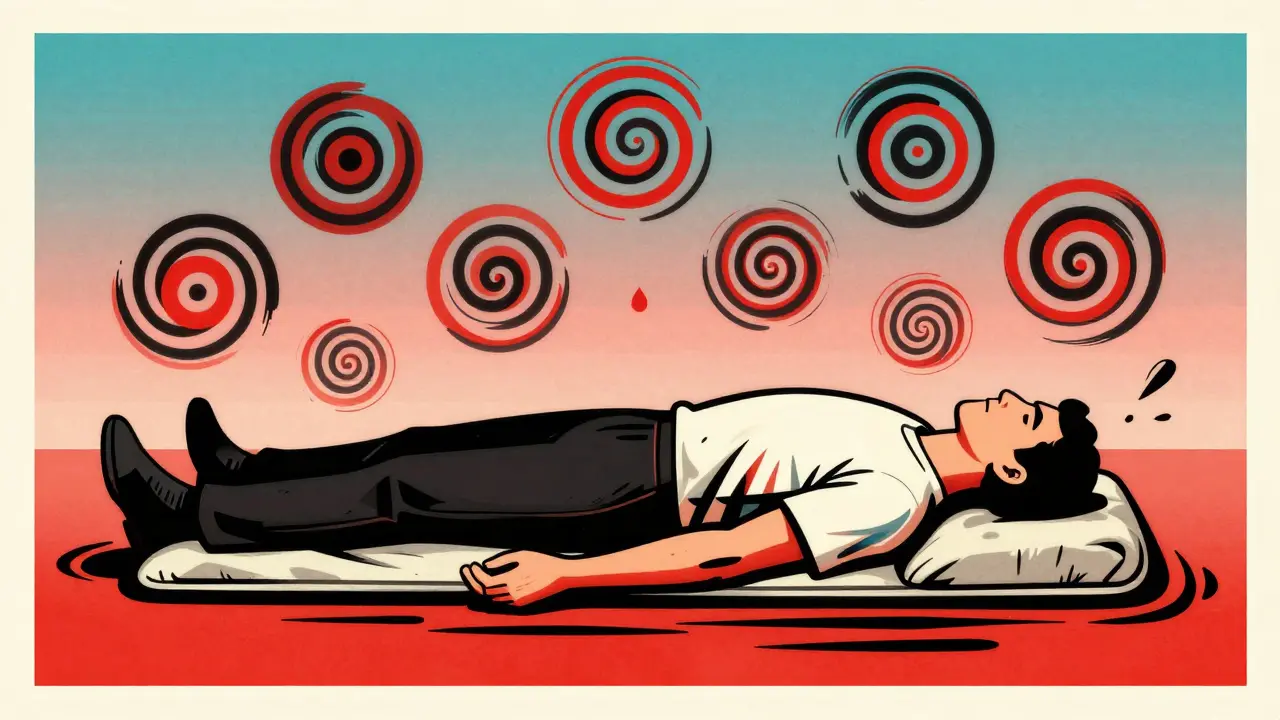
If you suspect you have taken both medications, or if you feel symptoms of hypotension, you need to act fast. The primary goal is to restore blood pressure to a safe level. The first step is positioning. You should lie down immediately with your legs elevated. This is called the Trendelenburg position. It uses gravity to help blood flow back to your heart and brain.
If symptoms persist, you must call emergency services. Do not try to drive yourself. When you speak to the paramedics, tell them explicitly that you have taken a PDE5 inhibitor and a nitrate. This information changes how they treat you. They will likely administer intravenous fluids to increase your blood volume and pressure. In some cases, they may use vasopressors, which are drugs that constrict blood vessels, though these can be less effective if cGMP levels are extremely high.
For patients with stable coronary artery disease who need both types of medication, there is a strategy called the "nitrate-free interval." This involves stopping the nitrate for a specific period before taking the PDE5 inhibitor. However, this must be done under strict medical supervision. The Princeton IV consensus guidelines (2018) recommend reassessing whether nitrates are absolutely necessary. Sometimes, alternative medications like beta-blockers or calcium channel blockers can manage angina without the interaction risk.
Education is the best defense. Many patients report receiving minimal counseling about this interaction. A study in the Journal of Sexual Medicine found that 68% of surveyed patients received little to no warning. You should carry a wallet card that lists your medications and the required waiting periods. This ensures that in an emergency, anyone treating you knows exactly what you have taken.
Future Directions and Guideline Updates
The medical community is constantly re-evaluating these rules. As of 2026, there is ongoing discussion about updating guidelines to reflect the real-world data. The American Heart Association has indicated plans to review the absolute contraindication in light of newer evidence. Some experts suggest that for highly selected patients with stable heart disease, the risk might be manageable with strict timing protocols.
Research is also looking at new drugs. A 2023 phase II trial is investigating a novel PDE5 inhibitor with reduced vascular selectivity. The goal is to create a drug that treats erectile dysfunction without affecting the blood vessels in the heart as much. Until these new treatments are approved and guidelines are officially updated, the current standard of care remains: do not mix these drugs.
Patients should not rely on internet forums or anecdotal evidence. While some users claim they have mixed them without issue, they are essentially playing Russian roulette with their blood pressure. The variability in individual metabolism means what works for one person could kill another. Always consult your cardiologist and urologist to create a safe plan that addresses both your heart health and sexual health.
Can I take Viagra if I use nitroglycerin spray?
No. Nitroglycerin spray is a nitrate. Mixing it with Viagra (sildenafil) can cause a sudden and dangerous drop in blood pressure. You must wait at least 24 hours after taking sildenafil before using any nitrate, including spray, patches, or pills.
How long does Cialis stay in your system?
Cialis (tadalafil) has a half-life of about 17.5 hours, which is longer than other PDE5 inhibitors. Because of this, you must wait at least 48 hours after taking Cialis before taking any nitrate medication to avoid severe hypotension.
Do dietary nitrates interact with PDE5 inhibitors?
Generally, no. Foods high in nitrates, like spinach or beets, do not produce enough nitric oxide in the blood to trigger the dangerous interaction. However, concentrated supplements like L-arginine should be used with caution and discussed with a doctor.
What should I do if I accidentally mix these drugs?
If you feel dizzy, faint, or lightheaded after mixing them, lie down immediately with your legs elevated. Call emergency services right away. Tell the medical team exactly which drugs you took and when.
Are there alternatives to nitrates for heart patients?
Yes. If you need PDE5 inhibitors, your doctor might switch your heart medication to beta-blockers or calcium channel blockers. These treat angina and heart disease without the dangerous interaction with erectile dysfunction medications.
Final Thoughts on Safety
The interaction between PDE5 inhibitors and nitrates is one of the most well-documented drug interactions in modern medicine. It is a perfect storm of pharmacology where two drugs amplify each other's effects to a dangerous degree. While the science is complex, the rule is simple: keep them apart. If you have heart disease and erectile dysfunction, talk to your doctor about safe alternatives. Your health is worth the extra conversation to ensure you never find yourself in a situation where your blood pressure drops too low.

Rama Rish
i knew about the time gap but not the biolgy behind it.
Darlene Gomez
The chemistry breakdown here is quite detailed for a general audience.
Kenneth Jones
people need to stop ignoring the warnings here it could kill you
Aaron Sims
Oh sure---and I suppose the big pharma companies are just worried about our health???--not profits!!!
Natasha Rodríguez Lara
The biological mechanism is explained clearly here.
Danielle Arnold
scary stuff but people need to know the risks involved
James Moreau
The medical guidelines provided here are worth following.
J. Murphy
i dont think its that big of a deal if you wait a bit
Jesse Hall
Stay safe everyone!!! ❤️💪
Donna Fogelsong
the nitric oxide pathway is clearly manipulated by corporate interests to ensure dependency
Sean Bechtelheimer
they want us sick so we buy more meds 🤔👁️
Seth Eugenne
I hope everyone reads this and stays safe out there 🙏💙
rebecca klady
My dad has heart issues and he takes the spray sometimes. He always asks me about the other meds he gets. I read through the whole thing and it makes sense why the rules are so strict. It is scary to think about how fast the pressure drops. The part about the bathtub overflowing was a really good analogy. I never understood why the time gap was so long for Cialis. Now I know it is because of the half life. It stays in the blood for so much longer than the others. I tell my friends about this all the time. They dont believe me until they see the stats. The study from 2010 really shows how dangerous it is. I hope more doctors talk to their patients about this. Sometimes they just hand out the pills and say take this. We need better education in the clinics. It could save a life if someone knows what to do in an emergency. Lying down with legs up is a good trick to remember. I will share this with my family group chat. Safety is always better than being sorry later.