
Peripheral neuropathy isn’t just tingling feet or occasional numbness. For millions, it’s a constant, burning pain that makes walking painful, sleep impossible, and daily tasks a struggle. It’s nerve damage outside the brain and spinal cord - the wires connecting your limbs to your brain - and it’s more common than most people realize. In the U.S. alone, about 20 million people live with it. The good news? You don’t have to just endure it. Understanding what’s causing it and what actually works to relieve the pain can change everything.
What Exactly Is Peripheral Neuropathy?
Peripheral nerves carry signals between your brain, spinal cord, and the rest of your body. When they get damaged, those signals get mixed up. You might feel pain where there’s no injury, or lose sensation entirely - like not feeling a blister forming on your foot until it’s infected. Symptoms usually start in the toes or fingers and creep upward. People describe it as sharp stabbing, electric shocks, or a constant burning sensation. Some say it feels like wearing invisible gloves or socks that won’t come off.
There are over 100 types, but they mostly fall into three groups: mononeuropathy (one nerve), multiple mononeuropathy (a few nerves), and polyneuropathy (many nerves at once). Polyneuropathy is the most common - making up about 75% of cases. It’s often linked to long-term health conditions.
The Top Causes of Nerve Damage
Diabetes is by far the biggest culprit. About half of all people with diabetes develop some form of nerve damage over time. High blood sugar slowly poisons nerves and damages the small blood vessels that feed them. If your HbA1c stays above 7% for years, your risk shoots up. But diabetes isn’t the only cause.
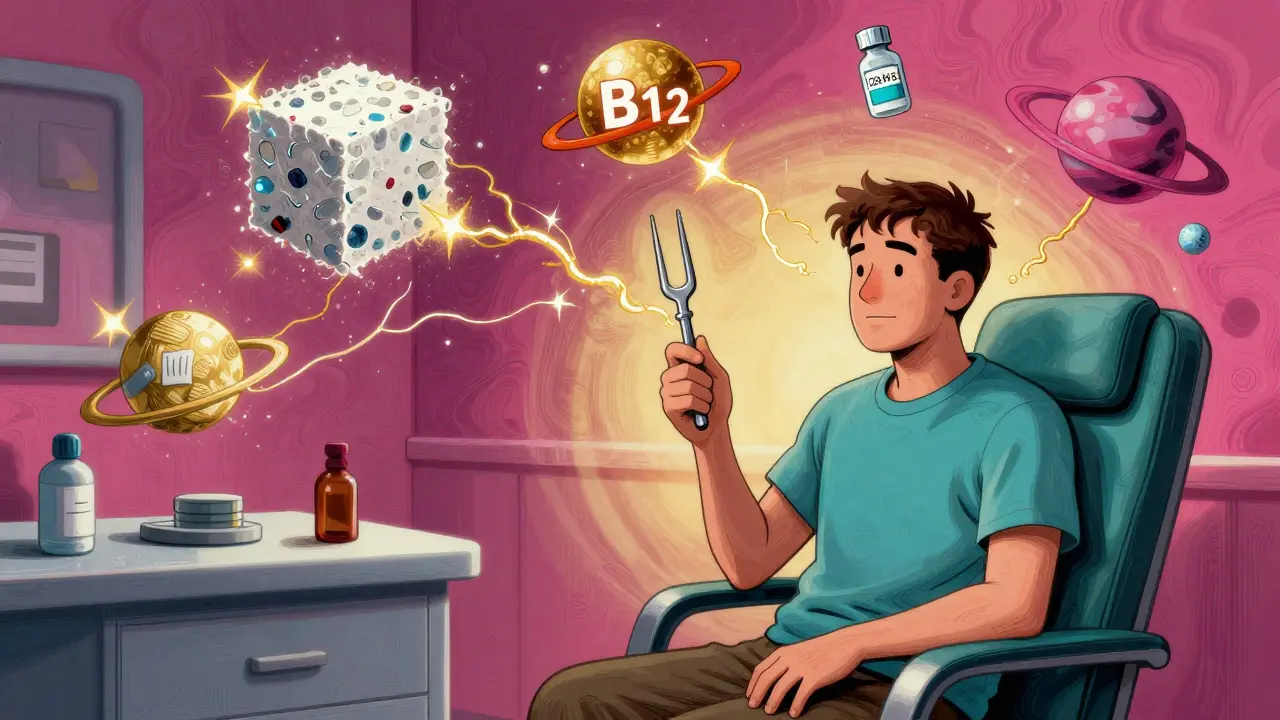
Vitamin B12 deficiency is another major one, especially in older adults or people on long-term acid reflux meds like omeprazole. Without enough B12, nerves lose their protective coating. This can cause numbness, balance problems, and even memory issues. The fix? A simple monthly B12 injection - often bringing relief in just 4 to 8 weeks.
Chemotherapy is another silent offender. Around 30 to 40% of cancer patients treated with drugs like paclitaxel or vincristine develop neuropathy. It can show up during treatment or months after. Some people never fully recover, which makes early detection critical.
Other causes include autoimmune diseases like lupus or rheumatoid arthritis, chronic alcohol use, infections like shingles or Lyme disease, and even inherited conditions like Charcot-Marie-Tooth disease. In about 20% of cases, doctors can’t find a cause at all - this is called idiopathic neuropathy.
How Doctors Diagnose It
There’s no single blood test for peripheral neuropathy. Diagnosis usually takes weeks and involves a few key steps. First, your doctor will check your reflexes, muscle strength, and sensation using a soft nylon filament (10-gram monofilament) to test for loss of touch. A 128-Hz tuning fork checks vibration sense - if you can’t feel it on your big toe, that’s a red flag.
The gold standard is a nerve conduction study. Small electrical pulses are sent through your nerves, and the speed and strength of the response are measured. Normal nerve signals travel at 50+ meters per second. In neuropathy, they slow down to 40 m/s or less. Electromyography (EMG) may also be used to check muscle response.
These tests aren’t perfect. Many people wait an average of 18 months from first symptoms to diagnosis. That delay lets nerve damage get worse. If you’ve had numbness, burning, or tingling for more than a few weeks - especially if you have diabetes or are on chemo - push for testing.
Pain Management: What Actually Works
Over-the-counter painkillers like ibuprofen or acetaminophen? They barely help. Neuropathic pain doesn’t respond to regular anti-inflammatories. Prescription options do - but they come with trade-offs.
Pregabalin (Lyrica) is often the first choice. It reduces pain in about 37% of users at doses of 150-600 mg daily. But side effects? Dizziness, drowsiness, weight gain. One patient on Reddit said it cut her pain from 8/10 to 3/10 - but she couldn’t drive for weeks because of dizziness.
Duloxetine (Cymbalta), originally an antidepressant, helps about 35% of people. It works by changing how the brain processes pain signals. But nausea is common - and many stop taking it within two weeks because of it.
Amitriptyline, an older tricyclic antidepressant, is slightly more effective - helping 41% of users. But dry mouth affects 75% of people. Drowsiness hits 60%. It’s cheap and effective, but not for everyone.
Then there’s scrambler therapy. It uses electrical signals to “trick” the brain into stopping pain signals. After 10 sessions, 85% of patients report at least 50% pain reduction. It’s not covered by all insurance, costing $1,200-$1,500 per full course - but for people who haven’t responded to meds, it’s life-changing.
Spinal cord stimulation is another option for severe, treatment-resistant pain. A small device is implanted near the spine and sends mild pulses to block pain signals. Studies show 65% of patients get at least half their pain relief. It’s invasive and expensive, but for some, it’s the only thing that works.
Non-Medication Approaches That Make a Difference
Medications aren’t the only answer. Physical therapy is one of the most underrated tools. A 12-week program focused on balance, strength, and coordination can reduce fall risk by 30%. Many patients report being able to walk without a cane again.
Custom orthotics or therapeutic shoes? 82% of users say they help. Neuropathy can change your foot shape, making regular shoes painful or dangerous. Special shoes reduce pressure points and prevent ulcers.
Foot care is non-negotiable. Check your feet twice a day - look for cuts, blisters, redness, or swelling. Use a mirror if you can’t see the bottom. Wash and dry them gently. Never go barefoot, even indoors. A small cut can turn into a serious infection if you don’t feel it.
Some people swear by acupuncture, massage, or capsaicin cream. The FDA-approved Qutenza patch - a high-dose capsaicin treatment applied in a clinic - gives 3 months of relief from just one 30-minute session. It’s not for everyone, but for those who respond, it’s a game-changer.
Managing the Root Cause: The Real Key
Doctors agree: treating the cause is more important than just masking pain. For diabetics, keeping HbA1c below 7% reduces neuropathy progression by 60%. That means daily blood sugar checks, diet changes, and sometimes new medications like SGLT2 inhibitors - which newer studies show may lower neuropathy risk by 30%.
If B12 is low, injections can reverse symptoms. If alcohol is the issue, stopping can halt further damage. If an autoimmune disease is involved, immunosuppressants may help. Without fixing the root, you’re just putting a bandage on a broken bone.
Early treatment matters. If you start managing the cause within the first six months of symptoms, your chances of improvement jump by 40%. Waiting too long means nerve damage becomes permanent.
What Doesn’t Work - And What to Avoid
Opioids are sometimes prescribed for severe neuropathic pain. But they’re not effective long-term. Studies show only 30% of patients get real relief, and addiction rates exceed 15%. The American Diabetes Association and Harvard Medical School both warn against relying on them.
Some supplements - like alpha-lipoic acid or acetyl-L-carnitine - are marketed for nerve health. Evidence is mixed. A few small studies show mild benefit, but nothing as reliable as prescription meds or lifestyle changes. Don’t waste money unless your doctor recommends it.
And don’t ignore the emotional toll. Chronic pain leads to anxiety and depression. One in three patients with neuropathy reports feeling hopeless. Counseling, support groups like Neuropathy Now, or even online communities like Reddit’s r/neuropathy can help. You’re not alone.
What’s Next? New Treatments on the Horizon
Research is moving fast. The Foundation for Peripheral Neuropathy launched the Neuropathy Genomics Project in early 2023 to identify genetic causes for over 50 types of the condition. By 2026, they hope to match patients with targeted therapies based on their DNA.
Gene therapy for inherited forms like Charcot-Marie-Tooth is in early trials. One study showed a 20% improvement in nerve speed after six months. Wearable nerve stimulators are also in development - expected to hit the market in 2024. These small devices could give continuous, drug-free pain relief.
AI tools are being trained to spot early signs of neuropathy from foot scans or gait patterns. If successful, diagnosis could drop from 18 months to just 6 months. That means earlier intervention - and better outcomes.
Final Thoughts: You Can Take Control
Peripheral neuropathy isn’t a death sentence. It’s a signal - your body telling you something’s wrong. Whether it’s high blood sugar, a vitamin deficiency, or something else, identifying and treating the cause is the first step. Pain relief is possible, even if it takes trying a few options. Physical therapy, proper footwear, foot care, and consistent blood sugar control aren’t just suggestions - they’re essential tools.
Don’t wait for your doctor to bring it up. If you’ve had unexplained numbness, burning, or tingling for more than a few weeks, ask for testing. And if one treatment doesn’t work, don’t give up. What works for one person might not work for you - but someone else out there found relief, and so can you.

Ryan Riesterer
Peripheral neuropathy is a complex neurophysiological phenomenon characterized by distal symmetric axonal degeneration, most commonly secondary to metabolic dysregulation in diabetic populations. The nerve conduction velocity thresholds cited-50+ m/s normal versus <40 m/s in pathology-are consistent with established electrophysiological criteria. The utility of EMG and NCS remains gold standard despite temporal delays in diagnosis, which are often attributable to primary care provider oversight rather than diagnostic ambiguity.
Tatiana Bandurina
You left out the real issue-doctors don't care until you're dragging your foot. I had burning toes for 14 months before anyone listened. My HbA1c was 8.9. They told me to 'take it easy.' Easy for you to say when you're not walking on broken glass.
Jasmine Bryant
Anyone else tried the Qutenza patch? I did it last year after 3 years of Lyrica side effects. It was rough-felt like my foot was on fire for an hour-but then nothing for 4 months. My podiatrist said it's not for everyone but wow. Also, foot checks twice a day? Non-negotiable. I lost a toe because I skipped a week. Don't be me.
Liberty C
It’s frankly embarrassing that we’re still prescribing amitriptyline like it’s 1987. We have scrambler therapy, spinal stimulators, and emerging gene therapies-and yet the medical establishment clings to tricyclics that make patients feel like zombies. This isn’t medicine. It’s negligence dressed in white coats.
Margaret Khaemba
My mom has this and she swears by acupuncture. Not sure if it’s placebo, but she walks without her cane now. Also, B12 shots-she was diagnosed with deficiency after years of omeprazole. She didn’t even know it could cause nerve damage. This post should be required reading for anyone on long-term acid meds.
Malik Ronquillo
So let me get this straight-you're telling me the solution to chronic pain is to check your feet and take B12? Meanwhile Big Pharma is selling Lyrica for $500 a pill. This whole thing is a scam. They want you sick so you keep buying stuff. I'm done.
Brenda King
Foot care is everything. Seriously. I had a blister I didn’t feel for three days. Infection set in. Had to go to the ER. Now I check every morning and night. I use a long-handled mirror. I wear socks to bed. I don’t care how silly it looks. I’d rather be silly than missing a toe.
Keith Helm
Diabetes is primary cause. HbA1c >7% increases risk. Early intervention critical. Avoid opioids. Evidence supports scrambler therapy. Foot inspection mandatory. B12 deficiency treatable. NCS gold standard.
Daphne Mallari - Tolentino
It is deeply concerning that non-evidence-based modalities such as acupuncture and capsaicin creams are presented as viable alternatives to neurophysiologically validated interventions. While anecdotal reports abound, the absence of robust, peer-reviewed, randomized controlled trials renders such recommendations clinically irresponsible.
Alec Amiri
My cousin got diabetic neuropathy after her doctor told her to 'just lose weight.' She ended up in a wheelchair. Now she’s on spinal stimulator. Guess what? Her doctor still doesn't believe it's real pain. It's not in your head. It's in your nerves. And they're screaming.
Lana Kabulova
Wait-so you’re saying if I stop drinking, my neuropathy might stop getting worse? But I’ve been sober for 18 months and still feel like I’m walking on hot gravel. So what now? Just suffer? No one talks about the grief part. The mourning for your own body. That’s the real pain.
Rob Sims
Of course you’re not getting better. You’re still eating carbs. You think Lyrica fixes your diet? No. It just makes you sleepy while your nerves keep dying. Fix the cause. Stop pretending meds are magic. You’re not broken-you’re fed wrong.
arun mehta
From India, I want to say thank you for this post. In our country, many don't even know what neuropathy is. My uncle had it for years, thought it was 'old age.' Now he's on B12 shots and walking again. Also, we use turmeric paste on feet-natural, cheap, helps with inflammation. 🌿🙏
Chiraghuddin Qureshi
My cousin in Mumbai got this after chemo. He tried everything. Then he found a local physiotherapist who used mirror therapy and balance pads. He walks without a stick now. Small things matter. 🙏❤️
Patrick Roth
Scrambler therapy? That’s just TENS with a fancy name. And spinal stimulators? You’re going to implant a device because you won’t fix your blood sugar? Classic Western medical arrogance. If you stopped eating sugar, you wouldn’t need any of this.