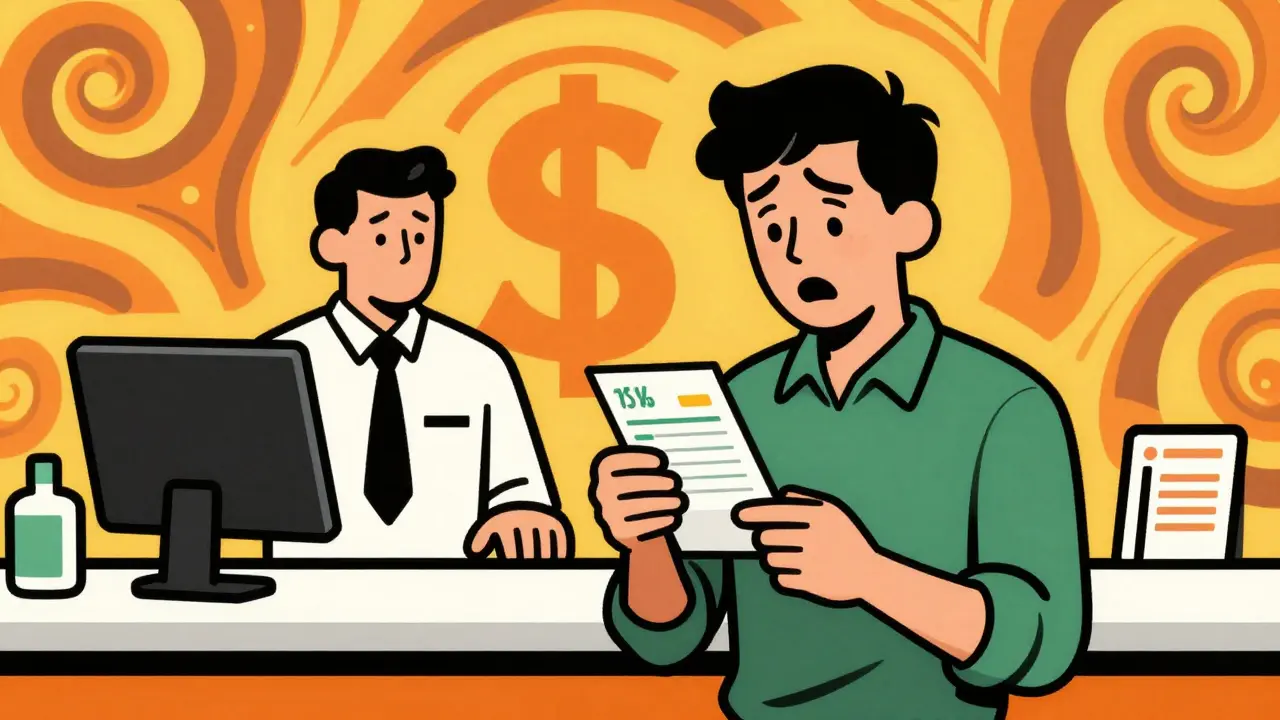
You walk into the pharmacy, hand over your prescription for a medication you’ve been taking for years, and stare at the receipt. It’s not the $10 copay you expected. It’s $450. Why? Because your plan changed its formulary, or you hit a deductible, or-worst of all-that specific brand isn’t covered anymore.
This scenario plays out thousands of times every year. According to research from Georgetown University cited by HealthPartners in 2023, precisely 66.7% of all adults in the United States use prescription drugs. That means two out of three people are walking around with a financial blind spot if they haven’t actually checked what their insurance covers.
Most people pick a health plan based on the monthly premium. They see a low number, click ‘enroll,’ and hope for the best. But when it comes to medication costs, the premium is just the tip of the iceberg. The real cost lies in deductibles, copays, coinsurance, and network restrictions. If you don’t ask the right questions before enrolling, you could be paying hundreds-or even thousands-more than necessary.
The Formulary: Your Plan’s Shopping List
Before you can ask about costs, you need to know if your drug is even on the list. Every insurance plan has a formulary, which is a curated list of medications that the plan agrees to cover. Think of it as a shopping list. If your medication isn’t on that list, the insurance won’t pay for it. Period.
Forms aren’t static. They change annually, often without much fanfare. A drug that was fully covered last year might move to a higher tier or get dropped entirely this year. This is why checking the formulary during Open Enrollment (November 1 to January 15 for Marketplace plans) is non-negotiable.
Here is the critical question to ask:
- "Is my specific medication on the current formulary?"
- "If it’s not, is there a generic alternative that works just as well?"
Don’t just assume “yes.” Log into your insurer’s portal or call customer service. Have the exact name of your drug ready. If you’re on multiple medications, check each one. One uncovered drug can derail your entire budget.
Understanding Tiers: It’s Not Just About the Drug Name
Once you confirm your drug is covered, the next big question is: how much will I pay? Insurance plans organize drugs into tiers. These tiers determine your cost-sharing responsibility. The lower the tier, the less you pay.
| Tier | Type of Drug | Average Copay/Cost |
|---|---|---|
| Tier 1 | Generic Drugs | $10 - $20 |
| Tier 2 | Preferred Brand-Name | $40 - $60 |
| Tier 3 | Non-Preferred Brand-Name | $100+ or % Coinsurance |
| Tier 4 | Specialty Drugs | 25-33% Coinsurance (often $1,000+ per script) |
Notice the jump between Tier 3 and Tier 4? Specialty drugs are high-cost, complex medications used for conditions like cancer, rheumatoid arthritis, or Crohn’s disease. For these, many plans don’t charge a flat copay. Instead, they charge coinsurance-a percentage of the drug’s total cost. If a specialty drug costs $4,000 and your coinsurance is 30%, you’re looking at a $1,200 bill.
Ask this question:
- "What tier is my medication, and does it have a fixed copay or a percentage-based coinsurance?"
If your drug is on Tier 3 or 4, dig deeper. Ask if there’s a preferred brand version (Tier 2) that offers similar efficacy at a lower cost. Sometimes, switching brands saves you hundreds of dollars a month.
Deductibles: The Hidden Hurdle
Many people forget about deductibles when calculating medication costs. A deductible is the amount you must pay out-of-pocket for covered services before your insurance starts paying. For some plans, especially Bronze-level Marketplace plans, the deductible can be as high as $6,000.
Here’s the catch: In many plans, generic drugs may count toward your deductible, but brand-name drugs might not start being covered until you meet it. Or worse, you might have to pay the full price for every prescription until you hit that $6,000 mark.
Compare this to Gold or Platinum plans, which often have much lower deductibles ($150-$500) but higher premiums. If you take regular maintenance medications (like insulin, blood pressure meds, or statins), a higher-premium plan with a low deductible might save you money overall.
Ask this question:
- "Do I have to meet my annual deductible before my prescriptions are covered?"
- "Are generic drugs exempt from the deductible?"
CMS modeling shows that someone filling 12 maintenance medications annually would save approximately $1,842 with a Gold plan versus a Bronze plan, despite the higher monthly premium. Do the math for your situation.
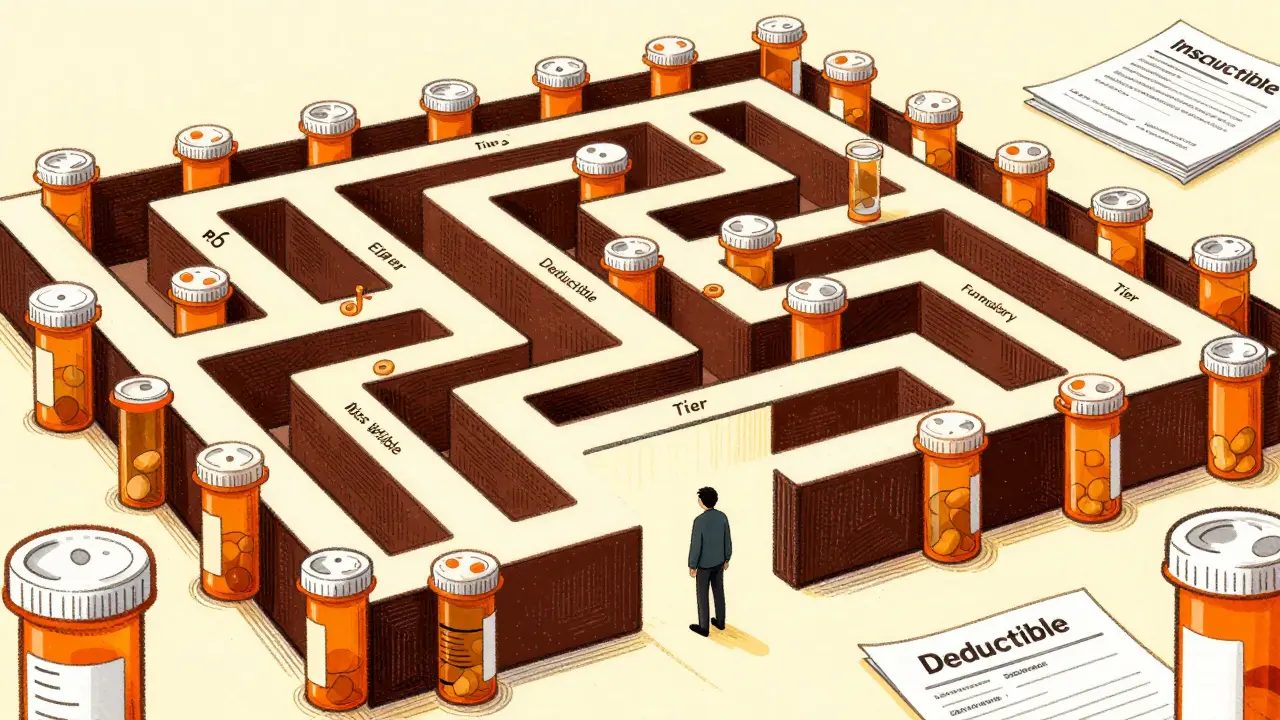
Prior Authorization and Step Therapy: The Red Tape
Even if your drug is covered and on the right tier, you might still face barriers. Two common hurdles are Prior Authorization and a process where your doctor must prove to the insurer that the drug is medically necessary before they will cover it. and Step Therapy, which requires you to try cheaper, lower-tier drugs first before the insurer will approve the more expensive one.
Data from the Government Accountability Office (GAO) shows that prior authorization is required for 28% of Medicare Part D prescriptions. Step therapy is used for 37% of Marketplace specialty drugs. This isn’t just an annoyance; it’s a delay in care. You might spend weeks arguing with insurance companies while waiting for approval.
Ask these questions:
- "Does my medication require prior authorization?"
- "Is step therapy required for this condition? If so, what alternatives must I try first?"
If your doctor says your current medication is essential and alternatives won’t work, ask if the plan offers an exception process. Some plans allow doctors to appeal step therapy requirements, but it takes time and effort.
Pharmacy Networks: Where You Fill Matters
You might think any pharmacy will do, but insurance plans often restrict coverage to specific networks. According to the NAIC Consumer Report (2022), 78% of Marketplace plans limit coverage to specific pharmacy networks. Using an out-of-network pharmacy can increase your costs by an average of 37%.
Worse yet, some plans have tiered pharmacy networks. Preferred pharmacies (often large chains like CVS, Walgreens, or Costco) offer lower copays. Non-preferred pharmacies might charge higher rates, even if they’re technically “in-network.”
Ask this question:
- "Which pharmacies are in my plan’s preferred network?"
- "Will my local pharmacy accept my plan, and will I pay the same copay there as at a preferred location?"
If you rely on a small independent pharmacy, check if it’s in-network. If it’s not, calculate the extra cost. Is the convenience worth the 37% price hike?

Medicare Part D Specifics: The Donut Hole and New Caps
If you’re on Medicare, the rules are different. Medicare Part D provides prescription drug coverage, but it has unique structures. For years, beneficiaries faced the “coverage gap” or “donut hole,” where they paid a larger share of costs after reaching a certain spending threshold.
However, major changes are coming. Under the Inflation Reduction Act, starting in 2025, the coverage gap is effectively eliminated, and there is a hard cap of $2,000 on out-of-pocket prescription costs for Medicare Part D beneficiaries. Additionally, monthly insulin costs are capped at $35.
For 2024, the gap still exists in a modified form. Beneficiaries pay 25% of drug costs between $5,030 and $8,000 in total drug costs before catastrophic coverage kicks in. Understanding where you fall in this cycle is crucial.
Ask these Medicare-specific questions:
- "How much have I spent on covered drugs this year, and am I close to entering or exiting the coverage gap?"
- "Does my plan include the new $2,000 out-of-pocket cap for 2025?"
- "Is my insulin included in the $35 monthly cap?"
Also, consider whether you want a standalone Part D plan or a Medicare Advantage plan with drug coverage. Standalone plans offer more flexibility to switch annually, while Advantage plans often have lower premiums but more restrictive pharmacy networks (68% of Advantage plans use tiered networks vs. 42% of standalone plans).
When to Ask: Timing Is Everything
You can’t just call your insurance company whenever you want to change plans. There are specific windows:
- Marketplace Open Enrollment: November 1 to January 15. This is when you can compare and switch ACA-compliant plans.
- Medicare Annual Election Period: October 15 to December 7. This is when you can join, switch, or drop Medicare Advantage or Part D plans.
- Special Enrollment Periods: Triggered by life events like marriage, birth, or moving to a new area.
During these periods, use the official comparison tools. HealthCare.gov allows you to enter up to 15 medications and 3 pharmacies to check coverage. Medicare Plan Finder requires you to enter medications by National Drug Code (NDC) for accurate comparisons.
Studies show that consumers who spend 20+ minutes checking medication coverage save an average of $1,147 annually compared to those who don’t verify. Twenty minutes now could save you a thousand dollars later.
Summary of Key Questions to Ask
To make it easy, here is your checklist. Print this out or save it to your phone before you enroll in any plan:
- Is my medication on the formulary? (Check the exact brand/generic name.)
- What tier is it in, and what is my copay or coinsurance?
- Do I have to meet a deductible before coverage starts?
- Does this drug require prior authorization or step therapy?
- Is my preferred pharmacy in the plan’s network?
- If on Medicare, how does the plan handle the coverage gap and out-of-pocket caps?
Don’t guess. Don’t assume. Call the number on the back of your card, log into the portal, or talk to a licensed broker. Your health-and your wallet-depends on it.
What should I do if my medication is not covered by my insurance plan?
First, ask your doctor if there is a therapeutic alternative that is covered. If not, you can request a "formulary exception" through your insurance company. This usually requires your doctor to submit a letter of medical necessity explaining why the uncovered drug is essential. You can also look into patient assistance programs offered by the drug manufacturer, which may provide the medication at a reduced cost or for free.
How do I find my plan's formulary?
Most insurance plans post their formularies online on their member portal or public website. Look for a section labeled "Drug List," "Formulary," or "Covered Medications." You can also call the customer service number on your insurance card and ask them to email or mail you the current formulary. For Medicare plans, use the Medicare Plan Finder tool on Medicare.gov.
What is the difference between a copay and coinsurance?
A copay is a fixed dollar amount you pay for a prescription (e.g., $10). Coinsurance is a percentage of the drug's total cost that you pay (e.g., 20%). Copays are predictable and easier to budget for. Coinsurance can lead to very high costs, especially for expensive specialty drugs, because your payment increases as the drug price increases.
Can I change my insurance plan mid-year if my medication costs go up?
Generally, no. You can only change plans during Open Enrollment or Special Enrollment Periods triggered by qualifying life events (like losing job-based coverage, getting married, or moving). However, if your current plan drops coverage for a medication you desperately need, you may qualify for a special enrollment period to switch to a different plan. Contact your marketplace or insurer immediately to check eligibility.
Why is my pharmacy telling me my insurance doesn't cover my drug, but my plan says it does?
This often happens due to network issues or administrative errors. First, confirm that the pharmacy is in your plan's network. Second, check if you've met your deductible. Third, there may be a prior authorization requirement that hasn't been processed yet. Call your insurance provider directly to verify coverage status and ask them to contact the pharmacy to resolve the issue.
