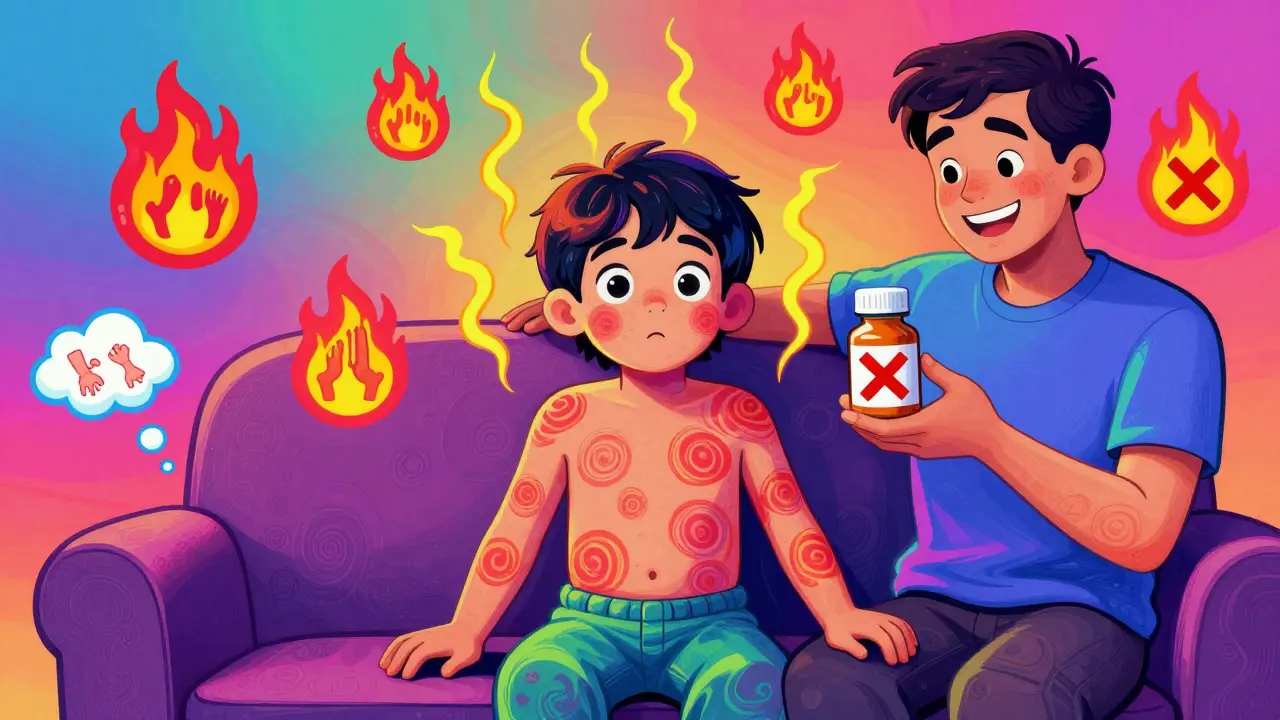
When a child develops a rash, fever, and joint pain a week after taking an antibiotic, parents often panic. Was it an allergy? Is this dangerous for life? Could they ever take penicillin again? The answer isn’t as simple as it seems. Many of these reactions aren’t true allergies at all - they’re serum sickness-like reactions (SSLR), a distinct, non-life-threatening immune response tied to specific antibiotics, not the entire class.
What Exactly Is a Serum Sickness-Like Reaction?
SSLR isn’t the same as the original serum sickness seen in the 1900s, when people got sick after receiving animal-derived antiserum for snake bites or rabies. Modern SSLR is a delayed reaction that happens 1 to 21 days after taking certain antibiotics - most often cefaclor, but also sometimes amoxicillin. It’s almost always seen in kids between 6 months and 6 years old. About 78% of all cases occur in children under 10, according to data from Cincinnati Children’s Hospital. Unlike true serum sickness, which involves immune complexes that damage organs like the kidneys, SSLR doesn’t form those complexes. That’s why it’s milder. Blood tests show normal complement levels (C3 and C4), no protein in the urine, and no signs of vasculitis. It’s not an anaphylactic event. It’s a T-cell-driven reaction, possibly triggered by how some kids’ bodies metabolize the drug. For example, a genetic variant in the CYP2C9*3 enzyme makes it harder to break down cefaclor, leading to metabolite buildup that sets off the immune response.The Classic Triad of Symptoms
If your child has SSLR, you’ll likely see three things together:- Urticarial rash - raised, itchy, red welts that move around. One spot fades in hours, but new ones pop up elsewhere. This happens in 95% of cases.
- Fever - usually between 38°C and 39°C (100.4°F-102.2°F). It’s common, but not always present. Only 85% of cases include fever.
- Joint pain or swelling - often in the knees, wrists, or ankles. It’s symmetric and can make walking or gripping hard. Affects 72% of kids with SSLR.
Why Misdiagnosis Is So Common - and Dangerous
Too often, doctors mistake SSLR for a viral rash, acute urticaria, or even anaphylaxis. In one audit from the Royal Children’s Hospital Melbourne, 23% of SSLR cases were mislabeled as viral exanthems. Others are called “penicillin allergy” and flagged permanently in medical records. That’s a huge problem. Here’s why it matters: if a child is wrongly labeled as allergic to penicillin, they’re more likely to get broader-spectrum antibiotics like vancomycin or azithromycin next time they’re sick. These drugs are more expensive, more disruptive to gut bacteria, and carry higher risks of side effects like C. diff infections. A 2022 study in the Journal of Allergy and Clinical Immunology found that 42% of SSLR patients ended up on unnecessary broad-spectrum antibiotics. That adds up to $187 million in avoidable healthcare costs every year in the U.S. alone. Worse, some families are told their child can never take any beta-lactam antibiotic again. That’s not true. Only the specific drug that caused the reaction - say, cefaclor - needs to be avoided. Over 89% of kids with SSLR from cefaclor tolerate other cephalosporins just fine. A 2020 study in the Journal of Pediatric Infectious Diseases confirmed this. The key is proper testing.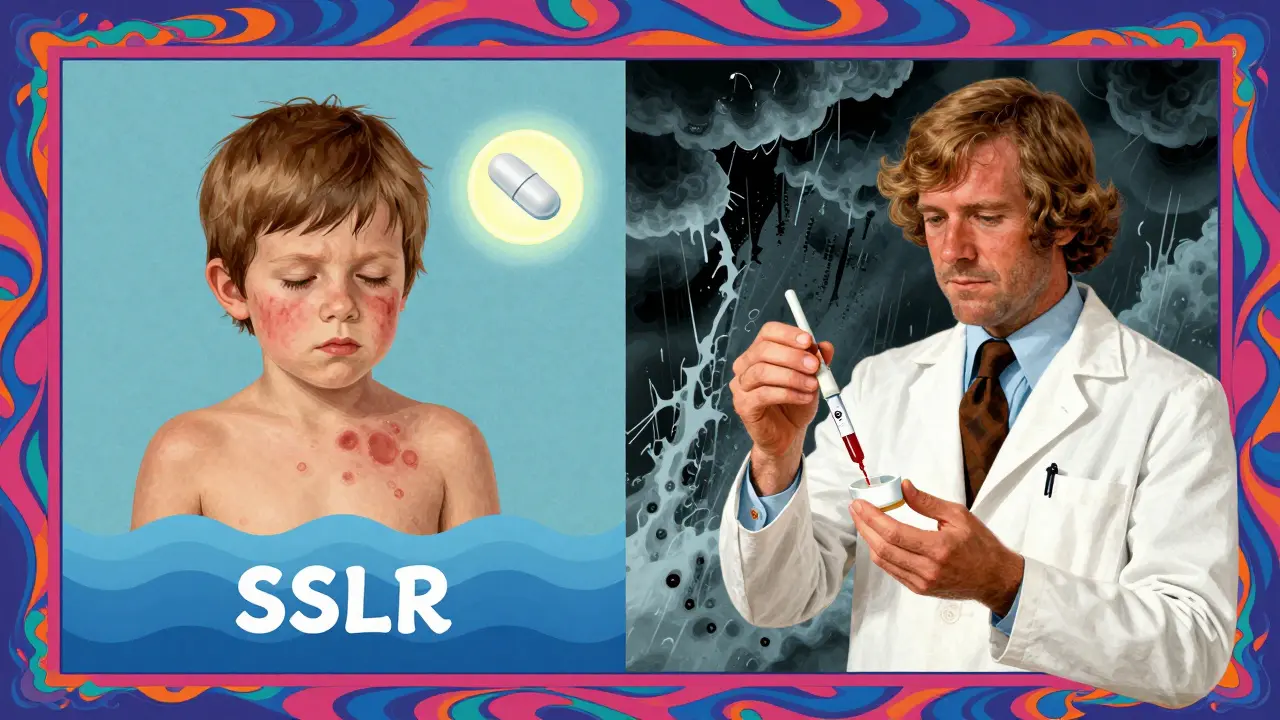
How SSLR Differs From True Serum Sickness
It’s easy to confuse the two. Both involve rash, fever, and joint pain. But here’s how they’re different:| Feature | SSLR | True Serum Sickness |
|---|---|---|
| Typical trigger | Cefaclor, amoxicillin | Antivenoms, infliximab, rituximab |
| Age group | Mostly children under 10 | Mostly adults |
| Onset after exposure | 1-21 days (median 7 days) | 7-21 days |
| Immune complexes | Absent | Present |
| Complement levels (C3/C4) | Normal | Low |
| Kidney involvement | None | 15-25% (proteinuria) |
| Resolution time | 3-7 days (92% recover fast) | 10-14 days |
| Long-term restriction needed? | No - only the specific drug | Yes - avoid the triggering agent |
What to Do If You Suspect SSLR
If your child develops a rash, fever, and joint pain 5-10 days after starting an antibiotic, stop the drug immediately. Don’t wait. Most reactions resolve within 72 hours of stopping the antibiotic. Treatment is simple:- Stop the antibiotic - this is the most important step. Continuing it can prolong symptoms.
- Use antihistamines - second-generation ones like cetirizine (0.25 mg/kg every 12 hours) help with itching and rash. They’re safe for kids and don’t cause drowsiness.
- Use ibuprofen - for joint pain and fever. Dose: 10 mg/kg every 8 hours.
- Oral steroids - only if symptoms are severe and affecting daily life. Prednisone at 1 mg/kg/day for 7-10 days, then taper.
Can Your Child Take Antibiotics Again?
Yes - but carefully. You don’t need to avoid all penicillins or cephalosporins. Only the specific drug that caused the reaction. Experts from the American Academy of Allergy, Asthma & Immunology (AAAAI) say SSLR is not a contraindication for future beta-lactam use. In fact, a 2023 study from Cincinnati Children’s showed that 92% of children who underwent a supervised oral challenge (usually 6-36 months after the reaction) tolerated other antibiotics without issue. One parent shared on Reddit: “My son had SSLR after cefaclor. We waited 14 months, then did an oral challenge under allergist supervision. He took amoxicillin with zero reaction. Now he’s on it for every ear infection.” But here’s the catch: 74% of pediatricians still write “penicillin allergy” in electronic health records after an SSLR event. That’s why allergist consultation is critical. Only 32% of parents know to ask for one. If your child’s doctor says “no more penicillin,” ask: “Was this a true allergy or a serum sickness-like reaction?”What’s Next for SSLR?
The 2024 International Consensus Document on Drug Hypersensitivity officially gave SSLR its own ICD-11 code: RA43.1. That’s huge. It means doctors will start coding it correctly, not lumping it with allergies. Researchers are also working on biomarkers. A study at the University of California is testing a urine test that detects cefaclor metabolites with 94% accuracy. If it works, we could soon have a simple test to confirm SSLR without waiting for symptoms to resolve. Meanwhile, AI tools are being tested in hospitals like Boston Children’s. Their AI system, trained on 12,000 pediatric cases, flags SSLR patterns in EHRs with 88% sensitivity and 91% specificity. It’s not perfect, but it’s helping cut down misdiagnosis.Bottom Line
SSLR is not a life-threatening allergy. It’s a confusing, temporary immune response that mostly affects young kids after certain antibiotics. Stop the drug, treat symptoms, and don’t panic. With the right diagnosis, your child can safely use other antibiotics in the future - and avoid the risks of unnecessary broad-spectrum drugs.Don’t let a rash after an antibiotic lead to a lifetime of restricted treatment. Ask questions. Get a second opinion. And remember: not every reaction is an allergy.
Is serum sickness-like reaction the same as a penicillin allergy?
No. SSLR is not an IgE-mediated allergy like anaphylaxis. It’s a delayed, T-cell-driven reaction that doesn’t involve immune complexes or IgE antibodies. While it can look like an allergy, it doesn’t mean your child can’t take other penicillins or cephalosporins. Only the specific antibiotic that caused the reaction needs to be avoided.
Can SSLR happen with amoxicillin, not just cefaclor?
Yes. While cefaclor is the most common trigger - responsible for 65-80% of pediatric cases - amoxicillin can also cause SSLR. It’s less frequent, but still documented. Any beta-lactam antibiotic can potentially trigger it, though cefaclor remains the top suspect, especially in children under 5.
How long does a serum sickness-like reaction last?
Most cases resolve within 3-7 days after stopping the antibiotic. About 92% of children fully recover in this timeframe. In 8% of cases, symptoms like rash or joint pain can linger for up to 3 months, but they gradually fade without treatment. Long-term damage is extremely rare.
Should I avoid all antibiotics if my child had SSLR?
No. Only avoid the specific antibiotic that caused the reaction. For example, if cefaclor triggered it, your child can still safely take amoxicillin, cephalexin, or other cephalosporins. Avoiding all beta-lactams increases the risk of using broader-spectrum drugs that are less safe and more expensive. Always consult an allergist before making permanent changes.
Can SSLR be diagnosed with a skin test?
No. Skin testing and IgE blood tests are not reliable for SSLR because it’s not an IgE-mediated reaction. Diagnosis is clinical, based on symptoms, timing, and ruling out other causes. In some cases, an oral challenge under medical supervision is the best way to confirm tolerance of other antibiotics.
Is SSLR dangerous for future vaccinations?
No. SSLR does not affect vaccine safety. The 2023 AAAAI guidelines confirm that children with a history of SSLR can receive all routine vaccines, including those containing trace antibiotics (like the MMR or varicella vaccine). The risk of SSLR from vaccines is negligible - CDC data shows only 0.003% of rabies vaccine recipients had any reaction, and none were SSLR.

Brandon Shatley
my kid got this after amoxicillin and we thought it was an allergy. turned out it was just sslr. stopped the drug, gave him cetirizine, and he was fine in 3 days. no more panic, no more 'no penicillin ever again' nonsense. so glad i read this.
Blessing Ogboso
As a pediatric nurse in Lagos, i’ve seen so many parents panic when their child gets a rash after antibiotics. In Nigeria, we don’t always have access to allergists, so misinformation spreads fast. I’ve had mothers come in convinced their child can never take penicillin again - when it was just a mild sslr. This post is a gift. The part about avoiding broad-spectrum antibiotics? So true. We end up using azithromycin for everything, and then kids get diarrhea for weeks. I wish more clinics had this info posted on the wall. Also, the 92% recovery stat? That’s the kind of number that calms a nervous parent. Thank you for writing this clearly. 🙏
Jefferson Moratin
The distinction between T-cell-mediated delayed hypersensitivity and IgE-mediated anaphylaxis is not merely semantic - it is foundational to rational clinical decision-making. To conflate SSLR with 'penicillin allergy' is to mistake a transient immunological artifact for a permanent constitutional contraindication. The economic and therapeutic consequences of this diagnostic error are not incidental; they are systemic. The fact that 74% of pediatricians still mislabel these cases reveals a profound failure in continuing medical education. We are not just misdiagnosing rashes - we are misallocating antibiotics, undermining antimicrobial stewardship, and perpetuating unnecessary fear. This is not a medical issue. It is a failure of epistemology.
Zola Parker
so like… if it’s not an allergy, why do they call it ‘serum sickness-like’? sounds like they’re just being dramatic. 🤷♀️ also, why are we even talking about this? kids get rashes. they always have. i’m just saying… maybe we’re overmedicating them? 🤔
florence matthews
this made me cry a little 😭 my daughter had this after cefaclor and we were told she’s allergic to ALL antibiotics. we avoided them for 2 years. she got pneumonia and we almost lost her because we were scared to give her amoxicillin. we finally went to an allergist - turned out she was fine. now she’s 8 and takes antibiotics like candy. i wish i’d known this 5 years ago. thank you for writing this. 🙏💛
Kenneth Jones
Stop the antibiotics. That’s it. No need for 10 paragraphs. No need for AI, no need for ICD-11 codes. Just stop the drug. The body fixes itself. Stop overcomplicating medicine.
Raphael Schwartz
so america spends 187 million a year because parents are too scared to read a simple article? lol. we need to stop coddling kids. if a rash shows up, let them suffer. they’ll be stronger. also why is everyone so obsessed with antibiotics? my grandpa never had a blood test and he lived to 92. we’re turning kids into fragile glass statues.
Marissa Staples
i think the real issue here isn’t the reaction itself - it’s how scared we’ve become of anything that looks like an allergy. we’ve turned every rash into a medical emergency. and then we overprescribe antibiotics to ‘fix’ the fear. ironic, right? we’re scared of one drug, so we use three others. and none of them are better. just… more expensive. and more disruptive. i wish we could just… breathe. let kids be kids.
Rachele Tycksen
wait so you’re saying my kid can have amoxicillin again? i thought he was allergic lol. i just kept saying nope nope nope. i’m so dumb. thanks for this. 🙈