
Statin Tolerance Calculator for Women
Personalized Risk Assessment
Based on current medical research about sex-specific statin side effects
Your Personalized Risk Report
Muscle Pain Risk
Diabetes Risk
Recommended Actions
Important: Always consult your healthcare provider before making changes to your medication. This tool provides general risk assessment only.
Women taking statins aren’t just getting the same side effects as men - they’re getting different ones, and often more of them. If you’re a woman prescribed a statin and you’ve felt muscle aches, fatigue, or noticed your blood sugar creeping up, you’re not imagining it. Research shows these aren’t random reactions. They’re patterns - and they’re tied to biology.
Why Women React Differently to Statins
Statins work by blocking an enzyme in the liver called HMG-CoA reductase, which makes cholesterol. That’s the same in everyone. But how your body handles the drug? That’s where sex differences kick in. Women tend to have lower kidney function after adjusting for body size - about 15-20% lower than men. That means statins stick around longer in the bloodstream. Women also carry more body fat on average (25-30% vs. 15-20% in men), which changes how the drug spreads through the body. These differences mean women often have higher drug exposure, even when taking the same dose as men. Add in the fact that women are more likely to be on multiple medications - for blood pressure, thyroid issues, or joint pain - and you’ve got a recipe for interactions that men rarely face. A 2021 study found women over 75 taking statins had more than double the risk of hospitalization from drug interactions, especially when combined with calcium channel blockers or blood thinners.Muscle Pain Is the Big One - and It Hits Women Harder
Muscle pain, stiffness, or weakness is the #1 reason women stop taking statins. The USAGE survey, which tracked over 10,000 patients, found that 31% of women reported new or worsening muscle symptoms compared to 26% of men. That might not sound like a big gap, but it adds up fast. Nearly 29% of women stopped their statin because of muscle issues, compared to just over 22% of men. And it’s not just about feeling sore. In older women - especially those over 65 - the risk of serious muscle damage (called myopathy) is 1.5 to 2 times higher than in men of the same age. That’s not because women are weak or overreacting. It’s because of how their bodies process the drug. Some women carry a genetic variant called SLCO1B1, which makes it harder for the liver to clear statins. About 23% of women have this variant, compared to 18% of men. That small difference can turn mild muscle aches into something dangerous. Genetic testing before starting statins isn’t routine yet - but it should be, especially for women with a history of muscle pain or those on multiple meds.Diabetes Risk: A Silent Trade-Off
Statins slightly raise the risk of developing type 2 diabetes. The FDA added this warning in 2012. But here’s what most women don’t know: the risk is real, and it’s higher for women. A 2015 meta-analysis of nearly 96,000 people found a 9% increased diabetes risk after four years of statin use. But when you look just at post-menopausal women, the risk jumps - and it happens regardless of the statin type or dose. That means whether you’re on low-dose pravastatin or high-dose rosuvastatin, your chances of developing diabetes go up after three years. One study showed women had a 12% increased risk of diabetes on statins, while men had 8%. That difference isn’t huge, but it matters. For women already at risk - overweight, prediabetic, or with a family history - that extra nudge can tip the scale. The good news? The heart benefits still outweigh the diabetes risk for most women with high cholesterol or a history of heart disease. But here’s the catch: you need to monitor your blood sugar. Get fasting glucose checked every 3 to 6 months, especially after the first year on statins. Catching early changes means you can adjust diet, activity, or even switch meds before diabetes takes hold.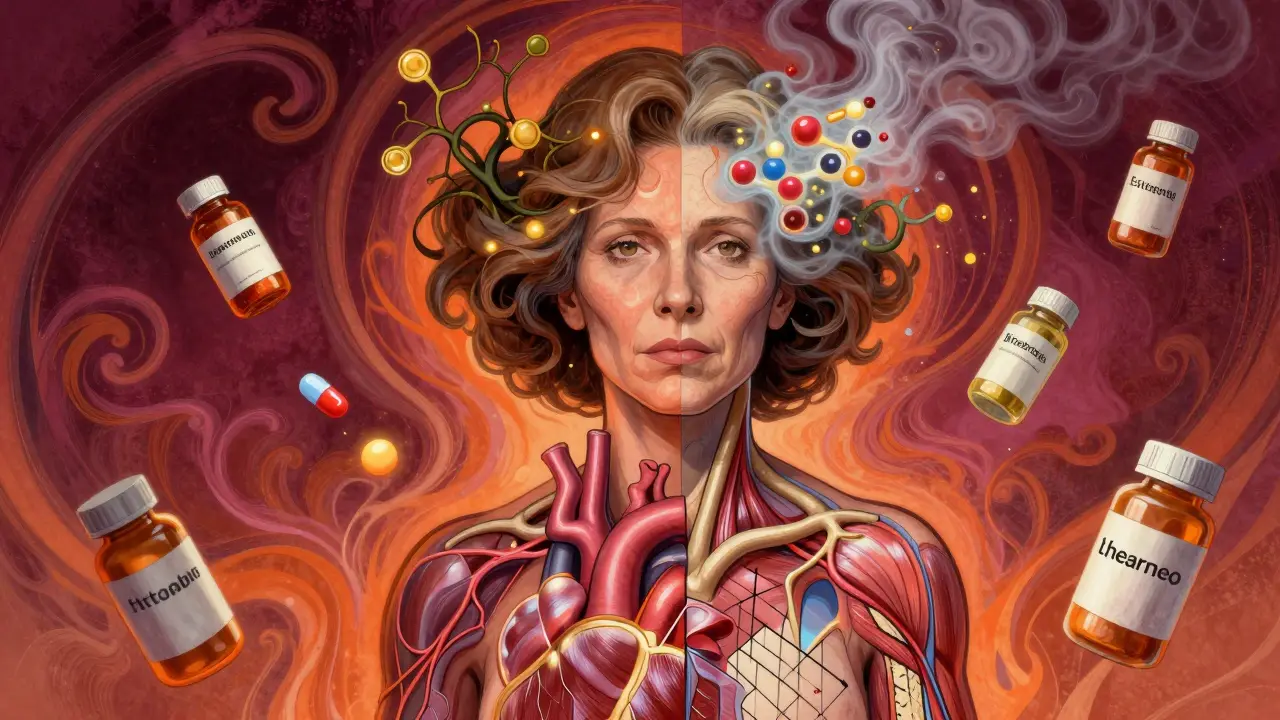
Communication Gaps Are Costing Women Their Health
You might be on a statin, but do you really understand why? A 2019 study found that 42% of women said their doctor never explained how high cholesterol leads to heart attacks. Only 31% of men said the same. That gap isn’t about intelligence - it’s about assumption. Too often, doctors assume women already know the basics, or that they’re less likely to stick with long-term meds. And that assumption hurts. Women are 2.3 times more likely to try three or more different statins before finding one they can tolerate. But when one doesn’t work, they’re 37% less likely to be offered alternatives like ezetimibe or PCSK9 inhibitors. These aren’t experimental drugs - they’re proven, effective, and often better tolerated. Even cost plays a role. Women are more likely to skip doses or delay refills because they’re paying for their partner’s or kids’ meds first. In one study, 29% of women cited cost as a reason for non-adherence, compared to 19% of men. That’s not laziness. That’s survival.What Happens During Menopause and Beyond
Menopause changes everything. As estrogen drops, cholesterol levels rise - and so does heart disease risk. Statins become even more important. But guess what? Muscle side effects get worse. The Women’s Health Initiative found that 41% of post-menopausal women reported muscle symptoms, compared to 33% of pre-menopausal women. That’s not coincidence. Estrogen helps protect muscle tissue. When it fades, muscles become more sensitive to statin toxicity. And it gets trickier with age. Women over 75 are at higher risk for serious side effects - not just from statins alone, but from how they interact with other common meds. Simvastatin combined with a calcium channel blocker? Risk of muscle damage jumps by 300%. Warfarin and statins together? Bleeding risk goes up 25%. The solution isn’t to avoid statins. It’s to start low and go slow. The American Heart Association now recommends beginning with half the usual dose - like 10mg of atorvastatin instead of 20mg - and adjusting only if needed. This simple change improved adherence by 32% in women in a 2020 Dutch trial.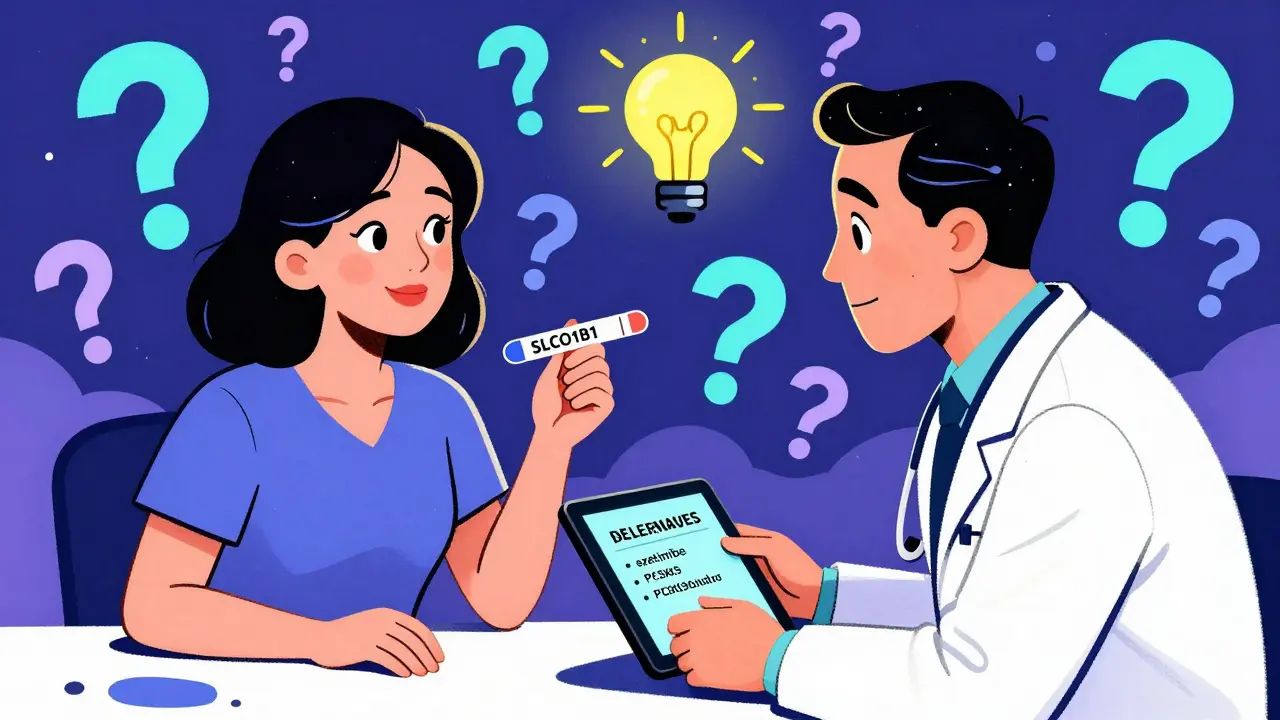
What You Can Do Right Now
If you’re on a statin and feeling off, don’t just quit. Talk to your doctor - and bring these points:- Track your symptoms: When did the muscle pain start? Does it get worse after exercise or at night?
- Ask about your dose: Could you start lower? Could you switch to a statin that’s less likely to interact with your other meds?
- Request a blood sugar check: Fasting glucose every 3-6 months is non-negotiable if you’re on statins long-term.
- Ask about alternatives: Ezetimibe, PCSK9 inhibitors, or bempedoic acid aren’t just backups - they’re options.
- Get genetic tested if you’re over 60 or on multiple meds: The SLCO1B1 test is simple, cheap, and could prevent a hospital visit.
It’s Not About Fear - It’s About Fit
Statins save lives. For women with high cholesterol, a history of heart attack, or diabetes, the benefit is clear. But for women who are healthy, just have borderline cholesterol, or are scared off by muscle pain, the conversation needs to change. You don’t have to take a statin if it’s not right for you. But you also shouldn’t give up because no one explained the risks - or the alternatives. The goal isn’t to avoid statins. It’s to find the right one - at the right dose - at the right time. And that starts with knowing your body, asking the right questions, and refusing to be ignored.Do statins cause more muscle pain in women than in men?
Yes. Studies show 31% of women report muscle pain or weakness on statins, compared to 26% of men. Women are also more likely to stop taking statins because of these symptoms - especially after age 65, where the risk of serious muscle damage is 1.5 to 2 times higher than in men. This is due to differences in how women’s bodies process the drugs - lower kidney function, higher body fat, and more frequent use of other medications.
Can statins cause diabetes in women?
Yes. Statins slightly increase the risk of developing type 2 diabetes - about 9% over four years in general, but studies show the risk is slightly higher in women, particularly post-menopausal women. This effect happens regardless of the statin type or dose. While the risk is real, it’s usually outweighed by the heart protection statins provide. However, women on statins should get fasting blood sugar tests every 3 to 6 months to catch early signs.
Should women start statins at a lower dose?
Yes. Major guidelines now recommend starting women on lower doses - like 10mg of atorvastatin instead of 20mg - because they’re more sensitive to side effects. A 2020 trial showed this approach improved adherence by 32% in women. Starting low and going slow helps avoid muscle pain and other side effects, and gives your body time to adjust.
Are there better alternatives to statins for women?
Yes. If statins cause side effects, alternatives like ezetimibe, bempedoic acid, or PCSK9 inhibitors are effective and often better tolerated. Yet studies show women are 37% less likely to be offered these options. Don’t accept a "take it or leave it" answer. Ask your doctor: "If this statin doesn’t work, what else can I try?" These drugs aren’t experimental - they’re FDA-approved and proven to lower LDL cholesterol.
Is it safe to take statins after menopause?
Yes - and it’s often more important. After menopause, heart disease risk rises sharply due to falling estrogen levels. Statins can significantly reduce that risk. However, muscle side effects become more common after menopause. The key is to start with a low dose, monitor for muscle pain, and check for drug interactions with other medications you may be taking, like blood pressure pills or blood thinners.
Can statins affect women who are pregnant or planning pregnancy?
No. All statins are classified as Pregnancy Category X, meaning they can cause birth defects. If you’re of childbearing age and prescribed a statin, your doctor must discuss reliable contraception before starting. About 15% of statin prescriptions to women under 45 lack proper pregnancy prevention counseling. If you’re planning to get pregnant, stop statins at least 3 months before conception and talk to your doctor about safer cholesterol management options.
