Radiation Dermatitis: Causes, Management, and What Works
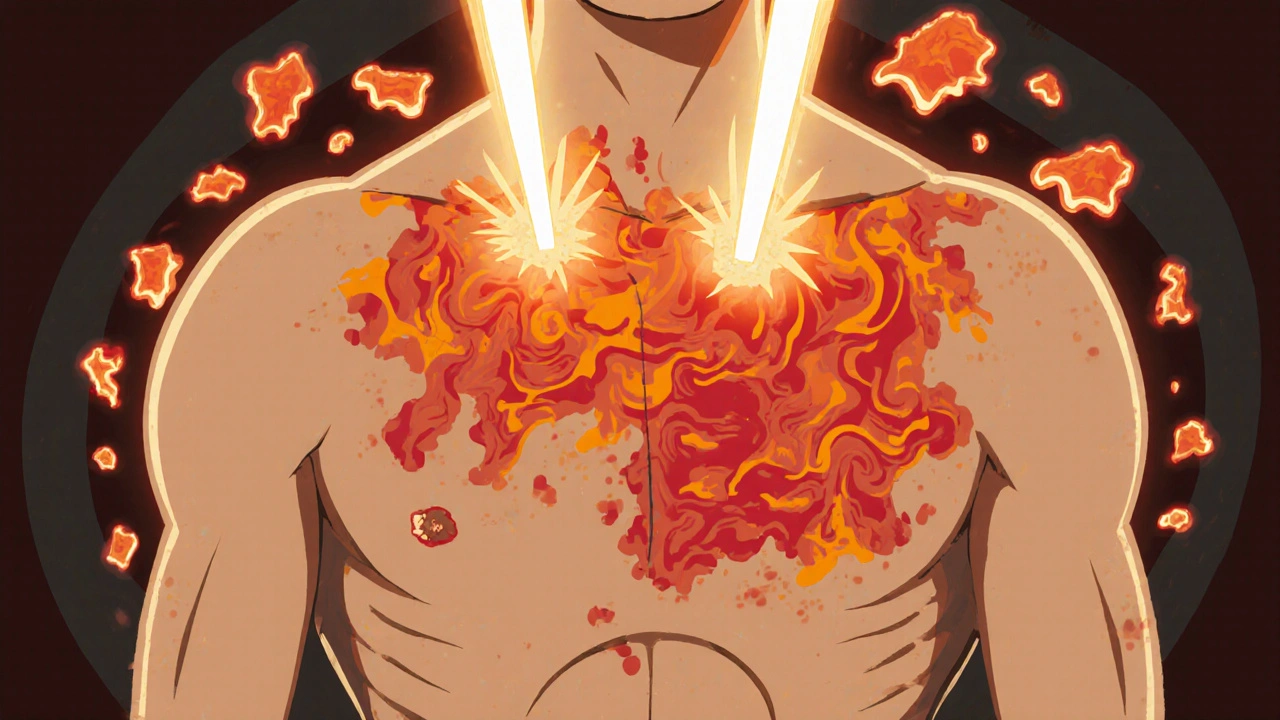
When you're undergoing radiation therapy, a targeted cancer treatment that uses high-energy beams to destroy tumor cells. Also known as radiotherapy, it's a critical tool in fighting cancer—but it doesn't just target tumors. The same energy that kills cancer cells can also damage the skin in its path, leading to radiation dermatitis, an inflammatory skin reaction caused by exposure to ionizing radiation during cancer treatment. This isn't just a mild sunburn. It can mean painful redness, peeling, blistering, and even open sores that make daily life harder.
Radiation dermatitis doesn’t happen to everyone the same way. Some people get mild redness, others develop severe burns. Factors like the radiation dose, the area being treated (face, neck, and underarms are more sensitive), skin type, and whether you're also getting chemotherapy all play a role. It usually shows up after a few weeks of treatment and can last weeks or even months after it ends. The skin becomes fragile, dry, and easily irritated. You might feel burning, itching, or tightness. Many patients say the discomfort is worse than the cancer itself—because it’s constant, visible, and hard to hide.
Managing this isn’t about fancy creams or miracle cures. It’s about simple, science-backed habits. Avoiding harsh soaps, skipping alcohol-based products, using fragrance-free moisturizers like petroleum jelly or ceramide-based lotions, and protecting skin from sun exposure are the basics. Some doctors recommend aloe vera or silver sulfadiazine for open wounds, but not all products are safe—some can trap heat or cause allergic reactions. It’s also important to know what not to do: no scratching, no tight clothing, no hot baths. Even your pillowcase can make a difference. Cotton is better than polyester. And if you’re using a heating pad or ice pack near the treated area? Don’t. Radiation-damaged skin can’t feel temperature the same way, and you could burn yourself without realizing it.
There’s growing evidence that early intervention helps. Starting gentle skin care before radiation even begins can reduce severity. Studies show patients who follow a structured skin care plan report less pain and faster healing. It’s not just about comfort—it’s about keeping your treatment on track. Severe radiation dermatitis can force delays in therapy, which can affect outcomes. That’s why so many oncology teams now include dermatology nurses who specialize in this exact problem.
What you’ll find in the posts below aren’t generic tips. These are real stories and clinical insights from people who’ve been through it—along with what actually works for managing radiation dermatitis while staying on treatment. From how to choose the right moisturizer to what to do when your skin cracks open, these posts cut through the noise. You’ll see how steroids, antihistamines, and even sleep habits tie into healing. You’ll learn why some popular remedies fail and what alternatives doctors recommend when things get worse. This isn’t theory. It’s what works when you’re tired, in pain, and just trying to get through another day.
Radiation Side Effects: Skin Care, Fatigue, and Recovery Tips
Learn how to manage radiation side effects like skin irritation and fatigue during cancer treatment. Get practical tips on skin care, fatigue relief, and what to expect during recovery.