Warfarin-Antibiotic Interaction Risk Estimator
Patient & Treatment Scenario
Analysis Results
Enter your details and click "Estimate Risk" to see potential INR changes and recommended actions.
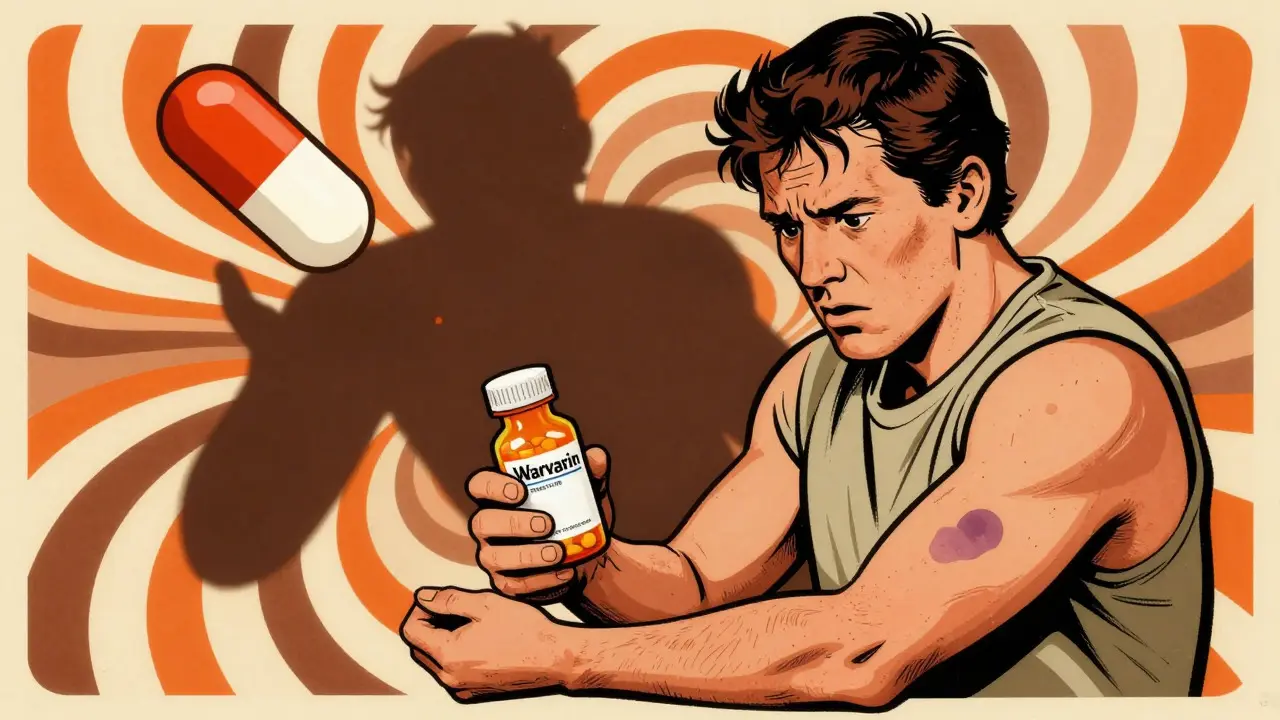
Imagine you’re on Warfarin, a common blood thinner, and your doctor prescribes a standard antibiotic for a simple infection. A few days later, you notice unusual bruising or bleeding gums. This isn’t just bad luck; it’s likely the result of a dangerous drug interaction between Coumadin and trimethoprim-sulfamethoxazole (TMP-SMX).
This combination is one of the most clinically significant interactions in pharmacology. When taken together, these drugs can cause your International Normalized Ratio (INR) to spike dramatically, turning a routine treatment into a medical emergency. Understanding why this happens and how to manage it is critical for anyone taking anticoagulants.
The Mechanism Behind the Spike
To understand the risk, we need to look at how these drugs work inside your body. Warfarin works by inhibiting vitamin K epoxide reductase, which reduces the production of clotting factors II, VII, IX, and X. It exists as two forms, or enantiomers: S-warfarin and R-warfarin. The S-enantiomer is three to five times more potent than the R-form and is responsible for 60-70% of the anticoagulant effect.
Here is where Trimethoprim-Sulfamethoxazole complicates things. This antibiotic attacks warfarin through multiple pathways:
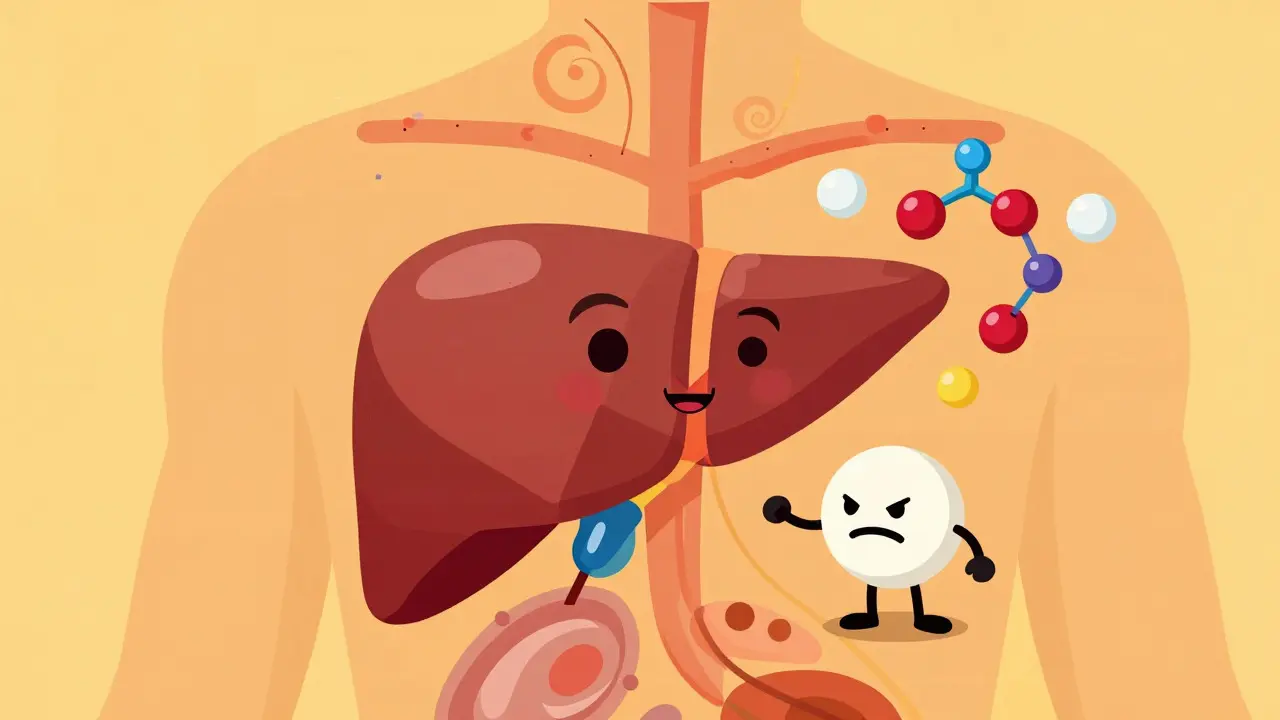
- CYP2C9 Inhibition: Trimethoprim is a moderate inhibitor of the liver enzyme CYP2C9. Since this enzyme is primarily responsible for metabolizing the potent S-warfarin, blocking it means warfarin stays in your system longer and builds up. Studies show this reduces S-warfarin clearance by approximately 20-30%.
- Protein Binding Displacement: Warfarin is 97-99% bound to albumin in the blood. Sulfamethoxazole competes for these same binding sites, displacing warfarin and increasing the amount of free, active drug circulating in your bloodstream.
- Gut Flora Reduction: Antibiotics kill bacteria in the gut, including those that produce vitamin K. Less vitamin K means less competition for warfarin, further enhancing its thinning effect.
The result is a rapid increase in anticoagulation. You don’t have to wait weeks to see changes. INR elevation typically begins within 36 to 72 hours after starting TMP-SMX therapy.
How Bad Is the Interaction?
Not all antibiotics affect warfarin equally, but TMP-SMX is among the worst offenders. Comparative data highlights the severity:
| Antibiotic | Average INR Increase | Risk Level |
|---|---|---|
| Trimethoprim-Sulfamethoxazole | 1.8 units (95% CI: 1.5-2.1) | High |
| Ciprofloxacin (Fluoroquinolone) | 0.9 units (95% CI: 0.7-1.1) | Moderate |
| Amoxicillin | 0.4 units (95% CI: 0.2-0.6) | Low |
For context, if your target INR is 2.5, an increase of 1.8 units pushes you to 4.3. According to the American Heart Association, the risk of bleeding increases substantially when INR exceeds 4.0, rising sharply above 5.0. Data from the FDA Adverse Event Reporting System shows that among reports of INR elevation linked to TMP-SMX, 42% resulted in hospitalization, and 3.7% involved fatal hemorrhage.
Individual factors matter too. Men are 9% more likely to experience INR elevation than women. Patients over 75, those with liver disease, heart failure, or poor nutrition are considered "warfarin sensitive" and may see INR jumps averaging 2.5 units compared to 1.5 units in others.
Should You Avoid TMP-SMX Entirely?
Expert consensus leans heavily toward caution. The Institute for Safe Medication Practices lists this interaction as "high-alert." Dr. Gregory Makris, a professor of medicine and co-author of hematology guidelines, has stated that TMP-SMX should be considered contraindicated in patients on warfarin unless absolutely necessary. For common conditions like urinary tract infections, alternatives like Nitrofurantoin are often preferred because they do not significantly interact with warfarin.
However, avoidance isn't always possible. Some infections respond better to TMP-SMX, or patients may have allergies to other classes. In these cases, experts like Dr. Jack Ansell note that careful monitoring can permit short-term use. The key is vigilance, not necessarily total prohibition, provided there is no safer alternative.
Management Protocols: What To Do If You Must Take It
If your healthcare provider determines TMP-SMX is the right choice, specific protocols must be followed to keep you safe. Here is the step-by-step approach recommended by clinical guidelines:
- Baseline Check: Get your INR checked before starting the antibiotic.
- Preemptive Dose Adjustment: For high-risk patients, reduce the warfarin dose by 20-30% before or immediately upon starting TMP-SMX.
- Frequent Monitoring: Check INR again 48-72 hours after starting the antibiotic. Continue checking every 3-4 days while on the medication and for several days after stopping it.
- Dietary Consistency: Maintain consistent vitamin K intake. Don’t suddenly change your leafy green vegetable consumption during this period, as fluctuations can compound the instability.
Patient education plays a huge role here. Research from the National Blood Clot Alliance shows that patients who receive specific counseling about antibiotic-warfarin interactions have 37% fewer emergency department visits for bleeding complications.
Handling Elevated INR: Treatment Tiers
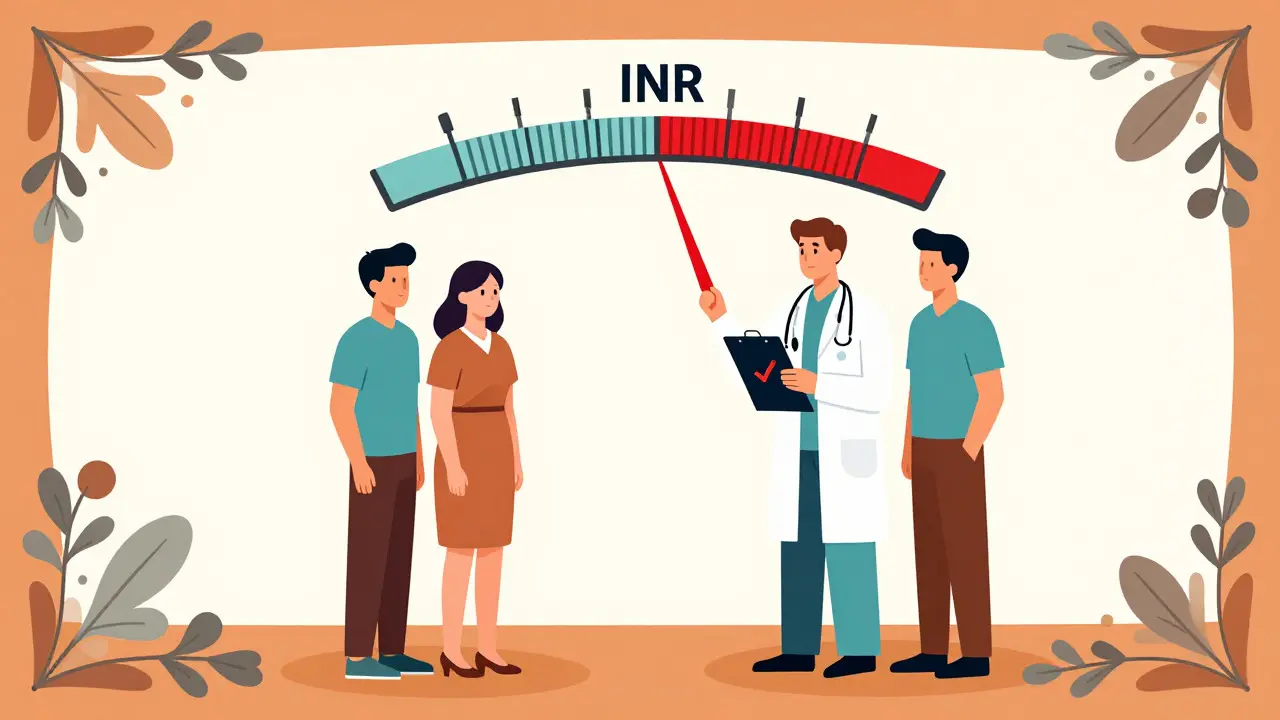
If your INR does rise, the response depends on the value and whether you are bleeding. The American Heart Association outlines clear tiers for management:
- INR 4.0 - 5.0 without bleeding: Withhold 1-2 doses of warfarin, then resume at a reduced dose once INR returns to therapeutic range.
- INR > 5.0 with minor bleeding: Administer oral vitamin K (1-2.5 mg) and withhold warfarin.
- Severe bleeding or INR > 10: This is a medical emergency. Treatment requires IV vitamin K (5-10 mg) plus 4-factor prothrombin complex concentrate (PCC) or fresh frozen plasma to rapidly reverse anticoagulation.
Don’t try to self-manage high INR values. Contact your anticoagulation clinic or doctor immediately if you suspect an interaction.
The Bigger Picture: Warfarin vs. DOACs
You might wonder why so many people still take warfarin given these risks. While direct oral anticoagulants (DOACs) like apixaban and rivaroxaban have reduced warfarin use, about 2.6 million Americans still received warfarin prescriptions in 2022. Why? Because DOACs aren’t suitable for everyone. Patients with mechanical heart valves, severe kidney disease, or certain antiphospholipid syndromes often require lifelong vitamin K antagonist therapy.
With 1.2 million mechanical heart valve recipients in the U.S., this interaction will remain clinically significant for years to come. Recent research, including a $2.4 million NIH-funded study, is looking into predictive models using CYP2C9 and VKORC1 genotypes to identify who is most at risk. Until personalized dosing becomes standard, awareness and monitoring are your best defenses.
How quickly does TMP-SMX affect warfarin levels?
INR elevation typically occurs within 36 to 72 hours after initiating trimethoprim-sulfamethoxazole therapy. This rapid onset is due to the immediate inhibition of CYP2C9 metabolism and protein binding displacement.
What are safe antibiotic alternatives to TMP-SMX for warfarin patients?
Nitrofurantoin is often preferred for urinary tract infections as it has minimal interaction with warfarin. Other options depend on the infection type but may include cephalosporins like cefazolin, though all antibiotics should be used with caution and monitoring.
Can I stop my warfarin when taking TMP-SMX?
Do not stop warfarin without consulting your doctor. Stopping abruptly can increase clotting risk. Instead, doctors usually recommend reducing the dose preemptively or withholding doses only if INR becomes supratherapeutic.
Why is S-warfarin more important than R-warfarin in this interaction?
S-warfarin is 3-5 times more potent than R-warfarin and accounts for 60-70% of the anticoagulant effect. Trimethoprim specifically inhibits CYP2C9, the enzyme that metabolizes S-warfarin, leading to a disproportionate buildup of the more active form.
What symptoms indicate dangerously high INR?
Watch for unusual bruising, bleeding gums, nosebleeds that won't stop, red or brown urine, black stools, or severe headaches. These signs suggest excessive anticoagulation and require immediate medical attention.
