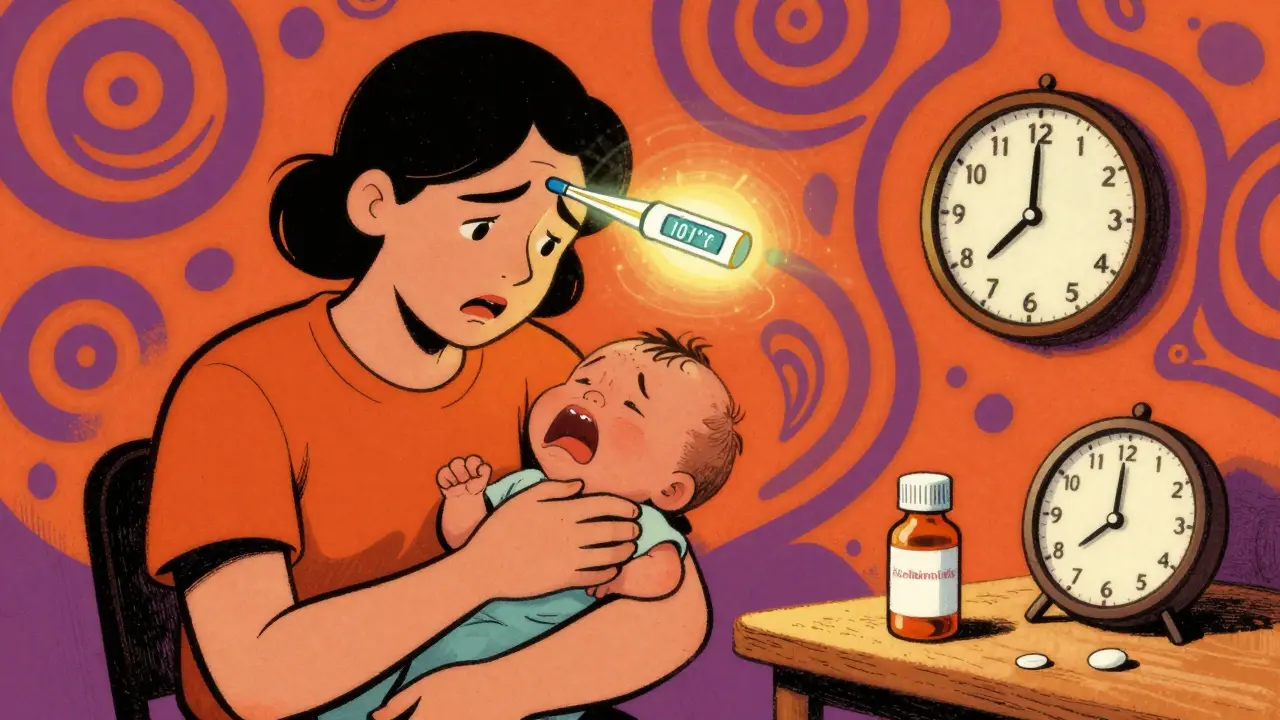
When your child gets vaccinated, it’s normal to worry about fever. Many parents reach for fever reducers like acetaminophen or ibuprofen right after the shot, thinking they’re helping. But giving these medicines too early might actually hurt the vaccine’s job - protecting your child from serious diseases.
Why Timing Matters More Than You Think
In the early 2000s, it was common practice to give fever reducers before or right after vaccines. The idea was simple: prevent discomfort. But research since 2009 changed everything. A landmark study in The Lancet showed that giving medications like acetaminophen before vaccination can lower the body’s antibody response. That means the vaccine might not work as well. Studies since then have repeated this finding. Children who got fever medicine before their shots had lower antibody levels against key vaccine components - like those in the pneumococcal, DTaP, and hepatitis B vaccines. The drop wasn’t huge, and most kids still developed some protection. But in medicine, even small drops in immune response can matter when you’re trying to prevent deadly diseases. The good news? If you wait, the vaccine works just fine.The 4-Hour Rule: What Experts Agree On
Most major health groups - the CDC, the American Academy of Pediatrics, and Children’s Hospital of Philadelphia - now say: don’t give fever reducers before vaccination. But they also say: it’s okay to give them after. The key is timing. Research shows that if you wait at least four hours after the shot before giving medicine, you avoid the dip in antibody production. One study compared kids who got acetaminophen right after their vaccine with those who got it four hours later. The group that waited had normal immune responses. The group that got it sooner? Their antibody levels dropped. So here’s the rule of thumb: wait four hours. If your child seems fine, hold off. If they start to feel hot or fussy after that window, then it’s safe to give medicine.Which Vaccines Cause Fever - and How Often?
Not all vaccines cause fever the same way. Some are more likely to trigger a temperature rise than others.- Prevnar 13 (pneumococcal): 24-35 out of every 100 babies develop a fever within a week.
- Pediarix (DTaP-IPV-HepB): 28-39 out of 100 babies get fever in the first few days.
- MenB (meningococcal B): This one is different. In the UK, health officials recommend giving paracetamol after this vaccine at 8 and 16 weeks because fever risk is so high.
When to Give Fever Medicine - And When Not To
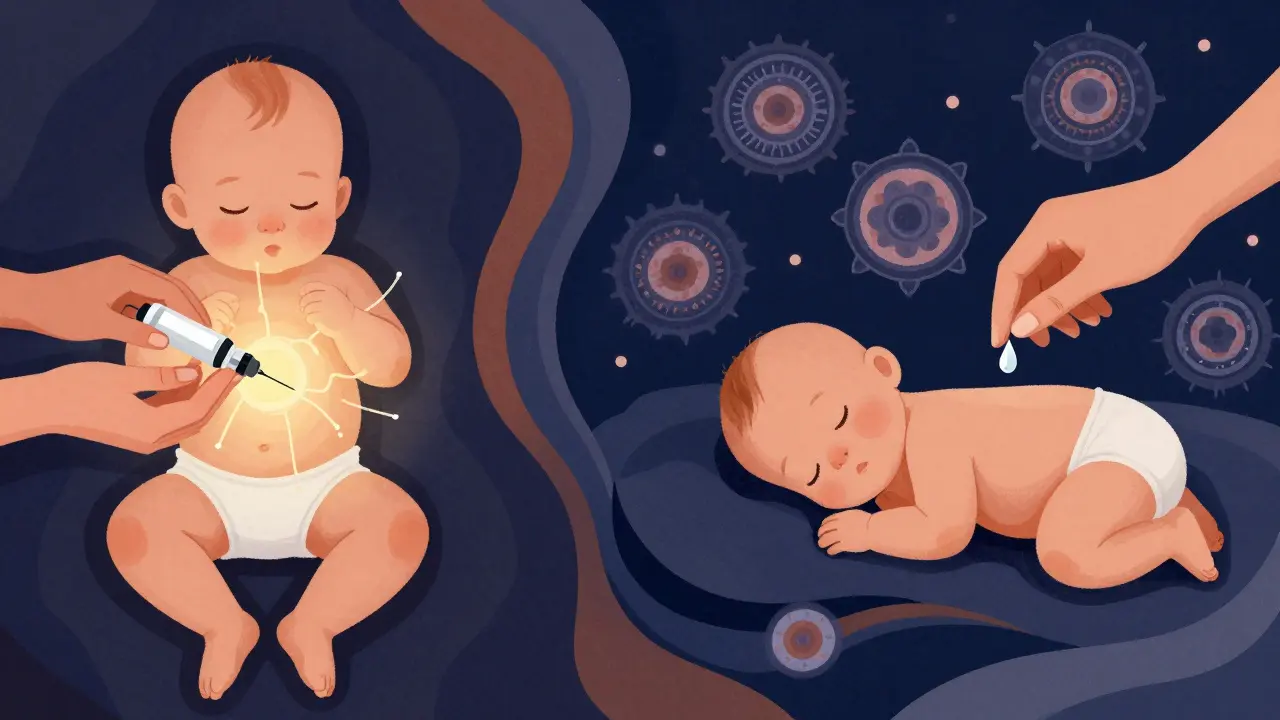
Just because your child has a fever doesn’t mean they need medicine. Seattle Children’s Hospital and the NHS both say: don’t treat low-grade fevers. If your child is playful, drinking fluids, and sleeping okay, let the fever be. Fever isn’t the enemy - it’s a sign your immune system is waking up. Only consider medicine if:- Temperature is over 102°F (39°C)
- Your child is clearly uncomfortable, irritable, or crying nonstop
- They’re refusing fluids or seem unusually sleepy
Medication Dosing: What You Need to Know
Acetaminophen (Tylenol) and ibuprofen (Advil, Motrin) are both safe when used correctly - but not interchangeable.- Acetaminophen: Give every 4-6 hours. Max 4 doses in 24 hours. Not for babies under 12 weeks.
- Ibuprofen: Give every 6-8 hours. Max 4 doses in 24 hours. Not for babies under 6 months (or under 12 lbs).
- A baby 6-11 months (18-23 lbs): 1.25 mL acetaminophen or 2.5 mL ibuprofen
What About the MenB Vaccine? A Special Case
The UK’s NHS stands out here. They recommend giving liquid paracetamol after the 8-week and 16-week MenB shots - not before, but after. Why? Because MenB causes fever in more than half of babies. High fevers can lead to seizures in very young infants. So the risk of fever outweighs the small chance of reduced immune response. This is the only vaccine where experts in a major health system actively recommend routine fever reducer use after vaccination. In the U.S., the CDC doesn’t make this same recommendation - but they don’t forbid it either. It’s a personal decision, based on your child’s risk and your comfort level.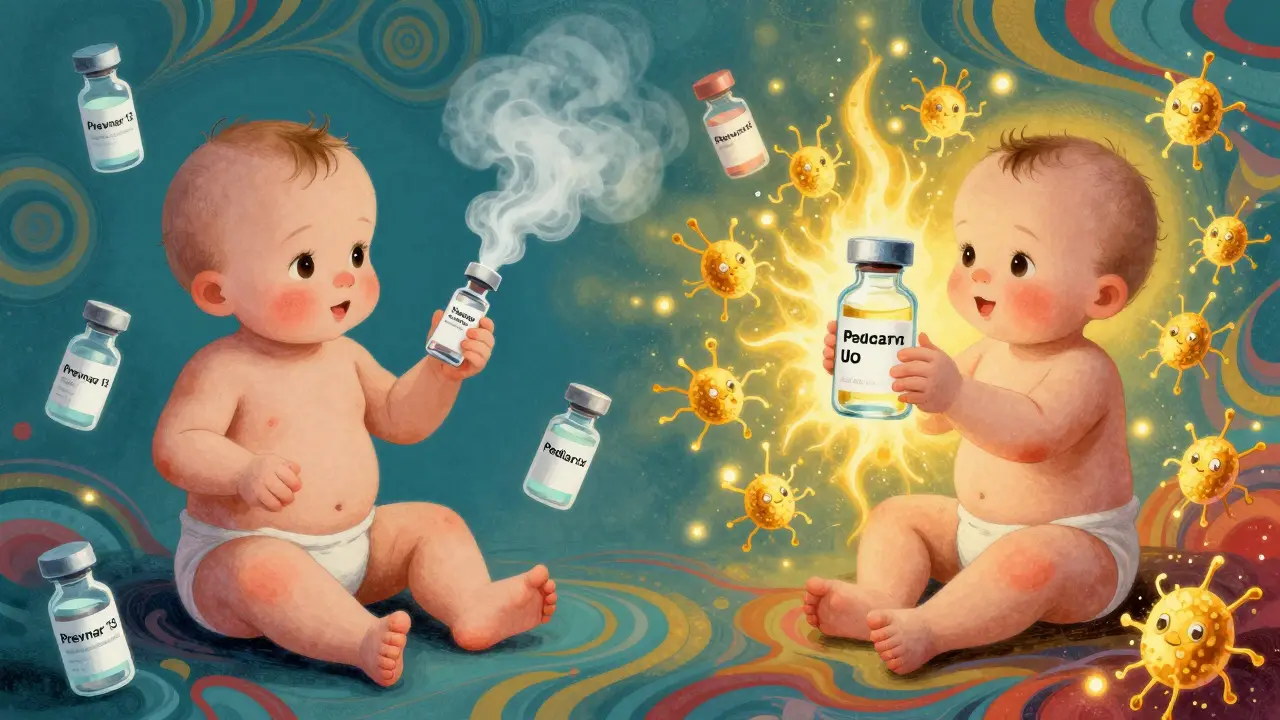
What NOT to Do
- Don’t give aspirin. It’s linked to Reye syndrome - a rare but deadly condition in children.
- Don’t give medicine before the vaccine. Even if you think it’ll help.
- Don’t give both acetaminophen and ibuprofen at the same time. Unless your doctor says so.
- Don’t rely on cooling blankets or ice packs. They can make your child shiver, which raises body temperature.
- Keep your child lightly dressed.
- Offer fluids often - breast milk, formula, water, or electrolyte solution.
- Let them rest.
- Monitor their behavior, not just their thermometer.
What If My Child Already Got Medicine Before the Shot?
If you gave acetaminophen or ibuprofen before the vaccine, don’t panic. One dose likely won’t ruin the vaccine’s effectiveness. The research shows the biggest drop happens with repeated doses - like giving it at the clinic, then again at 6 and 12 hours later. The CDC says: even if the immune response is slightly lower, the vaccine still offers strong protection. Better to have a slightly reduced response than no protection at all. But for future shots, wait. Stick to the 4-hour rule. Your child’s immune system will thank you.Final Takeaway: Let the Body Do Its Job
Vaccines work because your child’s immune system responds to them. Fever is part of that process. It’s not a problem to fix - it’s a sign it’s working. You don’t need to eliminate every symptom to keep your child safe. In fact, sometimes, letting the body react naturally makes the vaccine work better. So next time your child gets vaccinated:- Wait four hours before giving fever medicine.
- Only give it if they’re truly uncomfortable or over 102°F.
- Use the right dose - based on weight, not age.
- Call your doctor if your baby is under 12 weeks and has a fever.
- For MenB, follow your country’s guidelines - they may differ.
Should I give my child fever medicine before their vaccination?
No. Giving fever reducers like acetaminophen or ibuprofen before vaccination can reduce the child’s immune response to the vaccine. Studies show lower antibody levels when medicine is given before the shot. Wait until after the vaccination, and only give it if your child shows signs of discomfort or fever over 102°F.
How long after vaccination can I safely give fever medicine?
Wait at least four hours after the vaccination before giving acetaminophen or ibuprofen. Research shows that giving medicine more than four hours after the shot does not interfere with the vaccine’s ability to build immunity. This is the widely accepted timing threshold among pediatric experts.
Is it safe to give both acetaminophen and ibuprofen together after a vaccine?
Not unless your doctor advises it. Giving both medications at the same time increases the risk of dosing errors and potential side effects. Stick to one at a time. If one doesn’t help after an hour, you can switch to the other - but don’t alternate unless you’re certain of the correct dose and timing.
My baby is under 12 weeks old and has a fever after vaccination - what should I do?
Contact your healthcare provider immediately. Fever in babies under 12 weeks can be a sign of a serious infection, even if they just got vaccinated. Do not give any fever medicine without medical advice. Newborns have weaker immune systems, and a fever in this age group requires urgent evaluation.
Why does the UK recommend paracetamol after the MenB vaccine but the U.S. doesn’t?
The MenB vaccine causes fever in over 50% of infants, and high fever can lead to seizures in very young babies. The UK’s NHS decided the risk of fever outweighed the small chance of reduced vaccine effectiveness, so they recommend giving paracetamol after the 8-week and 16-week doses. The U.S. CDC does not make this same recommendation because they weigh the risks differently - but they also don’t forbid it. It’s a regional policy difference based on local health priorities.
Can I give fever medicine if my child already has a cold or low fever before the vaccine?
Yes. The CDC states that a mild illness - including a low-grade fever - does not affect how well the vaccine works. Vaccines can still be given safely if your child has a runny nose, slight cough, or temperature under 100.4°F. Only delay vaccination if your child is severely ill, vomiting, or has a high fever. In those cases, wait until they’re feeling better.
Do fever reducers affect all vaccines the same way?
No. Research shows the strongest effect is seen with pneumococcal, DTaP, and hepatitis B vaccines. The MenB vaccine is an exception - its high fever risk leads to different recommendations. Other vaccines like MMR or varicella don’t show the same level of immune response reduction when antipyretics are used. More studies are needed to fully understand how each vaccine interacts with fever medicine.
Is it okay to use ibuprofen for babies under 6 months?
No. Ibuprofen is not approved for infants under 6 months of age or those weighing less than 12 pounds. Acetaminophen is the only recommended fever reducer for this age group, but even then, it should not be given to babies under 12 weeks without a doctor’s advice. Always check the label and consult your pediatrician before giving any medication.

Alex Brad
Wait four hours. That’s it. No need to overthink it. Your kid’s immune system knows what it’s doing.
Renee Jackson
As a pediatric nurse with over fifteen years of experience, I cannot emphasize enough the importance of allowing the body’s natural immune response to unfold without pharmacological interference. Administering antipyretics prematurely may compromise the immunogenicity of critical vaccines such as DTaP and pneumococcal conjugates. Patience is not passive-it is a form of proactive care.
RacRac Rachel
I used to panic every time my son got a temp after shots 🥲 Now I just cuddle him, keep him hydrated, and wait. He’s been fine. The fever isn’t the enemy-it’s his body doing its superhero thing. 🦸♂️💉
Jane Ryan Ryder
Oh wow so now we’re supposed to let babies burn alive because science? 🤡
Diane Croft
I’ve been following this advice since my first child got vaccinated. No meds until after 4 hours. No fevers got out of control. No regrets. Trust the process. It works.
Deborah Dennis
I'm sorry, but this article is just... so... overly cautious. You're telling parents to wait? Wait for what? For their child to cry? For them to feel guilty? This is fear-mongering dressed up as science. Who even wrote this?
Siri Elena
Ah yes, the classic ‘let nature take its course’ pamphlet. How quaint. I suppose you also believe in leeches and bloodletting? The UK recommends paracetamol after MenB because they’re not idiots. Maybe your ‘science’ needs an update.
Pankaj Gupta
This is well-researched and balanced. In India, we also see high fever rates after MenB and DTaP. Many parents give medicine too soon. This guidance helps reduce unnecessary anxiety while preserving vaccine efficacy. Thank you for the clarity.
Matt Alexander
Simple rule: If they’re happy, don’t medicate. If they’re miserable after 4 hours, give Tylenol. That’s it. No need to overcomplicate.
Mike Dubes
I got so scared after my first kid got vaccinated and I gave him ibuprofen right away. Then I read this and realized I messed up. But I didn’t ruin the shot. One time won’t kill the immunity. Now I wait. And honestly? He’s healthier than ever. Thanks for the real talk.