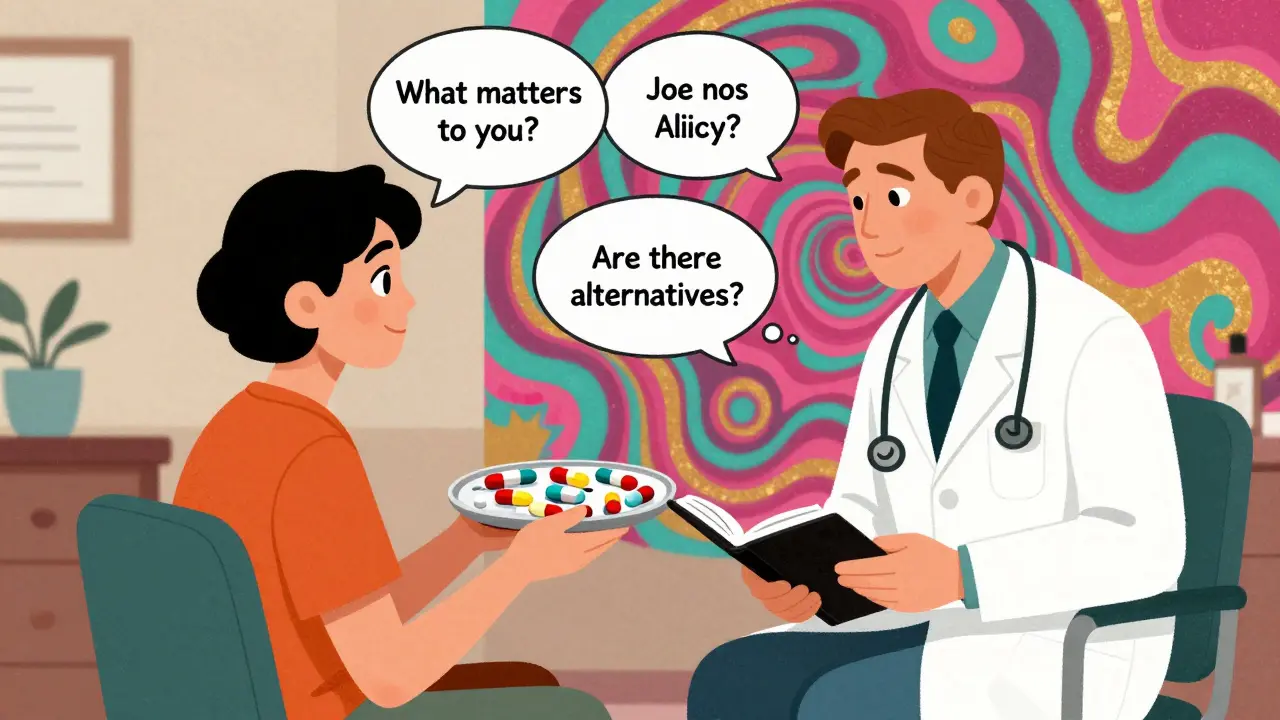
When you’re handed a prescription, do you feel like you’re making a choice-or just accepting what’s been decided for you? For many, the answer is the latter. But that’s changing. Across the U.S. and beyond, a quiet revolution is underway in how medicines are chosen. It’s not just about what works best clinically. It’s about what works best for you. This is the real meaning of medication autonomy: your right to understand, weigh, and choose your own treatment-even if it’s not the doctor’s first pick.
Why Medication Autonomy Isn’t Just a Nice Idea
It’s easy to think of medicine as a science with one right answer. Take this pill. Don’t take that one. But life isn’t that simple. A medication that helps one person might wreck another’s sleep, sex life, or daily routine. One person might prioritize avoiding drowsiness. Another might care more about cost. Someone else might refuse opioids because of their faith. These aren’t irrational choices. They’re human ones. The idea that patients should have a real say in what goes into their bodies didn’t come from a trend. It came from history. After the horrors of the Nuremberg Trials, the medical world had to rebuild trust. In 1972, a U.S. court ruled that doctors must tell patients about the risks of treatment-not just assume consent. That ruling, Canterbury v. Spence, became the legal backbone of modern informed consent. Today, ethics experts like Beauchamp and Childress define autonomy as having both freedom from pressure and the ability to act on your own values. That’s the standard now. And it’s not just theory. As of 2023, 87% of U.S. hospitals say they use shared decision-making tools for medication choices. But here’s the catch: only 42% of clinics in rural areas actually do it. That gap isn’t just a policy failure. It’s a justice issue.What Real Autonomy Looks Like in Practice
True medication autonomy isn’t just signing a form. It’s a conversation. And it requires three things: information, time, and respect. First, you need to know the facts. Not just “this drug works.” But how well? For example, in major depression, SSRIs help about half of users-but 25 to 30% of them experience sexual side effects. That’s not a footnote. That’s a life-altering trade-off. And cost? Brand-name biologics can run $5,000 to $7,000 a month. Biosimilars? $3,000 to $4,500. If you’re on Medicare Part D, 32% of people change their meds just to save money. That’s autonomy being forced, not chosen. Second, you need time. The average primary care visit lasts 15 minutes. That’s not enough to compare three different diabetes pills, talk about nausea risks with Ozempic, or weigh whether a once-daily pill beats three pills a day. One patient on PatientsLikeMe wrote: “My doctor prescribed Ozempic but wouldn’t discuss alternatives. I switched providers.” That’s not an outlier. It’s the norm in too many places. Third, you need to be heard. A 2023 survey of 15,000 adults found that 74% of white patients felt involved in their medication choices. Only 49% of Black patients and 53% of Hispanic patients did. That’s not a coincidence. It’s systemic.Where Autonomy Falls Short-And How It’s Being Fixed
You’d think doctors would be all in on this. But only 45% of primary care providers consistently use shared decision-making for meds. Compare that to surgery, where 68% do. Why? Because prescribing feels like a routine task. It’s not. One big problem? Electronic health records. Only 38% of Epic Systems-used by 78% of U.S. hospitals-have a way to record patient preferences. That means even if you talk about your concerns, they vanish after the visit. Cerner, another major system, does better at 62%. But neither is perfect. Another issue? Misinformation. Social media has fueled a 40% rise in antibiotic refusal requests since 2022. People hear about “microbiome damage” or “antibiotic resistance” and shut down. That’s not autonomy. That’s fear. Doctors need tools to correct myths-not just push prescriptions. But there’s progress. Pharmacy-led Medication Therapy Management (MTM) services are helping. Patients using MTM are 31% more likely to stick with their meds. Why? Because pharmacists have time. They sit down. They ask: “What matters to you?” Pre-visit tools are also making a difference. One VA pilot gave patients a simple questionnaire before their appointment: “What are your biggest worries about this medicine?” Those who used it had 42% less decision conflict. That’s not magic. It’s preparation.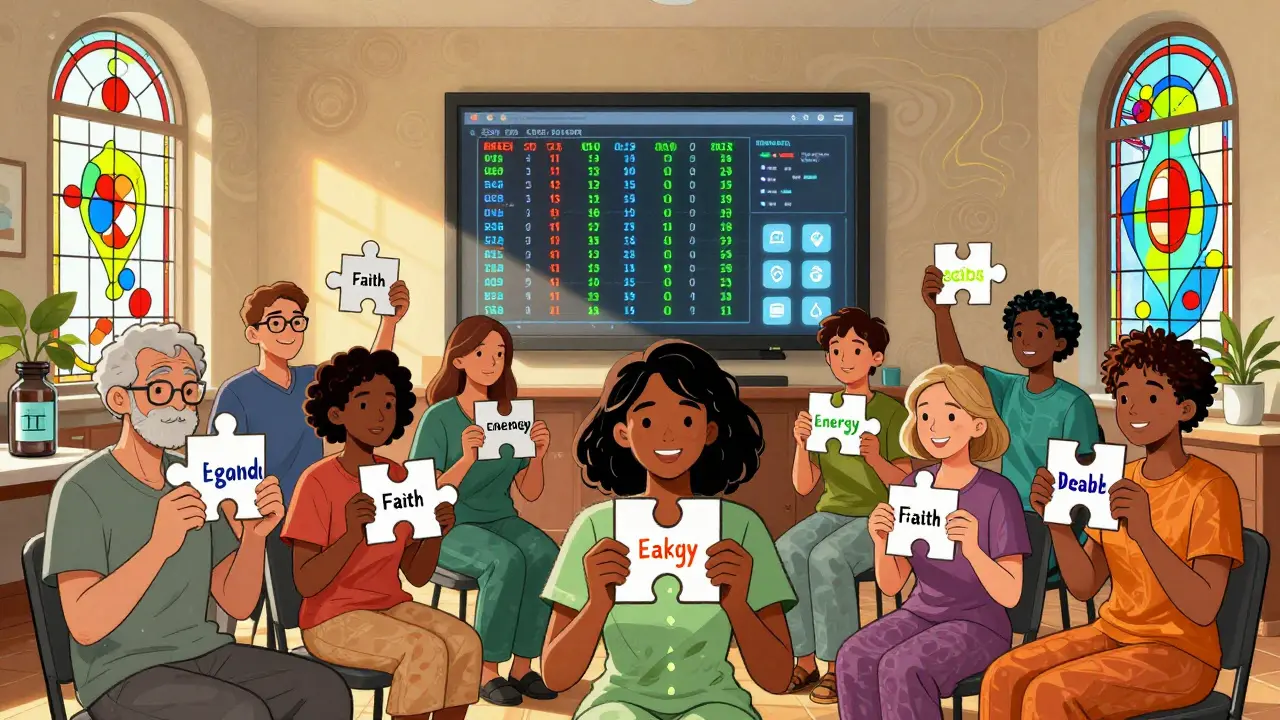
The New Frontiers: Digital Tools and Personalized Medicine
The next wave of autonomy isn’t just about talking. It’s about data. Pharmacogenomics-testing how your genes affect drug response-is dropping in cost. In 2020, a full panel cost $1,200. Now? $249. That means your doctor can say: “Based on your genes, this antidepressant will likely work. This one won’t.” No trial and error. No side effects you didn’t need. Digital therapeutics are another shift. Apps that help manage anxiety, insomnia, or chronic pain are now being treated like medicine. In 2024, 41% of patients said they’d consider a digital alternative to a pill. That’s huge. It means autonomy isn’t just about choosing one drug over another. It’s about choosing a whole different kind of care. Regulators are catching up. The FDA now requires drugmakers to collect patient preference data for new high-impact medications. Medicare Advantage plans must document patient medication choices by 2025. That’s not bureaucracy. It’s accountability.What You Can Do Right Now
You don’t need to wait for the system to change. You can start today.- Ask: “What are my options besides this pill?” Don’t accept “this is the best” as an answer.
- Ask: “What happens if I don’t take it?” and “What happens if I do?”
- Ask: “Is there a cheaper version? A generic? A different form-like a liquid or patch?”
- Ask: “How will this affect my daily life? Sleep? Sex? Energy?”
- Bring a list: Write down your concerns before your appointment. Bring someone with you if you can.
When Autonomy Gets Tricky
Let’s be real: autonomy isn’t always easy. Sometimes, patients choose options that are clearly worse. A 2023 study found patients sometimes refuse effective meds because of myths they read online. Dr. Arthur Caplan says that’s a real ethical dilemma. But the answer isn’t to override choice. It’s to do better listening. And then there’s the “medication exceptionalism” problem. Some people trust a surgeon to cut them open but refuse to trust a pill. Why? Because of decades of pharma scandals, price gouging, and aggressive ads. That distrust is real. And it’s not irrational. The solution? Transparency. Not just about side effects, but about costs, conflicts of interest, and how drugs are tested. When patients feel like they’re being sold something, autonomy collapses.What’s Next?
Medication autonomy is becoming standard-not because it’s trendy, but because it works. Patients who help choose their meds are 82% more likely to stick with them. That’s not a small win. That’s a life-saving one. The future? Personalized medicine powered by genes, apps, and better tools. But the foundation won’t change: you get to decide. Not your doctor. Not your insurer. Not your family. You. The system still has gaps. Rural clinics still lag. Digital tools still leave older adults behind. But the direction is clear. Autonomy isn’t a luxury. It’s the core of ethical care. And it’s yours to claim.What does medication autonomy really mean?
Medication autonomy means you have the right to make informed, voluntary decisions about which medicines to take-or not take-even if your doctor recommends a different option. It’s not just about saying yes or no. It’s about understanding your options, weighing risks and benefits based on your personal values, and having those choices respected.
Can I refuse a prescribed medication even if my doctor says it’s necessary?
Yes. As long as you have decision-making capacity-meaning you understand the information, appreciate the consequences, and can communicate a choice-you have the legal and ethical right to refuse any medication. Doctors are required to respect that, even if they disagree. Their job is to inform, not to force.
Why do some doctors seem resistant to discussing medication choices?
Time constraints are the biggest barrier. A 15-minute visit doesn’t leave room for deep conversations. Some doctors also worry about losing control or fear patients will choose ineffective options. But research shows that when patients are involved, adherence improves and outcomes get better. It’s not about control-it’s about partnership.
How can I tell if my doctor is truly supporting my autonomy?
Look for these signs: they list multiple treatment options, explain pros and cons without pushing one, ask what matters most to you, and give you time to think. They don’t say, “This is the only way,” or “Just take it.” If you’re left feeling unheard, ask for a referral to a provider trained in shared decision-making.
Are there tools I can use to help make better medication decisions?
Yes. The Mayo Clinic’s Specialized Information Services offers free, evidence-based decision aids. The Aid to Capacity Evaluation (ACE) helps assess if you’re ready to make a decision. Pre-visit questionnaires from organizations like the National Health Council can help you clarify your priorities before seeing your doctor. And pharmacists offering Medication Therapy Management (MTM) are trained to walk you through options.
Is medication autonomy only for people with chronic conditions?
No. Autonomy applies to every medication decision-from antibiotics for an infection to antidepressants, birth control, or pain relievers. Even short-term prescriptions involve trade-offs. Choosing what feels right for your body, lifestyle, and values matters every time.

MALYN RICABLANCA
OMG, I CANNOT BELIEVE how much this resonates!! I was prescribed Zoloft, and when I asked about alternatives, my doctor said, “It’s the gold standard.” GOLD STANDARD?! Like I’m a trophy on a shelf?! I looked up the data-27% of people on SSRIs get sexual dysfunction, and no one warned me!! I switched to CBT + exercise, and my libido came back, my anxiety dropped, and I didn’t need a pharmacy to survive!! This isn’t just medicine-it’s MY BODY, MY RULES!!
Also-why do doctors act like we’re toddlers who can’t handle facts? I read the FDA’s own clinical trial data. I know the numbers. I know the trade-offs. I don’t need you to “protect” me from the truth-I need you to give me the tools to choose!!
And don’t even get me started on the EHR systems. My preferences? Vanished. Like they were never spoken. It’s like talking to a brick wall with a clipboard!!
PS: If you’re reading this and your doctor says “just take it,” send them this link. Then fire them. You deserve better.
gemeika hernandez
I just took my first pill in 3 years because my doctor finally listened.
Nicole Blain
❤️ This. So much this. I’ve been through 5 meds in 4 years. I finally found one that works… and my pharmacist spent 45 minutes with me explaining side effects, costs, and even how to talk to my doctor next time. I cried. Not from sadness-from being seen.
💊✨ #medicationautonomy
Kathy Underhill
Autonomy is not merely the right to refuse but the capacity to choose meaningfully. The ethical framework requires not only informed consent but the structural conditions that make informed choice possible: time, access, and epistemic trust.
When systems fail to provide these, autonomy becomes a rhetorical device rather than a lived reality. The disparity between urban and rural access is not incidental-it is a failure of justice.
Pharmacogenomics and digital tools are promising, but they must not become new gatekeepers. The goal is not more data, but more dignity.
Stephen Habegger
Love this. I’m a nurse, and I’ve seen how much better outcomes are when patients actually get to weigh options. My mom refused statins because she didn’t want to risk muscle pain-so we found a diet + walking plan. Two years later, her numbers are better than ever. It’s not about being stubborn. It’s about being human.
lawanna major
There is a profound moral shift occurring in healthcare-one that moves from paternalism to partnership. The data is unequivocal: patient engagement increases adherence, reduces adverse events, and improves quality of life. Yet, institutional inertia persists.
Electronic health records must evolve beyond documentation to become dialogue platforms. Clinicians must be trained not just in clinical knowledge, but in facilitative communication. And patients? They must be empowered, not just informed.
This is not a trend. It is the evolution of medical ethics into practice.
Ryan Voeltner
As someone who has lived in three countries and received care in each, I can say with certainty that the American model of medication autonomy, despite its flaws, is among the most advanced in the world. The legal foundations laid by Canterbury v. Spence, the rise of shared decision-making tools, and the integration of patient preference data into regulatory processes represent a global standard.
While disparities in rural access and cultural bias remain deeply troubling, the trajectory is clear: healthcare is becoming more human, more responsive, and more just.
Let us not confuse imperfection with failure. We are building something better.
Linda Olsson
Of course they say ‘autonomy’-it’s just another marketing term to make you feel like you have power while they still control everything. The real system? Pharma owns the guidelines. The doctors are trained to push branded meds. The ‘decision aids’? Designed by drug reps. The ‘patient preference’ data? Collected only after you’ve already signed the consent form.
And now they want us to believe gene testing is the answer? You think your DNA is going to save you from the billion-dollar algorithms that decide what’s ‘cost-effective’? Wake up. This isn’t autonomy. It’s a more sophisticated form of control.