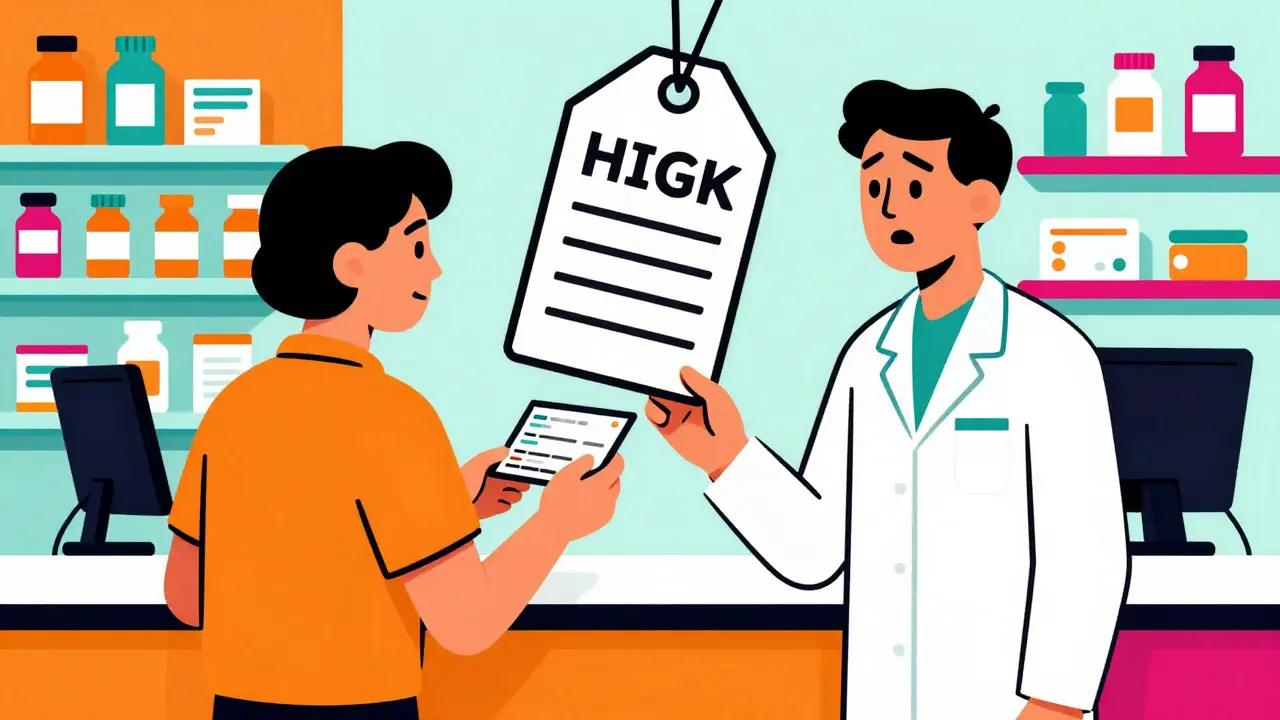
You walk into your local pharmacy in Melbourne, hand over the prescription for your blood pressure medication, and brace yourself for the price tag. You know it’s a generic-so it should be cheap, right? Not always. In fact, you might be paying significantly more than necessary simply because of how that generic is packaged or formulated. This isn’t just about saving a few dollars; it’s about understanding a hidden layer of pharmaceutical economics where cost savings from generic combinations can mean the difference between affordable care and financial strain.
We often assume that once a brand-name drug loses its patent, prices drop to rock bottom. While that’s true for many medications, the reality is far more complex. Some generics are priced similarly to their brand-name predecessors, while others offer massive discounts. Even more confusing is the choice between taking two separate pills (individual generics) versus one pill containing both drugs (a combination product). Which option actually saves you money? And does the cheaper option work just as well?
The Hidden Cost of "Generic" Labels
Let’s clear up a common misconception first. Just because a drug is labeled "generic" doesn’t mean it’s automatically the cheapest option on the market. A pivotal study published in JAMA Network Open in November 2022 by Socal, Cordeiro, Anderson, and colleagues analyzed claims data from Colorado. They looked at the top 1,000 generic drugs and found something startling: 45 of these high-cost generics had lower-cost therapeutic alternatives that offered the exact same clinical value.
How much more expensive were these high-cost generics? On average, they were 15.6 times more expensive than their cheaper counterparts. If patients and insurers had switched to the lower-cost alternatives, total spending could have dropped from $7.5 million to just $873,711-a potential savings of 88.3%. Most of these substitutions (62.2% of cases) involved different dosage forms or strengths of the same drug. For example, switching from a specific tablet strength to another available strength of the same medication resulted in mean discounts of nearly 95%.
This tells us that "generic" is not a single price point. It’s a spectrum. Plan sponsors and individual patients need to look beyond the label. As Dr. Gerard F. Anderson, a co-author of the study and Professor of Health Policy at Johns Hopkins, noted, plan sponsors should periodically review which specific products are driving up their drug spending. Some generics persist at high prices due to market consolidation or lack of competition, even when cheaper equivalents exist.
Individual Generics vs. Combination Products: The Price Battle
Now, let’s tackle the core question: Is it cheaper to take two separate generic pills or one combination pill? The answer depends heavily on the specific drugs and the current market competition.
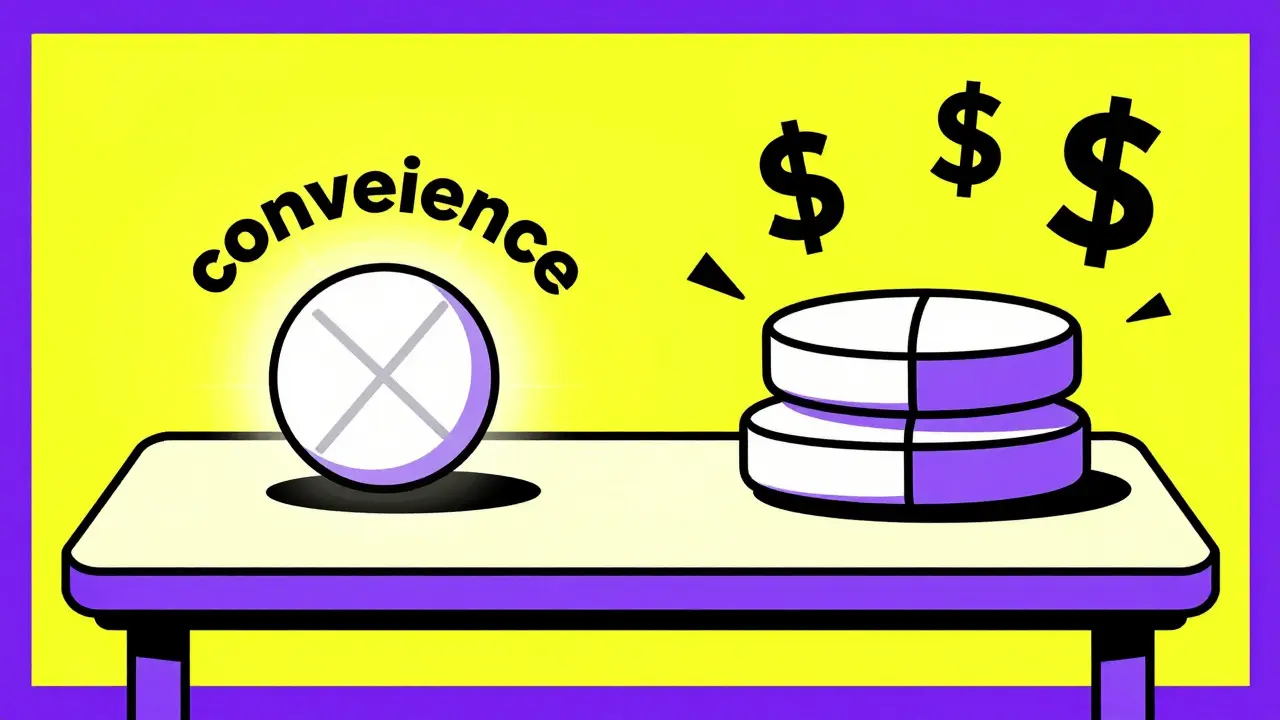
Combination products, such as those used for hypertension or asthma, combine two active ingredients into a single dose. They are designed to improve adherence-fewer pills to remember means patients are more likely to take their medication correctly. However, convenience often comes with a premium.
Consider the case of asthma medications. Advair Diskus, a popular brand-name combination inhaler, faced generic competition with Wixela Inhub. A 2022 study documented that the introduction of this generic alternative led to an estimated annual cost savings of $941 million across the U.S. market. Before the generic was widely available, monthly prescription costs for this class of drugs were around $337 million. After the generic entered the market, that figure dropped to $233 million per month.
At the individual patient level, the difference was stark. An Advair Diskus inhaler cost an average of $334, while the generic Wixela Inhub cost only $115. That’s a 65.6% reduction per unit. In this scenario, the generic combination product was significantly cheaper than the brand-name combination, but what about comparing it to two separate generics?
Often, the combination generic is still more expensive than buying the two individual generics separately. However, if the price difference is small (say, less than $5), the combination product may be worth it for the convenience and improved adherence. But if the gap is wide, sticking to individual generics is the smarter financial move. You need to check the cash price or your insurance copay for both options before deciding.
| Product Type | Average Unit Cost | Savings Potential | Best For |
|---|---|---|---|
| Brand-Name Combination (e.g., Advair) | $334 | Low | Patient preference for brand familiarity |
| Generic Combination (e.g., Wixela) | $115 | High (65.6% vs Brand) | Patients wanting convenience + savings |
| Two Separate Generics | Varies (often <$100) | Highest | Maximum cost minimization |
The Power of Competition: Why Prices Drop
Why do some generics cost pennies while others remain pricey? The key driver is competition. According to the FDA’s analysis, price declines correlate directly with the number of competitors in the market. When a generic first launches, there might only be one or two manufacturers. Prices drop moderately-about 20% after three years in markets with roughly three competitors.
But as more companies enter the fray, prices plummet. The Department of Health and Human Services’ 2021 analysis confirmed that generic drug prices are consistently 20-80% lower than brand-name prices. The largest savings occur when multiple generic competitors are fighting for market share. For instance, Crestor generics launched in 2015 reduced costs from $5.78 to $0.08 per unit-a 99% savings. Prilosec generics, launched in 2001, saw a similar drop from $3.31 to $0.05 per unit (98% savings).
This dynamic explains why older generics are often incredibly cheap, while newer ones (those within the first few years of patent expiration) can still carry a higher price tag. If you’re prescribed a recently launched generic, it might be worth asking your pharmacist if a slightly older, equally effective generic alternative is available.
Who Saves the Most? Insurance Status Matters
Not everyone benefits equally from generic substitution. A 2023 study in JAMA Health Forum analyzing the Mark Cuban Cost Plus Drug Company model shed light on how savings vary by insurance type. The study found median cost savings of $4.96 per prescription, but the distribution was uneven.
Uninsured individuals experienced the highest savings, averaging $6.08 per prescription. Military beneficiaries saved an average of $5.05, Medicare patients $4.64, and those with private insurance $3.69. Interestingly, Medicaid patients showed no observed savings in this specific dataset, likely due to strict formulary controls that already mandate low-cost options.
If you are uninsured or self-paying, you have the most leverage to seek out the lowest-cost generic alternatives. Don’t hesitate to ask your doctor or pharmacist: "Is there a lower-cost generic equivalent to this medication?" For insured patients, check your formulary tier. Sometimes, a combination product is on a higher tier (more expensive copay) than the two individual generics combined.
Barriers to Switching: Why High-Cost Generics Persist
If cheaper alternatives exist, why don’t we all switch? Several barriers stand in the way:
- Patent Thickets: Some manufacturers use secondary patents to block generic competition for longer periods, keeping prices artificially high.
- Market Consolidation: The generic drug market is increasingly concentrated. The top 10 manufacturers control about 40% of the $70 billion U.S. generic market. With fewer players, there’s less incentive to slash prices.
- Formulary Restrictions: Insurance plans may prefer certain brands or specific generics based on contracts with Pharmacy Benefit Managers (PBMs), limiting patient choice.
- Clinical Inertia: Doctors and patients often stick with what they know. Switching requires verification of therapeutic equivalence, which takes time and effort.
To overcome these barriers, experts recommend quarterly formulary audits. Plan sponsors and healthcare providers should actively identify "outlier" generics that are costing disproportionately more than their alternatives. The FDA’s Orange Book, updated monthly, provides therapeutic equivalence ratings. Drugs with an "A" rating are considered substitutable, meaning you can safely switch without losing efficacy.
Practical Steps to Maximize Your Savings
You don’t need to be a health economist to save money on your prescriptions. Here’s a simple checklist to follow every time you pick up a new medication:
- Ask for the Generic: If prescribed a brand-name drug, always ask if a generic is available. If so, ask if there are multiple generic manufacturers and which one is cheapest.
- Compare Combination vs. Individual: If prescribed a combination pill, ask your pharmacist for the cash price of the two individual generics. Calculate the total. If the combination pill is significantly more expensive, discuss whether splitting the dose into two pills is feasible for your routine.
- Check Therapeutic Equivalence: Use resources like the FDA Orange Book or consult your pharmacist to ensure any alternative you choose has an "A" rating for therapeutic equivalence.
- Leverage Discount Programs: For uninsured or underinsured patients, programs like the Mark Cuban Cost Plus Drug Company or GoodRx can reveal significant savings, especially for recently launched generics.
- Review Annually: Drug prices change. What was the cheapest option last year might not be today. Review your medications annually with your provider to see if better-priced alternatives have entered the market.
The Future of Generic Savings
The landscape is shifting. While generics have generated $3.7 trillion in cumulative savings over the past decade, the market faces challenges. Shortages are rising-from 166 in 2012 to 258 in 2022-and approval rates for new generics have declined since the 2017 peak. However, the entry of biosimilars (generic versions of complex biologic drugs like Humira) offers a new frontier for savings. The Department of Health and Human Services projects that increased competition from generics and biosimilars could generate an additional $1.2 trillion in savings over the next decade.
For now, the best strategy remains proactive comparison. Don’t accept the first generic price you see. Ask questions, compare individual versus combination options, and verify therapeutic equivalence. Small changes in how you approach your prescriptions can lead to substantial long-term savings without compromising your health.
Are combination generic drugs always more expensive than individual generics?
Not always, but often. Combination products include a manufacturing premium for combining two drugs into one pill. In many cases, buying two separate generic pills is cheaper. However, if the price difference is minimal (e.g., less than $5), the combination product may be worth the extra cost for the convenience of taking fewer pills, which can improve adherence.
Can I switch from a brand-name combination drug to a generic version?
Yes, in most cases. Generic combination drugs must meet FDA standards for bioequivalence, meaning they deliver the same amount of active ingredient into your bloodstream as the brand name. Always check with your doctor or pharmacist to ensure the generic has an "A" therapeutic equivalence rating and is appropriate for your specific condition.
Why are some generic drugs still expensive?
Some generics remain expensive due to limited competition. If only one or two manufacturers produce a specific generic, they can maintain higher prices. Other factors include patent thickets (secondary patents blocking competition), market consolidation among large manufacturers, and formulary restrictions set by insurance companies.
How can I find the cheapest generic alternative to my medication?
Start by asking your pharmacist if there are multiple generic manufacturers for your drug. Compare the cash prices of different brands. Use discount coupon services like GoodRx or Cost Plus Drugs if you are uninsured. Additionally, ask your doctor if a different strength or dosage form of the same drug is available, as these variations can sometimes be significantly cheaper.
Do uninsured patients save more from generic substitutions?
Yes. Studies show that uninsured individuals often experience the highest absolute savings from switching to lower-cost generics or using discount programs. Because they pay the full retail price, any reduction in the base cost of the drug translates directly into pocket savings. Insured patients also save, but the amount varies based on their specific copay structure and formulary tiers.

Jamie Rogers
Oh my gosh, this is such a crucial topic and I am SO glad someone finally brought it up because honestly? It feels like we are all just walking around in the dark when it comes to our own healthcare costs!
I remember when my dad was prescribed that new blood pressure med and he just assumed the generic would be dirt cheap. He didn't know about these 'high-cost generics' until he got the bill and nearly fainted. It's absolutely insane that there can be a 15x price difference for the exact same clinical value. That is not just bad luck; that is systemic failure right there.
We need to talk more about this. We need to empower patients to ask their pharmacists, 'Is there a cheaper alternative?' because most of us are too intimidated or too tired after a long day at work to even think about negotiating our meds. But hey, if we can save 88% on spending by just switching dosage forms or brands, why aren't doctors telling us this automatically? It’s like finding money in your winter coat pocket but instead of finding it, you have to dig through snow and ice to get it. Let’s keep spreading this awareness!
Angie Lara
i totally agree with jamie here its so scary how much we dont know about what we are paying for
in my country we have different issues but i read somewhere that sometimes the combination pill is actually way more expensive than buying two separate ones even if they are both generic
you really have to check the prices at your local pharmacy because insurance copays can be weird and unpredictable
it is important to be aware of these things so we can make better choices for our health and our wallets
thanks for sharing this info it is very helpful
Ed Ostrego
YES! This is the kind of info we NEED to hear more often! Don't let the big pharma companies win by keeping you in the dark!
Take charge of your health and your wallet! If you're taking multiple pills, go to the pharmacy and ask: 'Hey, what does the combo cost vs the two singles?' You might be shocked. I did it last week for my cholesterol and BP meds and saved like $40 a month. Multiply that by 12 months and boom, that's a nice dinner out or a few tank of gas!
Stay strong, stay informed, and never stop asking questions! You've got this!
Ambarish Pal
Ah, but isn't this entire premise flawed? Of course the generic is cheaper if you ignore the quality control issues that arise when you strip away the brand name's rigorous testing protocols. You are trading dollars for potential side effects that no one talks about. The 'savings' are an illusion built on the backs of patients who become guinea pigs for lesser formulations. It is a tragedy of modern medicine that we celebrate penny-pinching over precision. The drama of paying full price is preferable to the drama of wondering why your body suddenly rebels against a 'generic' equivalent.
Andrew Donovan
The tapestry of pharmaceutical economics is woven with threads of both greed and opportunity, my friends. While Ambarish raises a point about quality, the data presented here regarding the JAMA study is quite robust. The disparity in pricing is not merely a quirk of the market but a structural anomaly that cries out for correction.
In Australia, we see similar trends where bulk billing helps, but out-of-pocket expenses for non-subsidized generics can still vary wildly. The key, as Andrew Donovan would say, is to look beyond the label. The label is but a mask; the active ingredient is the face beneath. One must peel back the layers of marketing to find the true cost. It is a philosophical exercise as much as a financial one. Are we paying for the drug, or for the convenience of the packaging? The answer often lies in the fine print, hidden like a secret passage in an old castle.
Patrick Meyer
look, its obvious that people who dont understand basic economics are gonna be confused by this. its not rocket science. supply and demand. if there is only one supplier of a generic then they can charge whatever they want. its called monopoly power. dumbing down the explanation doesnt help anyone except the illiterate masses who cant read a balance sheet. the real issue is lack of competition not some mystical 'hidden layer' of economics. grow up and learn how markets actually work instead of whining about prices.
Prashant Shishodia
You need to stop being rude Patrick. Just because you think you know everything does not mean others do not struggle. Many people are stressed about money and health. Being helpful is better than being mean.
Andrew makes good points. We should focus on solutions. Check your prices. Ask your doctor. Do not assume the first option is the best. Simple steps can save money. Everyone deserves affordable care. Let us support each other in finding these savings. It is not about intelligence it is about information access. Share the knowledge kindly.
Autumn LW
It is truly pathetic how easily the public is manipulated by these superficial articles. The average person lacks the intellectual capacity to understand the nuances of pharmaceutical patent law and market dynamics. They just want a magic bullet solution. Meanwhile, those of us who actually pay attention to the details see the obvious: the system is rigged, and complaining about 'generic prices' is like blaming the victim for getting robbed. Educate yourselves before posting nonsense.
Scott Colter
Perhaps the true cost of medication is not measured in dollars, but in the erosion of trust between patient and provider. When we view our bodies as ledgers to be balanced, we lose the sacredness of healing. The question of 'individual vs combination' is a microcosm of a larger existential dilemma: do we seek efficiency or authenticity? The pill is a symbol, a small vessel carrying the weight of our hope for wellness. To dissect it purely for economic gain is to miss the poetry of survival. Yet, I suppose in a world driven by metrics, poetry is a luxury few can afford.
Paul Lyons
This is another example of globalist policies failing the American worker! Our medicines are made overseas and priced by foreign entities while we suffer here at home. The government needs to step in and force domestic production. It is unacceptable that we are paying more for generics than some countries. We need to prioritize American jobs and American health. Stop relying on imports and start making our own drugs. It is time to take back control of our healthcare sovereignty!
Deva Vidya
I found this article incredibly empowering! It is so easy to feel helpless when facing medical bills, but knowing that there are actionable steps we can take changes everything. I recently switched from a combination inhaler to two separate generics based on a similar tip, and the savings were immediate.
It is not just about the money; it is about reclaiming agency over our health decisions. We should encourage our communities to share these tips. A little bit of research goes a long way. Let us lift each other up and ensure everyone has access to affordable care. Together, we can navigate this complex system with confidence and clarity.
ANINDA GHOSH
In the intricate dance of life, health is the rhythm that keeps us moving. :D The disparity in drug pricing is a discordant note in this symphony. We must strive for harmony between affordability and accessibility. As philosophers have long debated, value is subjective, yet the pain of financial strain is universal. Let us approach this with wisdom and compassion. May we all find the balance between cost and care. :) The journey to wellness is shared, and knowledge is the light that guides us. Keep shining, friends. :)
MiMi Stanley
I’ve been quietly observing this thread and it’s interesting to see the range of reactions. Some are angry, some are philosophical, and some are just looking for practical advice. I tend to fall into the latter category.
I actually looked up my own prescriptions today after reading this. Turns out, my combination pill for hypertension is about $12 more expensive per month than buying the two components separately. It’s not a huge amount, but over a year, that adds up. Plus, I don’t mind taking two pills if it saves me money. Convenience is nice, but so is having extra cash in my pocket. Thanks for sparking this conversation, even if it did lead to some dramatic responses.
Najmunisa Govender
Oh my goodness!! This is exactly what I needed to hear!!! I have been struggling so much with my medication costs lately and I felt so alone in it!!!
Reading about the 15.6 times price difference just blew my mind!!! How is that even legal??? Or ethical??? I feel so validated now knowing that it is not just me being bad with money!!! It is the system!!!
I am going to call my pharmacist tomorrow!!! I have to!!! I cannot believe I waited this long!!! Thank you so much for sharing this!!! It gives me so much hope!!! Please keep writing these kinds of posts!!! They are lifesavers!!! Literally!!!