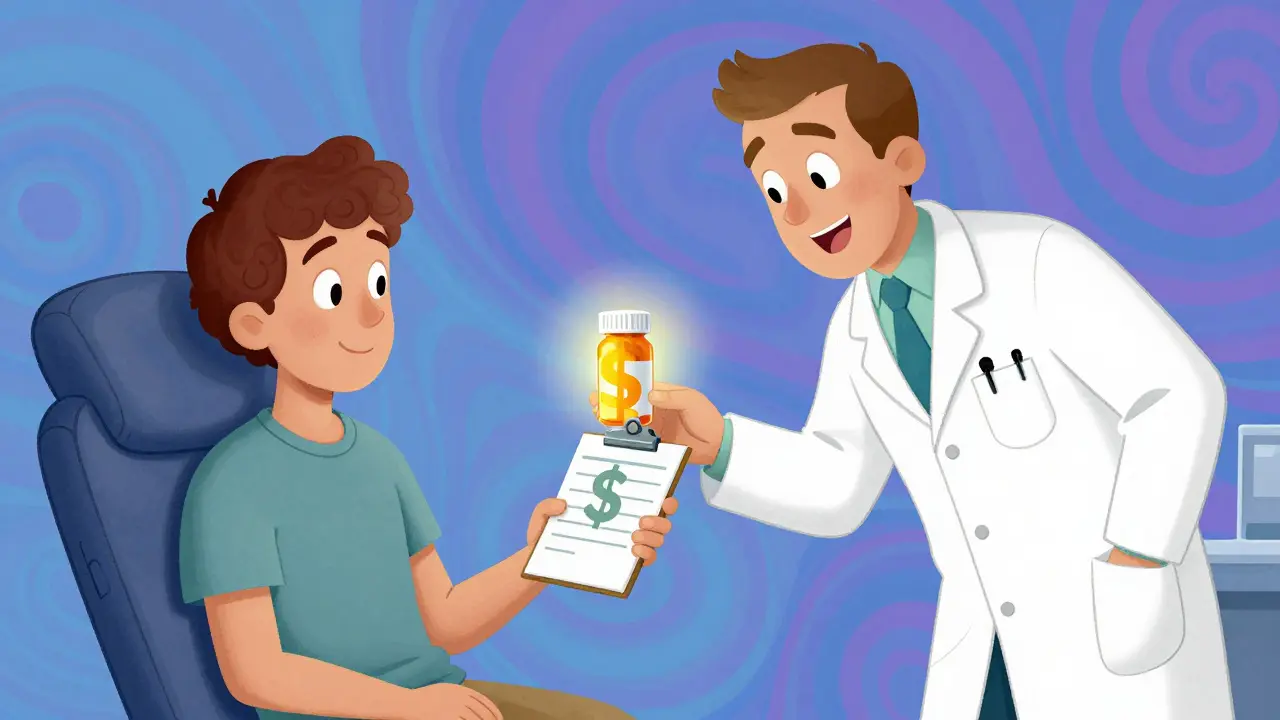
You’re standing at the pharmacy counter, holding a prescription for a brand-name drug that costs $300 a month. Your heart sinks. You’ve been taking this medicine for years, but now you’re on a tighter budget. You wonder: is there a cheaper version? There is-and it’s called a generic drug.
Generic medications are not second-rate. They’re the same as the brand-name version in every way that matters: same active ingredient, same strength, same way your body absorbs it. The only real difference? Price. Generics typically cost 80 to 95% less. For some drugs, that’s $5 instead of $300. That’s not a trick. That’s science.
Why Generics Are Just as Safe and Effective
The U.S. Food and Drug Administration (FDA) requires every generic drug to meet the same strict standards as brand-name drugs. Before approval, generics must prove they deliver the same amount of active ingredient into your bloodstream at the same rate as the brand-name version. This is called bioequivalence. The acceptable range? 80% to 125%-meaning your body gets nearly identical exposure.
Think of it like two identical cars: one made by Toyota, one by a different company using the same blueprints. Same engine, same fuel efficiency, same safety ratings. The color might be different. The logo? Different. But under the hood? Exactly the same.
According to the FDA, 95% of generic drugs perform identically to their brand-name counterparts in real-world use. A 2022 analysis from the Journal of the American Medical Association reviewed over 50 studies and concluded: "The evidence is overwhelming that generic medications are therapeutically equivalent to their brand-name counterparts for most drugs."
Even Medicare, which covers millions of older adults, dispenses generics 89% of the time when they’re available. That’s not because they’re cheap-it’s because they work.
When You Might Need the Brand-Name Version
There are exceptions. About 5% of medications fall into a category called narrow therapeutic index (NTI) drugs. These are medicines where even tiny changes in blood levels can cause serious problems. Examples include:
- Warfarin (a blood thinner)
- Levothyroxine (for thyroid conditions)
- Some anti-seizure medications like phenytoin or carbamazepine
In these cases, your doctor may recommend sticking with one brand to avoid fluctuations. But here’s the key: even for NTI drugs, switching between different generic manufacturers can sometimes cause issues-not because generics are inferior, but because each manufacturer’s formulation might vary slightly in inactive ingredients. That’s why consistency matters. If you’re stable on one generic, don’t switch unless your doctor says it’s safe.
Most people don’t need NTI drugs. If your doctor says you must stay on the brand, ask: "Is this because of the type of drug I’m taking?" If they say yes, ask which category it falls into. If they say no, ask why.
How to Start the Conversation at Your Appointment
Asking your doctor about generics can feel awkward. You don’t want to sound like you’re trying to cut corners on your health. But here’s the truth: doctors want you to take your meds. And if a cheaper version works just as well, they’re usually happy to help.
Don’t wait until you’re at the pharmacy. Bring it up during your appointment. Use these simple phrases:
- "Is there a generic version available for this medication?"
- "Would it be safe and effective for me to use the generic?"
- "Are there any reasons I should stay on the brand-name version?"
- "If a generic isn’t available now, when might one become available?"
Even better: say, "I want the most effective drug at the best price, and I’d like to use generics when possible." This frames the conversation around shared goals-not cost-cutting, but smart care.
Bring a printed list of your current prescriptions. Look up the prices on sites like GoodRx or your insurance portal before your visit. If Nexium costs $284 and omeprazole (the generic) costs $4, show them. Numbers make it real.
What Your Pharmacist Can Do
In most states, pharmacists are allowed to substitute a generic for a brand-name drug unless your doctor writes "Do Not Substitute" on the prescription. That means if your doctor prescribes "Lisinopril," and you pick it up, you’ll likely get the generic unless they specifically blocked it.
But here’s the catch: many doctors don’t know when a new generic hits the market. That’s where your pharmacist can help. If you’re handed a brand-name drug and you’re surprised by the price, ask your pharmacist: "Is there a generic available for this?" They can call your doctor and suggest an alternative.
Pharmacists are medication experts. They see what’s covered by your insurance, what’s in stock, and what’s cheapest. Use them. Don’t just be a customer-be a partner.
Real Savings, Real Stories
People are saving thousands every year by switching. One patient with rheumatoid arthritis was paying $6,300 a month for Humira. When the generic adalimumab became available, their cost dropped to $4,480-still expensive, but $1,820 less per month. That’s over $21,000 saved in a year.
Another person on sertraline (an antidepressant) switched from Zoloft to the generic. They paid $120 a month before. Now it’s $8. They didn’t feel any difference in mood or side effects.
According to AARP’s 2022 survey of 12,500 seniors, 68% who asked their doctor about generics successfully switched-and saved an average of $427 per year.
These aren’t rare cases. They’re the norm.
What If Your Doctor Says No?
Some doctors still believe brand-name drugs are better. They might say: "I’ve always prescribed this one." Or: "I don’t trust generics."
That’s outdated thinking. But if they resist, ask for specifics. Say: "Is this because of the drug’s class? Is it an NTI medication?" If they can’t answer, ask for a referral to a pharmacist or a second opinion.
Don’t give up. The American Medical Association now encourages doctors to routinely discuss generic options because the evidence is so strong. You’re not being difficult-you’re being informed.

Insurance and Cost Differences
Your insurance plan plays a big role. Medicare Part D plans have a 89% generic usage rate. Commercial plans? Only 72%. That means if you’re on private insurance, you might still pay more out of pocket-even for generics.
Check your plan’s formulary (the list of covered drugs). Many plans put generics in the lowest cost tier. Sometimes, the brand-name drug isn’t even covered unless you’ve tried the generic first.
Even if you don’t have insurance, you can still save. GoodRx, SingleCare, and other discount programs often make generics cheaper than your insurance co-pay. A 30-day supply of metformin (for diabetes) might cost $15 with insurance-but only $4 with a coupon.
What to Watch Out For
Not all generics are created equal in packaging or appearance. They might look different-different color, shape, or imprint. That’s normal. It’s not the active ingredient. It’s the filler, dye, or coating. Some people notice minor side effects like stomach upset or headaches when switching, but those are usually temporary and tied to inactive ingredients, not effectiveness.
If you feel different after switching, don’t assume the generic doesn’t work. Talk to your doctor or pharmacist. Maybe you need to stick with one manufacturer. Maybe you need to give it a few weeks. Maybe you need to go back to the brand. But don’t stop taking your medicine.
Bottom Line: Ask, Don’t Assume
Generics aren’t a compromise. They’re a smart choice. For the vast majority of prescriptions, they’re just as safe, just as effective, and dramatically cheaper.
You don’t need to be an expert. You don’t need to know every drug on the market. You just need to ask two simple questions at your next appointment:
- "Is there a generic version available?"
- "Is it safe for me to use?"
That’s it. You’re not asking for a discount. You’re asking for the best care possible-on your budget.
And if your doctor hesitates? Ask why. Then listen. If the answer is "I’ve always done it this way," it’s time to push back. If it’s "This is an NTI drug," then you’ve learned something valuable.
Medicine doesn’t have to be expensive to be effective. You deserve both. Start asking.
Are generic drugs really as good as brand-name drugs?
Yes, for most medications. The FDA requires generics to have the same active ingredient, strength, dosage form, and bioequivalence as the brand-name version. Studies show that 95% of generics perform just as well in real-world use. Differences in color, shape, or filler don’t affect how the drug works in your body.
Can I switch from a brand-name drug to a generic without my doctor’s approval?
In most cases, your pharmacist can switch you to a generic unless your doctor specifically wrote "Do Not Substitute" on the prescription. But it’s still best to talk to your doctor first. They know your medical history and can warn you if your medication is one of the rare types where switching could cause issues, like blood thinners or thyroid meds.
Why do some people say generics don’t work for them?
Sometimes, people notice minor side effects like nausea or dizziness after switching, but that’s usually because the inactive ingredients (like dyes or fillers) are different-not because the active drug changed. These symptoms often go away after a few days. If they don’t, talk to your doctor. In rare cases, people with narrow therapeutic index drugs (like warfarin or levothyroxine) may need to stick with one brand or manufacturer to keep blood levels stable.
How much money can I save with generics?
Savings vary, but most generics cost 80-95% less than the brand-name version. For example, a 30-day supply of Nexium (brand) might cost $284, while omeprazole (generic) costs $4. For drugs like lisinopril or sertraline, the savings are often $100-$200 per month. Over a year, that’s thousands saved.
What if my doctor won’t prescribe a generic?
Ask why. If they say "I’ve always prescribed this," that’s not a medical reason. If they say "this is a narrow therapeutic index drug," ask which one and if there’s a specific generic they recommend. You can also ask for a referral to a pharmacist or request a second opinion. You have the right to ask for cost-effective options-especially when the science supports them.
Are there any new generics coming out soon?
Yes. The FDA is approving more complex generics-like inhalers, injectables, and biologics-faster than ever. By 2027, another 15% of currently brand-only drugs could have generic versions. Drugs like Humira, which cost over $6,000 a month, already have generics available. Check the FDA’s Orange Book or ask your pharmacist if a generic is coming for your medication.

Chris Cantey
Generics aren't magic. They're math. And math doesn't care if you're rich or broke. If your body absorbs the same molecule at the same rate, it's the same drug. The rest is branding and profit margins dressed up as trust.
Stop letting corporations dictate your health choices.
Abhishek Mondal
While the FDA’s bioequivalence standards are ostensibly rigorous, one must consider the variability in excipients-particularly in patients with autoimmune sensitivities or metabolic polymorphisms-where even minute differences in lactose content or coating agents may precipitate subclinical adverse reactions, thereby undermining the very premise of therapeutic equivalence.
Moreover, the regulatory capture of the FDA by pharmaceutical lobbying entities casts doubt on the integrity of the approval process for generics, especially those manufactured in jurisdictions with lax oversight.
One must ask: Is safety truly prioritized, or merely commoditized?
en Max
It is critically important to acknowledge that the pharmacokinetic and pharmacodynamic equivalence demonstrated in clinical trials does not always translate uniformly across diverse patient populations, particularly those with polypharmacy, renal impairment, or advanced age.
While generics are statistically equivalent in aggregate data, individual variability remains a clinically significant factor. Therefore, the decision to switch should be individualized, not institutionalized.
Pharmacists and physicians must engage in shared decision-making, ensuring that the patient’s therapeutic history, adherence patterns, and subjective experience are not subordinated to cost-efficiency metrics.
The evidence base is robust, but medicine is not a spreadsheet.
Always document the rationale for substitution, and monitor for subtle shifts in symptomatology post-transition.
Therapeutic continuity is not a luxury-it is a pillar of patient-centered care.
Angie Rehe
My doctor refused to switch me to generic metformin because he said ‘I don’t trust the Chinese manufacturers.’
So I went to CVS, bought the generic for $4, and took it for six months.
My HbA1c is the same. My energy is the same. My bank account is $1,200 richer.
He’s still clinging to his brand-name delusion while I’m living in reality.
Doctors are not priests. They don’t get to decide what’s ‘safe’ based on bias.
And if you’re still paying full price for a drug that’s been generic for 15 years, you’re being robbed.
Stop being polite. Ask. Demand. Show them the GoodRx receipt.
They’ll blink first.
saurabh singh
Bro, I switched from Zoloft to generic sertraline last year-paid $150/month before, now $6.
Same mood. Same sleep. Same life.
My mom in Delhi takes her blood pressure meds from a local pharmacy-costs $1/month. She’s 72 and still gardening.
Don’t let fear or fancy labels steal your peace.
Ask your doc. Ask your pharmacist. Don’t wait until you’re choosing between meds and groceries.
Generics aren’t cheap-they’re fair.
And you deserve fair.
Dee Humprey
Just switched my dad from brand-name levothyroxine to generic after he had a panic attack over the $200 bill.
Three weeks later, his TSH is perfect.
He didn’t feel a thing.
Turns out, the only thing that changed was the label on the bottle.
Doctors need to stop acting like generics are a gamble.
They’re not.
And neither is your right to affordable care.
❤️
Jay Tejada
My doctor told me generics are ‘unreliable.’
I told him I’ve been on the same generic for 8 years.
He said, ‘That’s just luck.’
I said, ‘Then why do you think I’m still alive?’
He didn’t answer.
Now I bring my GoodRx printouts to every appointment.
He’s gotten quiet.
Smart move.
Allen Ye
The entire pharmaceutical-industrial complex is built on the illusion of distinction-brand names as symbols of trust, generics as symbols of compromise.
But what is trust, really? Is it the logo on the bottle? Or is it the molecular structure that binds to your receptors, that crosses the blood-brain barrier, that modulates your neurotransmitters?
The body does not recognize trademarks.
It recognizes molecules.
And molecules, in their purest form, are indifferent to marketing.
So why do we let corporations write our prescriptions?
Because we’ve been conditioned to believe that cost equals quality.
But in medicine, the opposite is often true.
And the most radical act of self-care isn’t demanding the most expensive option-it’s demanding the one that works, regardless of price.
That’s not frugality.
That’s wisdom.
mark etang
It is imperative that healthcare providers and patients alike recognize the regulatory rigor underpinning generic drug approval. The Hatch-Waxman Act established a framework that ensures bioequivalence through statistically validated comparative bioavailability studies, with stringent manufacturing standards enforced by the FDA under cGMP regulations.
Furthermore, the National Academy of Medicine has affirmed that generic substitution is not only clinically appropriate but economically essential to sustaining the integrity of the U.S. healthcare system.
Failure to leverage generics constitutes a failure of stewardship.
Every dollar saved on medication is a dollar redirected toward preventive care, adherence support, or social determinants of health.
Let us not mistake cost-efficiency for compromise.
Let us embrace it as an ethical imperative.
josh plum
Generics are a government conspiracy.
Did you know the FDA gets funding from Big Pharma?
They approve generics so you’ll take cheaper drugs and not sue them when you get sick.
My cousin took a generic blood thinner and ended up in the ER.
They said it was ‘coincidence.’
Coincidence? No.
It’s the system.
You think they want you healthy?
They want you dependent.
Brand names keep you coming back.
Generics? They’re a trap.
Don’t be fooled.
Ask yourself: Who benefits when you switch?
Not you.
Jason Stafford
I switched to generic omeprazole.
Three days later, I started having heart palpitations.
I didn’t sleep for a week.
I Googled it.
Turns out, the generic had a different dye.
Some people are allergic to FD&C Yellow No. 6.
They didn’t warn me.
They didn’t even tell me the generic had a different color.
Now I’m terrified to take anything.
What else are they hiding?
What’s in the fillers?
Who’s testing them?
And why does my pill look like a tiny, evil Lego brick?
I’m going back to the brand.
Even if it costs my rent.
Mandy Kowitz
My doctor told me to ask about generics.
So I did.
He looked at me like I asked him to perform surgery with a butter knife.
Then he wrote me a prescription for a $300 drug that’s been generic for 12 years.
He didn’t even blink.
So I printed out the FDA’s bioequivalence report.
And I walked out.
Next appointment? I’m bringing a lawyer.
And a spreadsheet.
And a selfie of me holding a $4 pill bottle.
Let’s see how long his ego lasts.
Stephen Craig
Generics work. I’ve been on them for 10 years. No issues. Save money. No drama.
Done.
Connor Hale
It’s funny how the same people who trust generic brands of cereal, toilet paper, and batteries get nervous about generic pills.
Same active ingredient.
Same science.
Same body.
Why does medicine feel different?
Maybe because we’ve been sold the idea that health is a luxury.
It’s not.
It’s a right.
And a $4 pill is just as valid as a $300 one.
en Max
Thank you for the thoughtful commentary from @6559 regarding levothyroxine.
While the FDA permits substitution for levothyroxine, many endocrinologists recommend consistency in manufacturer due to minor variations in bioavailability between formulations-even among generics.
It is not a matter of brand superiority, but of pharmacokinetic stability.
If a patient is stable on a specific generic, switching between manufacturers-even if both are FDA-approved-may warrant monitoring of TSH levels.
This nuance is often lost in the broader narrative.
Thank you for highlighting the human outcome.
That is the true measure of success.