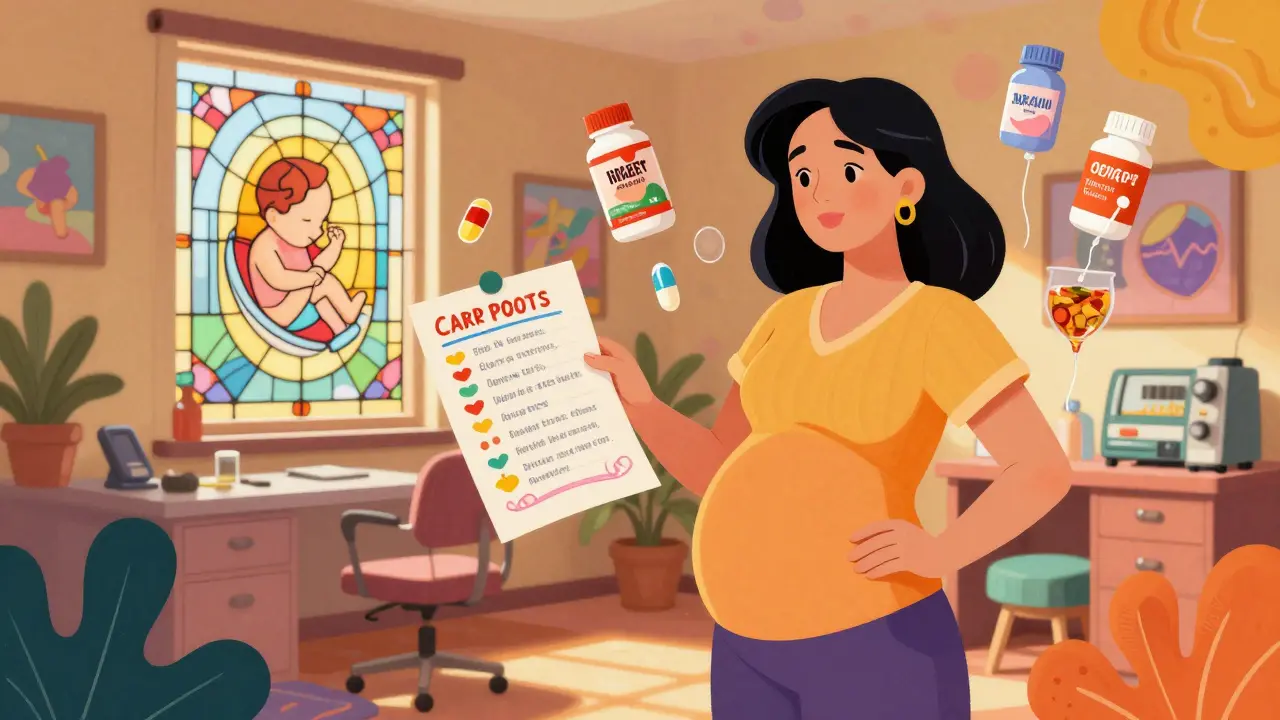
When you’re planning a pregnancy, already pregnant, or breastfeeding, the medications you take - even the ones you think are harmless - can have real effects on your body and your baby. Yet, many women walk into their OB/GYN appointments with a vague idea of what they’re taking, hoping the doctor will just know what’s safe. That’s not how it works. The truth is, your OB/GYN needs exact details to keep you and your baby protected. And you’re the only one who has all the information.
Why Medication Discussions with Your OB/GYN Are Non-Negotiable
Almost 90% of pregnant women take at least one medication during pregnancy, according to the CDC. That includes prescriptions, over-the-counter painkillers, vitamins, herbal teas, and supplements. But not all of them are safe. Some can interfere with fertility. Others might harm fetal development. And a few can affect milk supply while breastfeeding.
Your OB/GYN isn’t just checking your blood pressure or listening to your baby’s heartbeat. They’re doing a safety audit on everything you’re putting into your body. The American College of Obstetricians and Gynecologists (ACOG) says this isn’t optional - it’s standard care. Every medication, no matter how small or "natural," needs to be reviewed. That includes St. John’s Wort, which can cut the effectiveness of birth control pills by half. Or evening primrose oil, which some women take for PMS but can trigger contractions near term.
And it’s not just about avoiding harm. It’s about optimizing care. If you have high blood pressure, thyroid disease, or depression, your medication might need adjustment when you get pregnant. Doses that were perfect before may be too low or too high once your body changes. Your OB/GYN needs to know what you’re on so they can work with your other doctors - or refer you to a specialist - to keep everything balanced.
What to Bring to Your Appointment (The Exact List)
Don’t rely on memory. Don’t say "I take a prenatal vitamin" - that’s not enough. Bring a written list with every single thing you’ve taken in the last 30 days. Include:
- Prescription meds: Name, dose, how often, and why you take it. Example: "Levothyroxine 75 mcg, one pill daily, for hypothyroidism."
- Over-the-counter drugs: Even if you only take them "sometimes." Example: "Ibuprofen 400 mg, one tablet every 6 hours if I have a headache."
- Supplements and vitamins: Brand name matters. Example: "Nature Made Prenatal Multi + DHA, one tablet daily."
- Herbal products and teas: Yes, even chamomile or ginger tea if you drink it daily. Example: "Ginger capsules, 250 mg, two per day for nausea."
- Recreational substances: Alcohol, nicotine, cannabis, or CBD. No judgment - just facts. Your provider needs to know to assess risks.
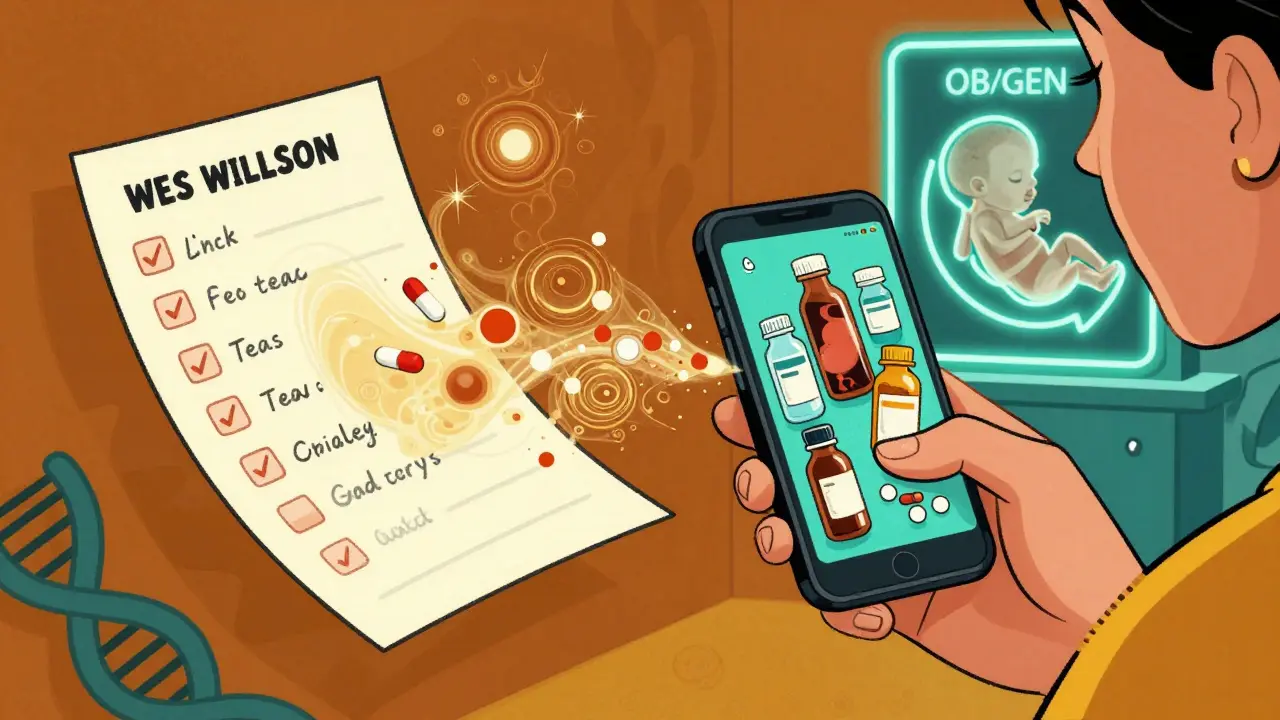
Pro tip: Take photos of your medicine bottles with your phone. That way, if you forget a dose or can’t read the label, you’ve got a backup. Many patients say this simple step cuts their appointment time in half and makes their doctor feel like they’re taking their care seriously.
What Your OB/GYN Will Ask (And Why)
They’re not just asking to be thorough. They’re looking for red flags. Here’s what they’re really trying to find out:
- "Are you taking folic acid?" - Because it reduces neural tube defects by up to 70%. They want to make sure you’re taking at least 400 mcg daily, starting at least one month before conception.
- "Have you used any new supplements since your last visit?" - Many women start taking something "for energy" or "for sleep" without realizing it can interfere with pregnancy hormones.
- "Do you take anything for pain or anxiety?" - NSAIDs like ibuprofen are risky after 20 weeks. Certain antidepressants may need switching to pregnancy-safe options like sertraline.
- "Are you using CBD or medical marijuana?" - Even if it’s legal where you live, it crosses the placenta. Only 38% of OB/GYNs routinely screen for this, but they should.
- "Have you stopped or changed any meds on your own?" - A lot of women stop their blood pressure or thyroid meds because they’re "worried about the baby." That’s more dangerous than staying on them.
These aren’t random questions. They’re based on hard data. A 2022 study found OB/GYNs catch 32% more drug interactions affecting fertility than general practitioners do. That’s because they specialize in reproductive pharmacology.
What to Ask Your OB/GYN - The 5 Must-Ask Questions
You’re not just answering questions - you’re leading the conversation. Come prepared with these:
- "Is this medication safe for pregnancy and breastfeeding?" - Don’t assume "yes" because it’s on the shelf. Some common drugs like ibuprofen, certain antibiotics, and even some allergy meds have hidden risks.
- "Is there a safer alternative?" - If you’re on a medication with a Category C or D rating (meaning animal or human studies show risk), ask what’s preferred. For example, instead of ibuprofen, acetaminophen is usually safe. For high blood pressure, labetalol or methyldopa are first-line choices.
- "Do I need to stop this before trying to conceive?" - Some meds, like acne treatments (isotretinoin) or certain autoimmune drugs, need to be cleared from your system months before pregnancy.
- "Will this affect my milk supply?" - If you’re breastfeeding, even safe meds can reduce milk. Decongestants, certain antidepressants, and hormonal birth control can all interfere.
- "Can you help me check if my insurance covers the replacement?" - Over 60% of OB/GYN-approved pregnancy-safe meds require prior authorization. Don’t wait until your prescription is denied to find out.
What Happens When You Don’t Prepare
Real stories from real patients tell the whole story.
One woman in Melbourne, pregnant for the first time, forgot to mention she was taking a fish oil supplement with high doses of vitamin A. Her OB/GYN caught it during a routine check-up - too much vitamin A can cause birth defects. She switched brands immediately.
Another woman took melatonin nightly for sleep. She didn’t think it counted as a "medication." Her OB/GYN flagged it as a potential hormone disruptor. They switched to sleep hygiene techniques instead.
And then there’s the woman who stopped her antidepressant cold turkey because she was "afraid it would hurt the baby." She ended up in the hospital with severe anxiety and postpartum depression. Her baby was fine - but she wasn’t.
These aren’t rare cases. A 2023 survey found that 41% of patients felt anxious about forgetting to mention a supplement they thought was "just natural." That’s the gap between fear and knowledge - and it’s why preparation matters.
What to Expect After the Appointment
A good OB/GYN won’t just say "stop this" or "keep taking that." They’ll give you a clear plan:
- A revised medication list with what to keep, change, or stop.
- Timing instructions: "Stop this 3 months before trying," or "Start this now," or "Wait until after delivery."
- Follow-up steps: Blood tests, specialist referrals, or apps to track symptoms.
- A written summary - ask for it. Many clinics now email it or upload it to your patient portal.
Some practices, like those using the Babyscripts app, even let you log your blood pressure or symptoms in real time between visits. That’s the future - and it’s already here.

Common Mistakes (And How to Avoid Them)
Here’s what trips people up most:
- Thinking "natural" means safe. - Herbal supplements aren’t regulated. St. John’s Wort, black cohosh, dong quai - all can interfere with hormones or trigger contractions.
- Waiting until you’re pregnant to ask. - The best time to review meds is before conception. That’s when you have the most control.
- Assuming your pharmacist knows. - Pharmacists know drug interactions, but not reproductive risks. Your OB/GYN is the expert on that.
- Forgetting to update your list. - If you start a new supplement in week 12, tell your OB/GYN at your next visit. Don’t wait.
It takes 2-3 visits to get comfortable with this process. But after that, it becomes second nature. And your peace of mind? Priceless.
The Bigger Picture: Why This Matters Beyond Your Appointment
The OB/GYN medication safety market is growing fast - $18.7 billion in 2022, and climbing. Why? Because more women are entering pregnancy with chronic conditions. By 2025, nearly 6 out of 10 pregnant women will have a pre-existing health issue like diabetes, asthma, or depression.
That means better systems are coming. The FDA is working on standardized pregnancy risk scores for drugs. ACOG is launching a patient checklist app in mid-2024. And more clinics are using electronic alerts to flag dangerous combinations before they happen.
But none of that replaces you. You’re the only one who knows what’s in your medicine cabinet, what you’ve forgotten to mention, and how you really feel about taking pills. Your job isn’t just to show up - it’s to speak up.
Prepare. Ask. Follow up. You’re not being difficult. You’re being smart.
Can I keep taking my antidepressants during pregnancy?
Some antidepressants are considered safe during pregnancy, including sertraline and citalopram. Others, like paroxetine, may carry higher risks. Your OB/GYN will review your specific medication, your mental health history, and your symptoms to decide whether to continue, switch, or adjust your dose. Never stop abruptly - that can cause withdrawal symptoms or worsen depression. Always talk to your provider before making changes.
Is ibuprofen safe during pregnancy?
Ibuprofen is generally safe in early pregnancy but should be avoided after 20 weeks. It can affect fetal kidney development and reduce amniotic fluid levels. After 30 weeks, it may also cause premature closure of a critical blood vessel in the baby’s heart. Acetaminophen (Tylenol) is the preferred pain reliever during pregnancy. Always check with your OB/GYN before taking any NSAID.
What if I took a risky medication before I knew I was pregnant?
Many women take medications before realizing they’re pregnant. The good news: most exposures don’t cause harm. Your OB/GYN will ask when you took the medication and how much. They’ll use pregnancy safety databases and risk models to assess potential effects. In most cases, the risk is very low - especially if it was a single dose early on. Don’t panic. Don’t hide it. Tell your provider as soon as possible so they can monitor you properly.
Are prenatal vitamins enough, or do I need extra supplements?
Prenatal vitamins cover the basics: folic acid, iron, calcium, and DHA. But some women need more. If you’re vegan, you might need B12. If you have low iron, your doctor may prescribe an extra iron pill. If you have a history of neural tube defects, you may need a higher dose of folic acid (4-5 mg). Don’t self-prescribe extra supplements - too much of some vitamins (like vitamin A) can be dangerous. Let your OB/GYN guide you based on blood tests and your history.
Can I breastfeed while taking my medications?
Most medications are safe during breastfeeding, but some can pass into milk and affect your baby. Common safe options include ibuprofen, acetaminophen, sertraline, and levothyroxine. Medications to avoid or use cautiously include certain antibiotics, decongestants, and some migraine drugs. Always check with your OB/GYN or a lactation consultant before starting or stopping any medication while breastfeeding. If you’re unsure, you can also check the LactMed database - a trusted resource for breastfeeding and medication safety.
Next Steps: What to Do Today
Don’t wait for your next appointment. Right now, open your medicine cabinet. Grab a notebook or your phone. Write down every pill, capsule, drop, and tea you’ve taken in the last month. Include dosages. Include brand names. Include the reason you take it. Then, call your OB/GYN’s office and ask: "What’s the best way to share this before my next visit?"
That’s it. That’s the whole secret. Preparation isn’t complicated. It’s just consistent. And when you do it, you’re not just protecting your baby - you’re taking control of your own health.
