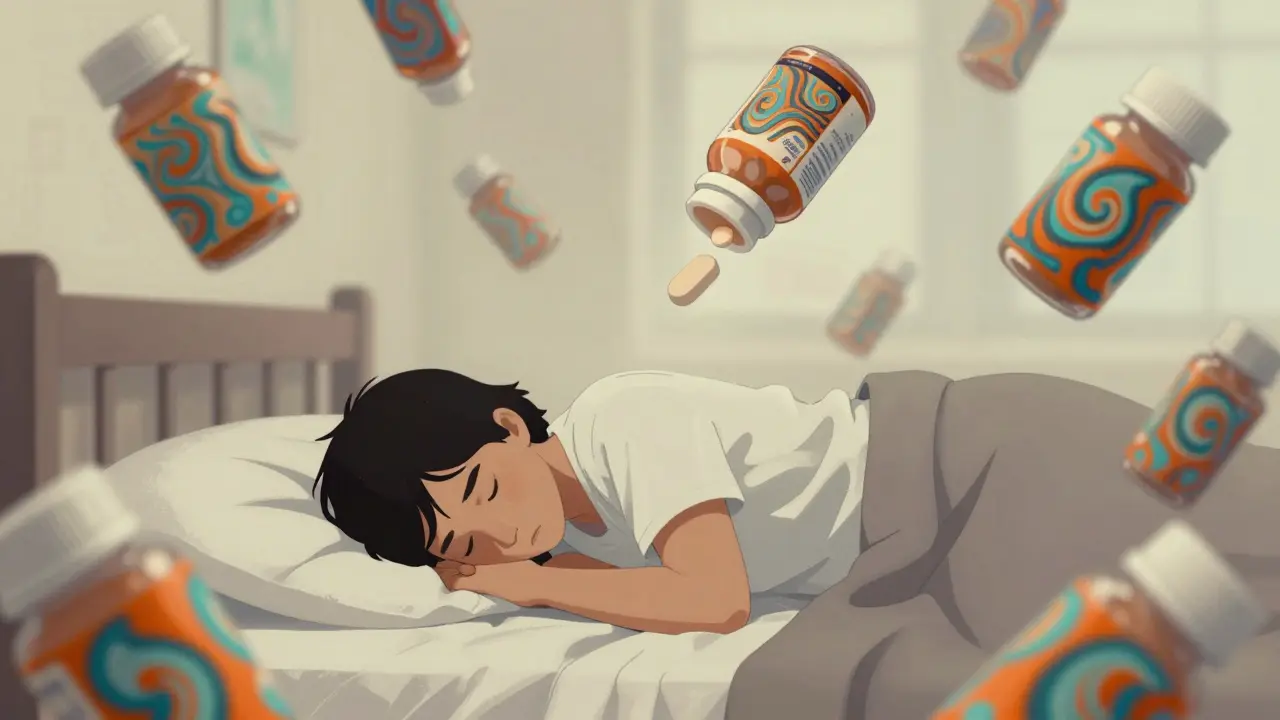
When someone is struggling with depression, taking pills on time isn’t just about forgetting-it’s about losing the energy, focus, and will to keep going. Depression doesn’t just affect mood. It rewires how the brain handles daily tasks, including something as simple as swallowing a tablet. For people managing chronic conditions like heart failure, diabetes, or high blood pressure, this isn’t a minor inconvenience. It’s a life-or-death risk.
Depression Makes You Forget-But Not Just Because You’re Distracted
People often assume missed doses are due to forgetfulness. But depression doesn’t cause forgetfulness the way aging or stress does. It steals motivation, not memory. A person might remember they need to take their blood pressure pill, but they can’t summon the energy to open the bottle. They might feel like it doesn’t matter anymore. That’s not laziness. That’s the weight of depression. Research from a 2022 systematic review of 31 studies found that patients with heart failure who were depressed were 2.3 times more likely to skip their medications than those without depression. Even after adjusting for age, education, and other health problems, the link stayed strong. The same pattern shows up in diabetes, HIV, and mental health treatments. Depression doesn’t just make adherence harder-it makes it collapse.Side Effects Feel Worse When You’re Depressed
Antidepressants like fluoxetine, sertraline, or amitriptyline often come with side effects: dry mouth, drowsiness, weight gain, nausea, or insomnia. For someone without depression, these might be annoying but manageable. For someone with depression, they become unbearable. A study in Ethiopia found that 57% of patients stopped taking their antidepressants because of side effects. In Turkey, 83% of people on SSRIs quit because they felt too tired or lost their appetite. The problem isn’t the side effects themselves-it’s how depression amplifies them. A 2014 study in Spain used the GARSI scale to measure how patients rated their side effects. Depressed patients who skipped their meds scored significantly higher on side effect severity, even when their actual symptoms were no worse than those who stayed on track. It’s not that the pills are making them sicker. It’s that depression makes every discomfort feel like proof the treatment isn’t working. “I feel worse after taking this,” they say. And in their mind, that’s enough to quit.How Clinicians Can Spot the Warning Signs
You can’t rely on patients to say, “I’m depressed, so I’m skipping my meds.” Most won’t. They’ll say they forgot. Or they were busy. Or the pills made them feel weird. That’s why doctors need tools to uncover the real issue. The PHQ-9 is a simple nine-question screen for depression. A score of 10 or higher means moderate depression-and that’s the threshold where adherence starts to drop sharply. For every 5-point increase on the PHQ-9, adherence drops by about 23%. That’s not a guess. That’s data from the NIH’s large-scale review. Pair that with the MMAS-8, an 8-question tool that measures medication adherence. Scores below 6 mean non-adherence. Below 8 means partial adherence. Only a score of 8 means full adherence. In one Cambridge study, just 6% of depressed patients hit that perfect score. The rest? They were missing doses-sometimes daily. The most effective approach? Use both. A 2021 study showed combining PHQ-9 and MMAS-8 improved prediction of non-adherence by 37%. That’s not a small boost. That’s the difference between missing a problem and catching it early.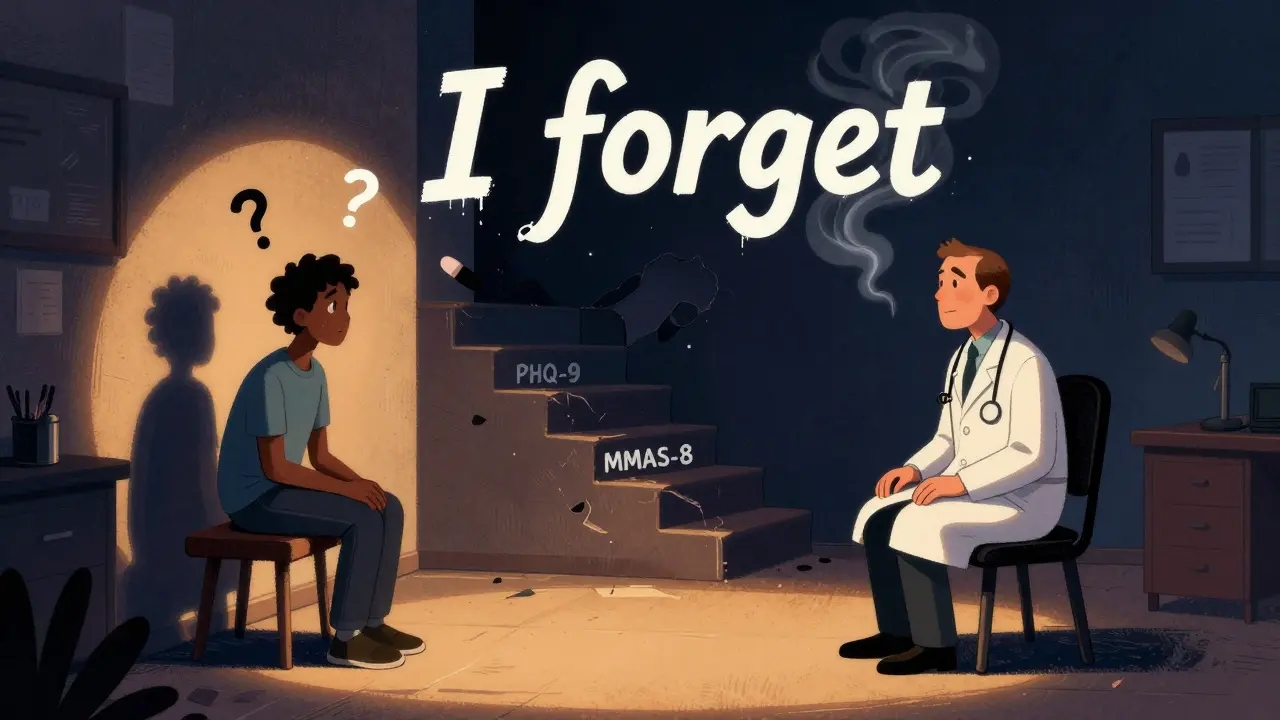
Early Misses Are the Biggest Red Flag
It’s not the occasional missed pill that’s dangerous. It’s the pattern. The STAR*D trial found that if a patient with depression misses more than 20% of their doses in the first two weeks, they’re nearly five times more likely to have treatment failure. That’s not a coincidence. That’s a warning. Doctors should treat the first two weeks of any new medication as a critical window. If a patient starts skipping doses right away, it’s not random. It’s depression in action. Ask: “Have you been feeling less like yourself since starting this?” “Have you thought about stopping because it’s too much?”What Patients Can Do to Fight Back
If you’re dealing with depression and a long list of pills, you’re not alone. And you’re not failing. Here’s what helps:- Use a pill organizer with alarms. Set two: one for the time you take it, one 30 minutes later. Depression makes time blurry. The alarm isn’t just a reminder-it’s a lifeline.
- Track your mood and doses together. Use a notebook or a free app. Write down how you felt that day and whether you took your meds. Over time, you’ll see patterns: “I skip pills on days I feel numb.” That’s insight. That’s power.
- Talk to your doctor about side effects before you start. Don’t wait until you’re miserable. Say: “If I feel X, Y, or Z, what should I do?” Having a plan reduces panic.
- Ask for help. Tell someone you trust: “I’m struggling to take my meds. Can you check in with me every few days?” Social support cuts non-adherence by up to 28% in studies.
Why This Matters Beyond the Pills
Skipping meds because of depression doesn’t just make your heart disease worse. It makes your depression worse. It’s a cycle. Poor adherence → symptoms return → hopelessness grows → adherence drops further. A 2024 study showed that when patients and doctors worked together on adherence-using PHQ-9 and MMAS-8 together-depression symptoms improved significantly. Mental quality of life went up. The patients weren’t just taking pills. They were regaining control. This isn’t about compliance. It’s about dignity. Depression makes people feel broken. But taking a pill isn’t a test of willpower. It’s a human act, and humans need support, not judgment.What’s Next for Recognition and Care
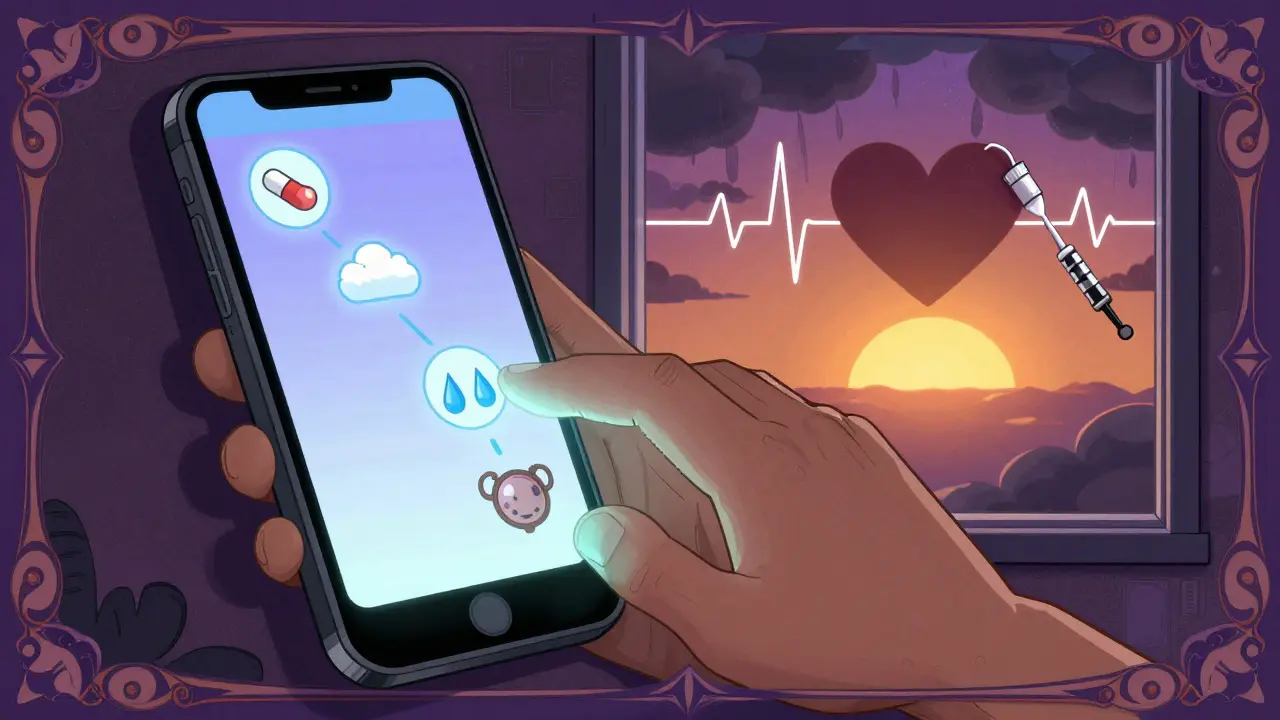
New tools are emerging. Smartphone apps that track mood and medication intake can predict missed doses 72 hours in advance-with 82% accuracy. Neuroimaging is showing that depression affects brain regions tied to planning and action. That’s why some people can’t even open a pill bottle, even when they know they should. The World Health Organization is investing $15 million to build simple, low-cost recognition tools for clinics in poor areas. That’s huge. Because this isn’t just a problem in wealthy countries. It’s global. The message is clear: if someone with depression isn’t taking their meds, it’s not because they don’t care. It’s because depression stole their ability to care-for now. Recognizing that isn’t just clinical. It’s compassionate.How do I know if my depression is causing me to skip my medications?
Look for patterns. Do you skip doses on days you feel exhausted, hopeless, or overwhelmed? Do you tell yourself it doesn’t matter anymore? Do you avoid opening your pill bottle because it feels like too much? If you answer yes to any of these, depression is likely playing a role. Use the PHQ-9 screen-scores above 10 suggest moderate depression linked to adherence issues. Pair it with the MMAS-8 to measure how often you miss doses.
Is it normal to stop taking antidepressants because of side effects?
It’s common-but not inevitable. Studies show that 57% to 83% of people stop antidepressants due to side effects like drowsiness, weight gain, or dry mouth. But depression makes these side effects feel worse than they are. Talk to your doctor before quitting. Sometimes switching medications helps. Other times, adjusting the dose or timing makes side effects manageable. Never stop abruptly-this can worsen depression.
Can using a pill organizer really help someone with depression?
Yes. A simple pill box with alarms cuts missed doses by up to 40% in depressed patients. It doesn’t fix depression, but it removes one barrier: the mental effort of remembering. When your brain is already overloaded, external tools become lifelines. Pair it with a daily mood check-in-this helps you see if skipping pills is tied to low mood, not forgetfulness.
Why do doctors ask about both depression and adherence together?
Because they’re linked. Depression doesn’t just make you feel sad-it makes it harder to manage your health. A 2021 study found that combining a depression screen (PHQ-9) with an adherence tool (MMAS-8) improved prediction of missed doses by 37%. Doctors aren’t being nosy. They’re trying to catch a hidden problem before it leads to hospitalization or worse.
What if I feel guilty about skipping my meds?
Feeling guilty is common-but misplaced. Depression isn’t a character flaw. It’s a medical condition that affects your brain’s ability to plan, motivate, and sustain effort. Skipping pills isn’t a failure of willpower. It’s a symptom. The goal isn’t to feel better about skipping. It’s to find support that helps you take them again. Talk to your doctor. Ask for help. You’re not alone.
Are there apps that can help track both mood and medication?
Yes. Apps like Medisafe, MyTherapy, and even simple Google Calendar reminders with mood notes have been shown to predict missed doses 72 hours in advance with 82% accuracy. These tools don’t replace human care, but they give you data to show your doctor: “I felt low on Tuesday, and I skipped my pill.” That’s a conversation starter-not a confession.

Alex Danner
Depression doesn’t make you lazy-it makes every action feel like climbing a mountain in concrete boots. I’ve been there. Took my heart meds for months, then one day just… couldn’t open the bottle. Not because I forgot. Because my brain said, ‘Why bother?’ That 2.3x stat? Real. I lived it.
What helped? A pillbox with alarms. Two. One at 8am, one at 8:30am. The second one wasn’t a backup-it was a lifeline. My brain needed the second nudge. And yeah, I tracked my mood. Some days I wrote ‘I feel like a ghost.’ That’s when I knew: it’s not forgetfulness. It’s the weight.
Doctors need to stop asking ‘Did you forget?’ and start asking ‘What’s it like to take this pill today?’ That’s the question that cracks the door open.
Also-side effects aren’t just side effects when you’re depressed. They’re proof the system is failing you. Even if they’re not worse, they feel worse. That’s not irrational. That’s biology.
And don’t tell me to ‘just push through.’ I tried. It didn’t work. What worked was someone saying, ‘It’s not your fault. Let’s fix this together.’
Ayodeji Williams
Bro this is all just Big Pharma gaslighting 😭💊
Depression? Nah man. You just need to drink more water and do yoga. They make you think you need pills but the real cure is sunlight and vibes 🌞🧘♂️
My cousin took 17 meds and died. Now he’s a ghost. Coincidence? I think not.
Also why are they using apps? That’s how they track you. The government + pharma = mind control. 🤫👁️
Kyle King
Let me guess-this whole post was funded by the DSM-5 lobby. Depression isn’t real. It’s a social construct invented to sell SSRIs.
My uncle took his meds for 20 years. Got fat. Got tired. Got depressed. Then he stopped. Instantly felt better. Guess what? He’s alive and happy at 72.
They say ‘2.3x more likely to skip’-but what if skipping is the *correct* response? What if the meds are the problem? What if the whole system is rigged?
Also, why are they measuring adherence? Who cares? Let people die if they want. Freedom, baby. 🤷♂️
Kamlesh Chauhan
u just said depression makes u forget but then u say its not forgetfulness its motivation lmao
so is it forgetfulness or not
also why are u talking about apps and pillboxes like its a magic fix
my aunt took 12 pills a day and still died of heart failure
so what’s the point
they just wanna keep you dependent
also i skipped my meds for 3 months and my blood pressure got better
coincidence
probably not
lol
Rachel Steward
Let’s be honest-this entire narrative is a therapeutic myth dressed in data. Depression doesn’t ‘steal motivation.’ It’s a biochemical imbalance, yes-but the solution isn’t more tools, more apps, more guilt-inducing checklists.
The real issue? The medical system is designed to treat symptoms, not root causes. You give someone a PHQ-9 and an MMAS-8 and call it ‘care’? That’s not intervention. That’s surveillance.
And why is the solution always ‘take more pills’ or ‘track more’? What if the problem is that we’ve turned human suffering into a KPI?
Also-83% of people in Turkey quit SSRIs because they felt tired? Shocking. Maybe the drugs are just bad. Maybe the entire class is overprescribed. Maybe we’re treating the wrong thing.
And don’t get me started on ‘social support cuts non-adherence by 28%.’ That’s not compassion. That’s social engineering.
This isn’t about dignity. It’s about control.
And you’re selling it as empathy.
Jonathan Larson
Thank you for this meticulously researched and deeply human piece. The distinction between forgetfulness and motivational collapse is not merely clinical-it is existential. The fact that depression alters the brain’s executive function to the point where opening a pill bottle becomes an insurmountable task speaks to the profound neurobiological burden carried by those who live with this condition.
It is not enough to prescribe medication; we must prescribe dignity. The PHQ-9 and MMAS-8 are not merely tools-they are bridges between clinical observation and compassionate intervention. When a physician asks, ‘Have you been feeling less like yourself since starting this?’-they are not just gathering data. They are offering a mirror to someone who has forgotten how to recognize their own face.
Let us not confuse adherence with obedience. Let us not mistake a silent struggle for negligence. The person who skips a dose is not failing-they are drowning. And sometimes, the only thing that saves them is not a pill-but a person who says, ‘I see you. I’m here.’
Elen Pihlap
i hate when people say ‘just use a pill organizer’ like that’s gonna fix everything
i tried it
still didn’t open it
just sat there
felt worse
then cried
then felt guilty
then skipped again
so yeah
no
that’s not help
that’s pressure
Sai Ganesh
Interesting data but in India we see something different. Many patients don’t take meds because they can’t afford them-not because of depression. The system fails them before depression even enters the picture.
Also, cultural stigma around mental health means people won’t admit to depression even if they feel it. So PHQ-9 scores may be artificially low.
And apps? Many don’t have smartphones. Or data. Or electricity.
This is a Western solution to a global problem. We need low-tech, low-cost, culturally grounded approaches. Not fancy apps. Not guilt trips. Just access.
Depression is real. But so is poverty. And one often hides behind the other.
Aparna karwande
How dare you imply that Indian patients are too weak to handle their own medication? We have survived famines, colonialism, and corrupt hospitals-yet you think depression makes us ‘unable to open a pill bottle’?
My grandmother took insulin for 40 years. No alarms. No apps. Just willpower. And pride.
This post is a Western lie wrapped in statistics. You’re infantilizing millions of people who have no choice but to endure.
Depression? Maybe. But the real villain? The system that tells people they’re broken so they’ll keep buying pills.
We don’t need tools. We need justice.
And stop telling us how to feel.
Jessie Ann Lambrecht
THIS. THIS IS WHAT NEEDS TO BE SAID.
I used to think skipping meds meant I was weak. Turns out? I was just sick. Not lazy. Not broken. Just sick.
My doctor finally asked me: ‘When was the last time you felt like yourself?’
That question changed everything.
I started using Medisafe. Set two alarms. Wrote ‘I felt numb’ on the days I skipped. Didn’t judge myself. Just recorded it.
Three months later-I looked back. Saw a pattern. Took it to my doctor. We adjusted my meds. I started therapy.
Depression didn’t vanish. But I got my life back.
You’re not failing. You’re fighting. And you’re not alone.
Keep going. Even if it’s one pill. Even if it’s today. You’re still here. That counts.
Vince Nairn
so you’re saying depression makes you not care… but the solution is to care more about taking pills?
what a circular logic masterpiece
also why is the doctor’s job to be a pill police
why not fix the system that makes people feel like shit in the first place
also i took my meds for 5 years
got worse
stopped
got better
so maybe the problem isn’t me
maybe it’s the damn pills
just saying
¯\_(ツ)_/¯
LALITA KUDIYA
app works for me
alarm + mood note
some days i write ‘today i felt like a rock’
other days ‘i took it and cried after’
showed to doc
she changed my dose
no guilt
just data
it helped
❤️
Poppy Newman
Wait so if someone skips meds because they’re depressed… is that the depression’s fault? Or is it the medication’s fault for making them feel worse?
Also why are we assuming everyone wants to be ‘adherent’? What if they’re just trying to survive?
And why is the solution always ‘more monitoring’? Why not ‘less pressure’?
Just… wondering. 🤔
Alex Danner
Replying to Vince: You’re not wrong. Sometimes the meds *are* the problem. I was on sertraline for 18 months. Felt like a zombie. Stopped. Got worse. Then switched to bupropion. Felt human again.
It’s not about compliance. It’s about trial. And patience. And not being shamed for changing your mind.
And yeah-some of us don’t want to be ‘adherent.’ We want to be alive. And sometimes, that means saying no. Even if it scares the doctors.
That’s not failure. That’s agency.