Your blood pressure numbers aren't just stats on a screen. They are the silent engine driving your heart's workload every single day. For millions of people, seeing those numbers climb above 130/80 mm Hg feels like a personal failure, even though it is often a complex mix of genetics, lifestyle, and aging. The good news? You have more control than you think. You don't have to choose between popping pills or trying unproven herbs. The most effective path usually sits right in the middle: combining proven medical treatments with powerful, evidence-based natural strategies.
We are going to break down exactly how these two worlds work together. We'll look at which supplements actually move the needle, how to tweak your diet without feeling deprived, and when medication is non-negotiable. This isn't about replacing your doctor; it's about arming yourself with the knowledge to manage your health proactively.
The Reality Check: Why Blood Pressure Matters
Let’s get straight to the point. High blood pressure, or hypertension, is dangerous because it rarely shows symptoms until it causes damage. According to the World Health Organization, nearly 1.28 billion adults worldwide live with this condition. It’s not just a number game. Every 5 mm Hg drop in systolic pressure (the top number) cuts your risk of dying from stroke by 14% and ischemic heart disease by 9%. That is a massive statistical advantage.
Most people fall into one of two camps: those who rely entirely on medication and those who try to fix it naturally but lack a structured plan. Both approaches have flaws if used in isolation. Medications can have side effects, while natural methods often take weeks to show results. The goal here is synergy. Think of natural strategies as the foundation that lowers your overall burden, potentially allowing for lower medication doses or better stability.
Natural Strategies That Actually Work
Not all "natural" remedies are created equal. Some are marketing hype, while others have robust clinical data behind them. Here are the heavy hitters that science supports.
The DASH Diet: Your First Line of Defense
If you only do one thing, make it this. The DASH diet (Dietary Approaches to Stop Hypertension) isn't a fad. Developed by the National Heart, Lung, and Blood Institute, it focuses on reducing sodium while boosting potassium, calcium, and magnesium. Studies show strict adherence can lower systolic blood pressure by 8-14 mm Hg within just 14 days. That is comparable to some first-line medications.
How do you start? Don't overhaul your kitchen overnight. Aim for gradual changes over 2-4 weeks. Focus on whole foods: fruits, vegetables, whole grains, and lean proteins. Cut out processed meats and salty snacks. The target is simple: reduce sodium intake to under 1,500 mg daily if possible, compared to the typical American average of 3,400 mg.
Supplements With Clinical Backing
Some supplements have earned their place in the conversation. Here is what the data says:
- Coenzyme Q10 (CoQ10): At doses of 100-225 mg daily, meta-analyses show an average reduction of 11-17 mm Hg systolic. It works by improving endothelial function (how well your blood vessels relax). Take it with a meal containing fat for better absorption.
- Aged Garlic Extract: Specifically aged garlic extract at 600-1,200 mg daily has shown systolic reductions of 7-10 mm Hg. Regular raw garlic doesn't have the same consistent effect due to variability in allicin content.
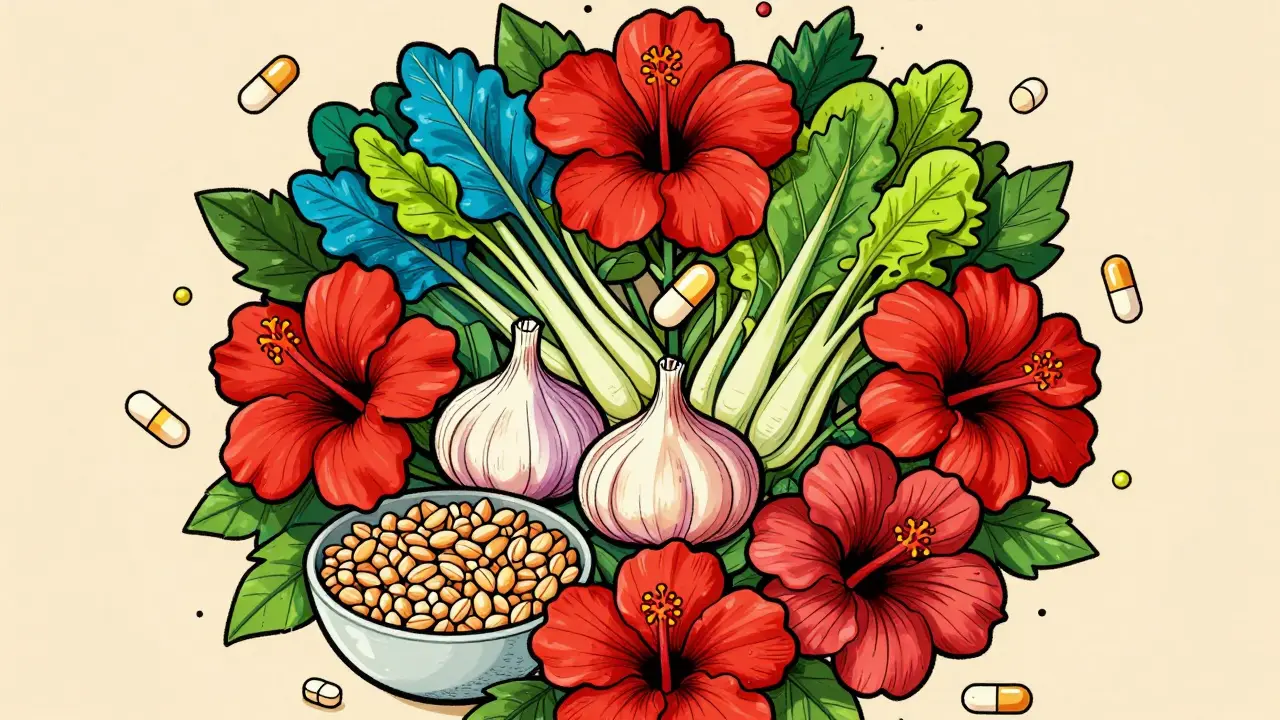
- Hibiscus Tea: Drinking 3-4 cups of strong hibiscus tea daily can lower systolic pressure by about 7.2 mm Hg after six weeks. It acts similarly to mild ACE inhibitors.
- Magnesium: A modest but significant player. Supplementing with 368 mg daily (often as magnesium glycinate) can drop systolic pressure by 2 mm Hg and diastolic by 1.8 mm Hg. It helps relax blood vessel walls.
A word of caution: "Natural" does not mean "safe." Supplements interact with medications. Garlic can thin the blood, interacting dangerously with anticoagulants like warfarin. Always tell your doctor what you are taking.
Lifestyle Levers: Weight and Movement
You cannot pill your way out of a sedentary lifestyle. Weight loss is one of the most potent natural interventions. Losing just 5-10% of your body weight can reduce systolic pressure by 5-20 mm Hg, depending on your starting BMI. Each kilogram (2.2 pounds) lost typically drops your systolic reading by 1 mm Hg.
Exercise matters too. You don't need to run marathons. The goal is 150 minutes of moderate-intensity aerobic activity per week-think brisk walking at 3-4 mph. This alone can lower systolic pressure by 5-8 mm Hg. Consistency beats intensity. Walking around your neighborhood daily is far more effective than one intense gym session a month.
Medication Control: When Pills Are Necessary
There is no shame in needing medication. For many, especially those with Stage 2 hypertension (≥140/90 mm Hg) or existing heart conditions, natural strategies alone are insufficient and risky. Medications provide immediate, predictable control.
| Medication Class | How It Works | Common Side Effects | Typical Systolic Reduction |
|---|---|---|---|
| ACE Inhibitors (e.g., Lisinopril) | Relaxes blood vessels by blocking angiotensin II formation | Dry cough, dizziness, elevated potassium | 10-20 mm Hg |
| ARBs (e.g., Losartan) | Blocks angiotensin II receptors directly | Dizziness, fatigue (less cough than ACEs) | 10-20 mm Hg |
| Calcium Channel Blockers (e.g., Amlodipine) | Prevents calcium from entering heart/vessel cells, relaxing them | Swollen ankles, flushing, headache | 15-25 mm Hg |
| Diuretics (e.g., Hydrochlorothiazide) | Helps kidneys remove sodium and water | Frequent urination, low potassium, cramps | 8-15 mm Hg |
First-line treatments per the 2023 European Society of Cardiology guidelines include these four classes. Amlodipine, for instance, is highly effective, often dropping systolic pressure by 20-25 mm Hg. However, it can cause ankle swelling. Your doctor will choose based on your specific profile-age, ethnicity, kidney function, and other conditions.
The key takeaway? Medications work fast. Most show results within 2-4 weeks. Natural strategies often take 4-8 weeks to demonstrate measurable effects. If your pressure is critically high, you cannot wait eight weeks for hibiscus tea to kick in.
Combining Both: The Integrated Approach
This is where the magic happens. Recent trials, like the SPRINT-2 follow-up published in the New England Journal of Medicine, show that combining intensive lifestyle modification with reduced medication doses achieves equivalent blood pressure control to standard drug regimens-but with 32% fewer side effects.
Here is how to integrate them safely:
- Start with Lifestyle: If you have Stage 1 hypertension (130-139/80-89 mm Hg) and low cardiovascular risk, doctors may allow a 3-6 month trial of intensive lifestyle changes before prescribing meds. Implement the DASH diet, cut salt, and start walking.
- Add Meds if Needed: If targets aren't met, add medication. Do not stop meds abruptly. This can cause rebound hypertension, which is dangerous.
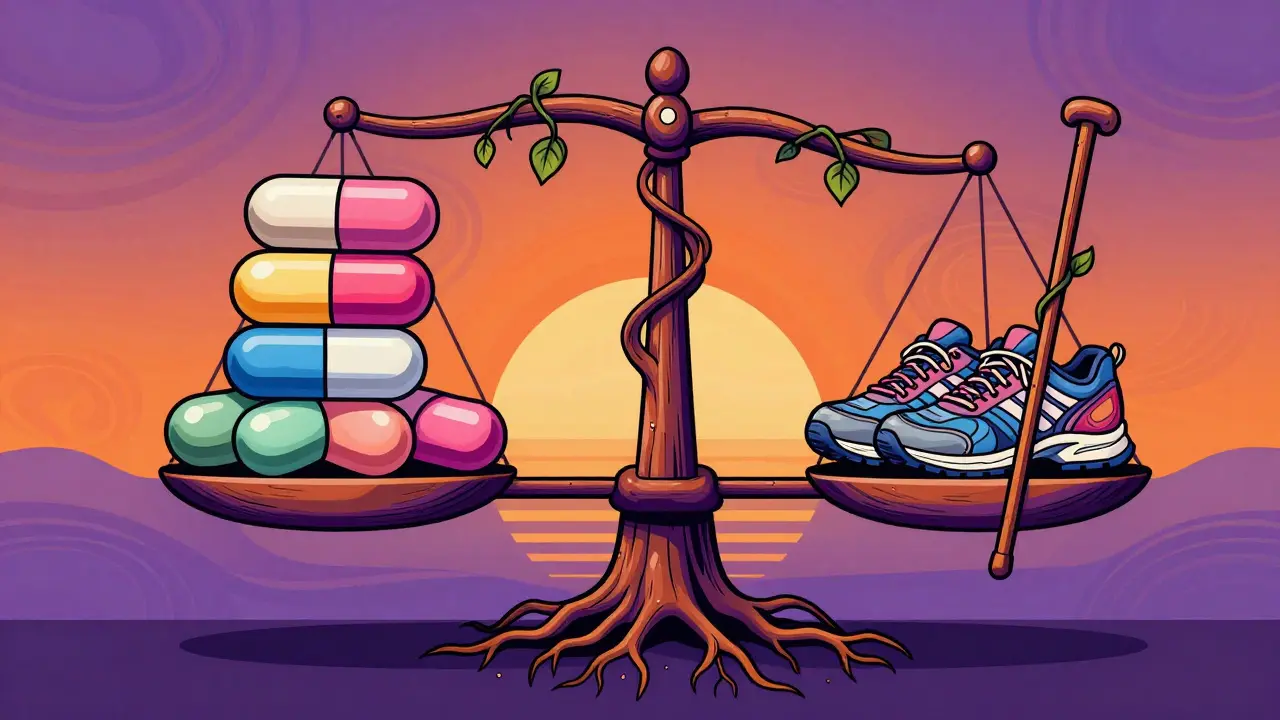
- Use Supplements as Adjuncts: Once stable on meds, discuss adding CoQ10 or garlic extract. These might help maintain levels, potentially allowing your doctor to lower your medication dose later.
- Monitor Religiously: Buy a validated home blood pressure monitor. Check your pressure twice daily (morning and evening) for the first few weeks of any change. Keep a log. Data drives decisions.
Dr. John Bisognano, President of the American Society of Hypertension, emphasizes that all patients should adhere to the low-salt DASH diet and exercise regimen as foundational therapy. Supplements are adjunctive, not replacements. Dr. Deepak Bhatt of Harvard Medical School notes that for low-risk Stage 1 patients, a monitored trial of natural approaches is appropriate before initiating pharmacotherapy.
Pitfalls to Avoid
I see people make the same mistakes repeatedly. Avoid these traps:
- The "All-Natural" Myth: Stopping prescribed medication to switch to herbs alone can lead to strokes or heart attacks. Never do this without medical supervision.
- Inconsistent Monitoring: White coat syndrome is real, but so is masked hypertension. Home monitoring gives the true picture. One bad reading doesn't mean treatment failure; trends matter.
- Ignoring Interactions: Licorice root can raise blood pressure. St. John's wort interacts with dozens of drugs. Hawthorn can enhance beta-blocker effects, causing your heart rate to drop too low. Always check interactions.
- Quick Fixes: There is no magic bullet. Hypertension management is a marathon, not a sprint. Sustainable habits beat short-term crashes.
Next Steps for You
Take action today. Schedule a visit with your healthcare provider to review your current strategy. Ask specifically about integrating the DASH diet and whether supplements like CoQ10 are safe for you. Start walking 20 minutes a day. Reduce salt by using herbs and spices instead of shakers. Small, consistent steps create lasting change. Your heart is counting on you.
Can I cure hypertension naturally?
For some individuals with Stage 1 hypertension and low cardiovascular risk, intensive lifestyle changes can normalize blood pressure without medication. However, for most, especially those with Stage 2 hypertension or existing heart disease, hypertension is a chronic condition managed, not cured. Natural strategies are powerful tools for management but rarely eliminate the need for medical oversight entirely.
How long does it take for natural remedies to work?
Natural strategies generally require 4-8 weeks to demonstrate measurable effects. The DASH diet can show results in as little as 14 days, while supplements like CoQ10 and garlic extract typically take 6-8 weeks of consistent use. This is slower than medications, which often work within 2-4 weeks.
Is hibiscus tea safe to drink daily?
Yes, drinking 3-4 cups of hibiscus tea daily is generally safe and has been shown to lower systolic blood pressure by about 7.2 mm Hg. However, it may interact with diuretics and antihypertensive medications, potentially lowering blood pressure too much. Consult your doctor before adding it to your routine if you are already on medication.
What is the best supplement for blood pressure?
Coenzyme Q10 (CoQ10) and aged garlic extract have the strongest evidence for significant blood pressure reduction. CoQ10 can lower systolic pressure by 11-17 mm Hg, while garlic extract reduces it by 7-10 mm Hg. Magnesium and hibiscus tea also offer modest but clinically relevant benefits. Always choose third-party tested brands to ensure quality.
Should I stop my medication if my blood pressure is normal?
Never stop medication without consulting your doctor. Normal readings likely mean the medication is working. Stopping abruptly can cause rebound hypertension, which increases the risk of stroke and heart attack. Your doctor may gradually taper your dose if lifestyle changes have significantly improved your baseline health.
