NSAID Medication Safety Checker
Check if your medication contains NSAIDs
Enter a medication name to see if it contains NSAID ingredients. All NSAIDs can be dangerous for heart failure patients.
Results
If you have heart failure, even a simple painkiller like ibuprofen could be putting your health at serious risk. It’s not just a warning on the label-it’s a real, measurable danger backed by years of clinical research. Many people don’t realize that over-the-counter NSAIDs, the kind you grab without a prescription, can trigger sudden worsening of heart failure. And when that happens, hospitalization isn’t just possible-it’s common.
How NSAIDs Make Heart Failure Worse
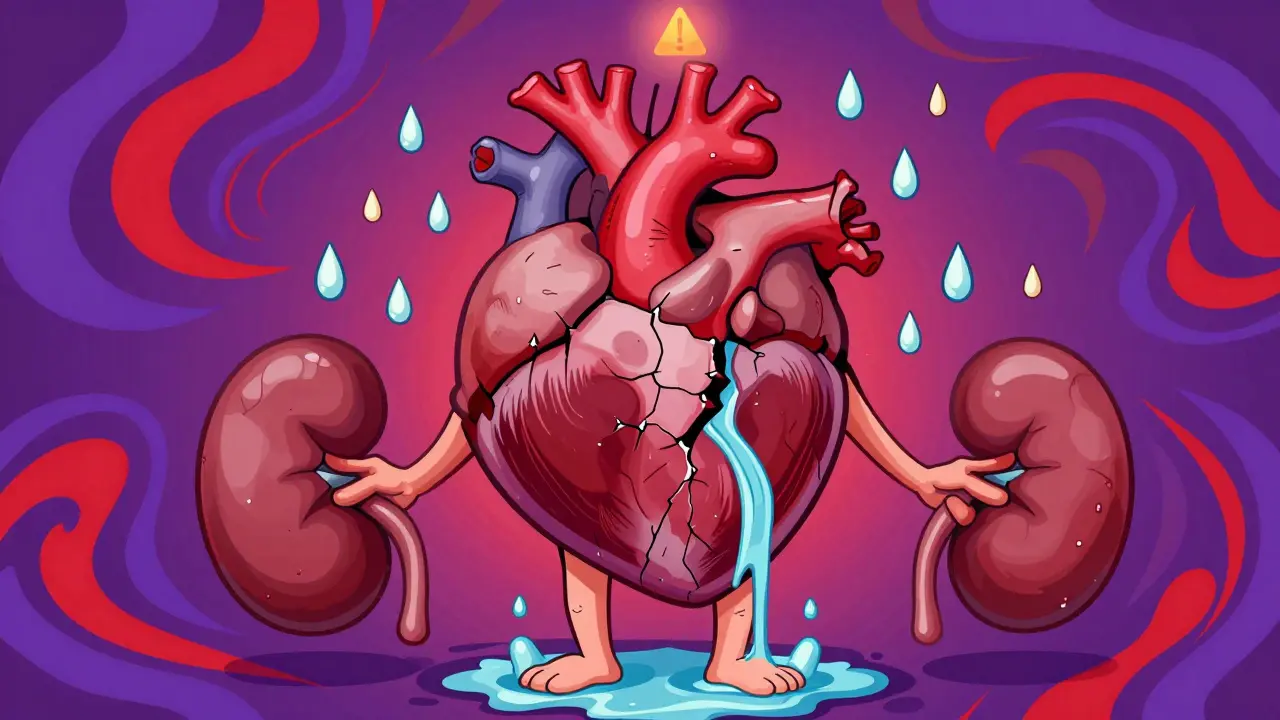
NSAIDs-non-steroidal anti-inflammatory drugs-work by blocking enzymes called COX-1 and COX-2. These enzymes help produce prostaglandins, chemicals that cause pain and swelling. But prostaglandins also play a key role in your kidneys. In healthy people, that’s fine. In someone with heart failure? It’s a recipe for trouble.
Your heart isn’t pumping well, so your body tries to compensate by holding onto fluid and salt. That’s why many heart failure patients take diuretics-to flush out the extra water. But NSAIDs interfere with this process. They reduce prostaglandin activity in the kidneys, which causes your body to hold onto even more sodium and water. The result? Fluid builds up in your lungs, legs, and abdomen. Your heart has to work harder. And if it’s already weak? It can’t handle the extra load.
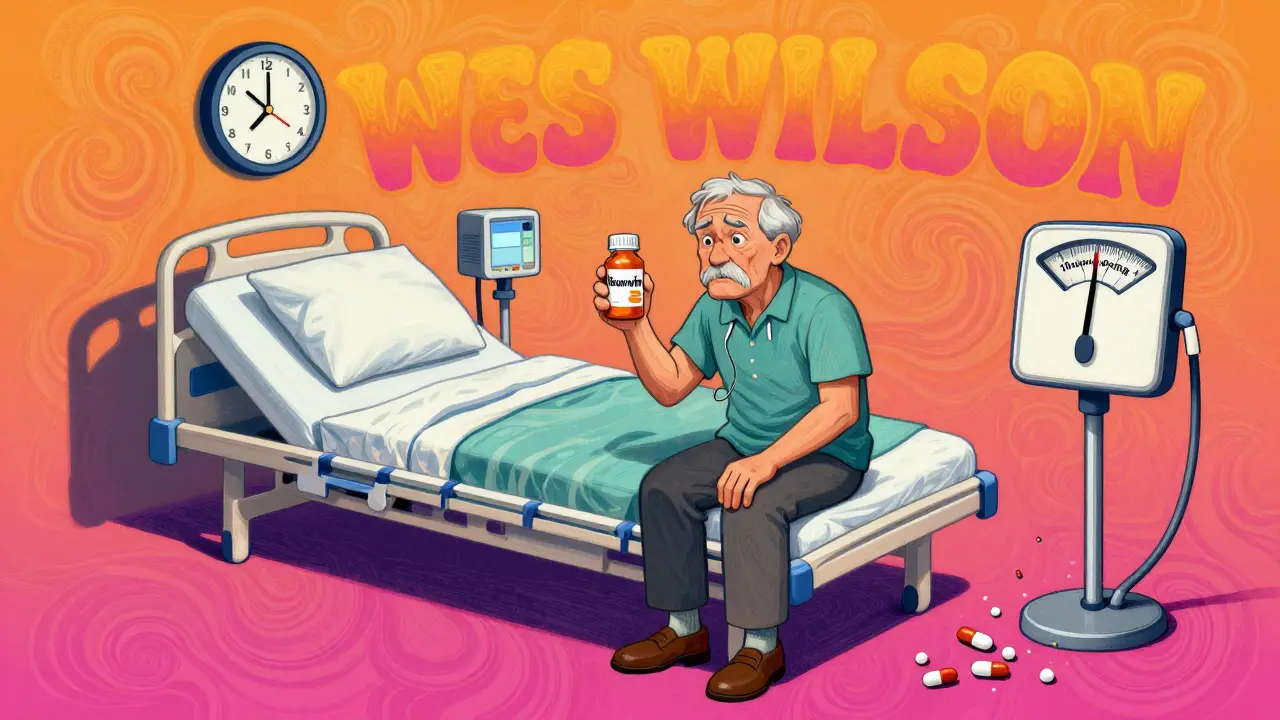
Studies show that within just 24 to 72 hours of taking an NSAID, heart failure patients can gain several pounds of fluid. One patient on Reddit reported a 10-pound weight gain in three days after taking two 400mg doses of ibuprofen for a backache. That’s not an outlier-it’s a textbook case of NSAID-induced decompensation.
Who’s Most at Risk?
You don’t have to be severely ill to be at risk. The biggest danger is in people over 65, those with type 2 diabetes, or anyone with reduced kidney function. These groups often take NSAIDs for arthritis, back pain, or headaches. But their bodies are already struggling to manage fluid balance. A 2022 study from Denmark followed over 200,000 people with type 2 diabetes and found that even short-term NSAID use (as little as 1-3 days) raised the risk of heart failure hospitalization by up to 88%.
It doesn’t matter if you’re taking a prescription or an OTC pill. Celecoxib (Celebrex), diclofenac, naproxen, and ibuprofen all carry the same risk. Early hopes that COX-2 inhibitors like celecoxib were safer turned out to be wrong. The same 2003 review by Bleumink et al. showed that these drugs affect kidney function just like traditional NSAIDs. In fact, the European Society of Cardiology now says all NSAIDs should be avoided in heart failure patients-no exceptions.
The Numbers Don’t Lie
Let’s look at the data:
- A 2022 study in the European Heart Journal found that NSAID use increased heart failure hospitalization risk by 24% to 88%, depending on the drug and timing.
- The American Heart Association found that 37% of heart failure patients unknowingly took NSAIDs, and 62% of them ended up in the hospital because of it.
- Patients exposed to NSAIDs within 30 days of discharge had a 28% higher chance of being readmitted within 30 days.
- Even after the FDA updated NSAID labels in 2020 to include heart failure warnings, a 2021 survey found that 57% of primary care doctors still didn’t routinely ask heart failure patients about NSAID use.
These aren’t rare side effects. They’re predictable, preventable, and happening every day.
What Happens When You Take NSAIDs?
Imagine your heart as a pump that’s already struggling. Now imagine someone turns up the pressure on the system. That’s what NSAIDs do.
They cause:
- Reduced blood flow to the kidneys (by 20-30% in vulnerable patients)
- Decreased glomerular filtration rate (GFR)-your kidneys’ ability to filter waste
- Increased sodium retention
- Reduced effectiveness of diuretics and blood pressure meds
- Rapid fluid buildup-often within days
Symptoms? Swelling in your ankles, sudden weight gain, shortness of breath, fatigue, or trouble lying flat. These aren’t just annoying-they’re warning signs your heart is failing again.
What Should You Take Instead?
Acetaminophen (Tylenol) is the go-to alternative. It doesn’t affect kidney prostaglandins the way NSAIDs do. It won’t reduce inflammation, but for mild to moderate pain-headaches, muscle aches, joint stiffness-it’s safe and effective.
But even acetaminophen isn’t risk-free. Taking too much can damage your liver, especially if you’re also on other medications. Stick to the lowest dose that works. And never mix it with alcohol.
For inflammation, consider non-drug options:
- Heat or cold packs for sore joints
- Physical therapy or gentle stretching
- Topical pain relievers like menthol or capsaicin creams
- Low-impact exercise like walking or swimming
These won’t replace NSAIDs for everyone-but they’re safer, and they don’t land you back in the hospital.
Why Do People Keep Taking Them?
Because they don’t know any better.
Most people think NSAIDs are harmless. They’re sold next to aspirin and vitamin supplements. Pharmacies don’t require a prescription. Family members often recommend them. One patient told a nurse she took ibuprofen because her daughter said it was “better than Tylenol.”
Doctors don’t always bring it up either. A 2020 study found that 15.7% of heart failure patients were still prescribed NSAIDs within a year of diagnosis. In those with preserved ejection fraction, that number jumped to 22.3%. That’s not negligence-it’s ignorance. Many providers still don’t realize how quickly these drugs can destabilize heart failure.
And it’s not just the elderly. A 2018 survey by the American Heart Association found that younger heart failure patients, even those under 50, were just as likely to use NSAIDs without realizing the danger.
What Should You Do?
If you have heart failure:
- Stop taking NSAIDs unless your doctor specifically says it’s safe (and even then, only for a few days).
- Check every medication you take-prescription, OTC, and supplements. Many cold and flu remedies contain NSAIDs like ibuprofen or naproxen.
- Use acetaminophen for pain. If it doesn’t work, talk to your doctor-don’t self-medicate.
- Monitor your weight daily. A gain of 2 pounds or more in a day, or 5 pounds in a week, is a red flag.
- Teach your family. Spouses, caregivers, and adult children need to know which drugs are dangerous.
It’s not about being perfect. It’s about avoiding the preventable. Every year, thousands of heart failure patients are hospitalized because of something they bought at the pharmacy without a second thought.
The Bottom Line
There is no safe NSAID for heart failure. Not celecoxib. Not naproxen. Not ibuprofen. Not aspirin (at high doses). The European Society of Cardiology, the American Heart Association, and the FDA all agree: avoid them completely.
Fluid retention doesn’t happen slowly. It happens fast. A few days of pain relief can mean weeks in the hospital. A few pills can undo months of careful management.
Your heart is already working too hard. Don’t make it harder.
Can I take ibuprofen if I have heart failure but no symptoms?
No. Even if you feel fine, your heart may still be struggling to manage fluid. NSAIDs can trigger hidden decompensation without obvious warning signs. The risk isn’t based on how you feel-it’s based on your diagnosis. The guidelines are clear: avoid all NSAIDs if you have heart failure, regardless of symptoms.
Is naproxen safer than ibuprofen for heart failure?
Some studies suggest naproxen has a slightly lower cardiovascular risk compared to other NSAIDs, but it still causes fluid retention and kidney stress. The European Society of Cardiology and American Heart Association do not recommend it. Even if the risk is marginally lower, it’s still too high to justify use. Acetaminophen remains the only safe alternative.
What if I need NSAIDs for severe arthritis?
Talk to your cardiologist and rheumatologist. There may be non-NSAID options like corticosteroid injections, physical therapy, or newer disease-modifying drugs. In rare cases, if no alternatives exist and the pain is disabling, a short course of the lowest NSAID dose might be considered-but only with close monitoring, daily weight checks, and no longer than 3-5 days. Never do this without medical supervision.
Can I take aspirin if I have heart failure?
Low-dose aspirin (75-100 mg) for heart protection is generally considered safe in heart failure patients who need it for stroke or heart attack prevention. But higher doses (like 325 mg for pain) act like other NSAIDs and increase fluid retention risk. If you’re taking aspirin for pain, switch to acetaminophen. If you’re on it for cardiovascular reasons, don’t stop without talking to your doctor.
How do I know if an OTC medicine contains NSAIDs?
Always check the “Active Ingredients” section on the label. Look for: ibuprofen, naproxen, diclofenac, ketoprofen, celecoxib, indomethacin, or aspirin (in doses over 81 mg). Many cold, flu, and sleep aids combine these with other ingredients. If you’re unsure, ask a pharmacist or your doctor. Don’t assume “natural” or “herbal” means safe-some herbal supplements also affect kidney function.

Milad Jawabra
This is straight-up life-saving info. I had no idea ibuprofen could wreck your heart like that. My dad’s in HF and he’s been popping Advil like candy for his arthritis. I’m printing this out and taping it to his fridge. No more excuses. 🚫💊
Sharon Lammas
It’s terrifying how often we treat our bodies like machines you can just tweak with a pill. We don’t pause to ask what’s happening beneath the surface. NSAIDs don’t just block pain-they disrupt a delicate, ancient balance. And we call it ‘over-the-counter’ like it’s a candy bar. Maybe we need to stop calling it medicine and start calling it a gamble.
Aisling Maguire
LMAO so the FDA warned us in 2020 and yet 57% of docs still don’t ask? 😂 Classic. My grandma took naproxen for 8 years because her ‘holistic’ chiropractor said it was ‘natural.’ She ended up in ICU with pulmonary edema. Now she uses a heating pad and yells at her cat instead. Win-win.
marjorie arsenault
You’re not alone if you didn’t know this. I didn’t either until my mom got hospitalized after a weekend of ibuprofen for a headache. We all think ‘it’s just a pill.’ But your heart? It’s not just a muscle. It’s your whole life. Start with Tylenol. Talk to your doctor. And tell your family. Seriously. This could save someone’s life. 💙
Deborah Dennis
Wow. Just... wow. 37% of patients didn’t even know they were taking NSAIDs? And you’re surprised they’re hospitalized? Who’s the real villain here? The drug? Or the people who think ‘over-the-counter’ means ‘no consequences’? This isn’t medical negligence-it’s societal ignorance. And it’s killing people.
Raman Kapri
I find it ironic that in the West, we treat pain as an enemy to be eradicated, while in many Eastern traditions, pain is seen as a signal. Perhaps the issue is not the NSAIDs themselves, but the cultural obsession with instant relief. Pain is information. Suppressing it without understanding its source is like silencing a smoke alarm.
Divya Mallick
Why is this even a debate? In India, we’ve seen this for decades-people take 400mg ibuprofen daily for back pain, then end up with kidney failure. It’s not science. It’s capitalism. Pharma companies sell these like candy. Doctors? They’re paid to prescribe. Patients? They’re told ‘it’s safe.’ Wake up. This isn’t medicine. It’s exploitation disguised as care.
Pankaj Gupta
The data presented here is both compelling and alarming. It is crucial to recognize that the physiological mechanisms underlying NSAID-induced fluid retention are well-documented in nephrology literature. The inhibition of renal prostaglandins leads to afferent arteriolar vasoconstriction, which reduces glomerular perfusion pressure. In the context of compromised cardiac output, this creates a vicious cycle. The recommendation to avoid NSAIDs is not merely precautionary-it is physiologically imperative.
Alex Brad
Tylenol. Not NSAIDs. Simple. Don’t overthink it.
Renee Jackson
Thank you for sharing this vital information with such clarity and compassion. It is deeply concerning that so many individuals remain unaware of the profound risks associated with seemingly innocuous medications. We must advocate for systemic changes in patient education, pharmacist training, and physician protocols to ensure that no one is left vulnerable to preventable harm. Your work is making a difference.
RacRac Rachel
I just shared this with my entire family 😍 My mom has HF and she’s been using Motrin since 2018. I’m so glad I found this before it was too late. We’re switching to Tylenol, trying heat packs, and I’m signing her up for physical therapy next week. You’re a lifesaver! 🙌❤️
Jane Ryan Ryder
So let me get this straight-people are dying because they bought painkillers at Walmart? Wow. What a country. We’ve turned healthcare into a vending machine. Next up: ‘How to die faster with OTC sleep aids.’
Callum Duffy
This is an exemplary summary of a critical clinical issue. The evidence base is robust, the implications are profound, and the call to action is both urgent and ethically unambiguous. That such a preventable cause of hospitalization persists speaks less to medical failure and more to systemic communication breakdowns. Perhaps the next step should be mandatory patient counseling at point-of-sale for all OTC NSAIDs in high-risk populations.