
Blood Thinner Missed Dose Guide
Recommended Action:
Note: This tool is for informational purposes based on general guidelines. Always verify with your healthcare provider or clinic.
First, it's helpful to understand what these drugs actually do. They are generally split into two camps: Anticoagulants (which slow down the clotting process) and Antiplatelet agents (like aspirin, which stop platelets from sticking together). They don't literally make your blood thinner in consistency; they just reduce the body's ability to form a clot. Because different drugs stay in your system for different lengths of time-a property called a half-life-the rules for a missed dose change depending on your prescription.
Immediate Steps for Different Medications
The most important rule, regardless of what you are taking, is this: Never double up on doses to make up for a missed one. Taking two doses at once drastically increases your risk of internal bleeding, which can be just as dangerous as a blood clot.
If you are taking Warfarin (known by brands like Coumadin), you have a bit more leeway because it has a long half-life (about 20 to 60 hours). If you remember the missed dose within 12 hours, go ahead and take it. However, if it's been more than 12 hours or you've reached the next day, skip that dose entirely. Some clinics suggest that if you remember before midnight, you can still take it, but after midnight, you should move on to the next day's dose and call your clinic to let them know.
For those on DOACs (Direct Oral Anticoagulants) like Apixaban (Eliquis), Rivaroxaban (Xarelto), or Dabigatran (Pradaxa), the window is much tighter. These drugs leave your system faster (Apixaban, for instance, has a half-life of only 8 to 15 hours). If you miss a dose of Eliquis, take it as soon as you remember on the same day. But be careful: if you are within 6 hours of your next scheduled dose, it's usually safer to skip the missed one and get back on your regular track the following day.
| Medication Type | Typical Half-Life | Action for Missed Dose | Critical Warning |
|---|---|---|---|
| Warfarin | 20-60 Hours | Take if remembered within 12 hours; otherwise skip. | Requires regular INR blood tests. |
| DOACs (e.g., Eliquis) | 8-15 Hours | Take as soon as remembered on the same day. | Higher risk if adherence drops below 80%. |
| Antiplatelets (Aspirin) | Short | Follow specific doctor's guidance. | Contact provider if multiple doses are missed. |
When a Missed Dose Becomes an Emergency
Missing one dose might not cause an immediate crisis, but it does increase your risk. For people with atrial fibrillation, the annual stroke risk without these meds can range from 1.5% to 6.6%. You need to know how to spot the warning signs that a clot has formed or that you're bleeding internally. This is where you stop managing at home and start seeking urgent medical care.
Seek immediate help if you experience any of the following:
- Neurological changes: Sudden severe headaches, dizziness, or confusion, which could signal bleeding in the brain.
- Respiratory distress: Unexpected shortness of breath or chest pain, which can be a sign of a pulmonary embolism (a clot in the lungs).
- Visual cues of bleeding: Red or brown discoloration in your urine, or stools that look black and tarry (a sign of GI bleeding).
- Physical trauma: If you fall or hit your head, call your doctor immediately. Even a minor bump can cause a major internal bleed when you're on anticoagulants.
- Skin changes: Unexplained or excessive bruising that appears without a clear cause.

Managing the Paperwork and Reporting
Your doctor needs to know if you've missed doses, even if you feel fine. For those on Warfarin, this is where your "yellow book" (Anticoagulant Record) becomes vital. Write down the date and the dose you missed. When you go in for your INR testing (the blood test that measures how long it takes your blood to clot), show this record to the staff. They use this data to adjust your dosage to keep you in the target range, typically between 2.0 and 3.0.
If you've missed more than one dose in a row, don't just try to "catch up." Contact your anticoagulant clinic or primary care provider right away. They may need to perform an immediate blood test or provide a bridging therapy to ensure you aren't at an acute risk of stroke or deep vein thrombosis (DVT).
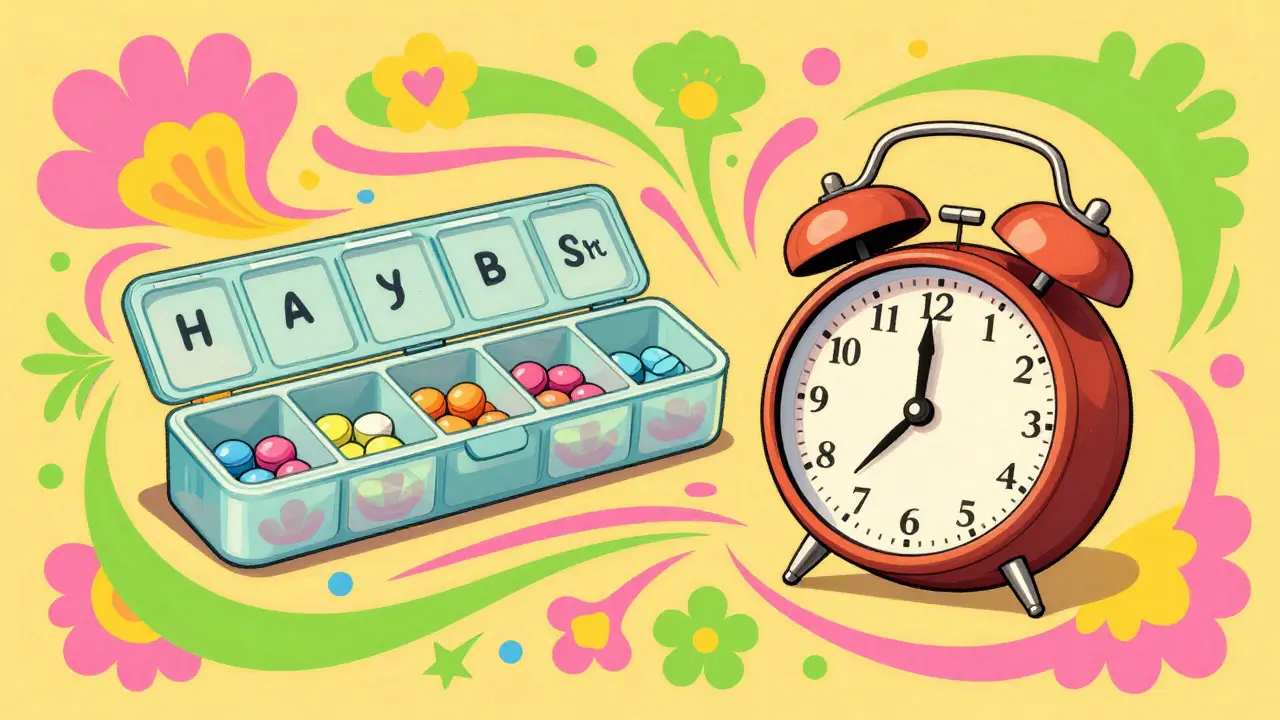
Strategies to Stop Missing Doses
Since missed doses account for up to 25% of adverse events in anticoagulant patients, building a fail-safe system is the best way to protect yourself. Reliance on memory is a risky strategy when your health depends on a daily pill.
Try these practical habits to stay on track:
- The Pill Organizer: Use a weekly pill box with morning and evening slots. A quick glance at the box tells you exactly if you've taken your medicine today.
- Digital Reminders: Set a recurring alarm on your phone. Don't dismiss the alarm until the pill is actually in your mouth.
- Anchor Habits: Pair your medication with a daily activity you never skip, like brushing your teeth or feeding the dog.
- Prescription Buffers: Never wait until you have one pill left to refill. Set a calendar alert for five days before your medication runs out to avoid gaps in treatment.
What happens if I miss one dose of a blood thinner?
While one missed dose may not always cause a problem, it can increase your risk of blood clots, deep vein thrombosis (DVT), or stroke. The level of risk depends on your medical condition (like atrial fibrillation) and the specific drug you are taking. You should follow the specific timing guidelines for your medication and notify your doctor.
Can I take a double dose to make up for a missed one?
No. You should never take a double dose of blood thinners. Doubling the dose significantly increases the risk of dangerous internal bleeding, which can be life-threatening. Always follow the "skip or take" rules based on the hours passed since your missed dose.
How do I know if I'm having a complication from a missed dose?
Watch for signs of clots, such as sudden shortness of breath or swelling in one leg. Also, watch for signs of bleeding, such as black tarry stools, red/brown urine, or unexplained bruising. Any sudden severe headache or dizziness requires immediate emergency attention.
Why is the rule different for Warfarin vs. Eliquis?
It comes down to the drug's half-life. Warfarin stays in your system much longer (up to 60 hours), meaning a single missed dose doesn't drop your protection levels as quickly. DOACs like Eliquis leave the body much faster, making the timing of each dose more critical to prevent a gap in protection.
Should I stop taking my blood thinners if I'm bleeding slightly?
Never stop taking your blood thinners without medical supervision. Stopping these medications abruptly significantly increases your risk of a stroke. If you notice unusual bleeding, contact your healthcare provider immediately to adjust your dose or check your INR levels.
Next Steps and Troubleshooting
If you've just realized you missed a dose, your first move is to check the clock. For DOACs, if it's the same day, take it now. For Warfarin, check if you are within the 12-hour window. Once that's settled, document the event in your record book or a notes app on your phone.
If you find yourself missing doses frequently-more than once a month-it's time to change your system. Discuss this with your pharmacist; they can often suggest the best type of pill organizer or even help you set up a medication synchronization program where all your prescriptions are refilled on the same day. If you are struggling with the side effects of a specific blood thinner, don't just skip doses; talk to your doctor about switching to a different agent that might be easier for you to manage.

dwight koyner
The distinction between anticoagulants and antiplatelets is a crucial point for patients to grasp, as it dictates the urgency of the response to a missed dose. I would further emphasize that patients should always maintain a current list of all supplements they are taking, as some herbal products like St. John's Wort or Ginkgo Biloba can interact significantly with these medications and alter their efficacy.
Nathan Kreider
This is such a helpful guide! It really takes the stress away knowing there are clear steps to follow if you make a mistake. We all forget things sometimes, and it's okay!
Benjamin cusden
The table is a rudimentary simplification of pharmacokinetics. While useful for the layman, the nuanced interaction between vitamin K intake and Warfarin efficacy is conspicuously absent from this discussion. One cannot simply 'skip a dose' without considering the dietary fluctuations of the previous forty-eight hours.
jack hunter
why do people even take these things lol just let the blood clot naturally its what the body wants to do anywyas these meds just mess with your internal balance and make u a slave to a pill box
Victoria Gregory
Oh wow, this is so important!!! 💖 I love the idea of anchor habits... I'm going to try pairing my meds with my morning coffee! ☕️✨ Stay safe everyone!!! 🌸
Windy Phillips
It is truly fascinating how some individuals manage to be so careless with their own survival... one would think that a life-threatening condition would instill a basic level of discipline, but apparently, that is too much to ask from some people!!!
Timothy Burroughs
Only in this country do people need a whole manual just to remember to swallow a pill! Absolute disaster how we handle healthcare here man just get it together
Christopher Cooper
The suggestion about the pharmacist's synchronization program is a game changer. I've actually found that using a smartphone app with a 'snooze' function that repeats every fifteen minutes until the dose is confirmed is far more effective than a standard alarm for those of us who tend to sleep through the first bell.
Daniel Trezub
Actually, the 12-hour window for Warfarin is a bit arbitrary depending on the patient's specific INR trend. Some people can miss a whole day and stay perfectly in range, while others swing wildly. It's not as one-size-fits-all as this guide makes it seem, though I guess it's fine for a general overview.
charles mcbride
I believe focusing on the positive habits mentioned here will really help a lot of people regain control of their health. It is wonderful to see such practical solutions provided for a stressful situation.
Jitesh Mohun
stop complaining and just use the pill box man its not hard just be disciplined and follow the rules or dont complain when things go wrong
Laurie Iten
there is a certain irony in trying to control the flow of life with a chemical timer... the body knows its rhythm even if we forget the schedule
Alexander Idle
I must say, the sheer audacity of expecting a person to maintain a 'yellow book' in this digital age is simply laughable. Who in their right mind is carrying around a physical diary for their medications? This is absolutely prehistoric and frankly a joke!
Stephen Luce
I completely get how scary it is when you realize you've missed a dose. That heart-sink feeling is real. Just take a deep breath and follow the guide, you've got this.
Sarabjeet Singh
Keep going everyone. Small changes in your routine can make a huge difference. Just stay consistent and stay healthy!