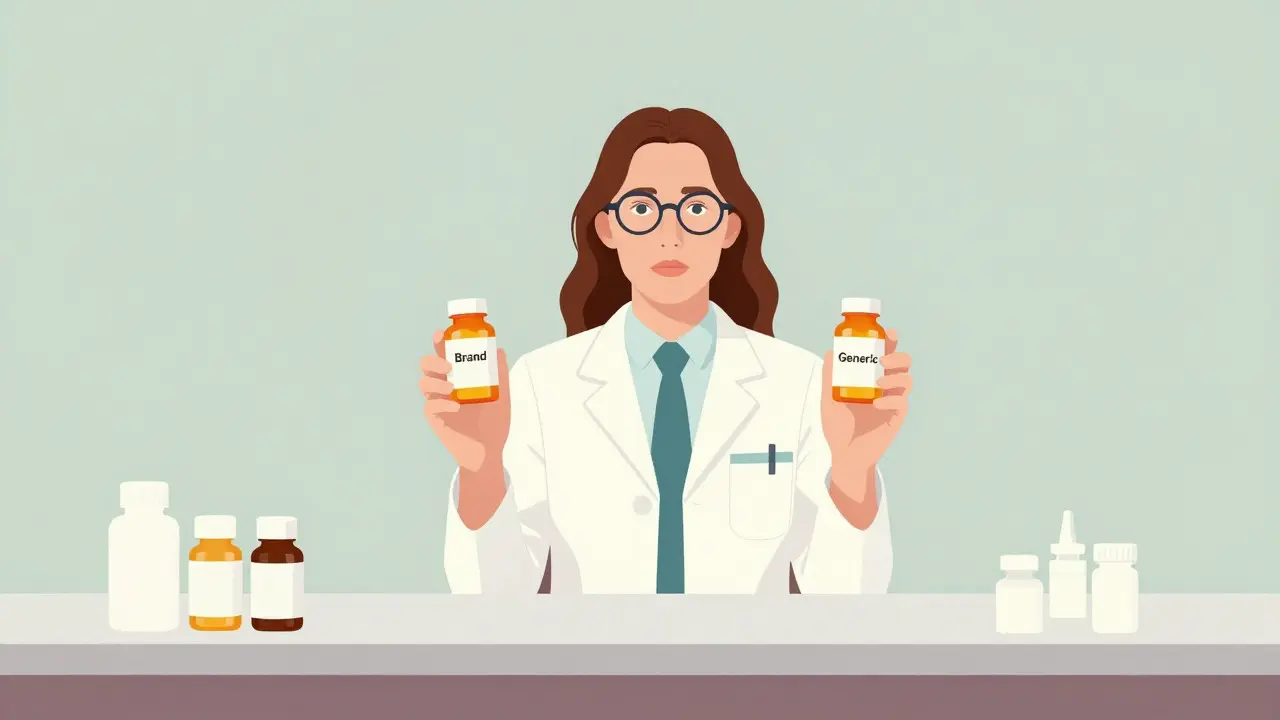
Imagine your life depends on hitting a bullseye with a dart thrown from across the room. Now imagine that same task, but you are blindfolded and someone keeps changing the weight of the dart. That is essentially what happens when patients take Narrow Therapeutic Index (NTI) drugs, which are medications where small differences in dose or blood concentration may lead to serious therapeutic failures or adverse drug reactions. For most medicines, a slight variation in how much drug gets into your bloodstream doesn’t matter much. But for NTI drugs, that tiny gap between "working perfectly" and "causing harm" is razor-thin.
You have likely been told by your insurance company or pharmacist that switching to a generic version saves money. And it does-often cutting costs by 30% to 85%. But should you stay on the brand-name version if you are stable? The answer isn't a simple yes or no. It depends on which drug you take, how sensitive your body is, and whether you are willing to trade extra cash for peace of mind. Let’s break down the science, the risks, and the real-world experiences to help you decide.
What Makes an NTI Drug Different?
Not all generics are created equal, and not all drugs need the same level of precision. The U.S. Food and Drug Administration (FDA) defines NTI drugs as those where minor changes in blood levels can trigger toxicity or treatment failure. Think of medications like levothyroxine (used for thyroid issues), warfarin (a blood thinner), tacrolimus (for transplant patients), and certain anti-seizure meds like phenytoin.
For standard drugs, the FDA allows generic versions to have bioequivalence within an 80% to 125% range compared to the brand. This means the generic could deliver slightly less or slightly more of the active ingredient than the brand, and it is still considered safe. However, since 2014, the FDA has tightened these rules for NTI drugs. They now use "scaled" bioequivalence limits, often narrowing the acceptable range to 90%-111%, depending on how variable the reference drug is. Despite this, a 10% difference can still be significant for someone whose body operates on the edge of the therapeutic window.
The Cost Argument: Why Everyone Pushes Generics
Let’s talk numbers, because money is usually the primary driver here. Brand-name levothyroxine (Synthroid) can cost anywhere from $30 to $60 per month out-of-pocket, while generic versions often run between $4 and $15. For warfarin, the savings are even starker, with studies showing thousands of dollars saved per patient over time. Insurance companies love this. In fact, many policies now require prior authorization just to get the brand name, forcing you to pay the full price difference if you insist on staying with Synthroid or Coumadin.
This financial pressure is why about 85% to 90% of NTI prescriptions are filled with generics today. The system is designed to push you toward the cheaper option. But does saving $40 a month justify the risk of a seizure breakthrough, a blood clot, or thyroid imbalance? That is the core question every patient faces.
What Does the Science Say About Safety?
If you look at large-scale studies, the data mostly supports generics. A major FDA-funded study analyzing nearly 18,000 patients found that similar proportions of people on generic versus brand levothyroxine achieved target thyroid levels. Another review of over 3.5 million patients showed analogous clinical outcomes for chronic diseases using generics. Dr. Janet Woodcock, former head of the FDA’s Center for Drug Evaluation and Research, has stated that evidence largely invalidates the idea that brand-name drugs are clinically superior for most conditions.
However, "mostly" leaves room for error. Research on tacrolimus, an immunosuppressant critical for organ transplant recipients, highlights gaps. Some studies show insufficient data to fully support bioequivalence between different generic formulations of tacrolimus. Dr. Robert A. Bies, a pharmacy professor, testified that the conventional bioequivalence limits might not be sufficient for some NTI drugs, noting that plasma concentration fluctuations during switches can lead to serious adverse events. So, while the average person might be fine, the outlier-the person who falls outside the statistical norm-is left vulnerable.
Patient Stories: The Real-World Experience
Statistics tell one story; patient forums tell another. On communities like Reddit’s r/Thyroid, the divide is clear. About 65% of users report successful transitions to generics. But roughly 30% experience problems requiring dose adjustments, and 5% report severe reactions that force them back to the brand immediately. For epilepsy patients, the stakes feel higher. A survey by the Epilepsy Foundation found that 42% of respondents reported seizure breakthroughs after switching to generic antiepileptics. While self-reported data isn't perfect, it reflects a genuine fear among those living with these conditions.
Warfarin users share similar mixed experiences. Most (78%) say they had no issues, but 22% noted instability in their INR (International Normalized Ratio) readings, requiring closer monitoring. These aren't just minor inconveniences; for a blood thinner user, unstable INR means a higher risk of stroke or bleeding. If you are one of those 22%, the generic savings vanish quickly against the cost of emergency care and anxiety.
| Feature | Brand-Name NTI Drug | Generic NTI Drug |
|---|---|---|
| Cost | High ($30-$60+/month) | Low ($4-$15/month) |
| Bioequivalence Range | Reference Standard (100%) | Tighter limits (90%-111% typically) |
| Consistency | Same manufacturer, same process | May vary by manufacturer/batch |
| Insurance Coverage | Often requires prior auth | Usually automatic approval |
| Risk Profile | Lower variability risk | Small risk of therapeutic fluctuation |
When Should You Stick with the Brand?
There is no universal rule, but certain scenarios strongly suggest staying on the brand name. First, if you have been stable on a specific brand for years, do not switch without a compelling reason. Stability is king in NTI management. Second, if you have a history of sensitivity to medication changes, such as frequent dose adjustments or side effects when switching manufacturers, the brand offers predictability.
Third, consider your condition's severity. If a missed therapeutic window leads to catastrophic outcomes-like organ rejection in transplant patients or status epilepticus in seizure disorders-the premium for the brand is an insurance policy. Finally, check your state laws. About 28 states have restrictions on automatic substitution for NTI drugs, requiring pharmacist consultation. Use this to your advantage. Ask your pharmacist if they can source from a consistent generic manufacturer. Sometimes, the issue isn't generic vs. brand, but Generic Manufacturer A vs. Generic Manufacturer B.
Practical Steps for Managing Your Medication
If you decide to try the generic, or if your insurance forces the switch, don't just swallow the pill and hope for the best. Take control of the transition. Always consult your healthcare provider before making any changes. Request therapeutic drug monitoring for 4 to 8 weeks after the switch. For levothyroxine, this means checking TSH levels more frequently. For warfarin, it means tighter INR checks. Keep a symptom diary. Note any new fatigue, mood swings, bleeding, or tremors.
Also, verify the manufacturer. Pharmacists can often order from a specific generic supplier. If you find a generic that works well, ask your doctor to write "Dispense As Written" or specify the manufacturer on future prescriptions to prevent unexpected swaps. This small step can maintain consistency without paying brand prices.
The Future of NTI Drug Regulation
The landscape is evolving. The FDA launched an NTI Drug Registry in 2023 to collect real-world evidence on substitution outcomes. Additionally, the Agency for Healthcare Research and Quality (AHRQ) is funding a multi-year study tracking 50,000 patients to compare brand and generic outcomes directly. Experts predict that by 2025 and beyond, we will see more personalized guidelines. Instead of blanket recommendations, decisions will be based on individual patient factors like genetic metabolism profiles and historical response data. Until then, the choice remains yours, guided by data, cost, and personal risk tolerance.
Is it safe to switch from brand-name levothyroxine to generic?
For most patients, yes. Large studies show similar success rates in achieving target thyroid levels. However, about 30% of patients may need dose adjustments, and a small percentage experience significant issues. Close monitoring of TSH levels for several months after switching is essential to ensure stability.
Do generic NTI drugs work as well as brand names?
Generally, yes. The FDA requires generics to meet strict bioequivalence standards, often tighter for NTI drugs (90-111% range). While statistically equivalent for the population, individual responses can vary due to differences in inactive ingredients or manufacturing processes, potentially affecting absorption in sensitive individuals.
Can my insurance force me to take a generic NTI drug?
Yes, many insurance plans automatically substitute generics to save costs. To stay on the brand, you may need a "Prior Authorization" from your doctor, proving medical necessity. Without this, you might have to pay the full price difference between the generic and brand out-of-pocket.
Which drugs are considered Narrow Therapeutic Index (NTI)?
Common NTI drugs include levothyroxine (thyroid), warfarin (blood thinner), tacrolimus (immunosuppressant), phenytoin and carbamazepine (anti-seizure), lithium (mood stabilizer), and digoxin (heart medication). These drugs have a very small margin between effective dose and toxic dose.
Should I monitor my levels after switching to a generic NTI drug?
Absolutely. Clinical guidelines recommend therapeutic drug monitoring for 4 to 8 weeks after any substitution. For example, warfarin users need frequent INR checks, and thyroid patients need TSH tests. This ensures the new formulation is working correctly for your specific body chemistry.
