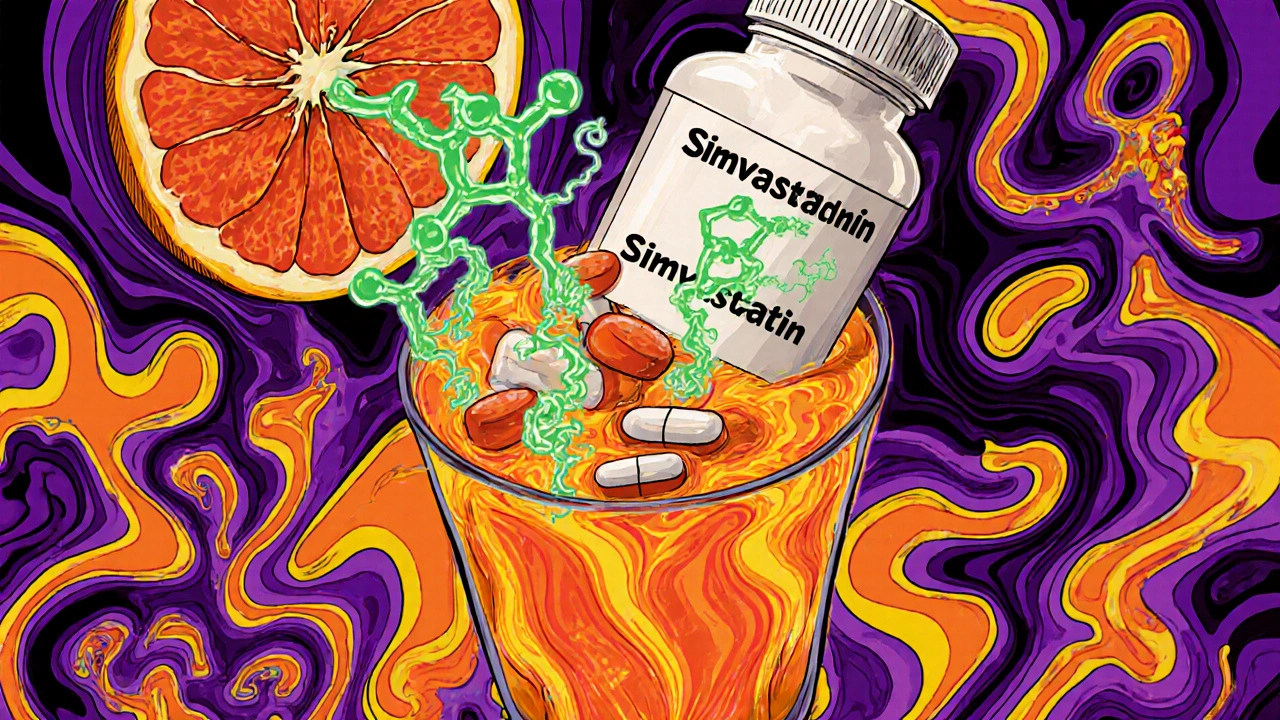
One glass of grapefruit juice in the morning might seem harmless-maybe even healthy. But if you're taking certain medications, that glass could be dangerous. It’s not just a myth or a warning on a label you ignore. Grapefruit juice can change how your body handles drugs, sometimes turning a safe dose into a toxic one. And the worst part? You might not know you’re at risk until it’s too late.
Why Grapefruit Juice Interacts with Medications
Grapefruit juice doesn’t just mix with drugs-it interferes with your body’s ability to break them down. The culprit? Furanocoumarins, natural chemicals found in grapefruit, especially in the pulp and peel. These compounds shut down an enzyme in your gut called CYP3A4. This enzyme normally acts like a gatekeeper, breaking down about half of all oral medications before they enter your bloodstream.
When CYP3A4 is blocked, more of the drug slips through untouched. That means your body absorbs way more of the medicine than intended. A drug meant to be at 10 mg in your blood might end up at 30 mg or higher. That’s not just stronger-it’s risky. Toxic levels can lead to kidney damage, heart rhythm problems, muscle breakdown, or even sudden death.
Unlike most drug interactions that happen when you take two things at the same time, grapefruit’s effect lasts for days. One 200-milliliter glass (about 6.7 ounces) can reduce enzyme activity by nearly half within four hours. And because your body needs 24 to 72 hours to rebuild those enzymes, even taking your medication hours after drinking grapefruit juice won’t help. The interaction sticks around.
Which Medications Are Most at Risk?
More than 85 prescription drugs have documented interactions with grapefruit juice. Not all are equally dangerous, but some can be deadly. Here are the biggest red flags:
- Statins (cholesterol drugs): Simvastatin (Zocor) is the worst offender. Just one glass of grapefruit juice daily for three days can triple your blood levels of this drug. That spikes your risk of rhabdomyolysis-a condition where muscle tissue breaks down and can cause kidney failure. Atorvastatin (Lipitor) has a milder interaction, but pravastatin and rosuvastatin are safe alternatives.
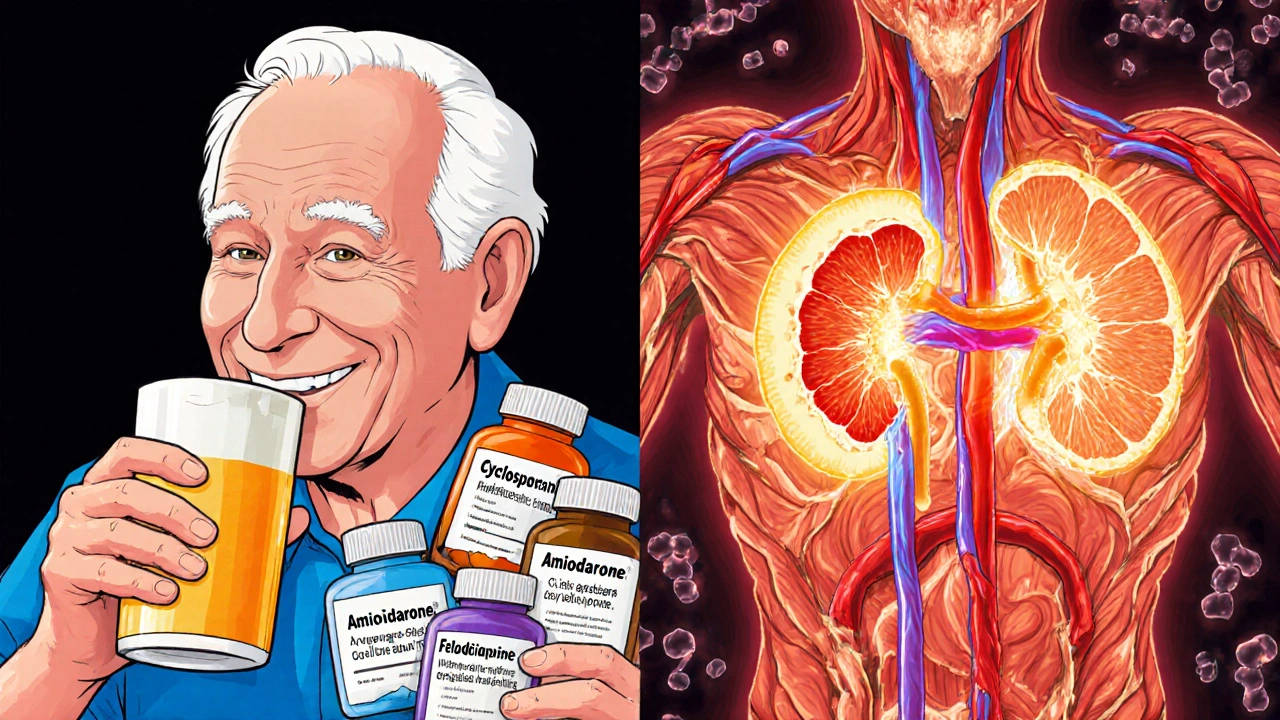
- Calcium channel blockers (blood pressure meds): Felodipine (Plendil) sees a fivefold increase in blood concentration with grapefruit. Nifedipine (Procardia) jumps by 3.3 times. But amlodipine (Norvasc)? No significant effect. The difference matters when choosing a long-term treatment.
- Immunosuppressants: Cyclosporine (Neoral), used after organ transplants, can increase exposure by 50-60%. That raises the risk of severe kidney damage. Tacrolimus is a safer option for transplant patients who want to keep drinking grapefruit juice.
- Antiarrhythmics: Amiodarone (Cordarone) can lead to dangerous heart rhythms when combined with grapefruit. Even a small increase in blood levels can trigger ventricular tachycardia.
- Some psychiatric drugs: Certain antidepressants and sedatives like triazolam (Halcion) are affected. But others, like trazodone and zolpidem, show little to no interaction.
Not every drug on this list will affect everyone the same way. One person might drink grapefruit juice with simvastatin and feel fine. Another might end up in the ER. Why? Genetics. Some people naturally have more CYP3A4 enzymes in their gut than others. That means they break down drugs faster-and grapefruit hits them harder. There’s no test to find out if you’re in the high-risk group. So if your drug is on the list, assume you are.
What About Other Citrus Fruits?
Not all citrus is the same. Seville oranges (used in traditional marmalade) and pomelos contain the same furanocoumarins as grapefruit. So if you’re avoiding grapefruit for drug safety, skip those too.
But sweet oranges-like navel or Valencia-and lemons? They’re safe. They don’t have enough of the bad chemicals to cause problems. Limes? Most common limes (Persian limes) are fine. But bitter limes, like those used in some tropical drinks, might pose a risk. When in doubt, check the label or ask your pharmacist.
How to Stay Safe
If you’re on medication, here’s what you need to do:
- Check your meds. Look at the patient information leaflet that comes with your prescription. If it says “avoid grapefruit,” take it seriously. You can also ask your pharmacist to review your full list of medications-prescription, over-the-counter, and supplements.
- Don’t assume timing helps. Taking your pill in the morning and grapefruit juice at night? Doesn’t matter. The enzyme inhibition lasts up to three days. Avoid it entirely while you’re on the drug.
- Ask about alternatives. If you love grapefruit and you’re on simvastatin, ask your doctor about switching to pravastatin or rosuvastatin. No grapefruit risk. Same for blood pressure meds: amlodipine is a safer pick than felodipine.
- Be extra careful if you’re over 65. Older adults are more likely to be on multiple medications and more likely to drink grapefruit juice daily. They’re also more vulnerable to side effects. About 40% of grapefruit consumers in the U.S. are over 65, according to USDA data.
- Don’t rely on memory. A 2022 survey found only 38% of patients recalled being warned about grapefruit interactions when they got their prescription. Write it down. Put it on your phone. Tell someone you live with.
What If You’ve Already Drank It?
If you accidentally drank grapefruit juice while on a risky medication, don’t panic. But do pay attention.
Watch for signs of overdose: unexplained muscle pain or weakness (especially with statins), dizziness, irregular heartbeat, nausea, or sudden fatigue. If you notice any of these, call your doctor or go to urgent care. Don’t wait.
For most people, one accidental glass won’t cause disaster-especially if it’s a low-risk drug like atorvastatin. But if you’re on cyclosporine, amiodarone, or simvastatin, even one glass can be enough to tip the scale. Better safe than sorry.
What’s Changing in the Future?
Scientists aren’t ignoring this problem. In October 2023, the USDA announced that CRISPR-edited grapefruit with 90% less furanocoumarin had passed early safety tests. If approved, these “safe grapefruits” could hit the market in the next few years. Until then, stick with the rules.
Drug makers are also required now to test new oral medications for grapefruit interactions during development. The FDA and European Medicines Agency both mandate this testing. That means fewer new drugs will slip through with hidden dangers.
But awareness still lags. Even though 76% of affected drug labels now say “avoid grapefruit,” most patients never read them. Pharmacists screen for this interaction in 89% of cases-but only if you tell them what you’re taking.
Bottom Line: When in Doubt, Skip It
Grapefruit juice isn’t evil. It’s full of vitamin C and antioxidants. But for people on certain medications, it’s a silent threat. You can’t predict who will react badly. You can’t time it safely. You can’t rely on your memory.
The only reliable strategy? Avoid it completely if your drug is on the list. Talk to your doctor or pharmacist. Get a list of your meds. Ask: “Does this interact with grapefruit?”
It’s not about giving up a healthy drink. It’s about protecting your health. One glass might seem small. But for some drugs, it’s the difference between feeling fine and ending up in the hospital.
Can I drink grapefruit juice if I take a statin?
It depends on the statin. Simvastatin (Zocor) and lovastatin (Mevacor) are dangerous with grapefruit juice-avoid them completely. Atorvastatin (Lipitor) has a mild interaction, so occasional small amounts may be okay, but it’s still risky. Pravastatin (Pravachol) and rosuvastatin (Crestor) don’t interact with grapefruit at all. If you love grapefruit, ask your doctor to switch you to one of these safer options.
How long does grapefruit juice affect my medications?
The effect lasts 24 to 72 hours after you drink it. That’s because grapefruit juice permanently disables the CYP3A4 enzyme in your gut, and your body needs that long to make new enzymes. Even if you take your medication hours later-or the next day-the interaction still happens. That’s why experts say you must avoid grapefruit entirely while on affected drugs, not just around the time you take your pill.
Are all grapefruit products the same?
No. Fresh-squeezed grapefruit juice has the highest concentration of furanocoumarins. Pasteurized juice, frozen concentrate, and whole fruit all contain them too, but in slightly lower amounts. Grapefruit supplements, extracts, or powders can be even more concentrated and pose a higher risk. Avoid all forms if your medication is affected.
Can I drink orange juice instead?
Yes-sweet oranges like navel or Valencia are safe. They don’t contain the furanocoumarins that cause the interaction. Lemon and lime juice (Persian limes) are also safe. But avoid Seville oranges (used in marmalade) and pomelos-they have the same harmful chemicals as grapefruit.
Why don’t all doctors warn patients about this?
Many do-but not all. A 2022 survey found only 38% of patients remembered being warned. Doctors are busy, and grapefruit interactions aren’t always top of mind during a short appointment. Pharmacists are better at catching this-they screen for it in 89% of cases. Always ask your pharmacist when you pick up a new prescription. Bring a list of everything you take, including supplements and what you eat regularly.

gina rodriguez
Just learned this the hard way last year. My dad was on simvastatin and loved his morning grapefruit. Didn’t realize it was dangerous until he ended up in the ER with muscle pain. Now he switches to oranges and feels way better. Always check with your pharmacist - they know more than you think.
Sue Barnes
People still drink grapefruit juice with statins? 🤦♀️ I swear, half the population thinks medical advice is optional. If your label says ‘avoid,’ don’t be the person who turns a 10mg dose into a 30mg nightmare. You’re not special. The enzyme doesn’t care how ‘healthy’ you think you are.
jobin joshua
Brooo 😱 I drink grapefruit juice every day with my blood pressure meds… 😅 I just found out I’m on felodipine. I’m gonna switch to orange juice rn 😅🙏
Sachin Agnihotri
Wow, this is so important - I had no idea the effect lasted for days! I always thought if I waited a few hours, I’d be fine. Turns out, even my evening glass was still risky. I’ve switched to lemon water now - tastes fine, no worries. Also, psa: if you’re on cyclosporine, please, please, please talk to your doctor. This isn’t something to gamble with.
Diana Askew
They’re hiding this on purpose. Big Pharma doesn’t want you to know you can replace expensive meds with cheap fruit. Why do you think they don’t put warning labels on the juice? It’s all about profit. And now they’re engineering ‘safe’ grapefruit? That’s just a distraction. Don’t trust them. Go organic. Eat whole fruit. Question everything.
Andrea Jones
So let me get this straight… I can drink orange juice, but not grapefruit… but if I’m in Mexico and accidentally get a ‘jugo de toronja’… I’m basically signing a death warrant? 😅 Well, I guess that’s why I’m not going to Mexico anymore. Just kidding. But seriously - I’m switching to apples now. Safer, tastier, and doesn’t require a PhD in pharmacology to enjoy.
Justina Maynard
Interesting how the interaction is so persistent - 24 to 72 hours. That’s longer than most people’s attention spans. It’s not just about avoiding grapefruit; it’s about retraining your habits. I used to have it with breakfast. Now I have it on weekends, and only if I’m not taking anything. It’s a small price to pay for not ending up in the hospital. Also, Seville oranges? I had no idea. Now I know why my marmalade tastes… different.
Evelyn Salazar Garcia
Why do we even care? Americans drink too much juice anyway. Just stop.
Clay Johnson
Human biology is a system of thresholds and failures. CYP3A4 isn’t a gatekeeper - it’s a bottleneck. Grapefruit doesn’t ‘block’ it - it degrades it. The consequence isn’t magic. It’s chemistry. And yet, we treat it like a superstition. The real danger isn’t the fruit. It’s our refusal to understand the systems we depend on.
Jermaine Jordan
This isn’t just a warning - it’s a wake-up call! Millions of people are living with silent risks because they never asked the right question: ‘Does this interact with grapefruit?’ Don’t wait for a crisis. Take control. Talk to your pharmacist. Write it down. Share it with your family. Your life isn’t a gamble - it’s a gift. Protect it like one!
Ifeoma Ezeokoli
I’m from Nigeria and we don’t drink much grapefruit here - but my cousin in Texas told me this story. I showed her this post and she cried because she’d been drinking it with her heart meds for years. We need to spread this info everywhere. Not just in the US. In Africa, in Asia, everywhere. Knowledge saves lives - especially when no one’s telling you.