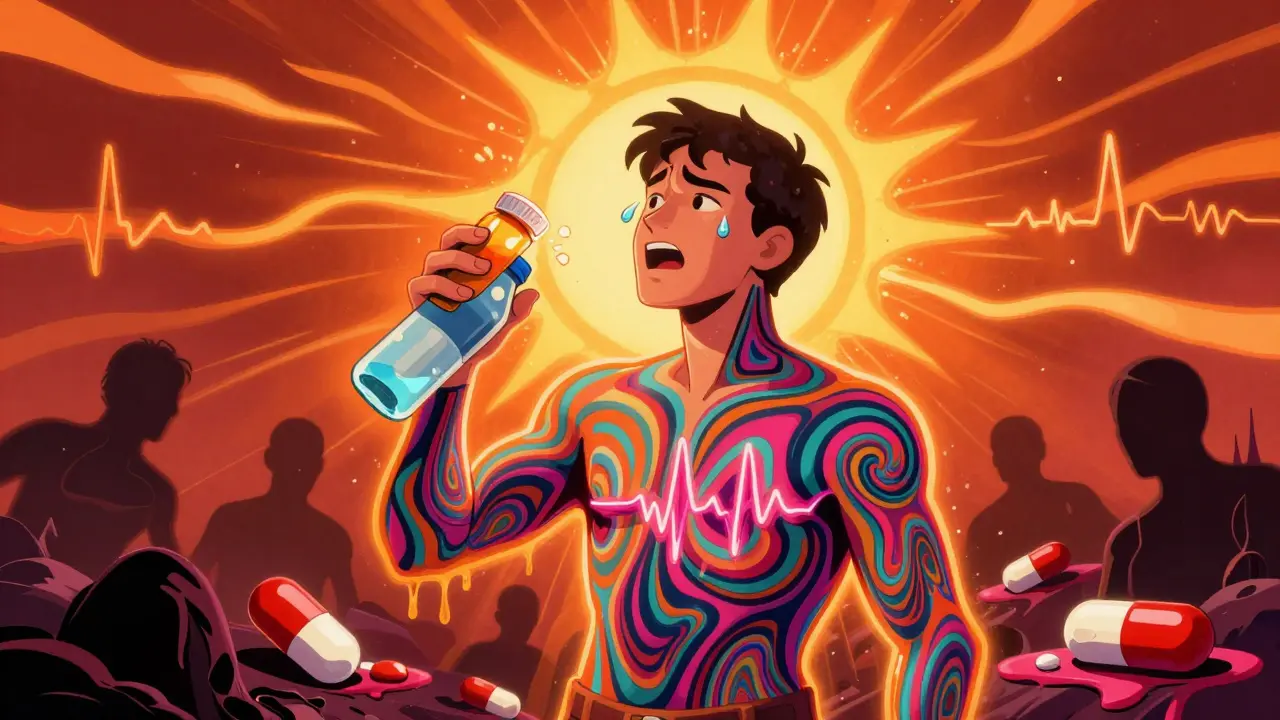
Heatwaves don’t just make you sweaty-they can kill you faster if you use drugs.
When the temperature hits 24°C (75°F) or higher, the risk of an accidental overdose spikes-especially for people using stimulants like cocaine, methamphetamine, or even opioids. It’s not just about dehydration. It’s about your body losing its ability to cope. Your heart is already working harder. Your brain’s judgment is clouded. And if you’re homeless, or on medication for mental health, or just trying to get through another day-you’re not just at risk. You’re in danger.
In Melbourne, where summer temperatures regularly climb past 30°C, this isn’t theoretical. In 2022, emergency services saw a 22% jump in overdose calls during heat advisories. The same pattern shows up in New York, Philadelphia, and Phoenix. It’s happening everywhere. And most people don’t know why.
Why heat makes drugs more dangerous
Your body is a finely tuned machine. When it gets hot, it tries to cool down by sweating, increasing blood flow to your skin, and raising your heart rate. That’s normal. But if you’re using drugs, your body is already under stress.
Stimulants like cocaine and meth push your heart rate up by 30-50%. Heat adds another 10-25 beats per minute. Together, that’s a cardiac overload. Your heart can’t keep up. That’s how people collapse-even if they’ve used the same dose for years.
Dehydration makes it worse. Lose just 2% of your body weight in fluids-about one liter for an average adult-and your blood gets thicker. Drugs concentrate in your bloodstream. What used to be a safe dose suddenly becomes a lethal one. Studies show this can increase drug concentration by 15-20%.
For opioids, heat reduces your body’s ability to compensate for slowed breathing. Normally, your body tries to breathe faster when oxygen drops. Heat shuts that down by 12-18%. You might not even realize you’re suffocating until it’s too late.
And it’s not just street drugs. Medications for depression, anxiety, or psychosis can lose effectiveness-or become more toxic-in extreme heat. Up to 70% of antipsychotics and 45% of antidepressants behave differently when it’s hot. That means someone managing their mental health could suddenly feel worse, use more drugs to cope, and overdose without understanding why.
Who’s most at risk-and why
It’s not random. Certain groups face a perfect storm of risk.
- People experiencing homelessness: Around 38% have substance use disorders. They have no air conditioning, no access to clean water, and often sleep on concrete that radiates heat overnight.
- People on multiple medications: Mixing mental health meds with drugs or alcohol increases heat sensitivity. Many don’t know their meds are making them more vulnerable.
- People in cooler climates: Cities like Seattle or Portland see a steeper rise in overdose deaths during heatwaves than Phoenix or Las Vegas. Why? Their bodies haven’t adapted. They’re less likely to recognize early signs of heat illness.
- People who use alone: Isolation is deadly. If you collapse and no one’s around, no one calls for help.
One study found that 35% of people admitted for heat illness during emergencies also had a substance use disorder. That’s not coincidence. That’s a system failure.
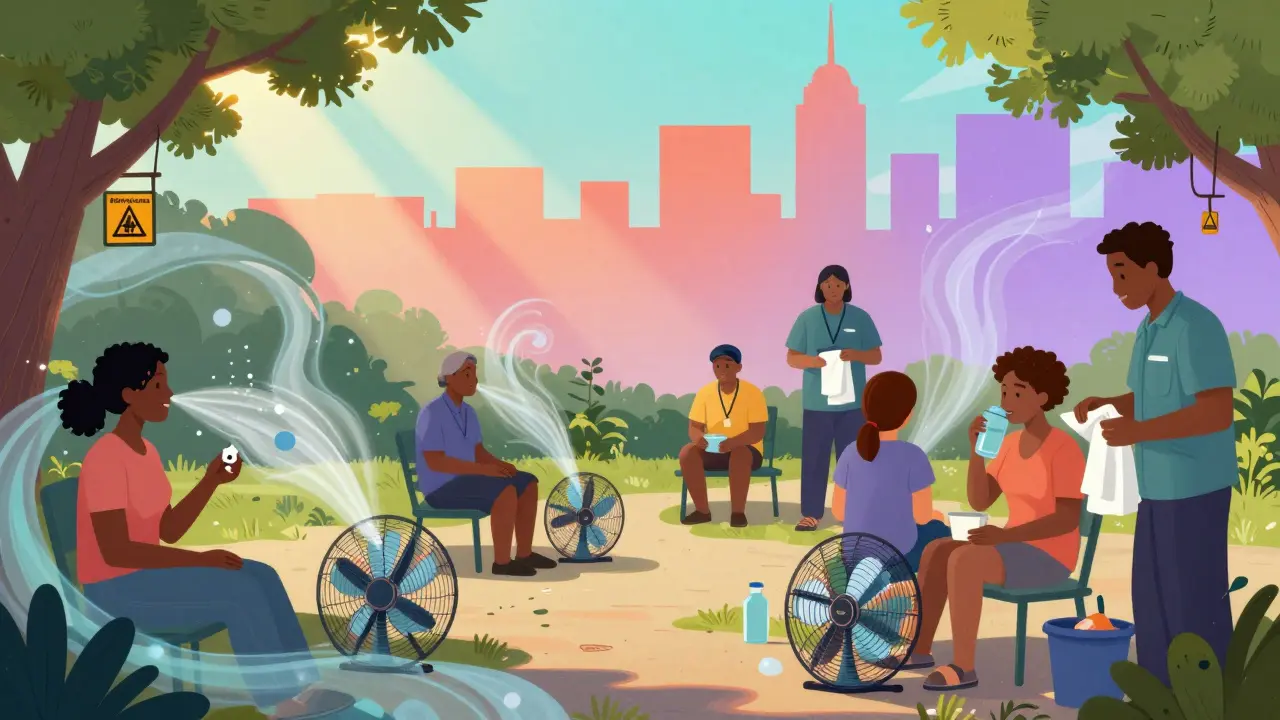
What to do: Practical harm reduction steps
You don’t need to stop using drugs to stay alive. You just need to adjust.
- Reduce your dose by 25-30% when it’s over 24°C. Your body isn’t the same in the heat. What worked last week might kill you today.
- Hydrate constantly. Drink one cup (8 oz) of cool water every 20 minutes-even if you’re not thirsty. Avoid alcohol and caffeine. They make dehydration worse.
- Stay in the shade or air-conditioned spaces. Libraries, community centers, and public pools are safe options. If you’re offered a cooling center, go. It’s not judgment. It’s survival.
- Use with someone. Never use alone. Have a buddy who knows how to use naloxone and can call for help if things go wrong.
- Carry naloxone. It saves lives from opioid overdoses. Keep it with you. Make sure your friends know where it is.
- Wear light clothing and use cooling tools. Misting towels, damp bandanas, and portable fans help. Some harm reduction groups give them out for free.
These aren’t just suggestions. They’re evidence-based. In New York, outreach workers who handed out water and cooling packs saw a 17% drop in heat-related overdose calls. In Vancouver, cooling centers next to supervised injection sites cut overdose deaths by 34% during the 2021 heat dome.
What services are available-and where to find them
Not every city has a plan. But some do.
In Philadelphia, public health teams hand out over 2,500 cooling kits each summer. Each one has electrolyte packets, water bottles, misting towels, and info on overdose prevention. In Maricopa County, Arizona, volunteers trained in naloxone do door-to-door wellness checks during heatwaves. They’ve made over 12,000 visits in a single season-and saved hundreds of lives.
Here’s how to find help:
- Call your local health department. Ask: “Do you have a heat emergency plan that includes people who use drugs?”
- Check with needle exchange programs. They often have cooling supplies and can connect you to safe spaces.
- Look up “harm reduction center near me.” Many offer free water, showers, and rest during extreme heat.
- If you’re on medication, talk to your doctor about how heat affects your prescription. Don’t assume it’s safe.
Some shelters still turn away people who are actively using. That’s wrong. And it’s deadly. If you’re turned away, ask for a referral to a medical respite center or a supervised consumption site. They’re legally required to provide care during emergencies in many places.
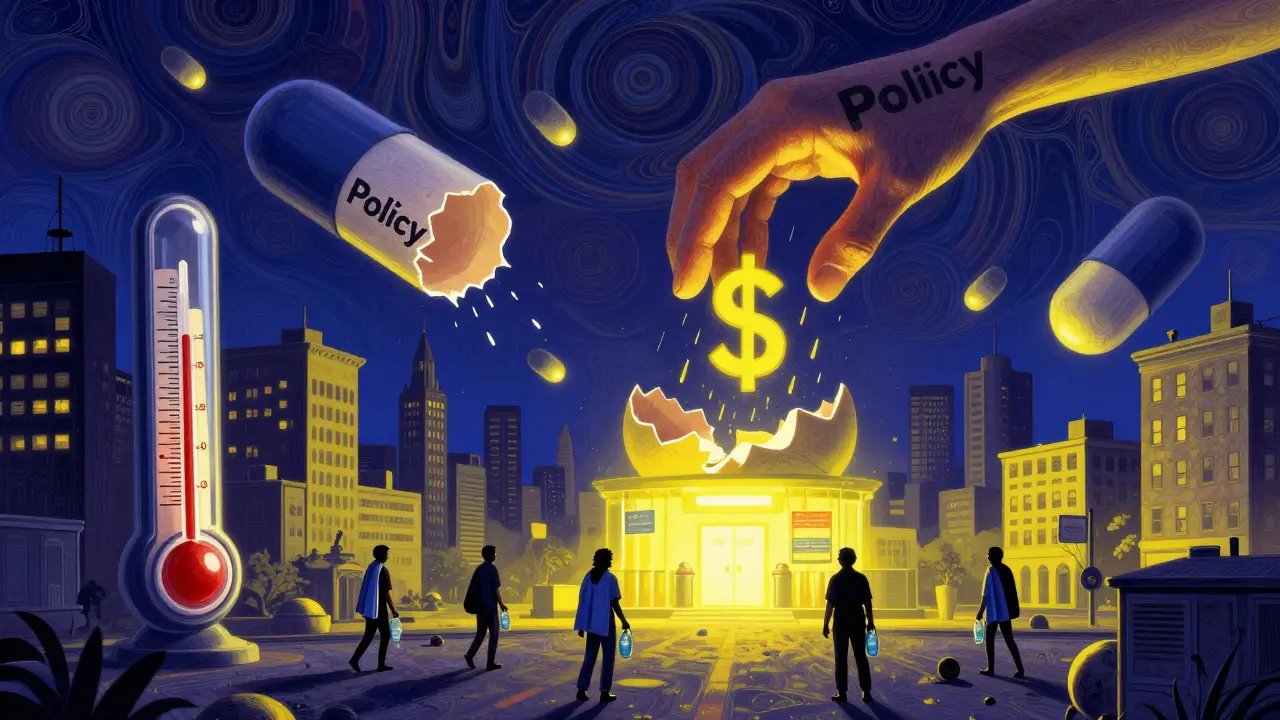
The bigger picture: Why this isn’t just about individual choices
This isn’t a personal failure. It’s a policy failure.
Only 12 out of 50 U.S. states have official heat emergency plans that include people who use drugs. Most don’t train first responders to recognize the link between heat and overdose. Many police departments still confiscate water or cooling supplies from outreach workers.
Climate change is making this worse. By 2050, we could see 20-30 extra days each year above the 24°C overdose risk threshold. That’s not a future problem. It’s happening now.
The Biden administration just allocated $50 million to fix this. States must have overdose risk protocols in their heat plans by December 2025. That’s progress. But it’s not enough. Communities need to act now.
What you can do today
You don’t need to be an expert. You just need to care.
- If you know someone who uses drugs, check in during heatwaves. Ask: “Are you cool? Have you eaten? Have you drunk water today?”
- Donate to local harm reduction groups. They need water, electrolytes, and cooling towels more than you know.
- Advocate. Tell your city council: “Include people who use drugs in your heat emergency plan.”
- If you’re a healthcare worker, screen for heat risk. Use tools like the CHILL’D-Out questionnaire. Ask about housing, meds, and drug use. Don’t assume they’re fine.
Overdose deaths during heatwaves aren’t inevitable. They’re preventable. But only if we act.
Can heat make my drug use more dangerous even if I don’t feel hot?
Yes. Your body can be overheating without you realizing it. Heat exhaustion reduces cognitive function by 25-35%, which means you might not notice you’re dizzy, confused, or in danger. If it’s over 24°C and you’re using drugs, assume your risk is higher-even if you feel fine.
Is naloxone effective during heat-related overdoses?
Naloxone only reverses opioid overdoses. If someone overdoses on cocaine, meth, or alcohol, naloxone won’t help. But it’s still essential to carry-many overdoses involve mixed drugs, and opioids are often part of the mix. Always have it on hand.
What if I’m on medication for mental health? Should I stop taking it during heatwaves?
Never stop your meds without talking to your doctor. Many psychiatric medications become less effective or more toxic in heat. Your doctor can adjust your dose or suggest safer alternatives. Contact them before the next heatwave hits.
Why do some shelters turn away people who use drugs during heatwaves?
Many shelters lack training, resources, or policies to support people who use drugs. Some fear liability. Others operate under outdated rules. But during emergencies, this is dangerous and often illegal. Ask for a referral to a medical respite center or a supervised consumption site-they’re required to provide care.
Are cooling centers safe for people who use drugs?
Yes. Many cooling centers now partner with harm reduction workers. They offer water, rest, and access to naloxone without judgment. Some even have on-site medical staff. If you’re turned away, ask for a list of approved locations. You have a right to safety.
How do I know if someone is having a heat-related overdose?
Signs include confusion, rapid heartbeat, hot dry skin (no sweating), vomiting, seizures, or loss of consciousness. If someone is unresponsive or breathing abnormally, call emergency services immediately. Administer naloxone if opioids are involved. Cool them down with water and shade while waiting for help.
What’s next?
If you’re reading this, you’re already ahead of most people. You know heat and drugs are a deadly mix. Now, share this. Talk to someone who uses drugs. Tell your local council. Donate to a harm reduction group. Keep water in your car. Check on your neighbor.
Survival isn’t about willpower. It’s about preparation. And community. And knowing when to ask for help.

John O'Brien
This is straight fire. I seen dudes drop in the park last summer when it hit 95. No one knew why. Now I get it. Always cut your dose when it's hot. Simple as that.
And carry naloxone. Always.
Kegan Powell
heat is the silent killer nobody talks about 🌡️💀
we fixate on the drug but forget the body's just trying to survive the oven outside
your heart ain't a machine it's a living thing that gets tired
and when you're homeless or on meds or just tired of life
the heat doesn't care if you're trying
it just wants you gone
we need more cooling centers
not more jails
not more shame
just water
shade
and someone who won't look away
April Williams
This is why we need to stop enabling drug addicts. You think giving them water and fans is the answer? No. The answer is forcing them into rehab or letting them die like the rest of us do when we make bad choices. This isn't compassion. It's enabling. Stop treating addiction like it's a weather condition.
suhail ahmed
yo this hit different. in india we got heatwaves that fry eggs on sidewalks and folks still hustle with bhang or speed. no ac. no water. just sweat and silence.
we dont got naloxone kits in the slums. we got cousins who shout "bhaiya! bhaiya!" when you go stiff.
but you know what? we still share our one bottle of water. we still sit with the guy who's shaking. we still don't leave.
maybe the real harm reduction ain't in the kits
it's in the hand that holds yours when your heart starts racing
and you don't even know why
Candice Hartley
I had a friend pass out in a parking lot last July. We didn’t know it was heat. Thought it was the coke. Turns out he hadn’t drunk water in 12 hours. Scary stuff. Always check on people. Always.
Desaundrea Morton-Pusey
This is just another liberal fantasy. People who use drugs are a burden on society. Why are we spending millions on cooling centers for addicts? Why not fix the system? Why not deport them? Why not just let nature take its course?
Murphy Game
They’re lying about the 22% increase. That’s CDC data. They’re manipulating stats to get funding. There’s no real link. It’s all propaganda. The government wants to push naloxone so they can track users. They’re using heat as an excuse to control us.
Marian Gilan
i read this and thought... wtf is this guy on? heat makes drugs more dangerous? really? so what? i been doin 200mg of meth in 100f and still walkin. its all in your head. they just want you scared so you take their pills instead.
they dont want you free. they want you dependant. on their water. their fans. their 'harm reduction'.
its all a trap.
Kirstin Santiago
I work at a needle exchange in Philly. We handed out 300 cooling packs last week. One guy cried and said he hadn’t had a cold drink in three days. We’re not heroes. We’re just showing up. That’s all anyone needs to do. Show up.
Kathy McDaniel
i didnt even know heat could do this 😳 i always thought it was just about drinking water. this changed my whole perspective. thanks for sharing. i’m donating to my local harm reduction group today 💙
Conor Murphy
I used to think people overdosed because they were weak. Now I know it’s because the world didn’t give them a chance. I carry naloxone in my backpack. I tell everyone I know to do the same. It’s not about politics. It’s about not letting someone die alone.
Paul Taylor
The data here is solid but the real issue is the infrastructure collapse. When your city has no public cooling centers and your only shelter turns you away because you smell like sweat and weed and you're on methadone and you're 62 and you've been living in your car since the eviction and the heat index is 110 and your meds are making you dizzy and you're too tired to walk to the library and no one checks on you because you're invisible and the system forgot you exist then yeah you're gonna die because the system decided you weren't worth saving and that's not a tragedy that's a policy choice and we're all complicit in it
Patrick Merrell
This is just another way to normalize drug use. We don't need more resources for addicts. We need more jails. More consequences. More accountability. This isn't helping. It's encouraging.
Conor Flannelly
I’m a paramedic in Cork. We had a heatwave in 2022. Three overdoses in one night. All on stimulants. All in alleyways. All alone. We started carrying extra water and damp cloths in the ambulance. No one asked. We just did it. You don’t need permission to be human.
Harry Henderson
STOP WAITING FOR GOVERNMENT TO SAVE YOU. If you’re using drugs in the heat, you’re already playing Russian roulette. The only person who can save you is YOU. Cut your dose. Drink water. Get shade. Or die. It’s that simple. Stop waiting for handouts. Take responsibility.