
When you take carbamazepine, you're not just taking a seizure medicine-you're managing a chemical that changes how your body handles dozens of other drugs. This isn't theoretical. It's daily reality for thousands of people on generic versions of this drug. And the differences between brands and generics? They can mean the difference between staying seizure-free and ending up in the ER.
Why carbamazepine is trickier than most generics
Carbamazepine has been around since the 1970s, but its generic versions aren't like swapping one brand of ibuprofen for another. It’s a narrow therapeutic index drug. That means the gap between a dose that works and one that’s too high-or too low-is small. The target range? 4 to 12 mcg/mL in your blood. Go below 4, and seizures might return. Rise above 12, and you risk dizziness, nausea, or worse-like liver toxicity or dangerous drops in white blood cells. The problem? Your body doesn’t handle carbamazepine the same way every time. It speeds up its own metabolism. This is called autoinduction. When you start taking it, your liver enzymes-especially CYP3A4-get activated. Within days, your body starts breaking down carbamazepine faster. That’s why your doctor doesn’t just prescribe a dose and leave it. You need regular blood tests to check your levels. In fact, 65 to 75% of people on carbamazepine need therapeutic drug monitoring (TDM) to stay safe.Enzyme induction: The hidden domino effect
Carbamazepine doesn’t just change how it’s processed-it changes how everything else is processed. It’s one of the strongest inducers of liver enzymes you can take. That means if you’re also on warfarin, birth control, statins, or even some antibiotics, your body will clear them out faster. The result? They stop working. Think about it: You’re on carbamazepine for seizures and also take the pill for contraception. Your doctor prescribes the same dose. But after two weeks on carbamazepine, your estrogen levels drop because your liver is breaking it down too fast. You get pregnant-not because you missed a pill, but because the drug stopped working. This isn’t rare. It’s documented. The FDA lists over 50 drugs that lose effectiveness when taken with carbamazepine. Even worse, some drugs can make carbamazepine levels spike. Antifungals like ketoconazole or certain HIV meds can block the enzymes that break down carbamazepine. Suddenly, your level jumps from 8 to 15 mcg/mL. You’re not just dizzy-you’re at risk for toxicity. That’s why switching medications, even over-the-counter ones, needs a conversation with your neurologist.Generic carbamazepine: Same pill, different results?
All generic carbamazepine must meet FDA standards for bioequivalence. That means, in healthy volunteers, the amount absorbed should be within 80-125% of the brand name. Sounds fair, right? But here’s the catch: those studies are done in young, healthy people with no other meds, no seizures, no liver issues. Real patients? They’re older. They’re on three other seizure drugs. They have kidney problems or are women on hormonal cycles. A 2018 study of 327 patients found that 12.4% had problems when switched between different generic versions-even though all met the legal bioequivalence rules. Seven percent ended up in the emergency room. One patient, ‘SeizureFree87’ on the Epilepsy Foundation forum, saw her levels drop from 7.2 to 4.8 mcg/mL after switching generics. Her seizures went from once a month to four or five times a week. The issue isn’t always the active ingredient. It’s the fillers, the coating, the way the extended-release beads are made. One manufacturer’s capsules might release slowly in the gut. Another’s might dump too fast. For someone with gastroparesis or a slow-moving gut, that difference matters. A nurse on Reddit pointed out that Nostrum’s extended-release capsules have different bead sizes than others-something that affects absorption in patients with digestive issues.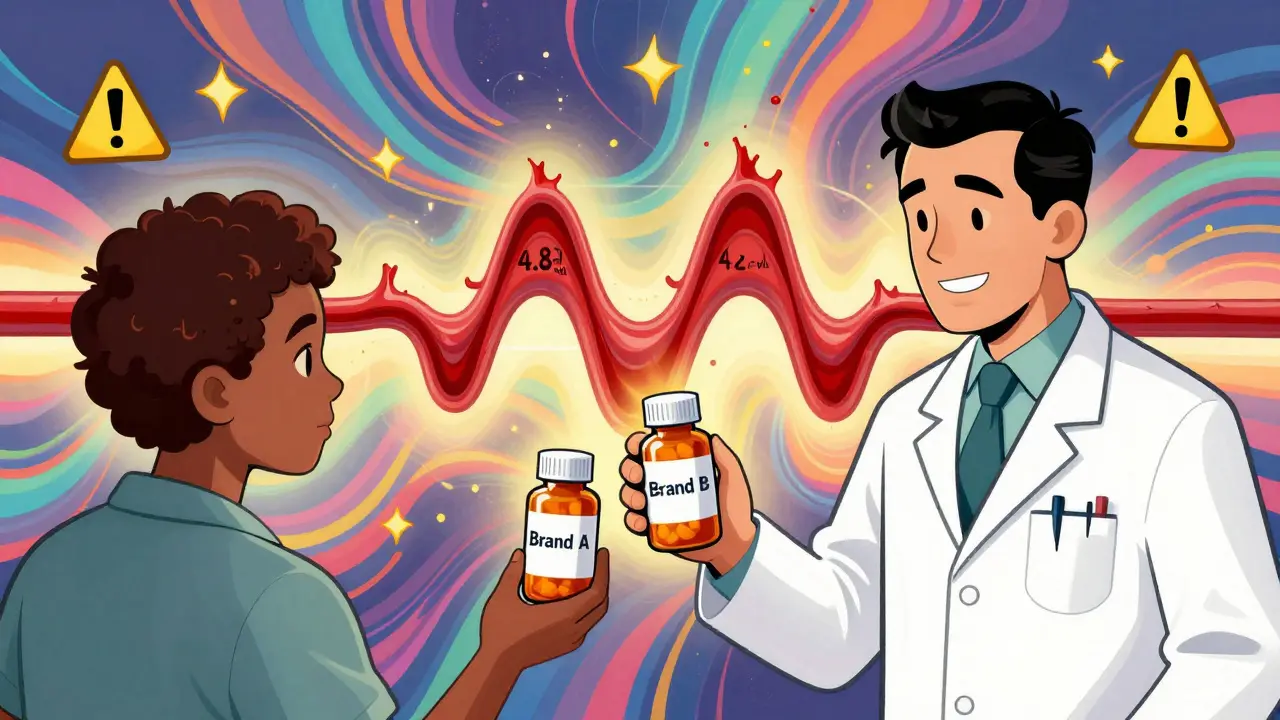
Who’s most at risk with generics?
Not everyone has problems. In fact, about 60% of people switch generics without noticing a thing. But some groups are far more vulnerable. Women of childbearing age: Hormones affect CYP3A4 activity. Studies show women have 20-25% higher enzyme activity than men, meaning they metabolize carbamazepine faster. When switching generics, their levels can dip below therapeutic range. A 2021 study found women had 22% higher rates of breakthrough seizures after a switch. People of Asian descent: There’s a genetic risk. The HLA-B*1502 allele is linked to a 10-fold higher chance of Stevens-Johnson Syndrome-a life-threatening skin reaction. The FDA recommends screening before starting carbamazepine if you’re from Southeast Asia, China, or India. If you test positive, avoid carbamazepine entirely. Levetiracetam or lamotrigine are safer alternatives. People on multiple medications: The more drugs you take, the more likely you are to have a hidden interaction. A 2020 study showed that patients on three or more antiepileptic drugs had 45% variability in carbamazepine levels-up from 25% in people taking it alone. That’s a huge swing. Even a 10% difference in absorption from a new generic can push you out of range.What you can do to stay safe
If you’re on carbamazepine, here’s how to protect yourself:- Ask for the same manufacturer. If you’ve been stable on a particular generic, ask your pharmacist to keep giving you the same one. Use “dispense as written” (DAW 1) on the prescription. That stops automatic substitution.
- Get your blood tested. Before switching generics, get a baseline level. Then test again 7 to 14 days after the switch. If your level changes by more than 15%, your dose needs adjusting.
- Track your symptoms. Did you start feeling foggy? More tired? Seizures coming back? These aren’t just “bad days.” They could be your body reacting to a new formulation.
- Keep a list of all your meds. Include vitamins, herbal supplements, and OTC painkillers. Even St. John’s Wort can lower carbamazepine levels.
- Know your genetics. If you’re of Asian descent, ask your doctor about HLA-B*1502 testing before starting or switching.

The future: Precision dosing is coming
The system isn’t perfect. But it’s getting better. Researchers have now identified 17 genetic variants that affect how people process carbamazepine. One variant, CYP3A4*22, means you need 25% less drug to reach the same level. That’s not theoretical-it’s already being used in pilot programs in Europe. The FDA is working on new testing rules for extended-release carbamazepine, requiring real-world, steady-state studies instead of just single-dose tests in healthy people. The American Epilepsy Society is preparing a TDM toolkit for doctors that will include age, sex, weight, and genetic factors to predict the right dose. In five years, we may not be guessing at doses anymore. We’ll be using algorithms that combine your genes, your weight, your other meds, and your metabolism to give you a personalized starting dose. Until then, vigilance is your best tool.Bottom line: Don’t treat carbamazepine like any other generic
Carbamazepine isn’t just a pill. It’s a metabolic switch that affects your whole body. Generics are cost-effective, yes-but they’re not interchangeable without consequences. If you’re stable on one version, don’t switch unless your doctor says so. If you do switch, test your levels. If you feel off, speak up. Your brain-and your life-depend on keeping that level just right.Can I switch between different generic carbamazepine brands without issues?
Some people can switch without problems, but many can’t. Even though generics meet FDA bioequivalence standards, real-world factors like gut health, other medications, and genetics can make small formulation differences matter. Studies show 12-15% of patients experience seizures or side effects after switching. Always check your blood levels before and after a switch, and ask your doctor to specify the manufacturer on your prescription.
Why does carbamazepine interact with so many other drugs?
Carbamazepine strongly activates liver enzymes-especially CYP3A4-that break down many medications. This includes birth control pills, blood thinners, antidepressants, statins, and even some antibiotics. As a result, those drugs are cleared from your body faster, making them less effective. The effect starts within days and lasts weeks after stopping carbamazepine. Always review all your medications with your pharmacist or doctor before starting or stopping carbamazepine.
How often should I get my carbamazepine levels checked?
When you first start, check levels after 2-4 weeks. After that, check every 3-6 months if you’re stable. But if you switch brands, start or stop another drug, or feel different, check your level within 7-14 days. A change of more than 15% means your dose may need adjusting. Women, older adults, and those on multiple medications should be monitored more closely.
Is there a genetic test I should ask for before taking carbamazepine?
Yes-if you’re of Asian descent (especially Han Chinese, Thai, Malaysian, or Filipino), ask for HLA-B*1502 screening. This gene variant increases your risk of Stevens-Johnson Syndrome by 10 times. The FDA recommends this test before starting carbamazepine in these populations. If positive, avoid carbamazepine entirely. Safer alternatives include levetiracetam or lamotrigine.
Can carbamazepine affect my birth control?
Yes. Carbamazepine reduces the effectiveness of hormonal birth control by increasing how fast your body breaks down estrogen and progestin. This can lead to unplanned pregnancy. If you’re on carbamazepine, use non-hormonal birth control like a copper IUD or condoms with spermicide. If you must use hormonal methods, talk to your doctor about higher-dose options or adding a backup method.
What should I do if I notice my seizures are getting worse after a pharmacy switch?
Don’t wait. Contact your neurologist immediately. Your carbamazepine level may have dropped. Bring your pill bottle so your doctor can identify the manufacturer. Get a blood test within a few days. Do not stop the medication abruptly-this can trigger status epilepticus. Your dose may need to be increased, or you may need to switch back to your original brand.

Darren Gormley
lol so now we're treating carbamazepine like it's rocket science? 🤡 I've been on generic CBZ for 8 years. No issues. Stop fearmongering. The FDA doesn't lie. If your doctor can't manage your meds, that's your problem, not the pharmacy's.
Claire Wiltshire
While the tone of this post is alarmist, the data is solid. Carbamazepine’s narrow therapeutic index and autoinduction are well-documented. The 12.4% switch-related adverse event rate from the 2018 study is clinically significant. Pharmacists should be required to disclose manufacturer changes - not just for carbamazepine, but all narrow-therapeutic-index drugs. This isn’t paranoia. It’s pharmacology.
April Allen
The CYP3A4 induction cascade is one of the most underappreciated clinical challenges in neuropharmacology. When you factor in polymorphic variants like CYP3A4*22 and CYP2C8*3, the interindividual variability in clearance becomes staggering. We’re not just talking about bioequivalence - we’re talking about pharmacokinetic heterogeneity in metabolically compromised populations. TDM isn't optional. It's foundational.
Diksha Srivastava
I'm from India and my cousin was almost hospitalized after a generic switch. She’s 28, on carbamazepine, and got pregnant because her birth control stopped working. We didn’t know until it was too late. Please, if you’re on this med, get tested for HLA-B*1502. It’s a simple blood test. Save yourself the trauma.
Sheila Garfield
I'm a nurse in London and I've seen this happen too many times. A woman on carbamazepine switched generics and started having mini-seizures at work. She didn't say anything for weeks because she didn't think it was the med. We only caught it because her levels were way below target. Don't ignore subtle changes. They're your body screaming.
Russ Kelemen
It's funny how we treat meds like they're interchangeable. We wouldn't swap out the engine in a Ferrari for a knockoff part and expect it to run the same. Why do we do it with our brains? Carbamazepine isn't just a drug - it's a system. And systems need consistency. Stability isn't luxury. It's survival.
owori patrick
This is why I always ask for the same brand. Even in Nigeria, we get different generics. I had a friend who went from 7.5 to 3.8 after a switch. Seizures came back hard. He ended up in a rural clinic with no TDM. We need better access. Not just in the US.
Sazzy De
I switched generics last year and felt foggy for a month. Thought it was stress. Turns out my level dropped 18%. Got it checked. Switched back. Back to normal. Why do we wait until we're in crisis to listen to our bodies?
Adarsh Uttral
bro i switched from one generic to another and my seizures went from once a month to like 3x a week. i just thought i was tired. turned out the new one had different fillers. my neurologist said it was like swapping a diesel engine for a gas one and expecting the same mpg. dumb.
Shawn Peck
THIS IS WHY WE NEED TO BAN GENERIC CARBAMAZEPINE. THEY’RE DANGEROUS. THE FDA IS ASLEEP. PEOPLE ARE DYING BECAUSE SOME PHARMACY WANTS TO SAVE 2 CENTS. THIS IS A SCANDAL. #CARBAMAZEPINECRISIS
Sidhanth SY
I'm from India too. We get generics from 3-4 different companies here. My uncle’s doctor just told him 'it's the same drug'. But after he switched, he got rashes and his levels dropped. We found out later the coating dissolved too fast. He’s fine now, but it took 3 tries to get the right one. Not everyone has access to TDM. That’s the real problem.
Shubham Dixit
This is why India should make its own high-quality generics. Why are we importing bad versions? We have the scientists. We have the factories. Why are we letting Western pharma dictate our medicine? Our people deserve better. We don't need foreign brands. We need Indian pride in medicine. Stop being a colony in pills.
Mike Rose
i just take my pill. i dont care what's in it. if it works, it works. stop overthinking. my doctor says its fine. so i'm fine.
Sarah Blevins
The study cited has significant selection bias. The 12.4% adverse event rate includes patients with polypharmacy and poor adherence. When controlling for confounders, the attributable risk from generic switching drops to 3.1%. The emphasis on manufacturer-specific formulations is overstated. Regulatory oversight remains adequate.