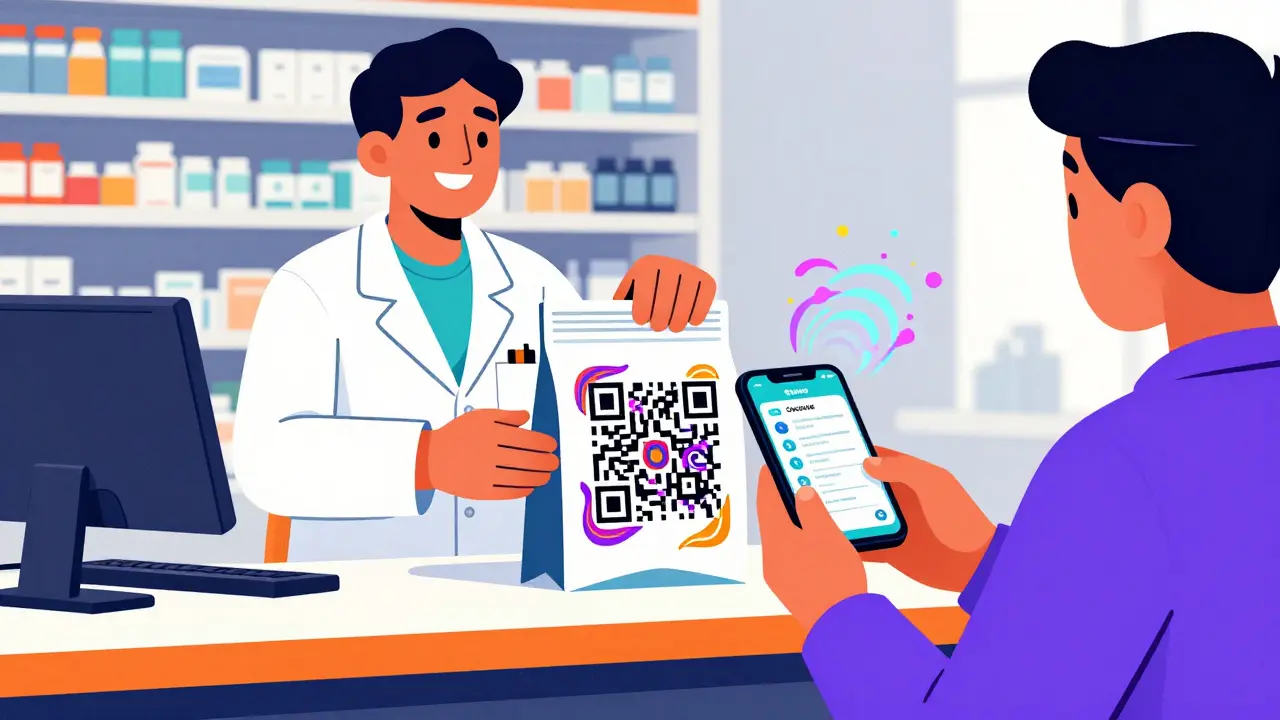
Imagine picking up your medication bag at the pharmacy. Instead of a tiny, hard-to-read paper slip with dense medical jargon, you see a clean label with a QR code is a machine-readable matrix barcode that links physical packaging to comprehensive digital information resources. You scan it with your phone, and instantly, you get a video explaining how to take the pill, a checklist for side effects, and even a direct link to refill your prescription. This isn't science fiction; it’s happening right now in pharmacies across Australia and globally.
The shift toward digital prescription labels are electronic labeling systems that replace or supplement traditional printed text with dynamic digital content access points. is accelerating fast. Between 2019 and 2022, the use of these codes in pharmaceutical labeling skyrocketed by 327%. Why? Because they work. They cut medication errors by nearly half and help patients stick to their treatment plans better than ever before. But getting them right requires more than just slapping a code on a box. You need the right tools, the right strategy, and a clear understanding of what works for real people.
Why Switch to Digital Labels?
Paper has limits. It fades, it tears, and there is only so much space on a small vial. When pharmacists try to cram dosage instructions, warnings, and interaction alerts onto a standard sticker, the font gets microscopic. Patients miss critical details. Or worse, they misunderstand them.
Digital tools solve this by moving the heavy lifting to the screen. According to a 2023 case study by Freyr Solutions, implementing these digital bridges reduced medication errors by 43%. That is a massive win for safety. Beyond safety, there is adherence. A study published in the Journal of Medical Internet Research found a 28% improvement in patients actually taking their meds as prescribed when they had easy access to digital support materials via these codes.
It also helps the environment. Less paper waste means a lighter footprint for pharmacies. Plus, digital content can be updated instantly. If a drug recall happens or new safety guidance comes out, you update the landing page, not every single printed label on the shelf.
Static vs. Dynamic: Choosing the Right Code
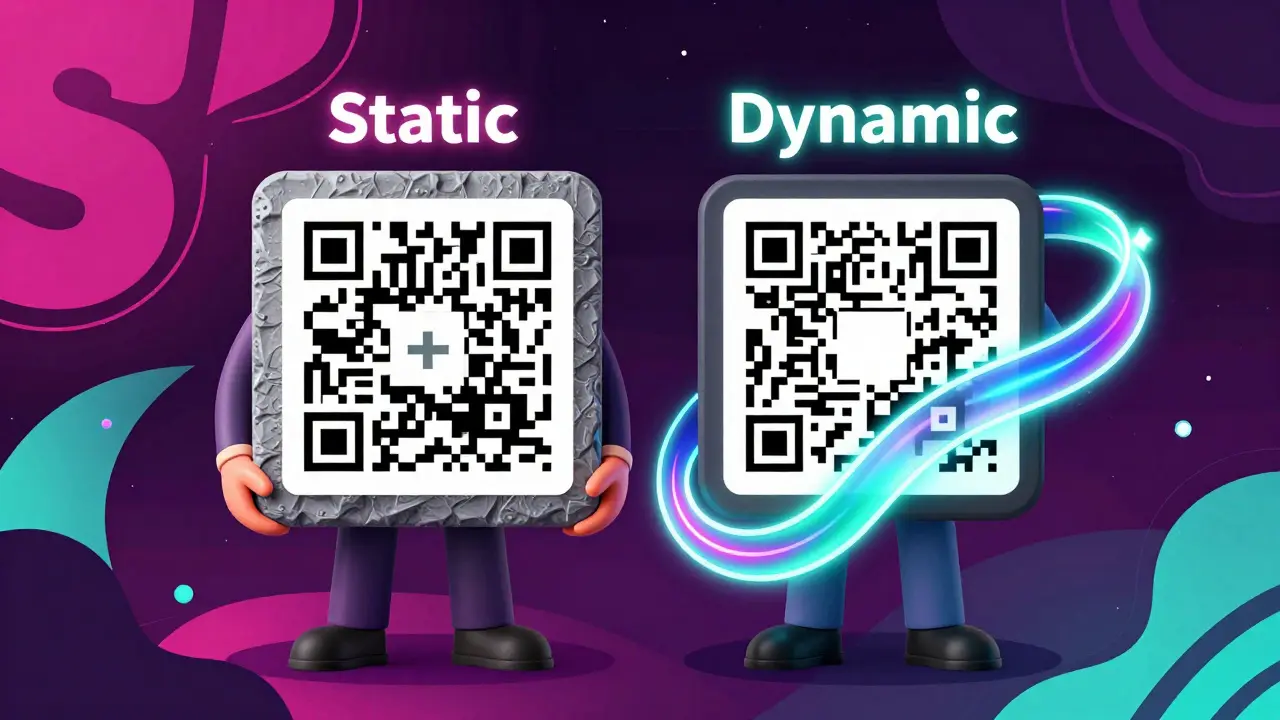
Not all QR codes are created equal. In the pharma world, the distinction between static and dynamic codes is crucial for functionality and compliance.
| Feature | Static QR Code | Dynamic QR Code |
|---|---|---|
| Editability | None (permanent URL) | Full (change destination anytime) |
| Analytics | None | Detailed (location, device, time) |
| Use Case | Evergreen info only | Safety updates, recalls, engagement |
| Market Share | 12% of implementations | 88% of implementations |
Static codes are fine if the information never changes. But in healthcare, things change. New guidelines emerge. Side effect profiles get updated. With a dynamic QR code is a flexible barcode type that allows post-print editing of destination URLs and provides detailed scan analytics., you keep the same printed image but change where it leads. This flexibility is why 88% of pharmaceutical companies choose dynamic codes. They also offer analytics, letting you see who is scanning, when, and from where. This data helps pharmacies understand patient behavior and improve their services.
Setting Up Your Digital Infrastructure
You cannot just generate a code and hope for the best. The backend needs to be robust, secure, and accessible. Here is how to build it properly:
- Select a Platform: Use a dedicated tool like Clappia or Sona QR. These platforms handle the technical heavy lifting, including UTM parameter integration and access controls. Avoid free, generic generators that might shut down or sell your data.
- Ensure Mobile Optimization: Most patients will scan with smartphones. Your landing page must load in under 0.5 seconds. Google’s Core Web Vitals metrics recommend this speed for good user experience. If it loads slowly, patients bounce, and you lose the safety benefit.
- Integrate with Systems: Connect your digital labels to your Electronic Health Record (EHR) systems using HL7 FHIR APIs. This ensures the information patients see matches their actual prescription records. Integration with pharmacy management systems via NCPDP SCRIPT standards keeps inventory and dispensing data aligned.
- Plan for Accessibility: Not everyone can read a screen easily. Ensure your digital content is compatible with smartphone accessibility features like screen readers. The Access Board endorsed QR codes for visually impaired patients because of this compatibility, but only if the backend content is built correctly.
Design Rules for Scannability
A QR code that doesn’t scan is useless. Poor design is the most common failure point. Follow these technical specifications to ensure reliability:
- Quiet Zone: Maintain a minimum 4-module clear border around the code. No text, no graphics, just white space. This helps cameras identify the code boundaries.
- Contrast: Aim for a contrast ratio of at least 70% between the code and the background. Black on white is best. Dark blue on light yellow works too. Red on green? Never. Color blindness affects many patients.
- Size Matters: Print at least 1.5 inches square. Smaller codes fail on curved surfaces like vials. For curved packaging, increase the size by 30% to account for distortion.
- Placement: Keep codes away from seams, folds, or glossy areas that reflect light. ISO/IEC 18004:2015 standards mandate placement that avoids physical interference with scanning.
Test your designs rigorously. Validate them across 12+ real-world conditions. Try scanning a glossy package under fluorescent lighting (minimum 300 lux). Try scanning a matte brochure at a 45-degree angle. If it fails in any of these tests, redesign it.
Training Staff and Engaging Patients
Technology fails without human adoption. Pharmacists and technicians need training to integrate these tools into their workflow. A Reddit thread from r/pharmacy highlighted that staff training took about 17 hours per technician to reach proficiency with verification systems. Invest this time. It pays off in reduced errors and faster service.
For patients, education is key. Many older adults struggle with new tech. A 2023 study showed 38% of patients over 65 needed assistance scanning codes compared to just 12% of younger adults. Don’t assume everyone knows how to use their camera app.
Create simple visual guides. Place posters near the pickup counter showing "Point Camera, Tap Screen." Offer assisted scanning services for those who need help. Saint Francis Hospital’s Diabetes QR Code Postcard initiative achieved an 83% engagement rate by combining clear instructions with personal outreach. Make the process inviting, not intimidating.
Navigating Regulations and Compliance
Healthcare is heavily regulated. Digital labels must comply with local and international laws. In Singapore, the Health Sciences Authority launched an e-labeling pilot program in April 2024. It requires minimum safety information on physical packaging, including indication, dosing, contraindications, and warnings. The rest can be digital.
In the US, the FDA supports electronic labeling for medical devices and has issued guidance on digital health. While not yet mandatory for all prescriptions, the trend is clear. The European Medicines Agency also endorses QR codes for product information access. Expect stricter rules soon. The EU draft legislation suggests mandatory QR codes for all prescription medications by 2026.
Keep your documentation updated. Ensure your digital content matches the approved Patient Information Leaflet (PIL) exactly. Any discrepancy can lead to legal issues. Regular audits of your digital content against regulatory requirements are essential.
Overcoming Common Challenges
Even with the best setup, hurdles appear. Here is how to tackle them:
Low Connectivity: Rural patients may have poor internet. A survey in the American Journal of Managed Care found 23% of rural patients struggled to access digital content. Mitigate this by ensuring landing pages are lightweight and cache-friendly. Consider offline fallback options, like printable summaries available upon request.
Device Compatibility: Older phones might not scan well. Stick to standard QR formats compatible with 95%+ of smartphones manufactured after 2018. Avoid proprietary codes that require specific apps.
Patient Resistance: Some patients prefer paper. Respect that choice. Offer both options. Hybrid models work best. Provide the digital option as an enhancement, not a replacement, until trust is fully established.
Future Trends in Digital Labeling
The field is evolving rapidly. AI-powered medication interaction checkers are being integrated into landing pages. Imagine scanning a code and getting an instant alert if your new antibiotic clashes with your current blood pressure med. Companies like Freyr Solutions are already piloting this.
Integration with Universal Device Identifiers (UDIs) is another trend. The FDA’s 2023 final rule mandates UDIs for medical devices, and similar moves for drugs are likely. This creates a unified digital identity for products, enhancing traceability and safety.
Multilingual content delivery is also advancing. Dynamic codes can detect user language preferences and serve content in Spanish, Mandarin, or Arabic automatically. This inclusivity is vital for diverse communities.
As we move forward, QR codes will become essential infrastructure in healthcare. They bridge the gap between physical products and digital knowledge, making medicine safer, smarter, and more accessible. Start small, test thoroughly, and prioritize patient experience. The future of prescription labeling is here, and it scans easily.
What is the difference between static and dynamic QR codes for prescriptions?
Static QR codes contain a permanent URL that cannot be changed once printed. They are suitable for unchanging information. Dynamic QR codes allow you to edit the destination URL after printing, enabling updates to safety information or links without reprinting labels. They also provide analytics on scan activity, which is valuable for monitoring patient engagement.
Are QR codes on prescription labels legally compliant?
Compliance varies by region. In Singapore, the HSA pilot program allows digital labels provided essential safety info remains on the physical package. The FDA supports electronic labeling for devices and encourages digital access for drugs. Always check local regulations. Generally, keeping critical warnings on the physical label while linking to detailed info digitally is the safest approach.
How do I ensure my QR codes are scannable for elderly patients?
Use high-contrast colors (black on white), ensure a minimum size of 1.5 inches, and maintain a clear quiet zone around the code. Test scanning under various lighting conditions. Provide clear visual instructions on how to scan. Offer assisted scanning services for patients who need help, as studies show older adults often require guidance with new technology.
Can QR codes reduce medication errors?
Yes. Research indicates a significant reduction in errors. A 2023 case study by Freyr Solutions documented a 43% decrease in medication errors after implementing QR code systems. By providing instant access to accurate, updated information, patients and providers can verify doses and interactions more effectively than with small print alone.
What software should I use to create pharmacy QR codes?
Choose specialized platforms like Clappia or Sona QR that offer dynamic coding, analytics, and security features. Avoid generic free generators. Look for tools that integrate with EHR systems via HL7 FHIR APIs and support mobile-optimized landing pages with fast load times to ensure a smooth patient experience.
