CYP3A4: How This Enzyme Affects Your Medications and Supplements
When you take a pill, your body doesn’t just let it sit there—it has to break it down, and that’s where CYP3A4, a liver enzyme responsible for metabolizing over half of all prescription drugs. It’s also known as cytochrome P450 3A4, and it’s the reason some medicines work great for you but not for someone else. This enzyme is like a bouncer at a club: it decides which drugs get processed, how fast, and whether they’ll cause problems when mixed with other stuff.
CYP3A4 doesn’t work alone. It’s deeply tied to drug metabolism, the process your liver uses to break down and eliminate medications. If CYP3A4 is too active, your drug gets cleared too fast—meaning it won’t work. If it’s blocked, the drug builds up and can become toxic. That’s why grapefruit juice is warned against with statins like simvastatin: it shuts down CYP3A4, turning a safe dose into a dangerous one. The same thing happens with certain antibiotics, antifungals, and even some herbal supplements like St. John’s Wort, which can speed up CYP3A4 and make your birth control or antidepressant useless.
This enzyme also explains why some people need higher or lower doses of the same medicine. Genetics, age, liver health, and what else you’re taking all change how CYP3A4 behaves. For example, if you’re on a long-term steroid like prednisone, CYP3A4 helps clear it—but if you start a new antibiotic, your steroid levels could spike or crash. Even something as simple as eating a grapefruit or drinking a glass of orange juice can throw off your medication timing.
Understanding CYP3A4 isn’t about memorizing biochemistry—it’s about avoiding real risks. It’s why some drugs cause kidney damage, heart rhythm issues, or muscle breakdown when combined with others. It’s why your pharmacist asks if you’re taking supplements. And it’s why knowing what your meds are doing in your body can mean the difference between feeling better and ending up in the hospital.
Below, you’ll find real-world examples of how CYP3A4 shapes drug safety—from statin interactions and QT prolongation risks to how grapefruit affects your heart meds and why some supplements can sabotage your treatment. These aren’t theoretical warnings. They’re stories from people who took the right pills, but didn’t know how their body was processing them.
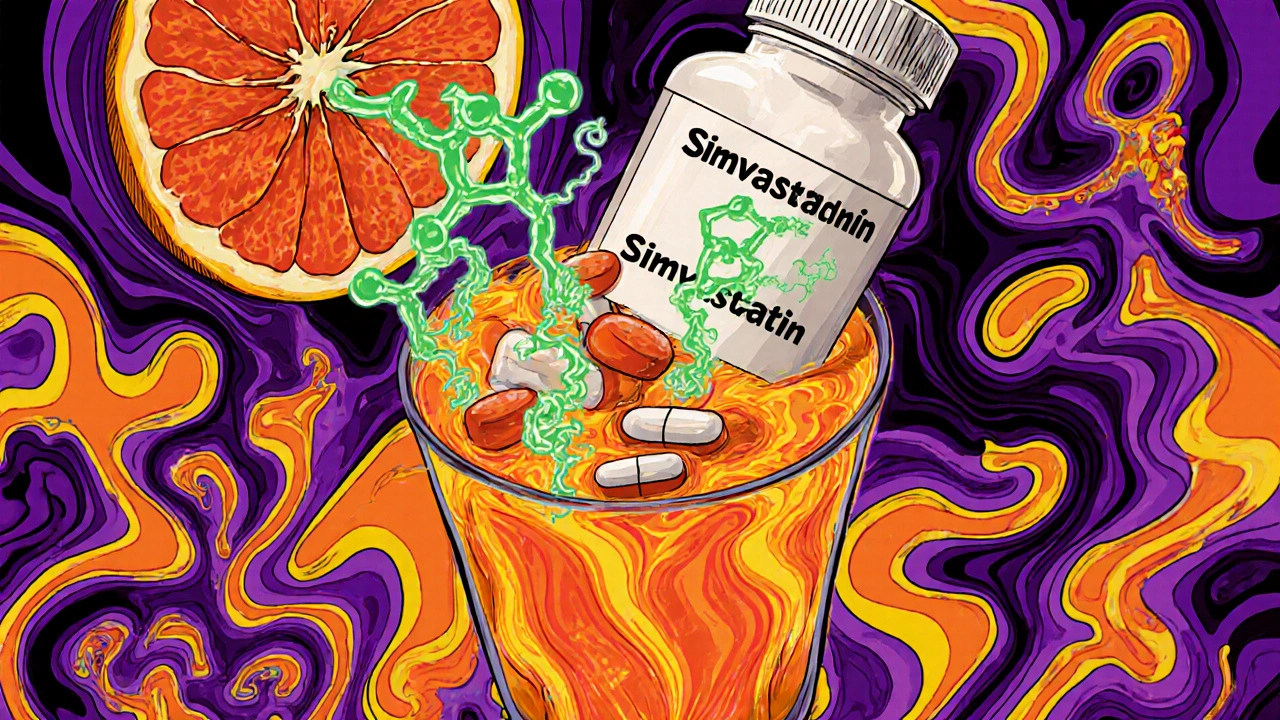
Grapefruit Juice and Medications: What You Need to Know Before You Drink
Grapefruit juice can dangerously increase drug levels in your blood by blocking a key enzyme. Learn which medications are at risk, why timing doesn't help, and how to stay safe.