Grapefruit Juice and Medications: Dangerous Interactions You Need to Know
When you drink grapefruit juice, a common citrus beverage known for its tart flavor and vitamin C content. Also known as grapefruit, it's often praised for its health benefits—but it can also trigger serious, sometimes life-threatening reactions when mixed with certain medications. This isn’t just a warning on a label. It’s a real, documented risk that affects thousands of people every year, especially those taking cholesterol drugs, blood pressure pills, or heart medications.
The problem isn’t the juice itself—it’s how it changes the way your body handles drugs. Grapefruit juice blocks an enzyme in your gut called CYP3A4, which normally breaks down many medications before they enter your bloodstream. When that enzyme is shut down, the drug builds up to much higher levels than intended. For example, simvastatin, a statin used to lower cholesterol, can reach toxic levels when taken with grapefruit juice, increasing the risk of rhabdomyolysis—a condition that breaks down muscle tissue and can damage your kidneys. Even a single glass of juice can cause this effect, and it lasts for over 24 hours. Other drugs affected include some blood pressure medications, anti-anxiety pills, and immunosuppressants.
This interaction doesn’t just happen with simvastatin. medication safety, the practice of using drugs correctly to avoid harm means knowing what to avoid, not just what to take. Many people think if a drug is prescribed, it’s automatically safe with everything else. But grapefruit juice is one of the most common and dangerous dietary triggers for drug toxicity. It’s not just about grapefruit either—other citrus fruits like Seville oranges and pomelos can do the same thing. Regular oranges and lemons? Generally safe.
There’s no way to outsmart this interaction. Drinking the juice hours before or after your pill won’t help. The enzyme-blocking effect is long-lasting. The only reliable fix is to avoid grapefruit juice entirely if you’re on a medication that interacts with it. Check your prescription label. Ask your pharmacist. Or look up your drug in a trusted database—many common ones are listed in the FDA’s warnings. If you love grapefruit juice and take a statin, your doctor might switch you to a safer alternative like pravastatin or rosuvastatin, which don’t react the same way.
What you’ll find in the posts below is a collection of real, practical stories and science-backed facts about how everyday things—like juice, herbs, or even common supplements—can clash with medications. From simvastatin’s dangerous mix with grapefruit to how St. John’s Wort can cancel out birth control, these aren’t hypothetical risks. They’re everyday dangers that people face without realizing it. You don’t need to be a medical expert to protect yourself. You just need to know what to ask, what to avoid, and where to look for answers.
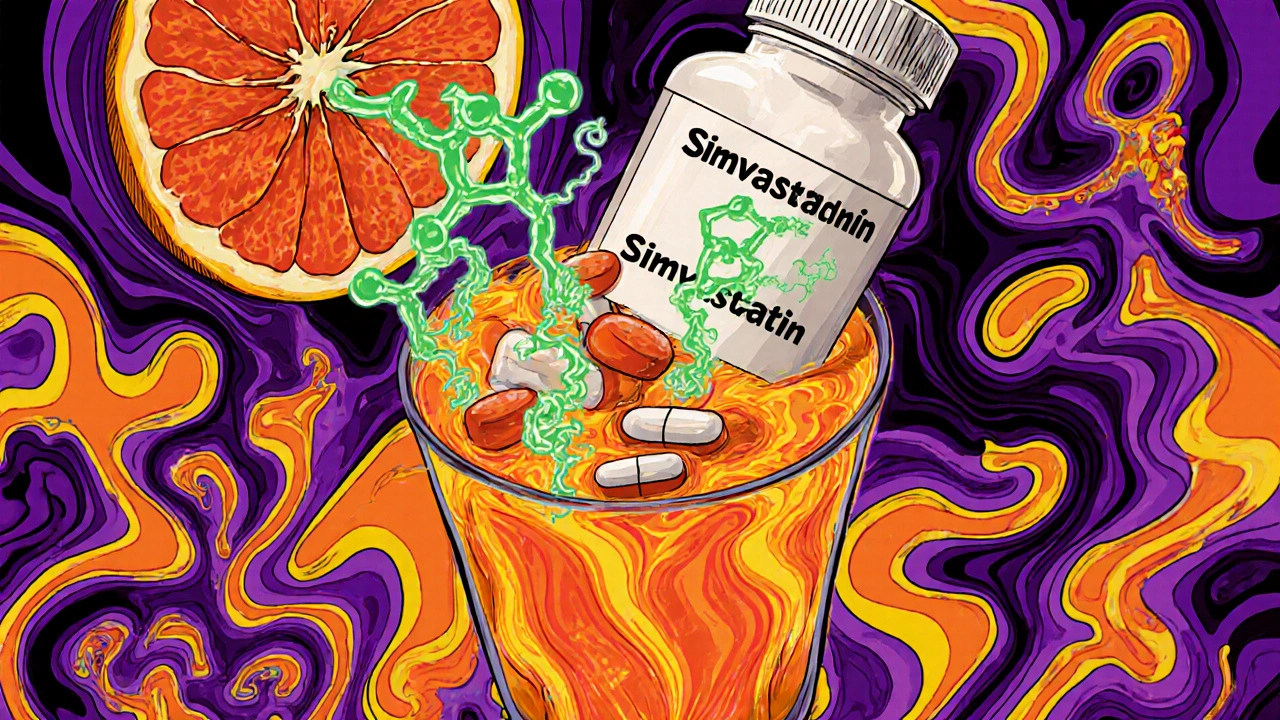
Grapefruit Juice and Medications: What You Need to Know Before You Drink
Grapefruit juice can dangerously increase drug levels in your blood by blocking a key enzyme. Learn which medications are at risk, why timing doesn't help, and how to stay safe.