NSAID Kidney Injury: Risks, Signs, and How to Stay Safe
When you take a pain reliever like ibuprofen or naproxen, you’re probably thinking about your headache or sore back—not your kidneys. But NSAID kidney injury, a type of kidney damage caused by nonsteroidal anti-inflammatory drugs. Also known as NSAID-induced nephrotoxicity, it’s more common than most people realize, especially in older adults or those with existing health issues. These drugs, sold under brand names like Advil, Aleve, and Motrin, work by blocking enzymes that cause pain and swelling. But they also reduce blood flow to the kidneys, which can lead to real, sometimes permanent, damage.
People with high blood pressure, a condition that puts extra strain on kidney function or diabetes, a leading cause of chronic kidney disease are at higher risk. Even healthy people can be affected if they take high doses for long periods, especially when dehydrated or using multiple NSAIDs at once. It’s not just about pills—topical gels and patches can add up too. The damage often builds slowly, with no early warning signs. By the time you feel tired, swollen, or notice less urine output, your kidneys may already be struggling.
Some of the posts in this collection show how other medications interact dangerously with common treatments. For example, grapefruit juice can spike drug levels in your blood, and St. John’s Wort can make other drugs useless. NSAIDs follow a similar pattern: they seem harmless until they’re mixed with other risks—like diuretics, ACE inhibitors, or just taking too much for too long. The real danger isn’t one pill—it’s the habit, the assumption that "it’s just an OTC drug," and the lack of awareness that your kidneys are silently paying the price.
You don’t have to avoid pain relief entirely. But you do need to know your limits. If you’re over 60, have heart or kidney trouble, or take daily meds for blood pressure or cholesterol, talk to your doctor before reaching for the bottle. Watch for swelling in your ankles, sudden weight gain, or changes in how often you urinate. These aren’t normal side effects—they’re red flags. And if you’ve been taking NSAIDs daily for months, it’s time to ask: Is this still the best choice?
Below, you’ll find real-world stories and science-backed advice on how these drugs affect your body, what alternatives actually work, and how to spot trouble before it’s too late. This isn’t about fear—it’s about making smarter choices so you can manage pain without risking your long-term health.
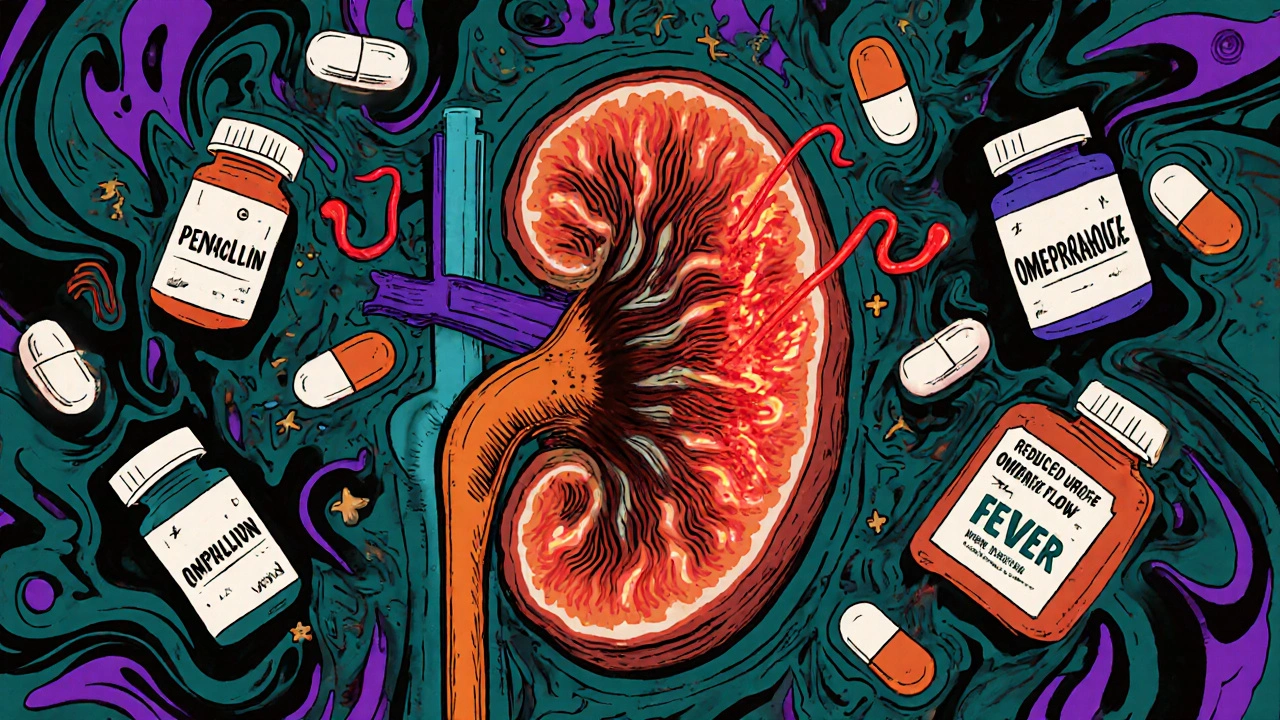
Acute Interstitial Nephritis from Medications: Signs, Causes, and What to Do
Medication-induced acute interstitial nephritis is a hidden cause of kidney damage. Learn the signs, which drugs trigger it, what to do if you suspect it, and how to protect your kidneys long-term.