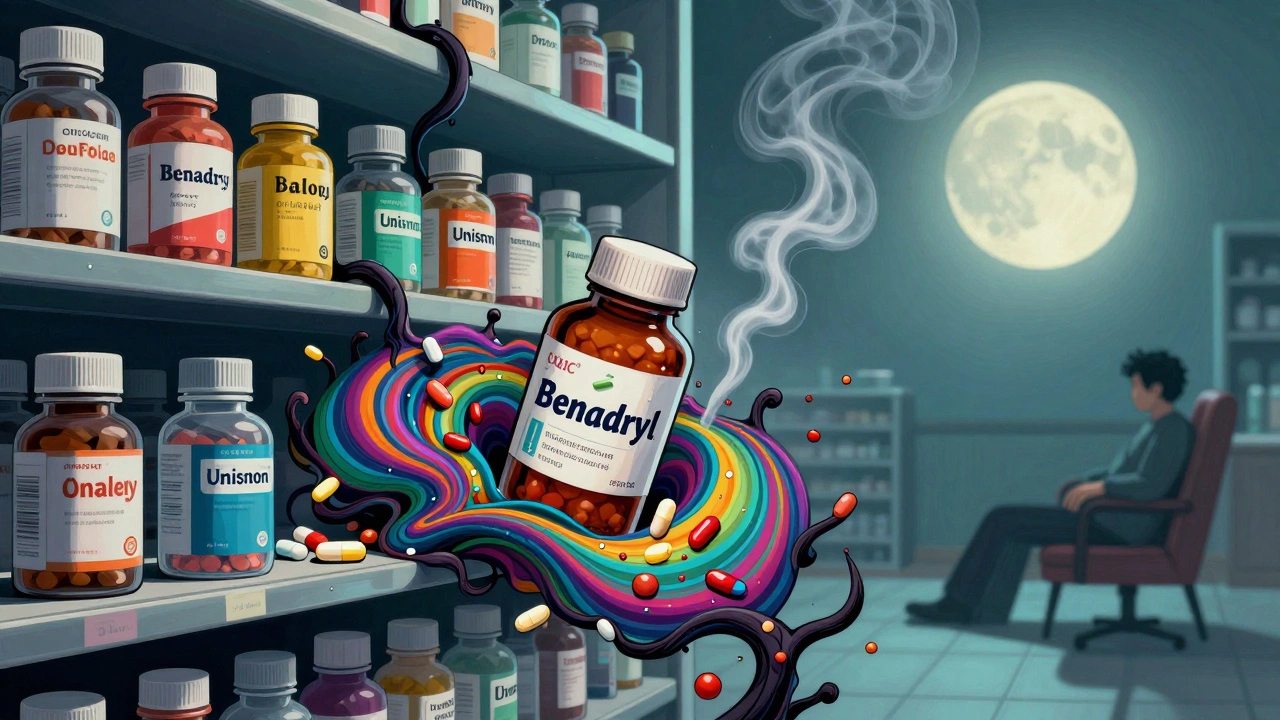
When you’re in pain and can’t sleep because of allergies, it’s tempting to reach for your prescription painkiller and an over-the-counter allergy pill. But mixing opioids with common antihistamines like diphenhydramine or hydroxyzine isn’t just a minor risk-it can stop your breathing. This isn’t theoretical. People are dying from this combination, often because they never realized their cold medicine could be deadly with their pain pills.
How Opioids and Antihistamines Work Together to Slow You Down
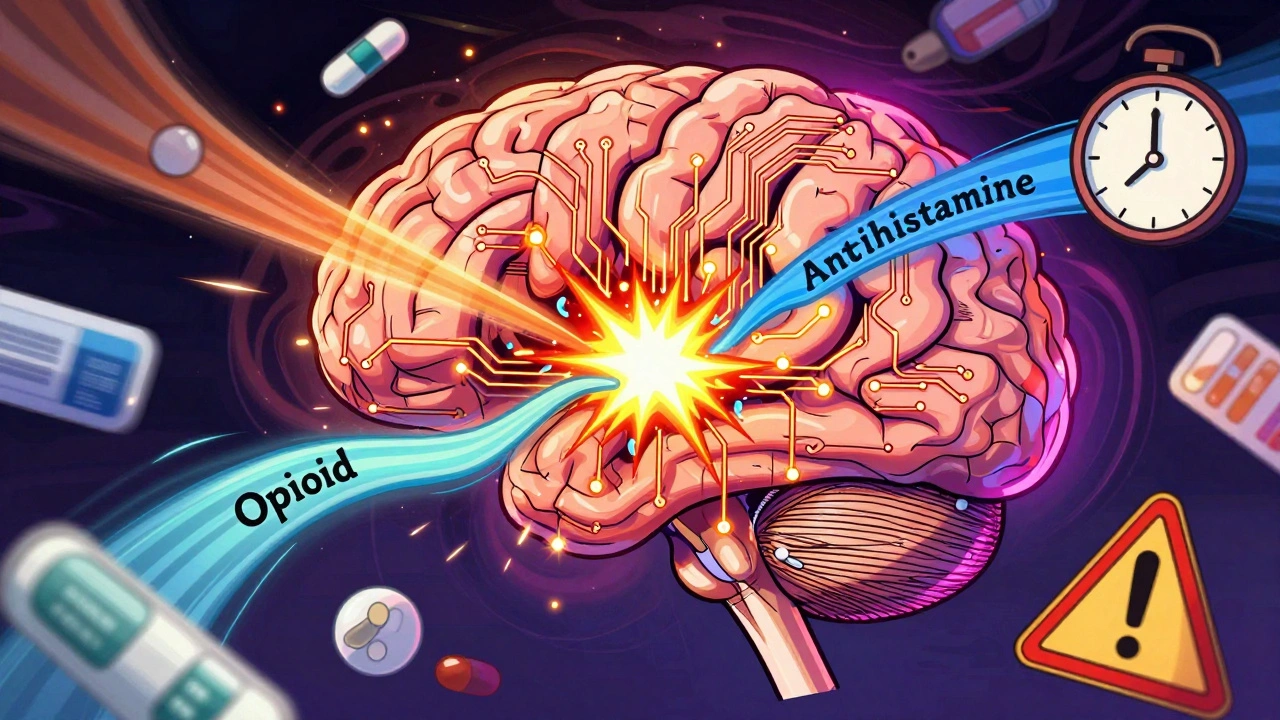
Opioids like oxycodone, hydrocodone, and morphine work by binding to receptors in your brain and spinal cord to block pain signals. But they also slow down the part of your brain that controls breathing. That’s why high doses can cause respiratory depression-breathing becomes shallow, slow, or stops entirely.
First-generation antihistamines like Benadryl (diphenhydramine), Vistaril (hydroxyzine), and Unisom (doxylamine) do something similar. They cross the blood-brain barrier and block histamine, which is why they make you drowsy. That drowsiness isn’t just a side effect-it’s a direct depression of your central nervous system. When you take these drugs together, their effects aren’t just added up-they multiply. The result? Extreme sleepiness, confusion, and dangerously slow breathing.
Studies show that opioids alone cause sedation in 20% to 60% of users. Add a sedating antihistamine, and that number jumps sharply. One hospital study found patients on both drugs were far more likely to need intensive care. The mechanism is simple: opioids reduce your brain’s response to rising carbon dioxide levels, and antihistamines further suppress the signals that tell you to breathe. Together, they silence your body’s natural safety alarm.
Why Over-the-Counter Medicines Are the Biggest Risk
Most people know not to mix opioids with alcohol or benzodiazepines. But few realize that their allergy medicine, sleep aid, or motion sickness pill can be just as dangerous. Diphenhydramine is in more than 100 OTC products-from sleep aids to cold remedies. Hydroxyzine is often prescribed for anxiety or itching, and patients assume it’s safe because it’s not a controlled substance.
The problem is hidden in plain sight. A 2021 NIH survey found that 68% of patients never tell their doctor about OTC medications they’re taking. A 68-year-old man in North Carolina came into the ER unresponsive after taking hydrocodone for back pain and Benadryl for itching. He spent 36 hours in the ICU. His doctor hadn’t warned him. He didn’t think it mattered.
Even worse, many older adults take these combinations because they’re told to “take something for sleep” or “get rid of the itching.” But older bodies process drugs slower. Their lungs are more fragile. Their brains are more sensitive. The Beers Criteria-a trusted guide for safe prescribing in seniors-lists diphenhydramine and hydroxyzine as “potentially inappropriate” for anyone over 65 because of their strong anticholinergic effects. Yet they’re still widely prescribed.
Real Cases, Real Consequences
It’s not just anecdotal. Between 2019 and 2022, the Institute for Safe Medication Practices recorded 87 adverse events linked to opioid-antihistamine combinations. Twelve of those cases resulted in death or permanent harm. A Sermo physician survey from April 2023 reported 147 cases of severe sedation in just six months. Over a third of those patients needed naloxone, the opioid overdose reversal drug, just to stay alive.
One patient on PatientsLikeMe fractured her hip after falling while taking oxycodone and Atarax (hydroxyzine). She was so drowsy she didn’t even feel the fall. Another Reddit user, a nurse, shared how a patient on morphine and diphenhydramine stopped breathing in the recovery room. “We had to intubate him,” she wrote. “He was fine the day before.”
These aren’t rare outliers. They’re predictable outcomes of a system that treats OTC drugs as harmless. But when you combine them with opioids, the risk isn’t just higher-it’s life-threatening.
Who’s Most at Risk-and Why
Some people are far more vulnerable to this interaction:
- Elderly patients: Slower metabolism, reduced lung function, and increased brain sensitivity make them prone to overdose even at low doses.
- People with COPD or sleep apnea: Their breathing is already compromised. Adding CNS depressants pushes them past their limit.
- Those on high-dose opioids: The higher the opioid dose, the greater the risk. Even small amounts of antihistamines can tip the scale.
- People with liver or kidney disease: These organs clear both drug classes. If they’re not working well, the drugs build up.
One study found that opioid-induced respiratory depression occurred most often in the first 24 hours after surgery-and patients with heart disease, lung disease, or sleep-disordered breathing were at highest risk. If you’re in any of these groups, even one dose of diphenhydramine could be dangerous.
What You Can Do to Stay Safe
There’s no magic antidote for antihistamine overdose. Naloxone reverses opioids, but it doesn’t touch the sedative effects of antihistamines. That’s why prevention is the only real solution.
Switch to non-sedating antihistamines. Fexofenadine (Allegra), loratadine (Claritin), and cetirizine (Zyrtec) have minimal brain penetration. At standard doses, they don’t cause drowsiness. For allergies, itching, or hives, these are just as effective without the risk.
Ask your doctor or pharmacist. If you’re on an opioid, ask: “Is this OTC medicine safe to take with it?” Don’t assume it’s okay because it’s sold on a shelf. Pharmacists are trained to spot these interactions. Use them.
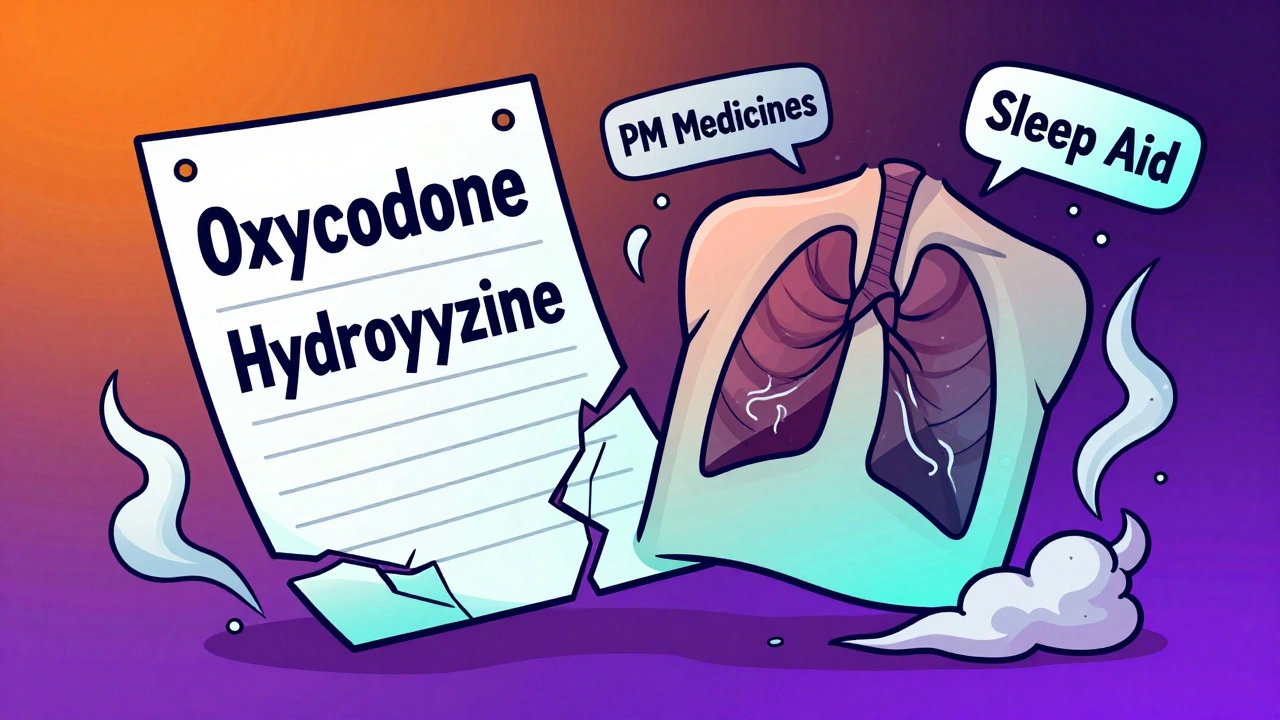
Read every label. Diphenhydramine is hidden in nighttime cold medicines, sleep aids, and even some stomach remedies. Look for “PM” in the name-like Tylenol PM or Advil PM. That’s diphenhydramine.
Don’t self-medicate for sleep. If your opioid is making you drowsy, don’t add another sedative. Talk to your provider about adjusting the dose or switching to a different painkiller.
What’s Changing in Healthcare
Systems are starting to catch up. As of 2023, 92% of U.S. hospitals using Epic’s electronic health record system have “hard stop” alerts that block prescriptions for opioid-antihistamine combinations. The FDA updated its guidance in May 2023 to explicitly include all CNS depressants-not just benzodiazepines-in opioid safety warnings.
Pharmacies are now required by law to hand out opioid medication guides that mention drug interactions. The SUPPORT Act of 2018 mandates prescriber education on these risks. And the CDC now recommends avoiding concurrent opioid and CNS depressant prescriptions whenever possible.
But technology alone won’t fix this. Only 34% of patients prescribed opioids get full counseling about drug interactions. That’s the real gap. People need to know that their allergy medicine isn’t harmless. That their sleep aid isn’t just “making them sleepy.” That it could stop their breathing.
Final Takeaway: Don’t Assume It’s Safe
If you’re taking an opioid for pain, treat every sedating medication like a potential danger-whether it’s prescribed, bought over the counter, or given to you by a friend. There’s no safe dose when these drugs mix. The risk isn’t just theoretical. It’s documented, preventable, and deadly.
There’s no reason to risk your life for a little relief from itching or trouble sleeping. Safer alternatives exist. You just have to ask for them.
Can I take Benadryl with my opioid painkiller?
No. Combining Benadryl (diphenhydramine) with opioids like oxycodone, hydrocodone, or morphine can cause extreme drowsiness, dangerously slow breathing, coma, or death. Even one dose can be risky, especially if you’re older, have lung disease, or are on a higher opioid dose. Switch to a non-sedating antihistamine like Allegra or Claritin instead.
Are all antihistamines dangerous with opioids?
No. Only first-generation antihistamines like diphenhydramine, hydroxyzine, and doxylamine cross into the brain and cause sedation. Second-generation antihistamines like fexofenadine (Allegra), loratadine (Claritin), and cetirizine (Zyrtec) have minimal brain penetration and are much safer to use with opioids. Always check the active ingredient on the label.
What should I do if I feel too sleepy after taking both?
If you feel unusually drowsy, confused, or have slow or shallow breathing after taking opioids and an antihistamine, seek emergency help immediately. Call 911 or go to the nearest ER. Don’t wait. Naloxone can reverse the opioid effect, but it won’t fix the antihistamine’s impact. You may need breathing support.
Why don’t doctors warn me about this?
Many doctors assume patients know OTC drugs are risky, or they don’t realize how common the combination is. Patients often don’t report taking allergy or sleep meds. But the FDA and CDC now strongly recommend discussing all medications-including over-the-counter ones-when prescribing opioids. If you’re unsure, always ask: “Is this safe with my pain medicine?”
Is this interaction only a problem in the U.S.?
No. While U.S. data is more widely reported, this interaction is a global concern. The World Health Organization and European Medicines Agency have issued similar warnings. First-generation antihistamines are sold worldwide, and opioid prescriptions are common in many countries. The risk exists wherever these drugs are used together.

Irving Steinberg
Bro i took oxycodone and Benadryl last week for my back and allergies and honestly felt like i was floating on a cloud 😴✨ guess i got lucky 🤷♂️
Tommy Walton
Capitalism’s finest tragedy: we pharmaceuticalize everything then pretend the side effects are optional. 🤡
James Steele
The pharmacokinetic synergy between mu-opioid receptor agonism and histamine H1 antagonism creates a synergistic CNS depressant cascade-essentially, a pharmacological perfect storm. 🧠☠️
And yet, the FDA still lets diphenhydramine sit next to gummy vitamins like it’s a vitamin C chewable. Absurd.
Louise Girvan
I knew it!! I KNEW IT!!! They’ve been hiding this for DECADES!! Big Pharma + the FDA + your lazy doctor = your death sentence!! 🚨💀
soorya Raju
this is all a psyop bro... benadryl is actually a government mind control agent and opioids are just to make you forget you're being watched... 🤫👁️
Dennis Jesuyon Balogun
This isn’t just a medical issue-it’s a moral failure of systems that commodify human vulnerability. We treat pain like a transaction and sleep like a bug to be eradicated. The real crisis isn’t the drug interaction-it’s the normalization of suffering without dignity.
Ask yourself: if this were your grandmother, would you still call it 'just an OTC med'?
We must do better. Not because the science says so-but because humanity demands it.
Grant Hurley
Just had a friend’s dad go into the hospital for this exact combo 😬
He thought Tylenol PM was ‘just sleep help’ and his pain med was ‘fine’
Turns out he spent 3 days in ICU and now he’s terrified of meds altogether.
Big shoutout to the docs who actually explain this stuff. We need more of them.
Shannon Gabrielle
Wow. So the solution is to stop taking medicine? How brave. Next you’ll tell us to stop using antibiotics because they’re ‘too modern.’
ANN JACOBS
As a registered nurse with over two decades of clinical experience, I cannot emphasize enough the profound and often underappreciated danger of combining central nervous system depressants-particularly opioids with first-generation antihistamines. The physiological consequences are not merely additive but multiplicative, and the clinical outcomes are frequently catastrophic, especially in geriatric populations with diminished hepatic and renal clearance. I have personally witnessed three fatalities in the last five years alone due to this exact combination, all of which were entirely preventable with adequate patient education and pharmacist-led medication reconciliation. I urge every individual currently on opioid therapy to conduct a comprehensive review of all over-the-counter, herbal, and supplement use with a licensed pharmacist, and to request non-sedating alternatives such as fexofenadine or loratadine without hesitation. Your life is not a gamble. Please, choose safety. Always.