CNS Depressants: What They Are, How They Work, and What You Need to Know
When your brain is stuck in overdrive—whether from anxiety, insomnia, or seizures—CNS depressants, a class of medications that slow down brain activity to promote calm and relaxation. Also known as central nervous system inhibitors, these drugs help reset your nervous system when it’s running too fast. They’re not sedatives you take for fun. They’re prescribed tools, used under medical supervision, to bring balance back to your brain chemistry.
There are several types of CNS depressants, medications that reduce neural activity by enhancing the effect of GABA, the brain’s main calming neurotransmitter. The most common include benzodiazepines, like diazepam and alprazolam, used for short-term anxiety and seizure control, and barbiturates, older drugs like phenobarbital that are now mostly reserved for epilepsy or anesthesia. Then there are non-benzodiazepine sleep aids, like zolpidem, and even some antihistamines that cause drowsiness as a side effect. Each has a different risk profile, and mixing them with alcohol or opioids can be deadly. That’s why you’ll see posts here about hydroxyzine and QT prolongation, or how grapefruit juice can dangerously boost drug levels in your blood.
These drugs don’t just calm you—they can change how your body responds to stress, sleep, and even pain. That’s why deprescribing research matters. Many older adults take CNS depressants long after they’re needed, increasing fall risk and cognitive decline. And when you combine them with antidepressants or mood stabilizers, the effects can stack up in ways you don’t expect. That’s why the black box warning on some antidepressants isn’t just about suicide risk—it’s also about how these drugs interact with your nervous system when layered together.
What you’ll find in this collection isn’t a list of brand names or dosage charts. It’s real talk about how these drugs affect your body, when they help, when they hurt, and how to talk to your doctor about reducing or switching them. You’ll read about medication safety in seniors, how to spot dangerous interactions, and why stopping these drugs suddenly can be as risky as taking them wrong. This isn’t about fear. It’s about knowing what you’re taking, why, and what to watch for—so you can stay in control of your health, not your prescription.
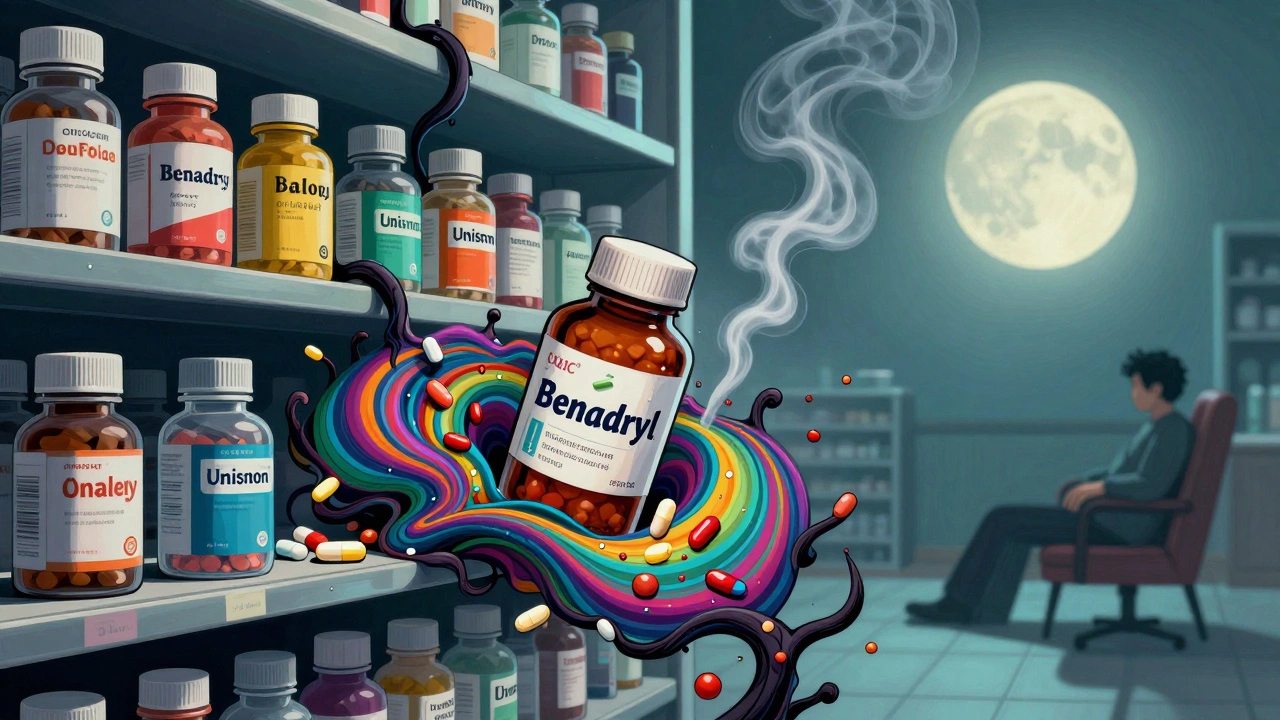
Opioids and Antihistamines: The Hidden Danger of Combined Sedation
Mixing opioids with common antihistamines like Benadryl can cause life-threatening sedation and breathing problems. Learn why this dangerous combo happens, who’s at risk, and how to stay safe.