Compulsory Licensing: What It Means for Drug Prices and Patient Access
When a drug is too expensive for most people to afford, compulsory licensing, a legal tool that allows governments to authorize generic production of patented medicines without the patent holder’s consent. Also known as government use licenses, it’s a way to break the monopoly on life-saving drugs when public health needs outweigh corporate profits. This isn’t theoretical—it’s been used for HIV meds in Africa, hepatitis C drugs in Egypt, and cancer treatments in India. The World Trade Organization lets countries do this under the TRIPS Agreement, as long as they pay fair compensation and only use it for domestic needs.
Compulsory licensing doesn’t mean ignoring patents. It means balancing them with real-world access. When a drug like sofosbuvir cost $84,000 for a full course in the U.S., countries like Thailand and Brazil issued compulsory licenses to produce generics for under $300. That’s not piracy—it’s pragmatism. The same logic applies to insulin, antibiotics, and vaccines during pandemics. Pharmaceutical companies argue this kills innovation, but evidence shows most breakthroughs come from publicly funded research anyway. What’s really at stake is profit margins, not scientific progress.
Related to this are generic drugs, lower-cost versions of brand-name medicines that meet the same safety and effectiveness standards. They’re the end result of compulsory licensing in action. And when you look at how drug pricing, the often arbitrary cost set by manufacturers regardless of production expenses affects real people—like seniors skipping doses to afford rent—it’s clear why this issue keeps coming up. The patent rights, legal protections that give companies exclusive sales rights for 20 years are meant to incentivize innovation, but they’re often extended through minor tweaks or new formulations, keeping prices high long after the science is old.
What you’ll find in these posts isn’t just theory. It’s real stories of people who couldn’t afford their meds, pharmacists caught between laws and ethics, and countries fighting for the right to treat their populations. You’ll see how compulsory licensing connects to Medicare formularies, copay assistance, and even insurance coverage for counterfeit drugs. It’s all part of the same system—where access to medicine shouldn’t depend on your bank account.
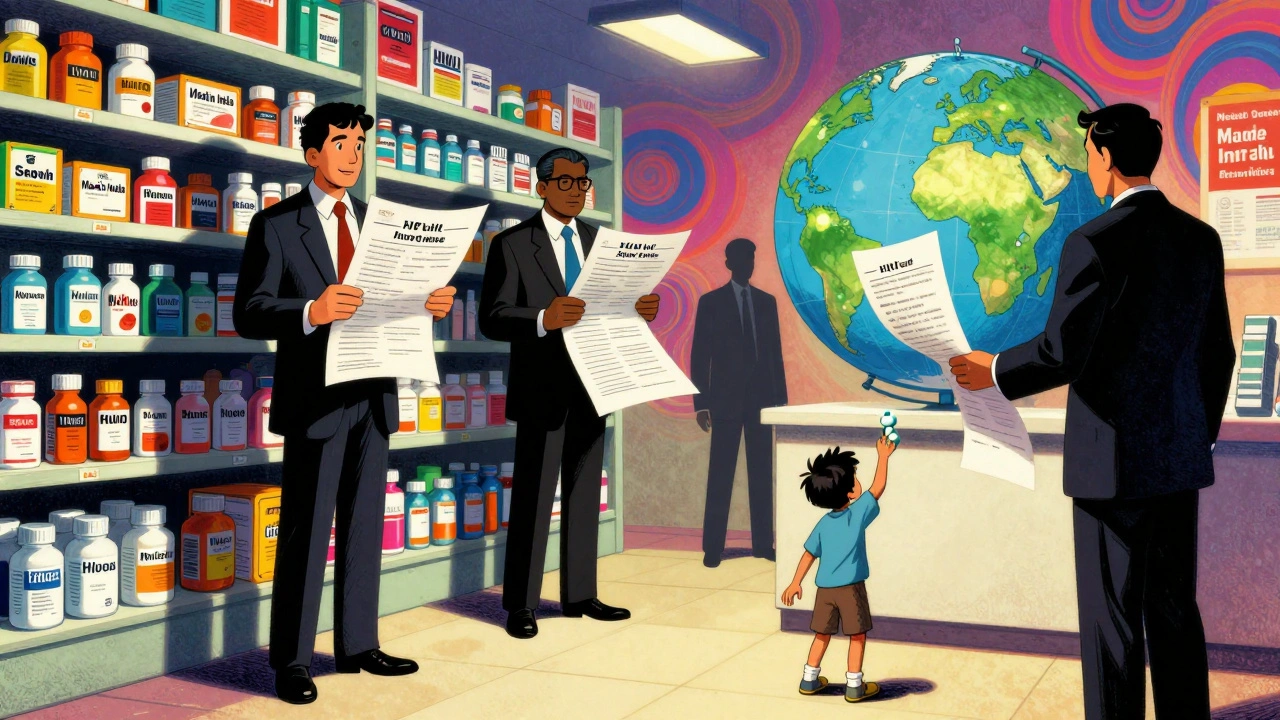
How TRIPS Trade Agreements Shape Global Access to Generic Medicines
TRIPS shaped global access to generic medicines by enforcing strict patent rules that raised drug prices and blocked cheaper alternatives. Despite flexibilities like compulsory licensing, trade deals and corporate pressure have limited their use - leaving millions without life-saving treatments.