Opioids and Antihistamines: Risks, Interactions, and What You Need to Know
When you take opioids, powerful pain relievers like oxycodone, hydrocodone, or morphine that act on the brain’s pain and reward centers along with antihistamines, drugs like hydroxyzine, diphenhydramine, or promethazine used for allergies, itching, or nausea, you’re mixing two types of central nervous system depressants. This isn’t just a minor caution—it’s a real, documented danger. Both slow your breathing, make you drowsy, and can crash your heart rhythm, especially in older adults or those with existing health issues. The combination doesn’t just add up—it multiplies the risk.
One of the most serious concerns is QT prolongation, a heart rhythm disturbance that can lead to sudden cardiac arrest. Hydroxyzine, a common antihistamine, is known to cause this. When paired with opioids like methadone or fentanyl, which also affect heart electrical activity, the risk spikes. It’s not theoretical—emergency rooms see cases where people collapsed after taking both for a cold and back pain. Even over-the-counter antihistamines like Benadryl can be risky if you’re on a long-acting opioid. And timing doesn’t help: taking them hours apart won’t prevent the buildup of effects in your system.
Why do people combine them? Often, it’s because one drug masks the side effect of the other. Someone on opioids for chronic pain might take an antihistamine to help with nausea or sleep. But that’s a trap. The drowsiness isn’t just "feeling tired"—it’s your brain’s breathing control being suppressed. Studies show this combo increases overdose risk by more than 50% compared to opioids alone. And it’s not just about accidental misuse. Some people don’t realize their allergy med is an antihistamine, or think natural remedies like melatonin or valerian are safe to mix in. They’re not. This is a hidden danger in everyday medicine.
What you’ll find in the posts below are real cases, clear explanations, and practical guidance on how these drugs behave in the body. You’ll learn which antihistamines carry the highest cardiac risk, why some opioids are more dangerous than others when mixed, and what alternatives exist for sleep or allergies without the deadly synergy. There’s no fluff—just what you need to know to protect yourself or someone you care about. The goal isn’t to scare you, but to give you the facts so you can make smarter choices with your prescriptions.
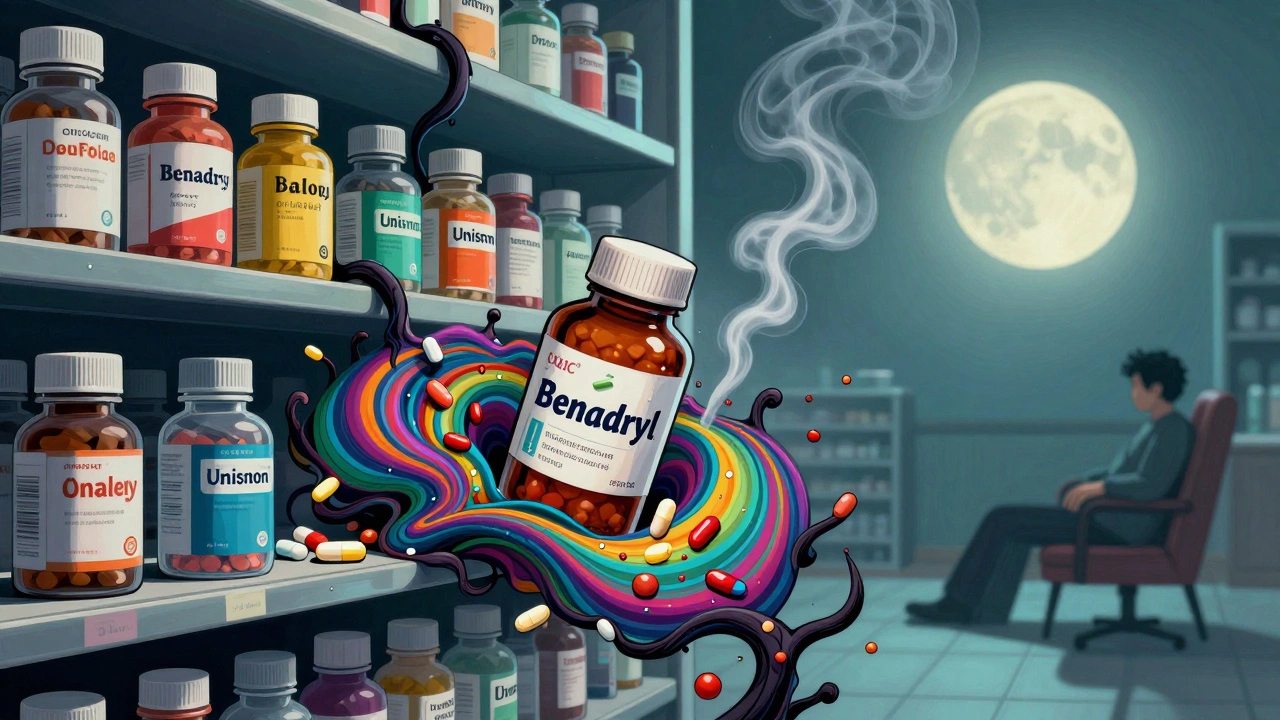
Opioids and Antihistamines: The Hidden Danger of Combined Sedation
Mixing opioids with common antihistamines like Benadryl can cause life-threatening sedation and breathing problems. Learn why this dangerous combo happens, who’s at risk, and how to stay safe.