Respiratory Depression: Causes, Risks, and Medications That Can Trigger It
When your breathing slows down too much, it’s called respiratory depression, a condition where breathing becomes too shallow or slow to supply enough oxygen to the body. Also known as hypoventilation, it’s not just a side effect—it can be life-threatening if not caught in time. This isn’t something that happens overnight. It often starts quietly, with someone feeling unusually drowsy after taking a painkiller or anxiety med, then slowly slipping into a state where they’re not getting enough air.
Most cases of respiratory depression are tied to opioids, a class of drugs used for pain relief that act on the brain’s breathing control center. Drugs like oxycodone, hydrocodone, and fentanyl can suppress breathing, especially when taken in high doses or mixed with other sedatives. Benzodiazepines, such as diazepam or alprazolam, often used for anxiety or sleep, make this risk much worse when combined with opioids. Even sleep aids, like zolpidem or zaleplon, can cause this problem, especially in older adults or people with lung conditions. The danger isn’t always obvious—many people don’t realize their breathing has slowed until it’s too late.
It’s not just about overdoses. People on long-term pain management, seniors taking multiple meds, or those new to these drugs are at higher risk. A single extra pill, mixing alcohol with a prescription, or skipping a dose then doubling up can tip the balance. That’s why deprescribing—carefully reducing unnecessary meds in older adults—is becoming more common in geriatric care. It’s not just about cutting pills; it’s about preventing silent dangers like respiratory depression before they start.
You’ll find real-world stories and data in the posts below. Some explain how antidepressants can indirectly affect breathing patterns. Others warn about drug interactions—like grapefruit juice making opioid effects stronger—or how hydroxyzine, a common antihistamine, can slow breathing in sensitive people. There are guides on recognizing early signs, what to do if someone stops breathing, and how pharmacists help prevent these risks when dispensing generics. This isn’t theoretical. These are the situations real people face every day.
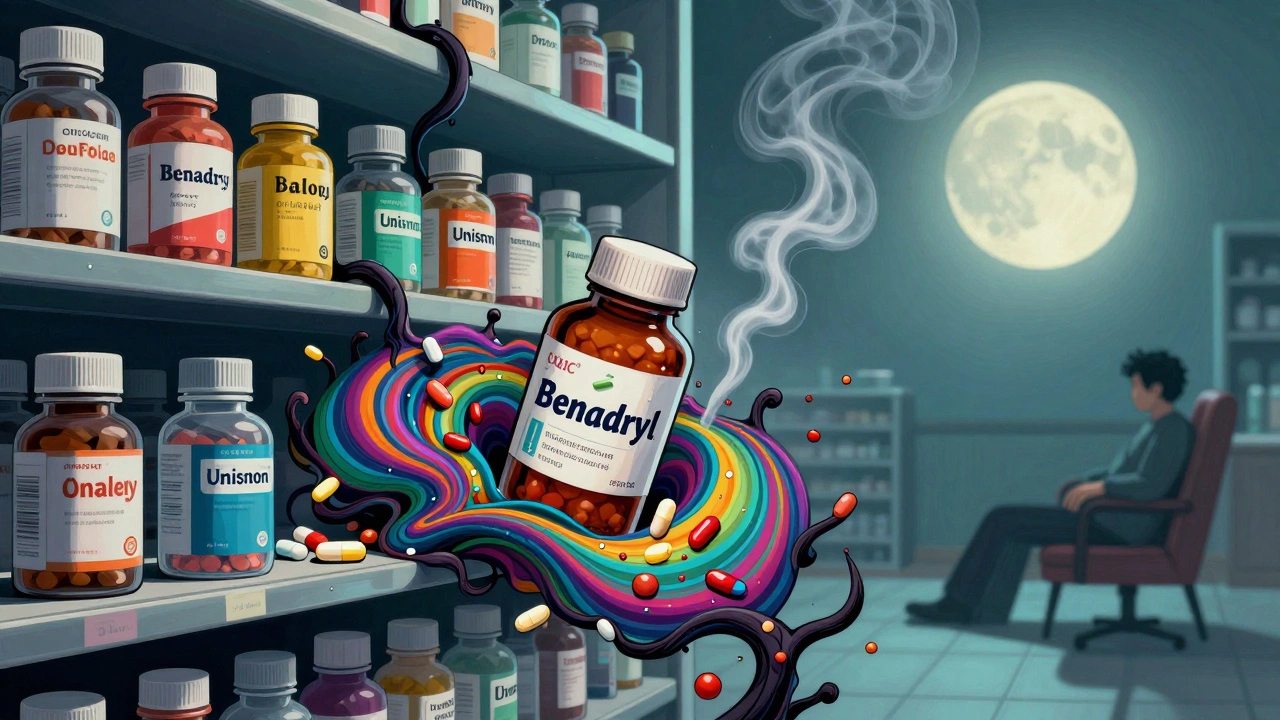
Opioids and Antihistamines: The Hidden Danger of Combined Sedation
Mixing opioids with common antihistamines like Benadryl can cause life-threatening sedation and breathing problems. Learn why this dangerous combo happens, who’s at risk, and how to stay safe.